Number Recognition Easy Numbers Worksheets for Ages 7-8 - Page 2
26 filtered results
-
From - To
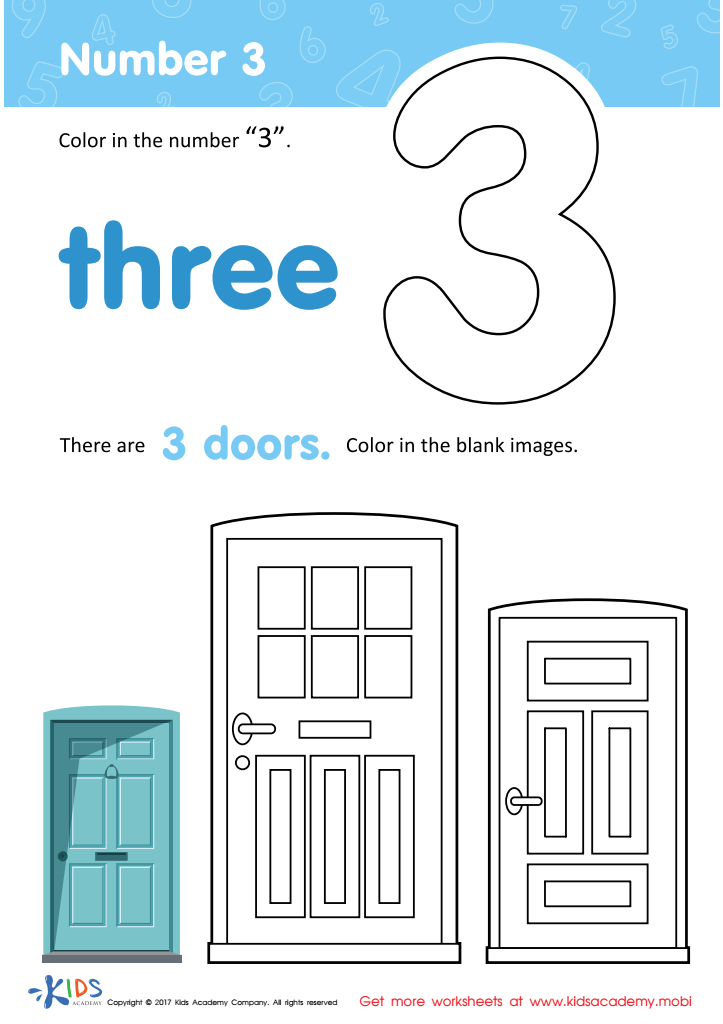
Number 3 Worksheet
 Assign to My Students

Counting on the City Skyline: Dot-to-Dot Worksheet








Number recognition is a fundamental skill for children aged 7-8, serving as a foundational building block for more advanced mathematical concepts. At this age, students are transitioning from basic arithmetic to more complex operations like addition, subtraction, and even introductory multiplication. Proficient number recognition not only facilitates ease in these operations but also cultivates confidence in young learners.
When parents and teachers prioritize number recognition, they empower children to develop a solid mathematical understanding. Recognizing numbers quickly enables them to participate actively in classroom activities, engage in problem-solving, and even relate mathematical concepts to real-life situations, such as managing money or understanding time.
Additionally, fostering number recognition enhances cognitive skills such as memory and pattern recognition, essential for broader academic success. It's crucial for parents and teachers to create a supportive environment, incorporating games, visual aids, and hands-on activities that make learning enjoyable.
In this digital age, where technology often competes for attention, rekindling interest in basic mathematical skills through fun, relatable activities is vital. By nurturing strong number recognition abilities from an early age, parents and educators lay the groundwork for lifelong success in mathematics and analytical thinking.








