
Following instructions Easy Math Worksheets for Ages 7-8
5 filtered results
Difficulty Level
Grade
Age
-
From - To
Subject
Activity
Standards
Help your child master the essential skill of following instructions with our easy math worksheets designed for ages 7-8. Our engaging and educational worksheets simplify complex concepts, making learning enjoyable and effective. Each sheet provides clear, step-by-step directions, promoting independence and confidence in young learners. Perfect for classroom use or at-home practice, these worksheets cover various math topics tailored to the developmental needs of 7-8 year-olds. Boost your child's learning skills and ensure a strong math foundation with Kids Academy's carefully crafted resources. Discover a fun way to improve focus, comprehension, and academic success now!
Favorites
With answer key
Interactive
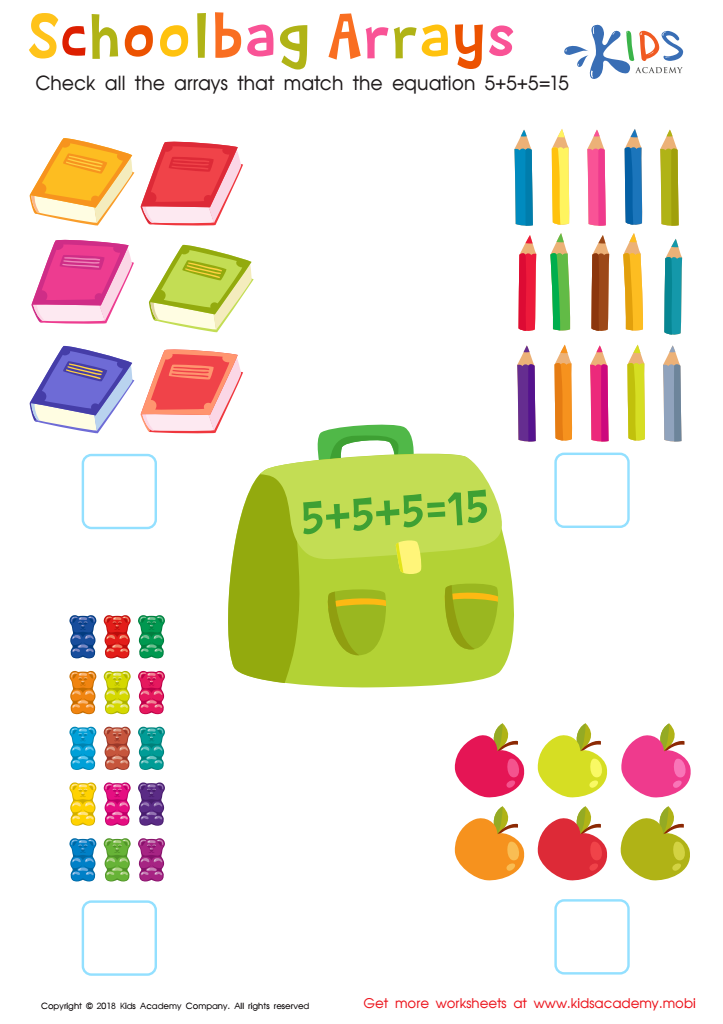
Schoolbag Arrays Worksheet
Help your child spot the correct arrays in this worksheet: having them count the items in each and check the boxes for the ones with 15 objects. Ask them to differentiate between rows and columns and explain which ones match the equation 5+5+5=15.
Schoolbag Arrays Worksheet
Worksheet

Color the Shapes Worksheet
Help your student master shape identification with this fun worksheet. Ask them to name the shapes in the picture, then color it! Ask questions like "How many squares do you see?" and "How many triangles?" to extend the learning. Identify squares, circles, triangles and rectangles with this enjoyable coloring page.
Download (PDF)
 Assign to My Students
Assign to My Students
Color the Shapes Worksheet
Worksheet
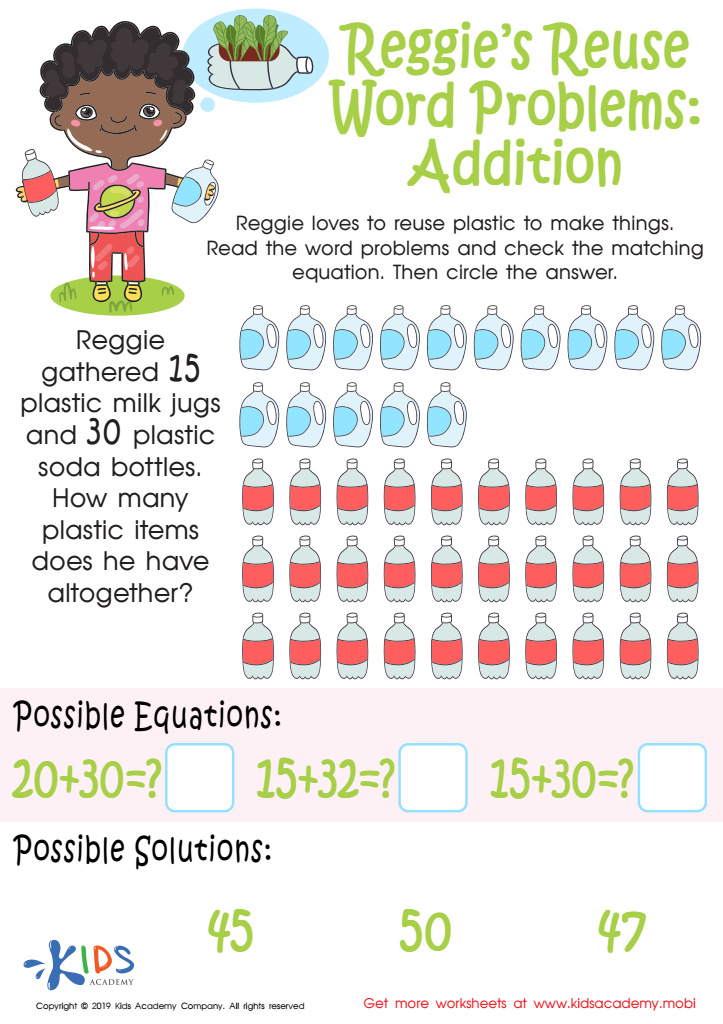
Reggie's Reuse Word Problems: Addition Worksheet
Help Reggie and your child save the planet by using this free worksheet! It reinforces addition word problems using one-to-one picture representation, and helps them pick out the correct number sentence and possible solutions. It's an easy way to help the planet and practice math!
Reggie's Reuse Word Problems: Addition Worksheet
Worksheet
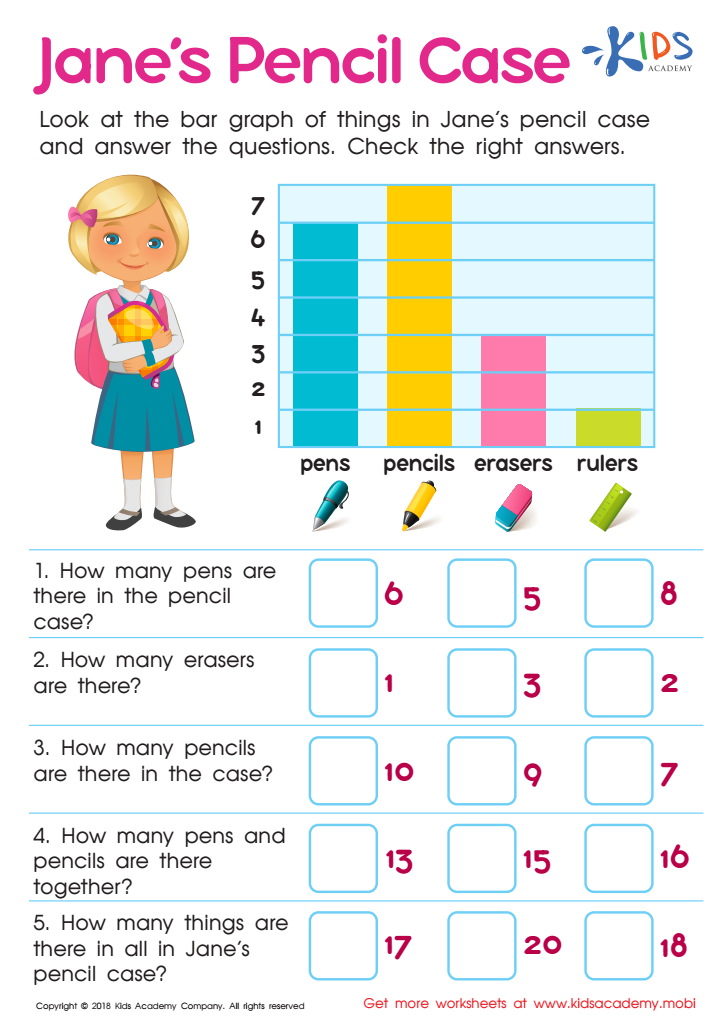
Jane's Pencil Case Worksheet
Help Jane organize her pencil case! Have your child look and the bar graph on the worksheet and interpret the data. Ask them to read each problem, then check the box next to the correct number. It's a fun way to practice reading graphs and reporting data.
Jane's Pencil Case Worksheet
Worksheet
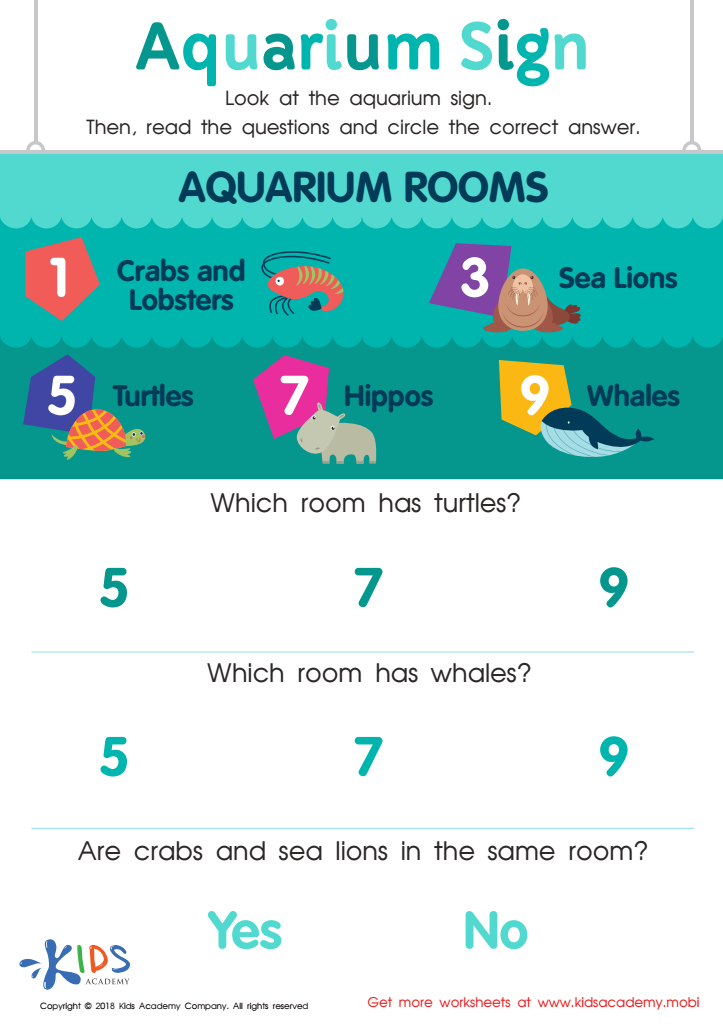
Assessment: Aquarium Sign Worksheet
Take your kids to an aquarium and marvel at the sea creatures! Help them identify the animals they see, and ask them which one is their favorite. Look at the aquarium sign and point to each creature. Ask your kids the questions and help them circle the right answer.
Assessment: Aquarium Sign Worksheet
Worksheet
Join Kids Academy for Free
Who is primarily going to use this learning content?



.jpg)




Teaching children aged 7-8 to follow instructions in math is crucial for several reasons. At this developmental stage, students are building foundational skills that support their overall academic success. Math can be a fun and engaging way to practice listening and following steps, essential skills for everyday tasks and future education.
Firstly, following instructions helps children understand the process, not just the outcome. By adhering to step-by-step directions, young learners grasp the 'why' behind math concepts, fostering deeper comprehension. For example, learning how to solve a simple addition or subtraction problem involves recognizing the importance of each individual step.
Secondly, practicing these skills improves attention to detail and concentration. When children learn to follow instructions meticulously, they are less likely to make careless mistakes, increasing both accuracy and confidence.
Moreover, developing these habits early sets a positive precedent. Children who master following instructions in math are more likely to apply these disciplined approaches to other subjects and areas of life.
Parental and educator involvement is key: they can model and reinforce good habits, offer guidance when needed, and create an environment where children feel safe to ask questions and make mistakes. By prioritizing this, adults help instill a strong, versatile skill set in children that will benefit them throughout their life.








