Time reading skills Easy Math Worksheets for Ages 7-8
4 filtered results
-
From - To
Enhance your child's understanding of time with our Easy Math Worksheets designed for ages 7-8! These engaging resources help students master essential time-reading skills, including telling time on both analog and digital clocks. Featuring fun and interactive exercises, our worksheets encourage critical thinking and strengthen math foundations. With clear instructions and colorful illustrations, children will enjoy learning how to read hours and minutes, convert between time formats, and solve real-life time problems. Perfect for home or classroom use, these worksheets ensure an exciting and educational experience, fostering confidence and proficiency in one of life's vital skills.
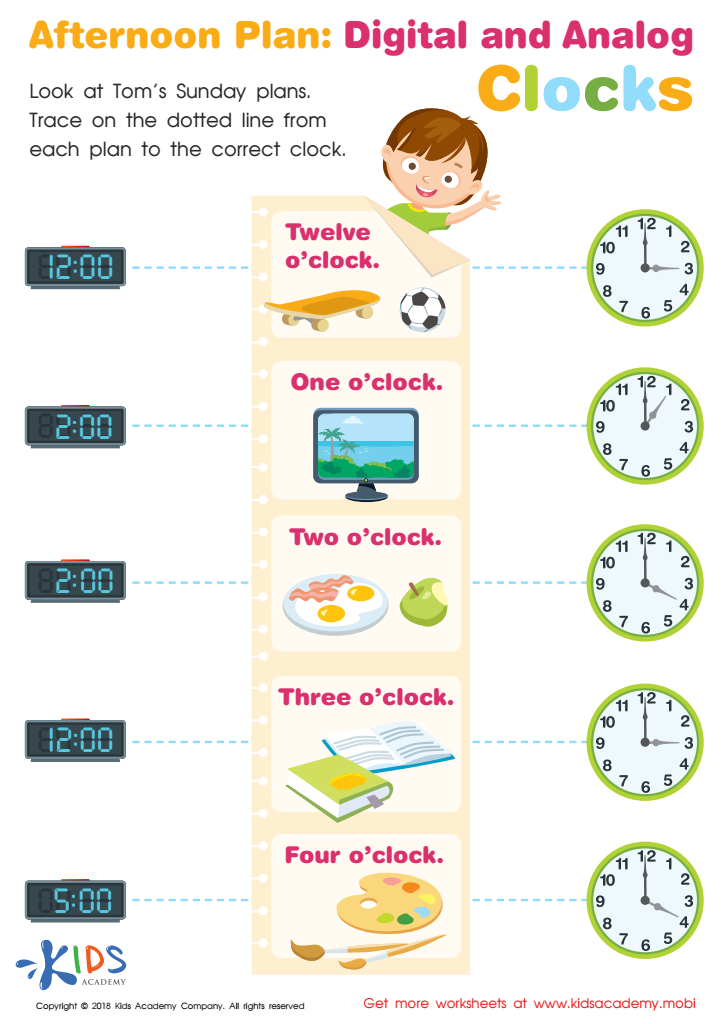
Afternoon Plan: Digital and Analog Clocks Worksheet
 Assign to My Students
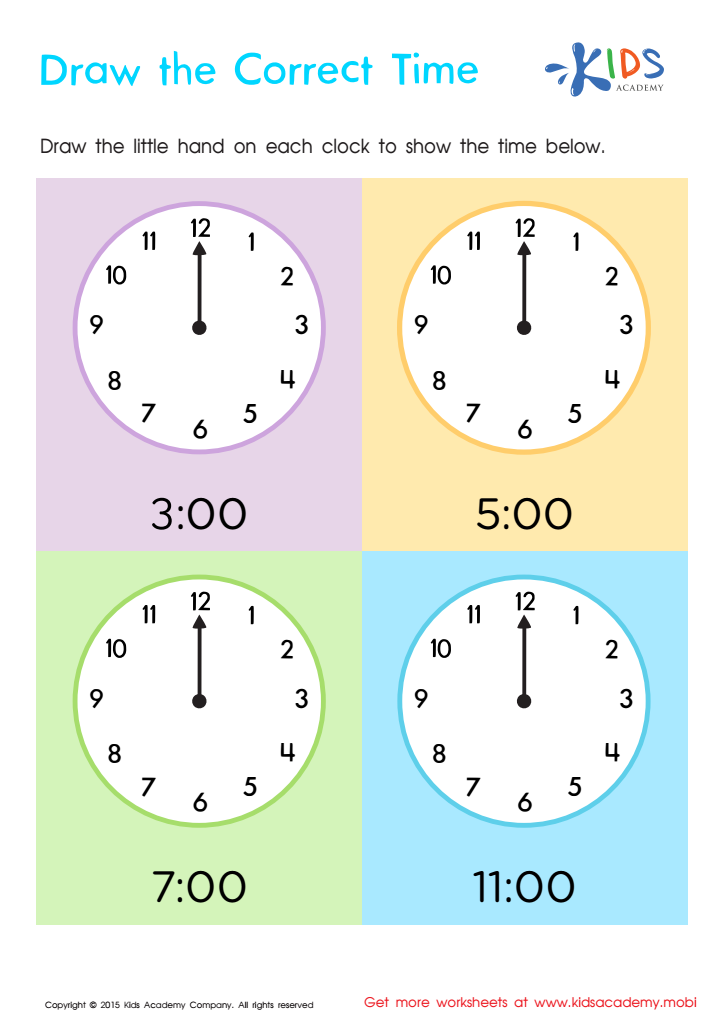
Telling The Time Worksheet: Part 1
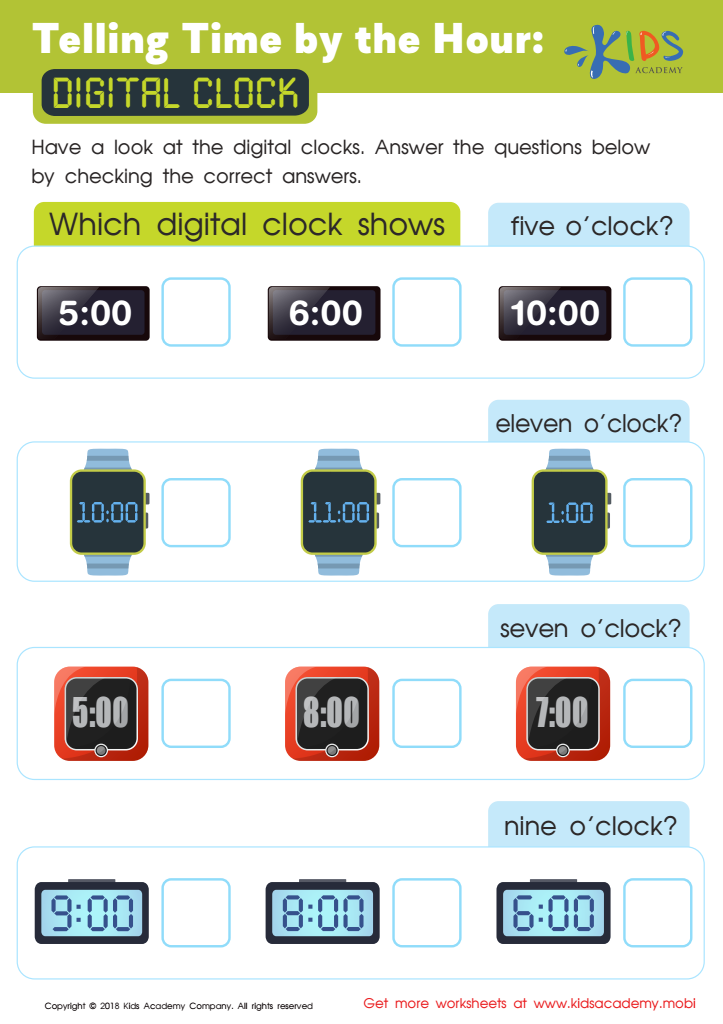
Telling Time by the Hour: Digital Clock Worksheet
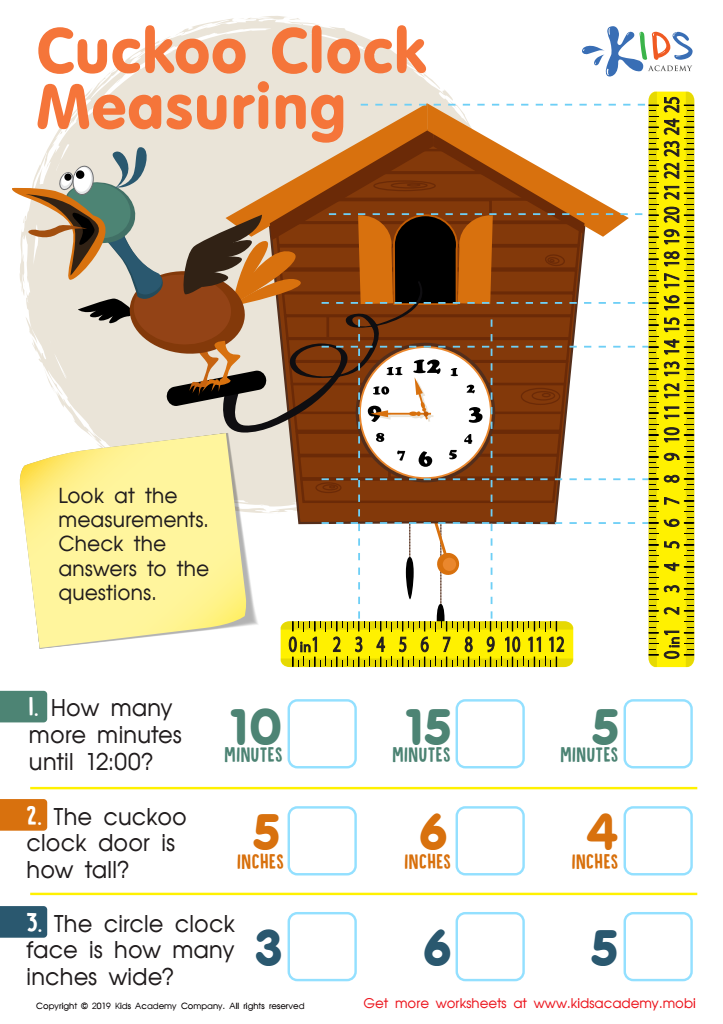
Cuckoo Clock Measuring Worksheet








Parents and teachers should prioritize reading and math skills for children aged 7-8, as these foundational abilities significantly impact academic success and overall development. At this age, children transition from learning to read to reading to learn. Strong reading skills enhance comprehension across all subjects, fostering critical thinking and the ability to grasp complex concepts. Engaging with texts also nurtures imagination, broadens vocabulary, and improves communication skills.
Additionally, easy math skills, such as basic addition, subtraction, and problem-solving, build numeracy and reasoning vital for everyday tasks and further academic pursuits. Mastery of these fundamental math concepts not only boosts confidence but also lays the groundwork for advanced skills like multiplication and division.
Moreover, reading together and practicing math can strengthen the bond between parents, teachers, and children, creating a positive learning environment where kids feel supported and motivated. Encouraging reading and math at this early age cultivates a lifelong love for learning, enabling children to explore their interests and develop essential life skills. By investing time in these areas, adults help shape well-rounded, capable learners, ultimately contributing to children's joyful and successful educational journeys.








