Understanding patterns Easy Math Worksheets for Ages 7-8
5 filtered results
-
From - To
Welcome to our "Understanding Patterns" Easy Math Worksheets page for ages 7-8! Designed to make learning fun and accessible, these worksheets offer engaging activities that help children recognize, create, and extend patterns. Our resources are perfect for reinforcing essential math skills while sparking curiosity and creativity. Each worksheet is carefully crafted to challenge young learners with various patterns, including shapes, colors, and numbers, ensuring a comprehensive understanding of this foundational math concept. Explore our worksheets to enhance your child's analytical thinking and problem-solving skills while making math an enjoyable journey! Perfect for home or classroom use. Get started today!
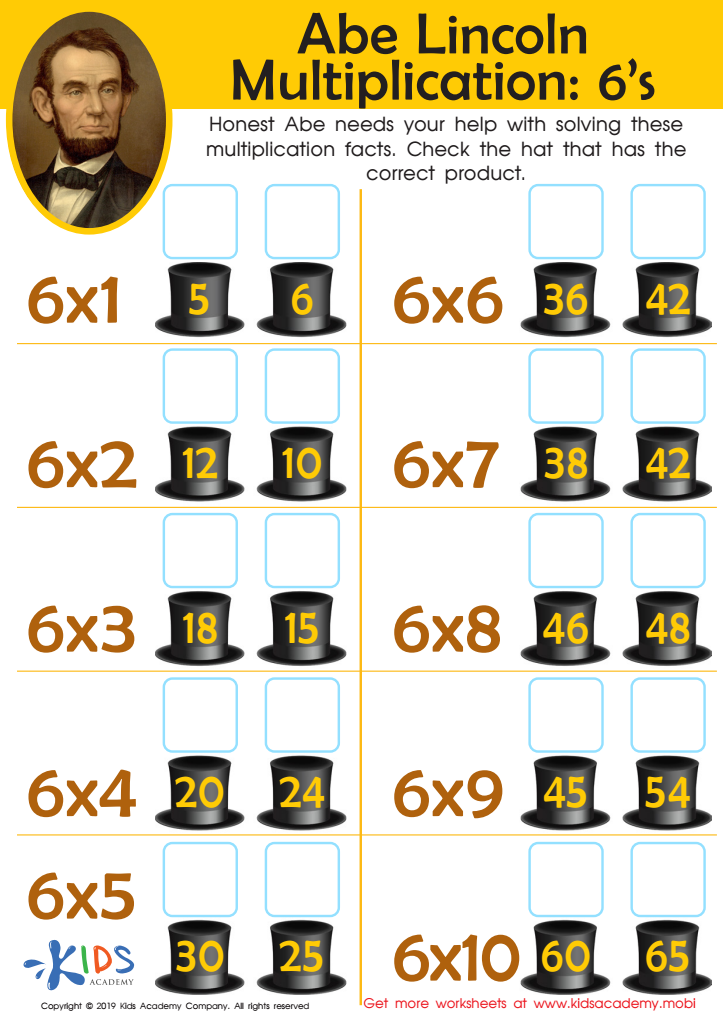
Abe Lincoln Multiplication: 6’s Worksheet
 Assign to My Students
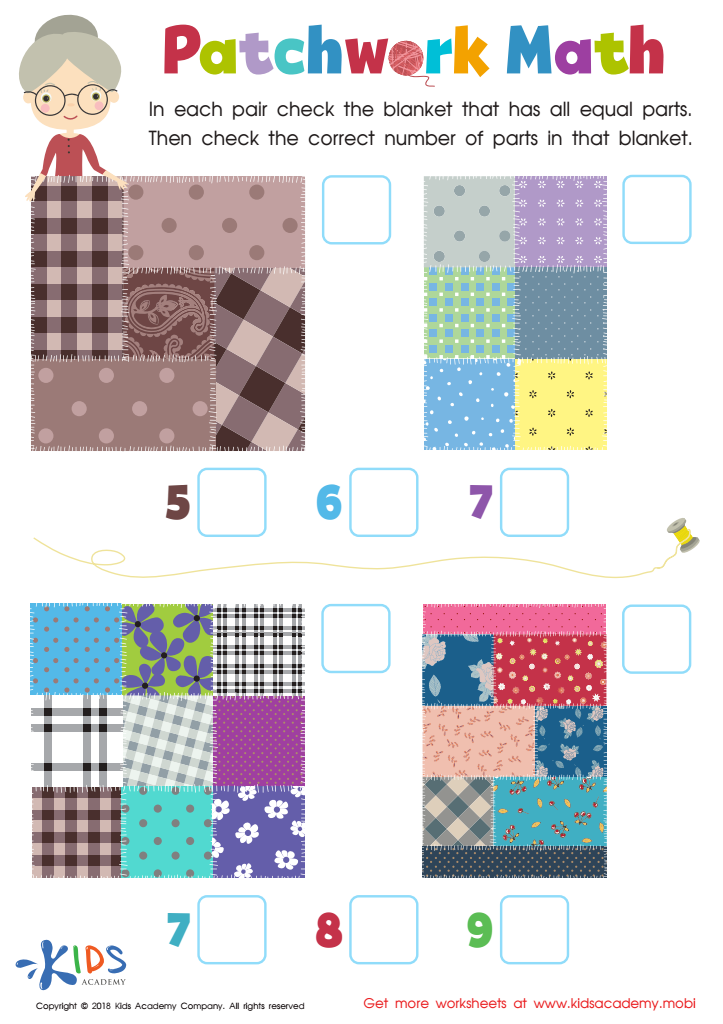
Patchwork Math Worksheet
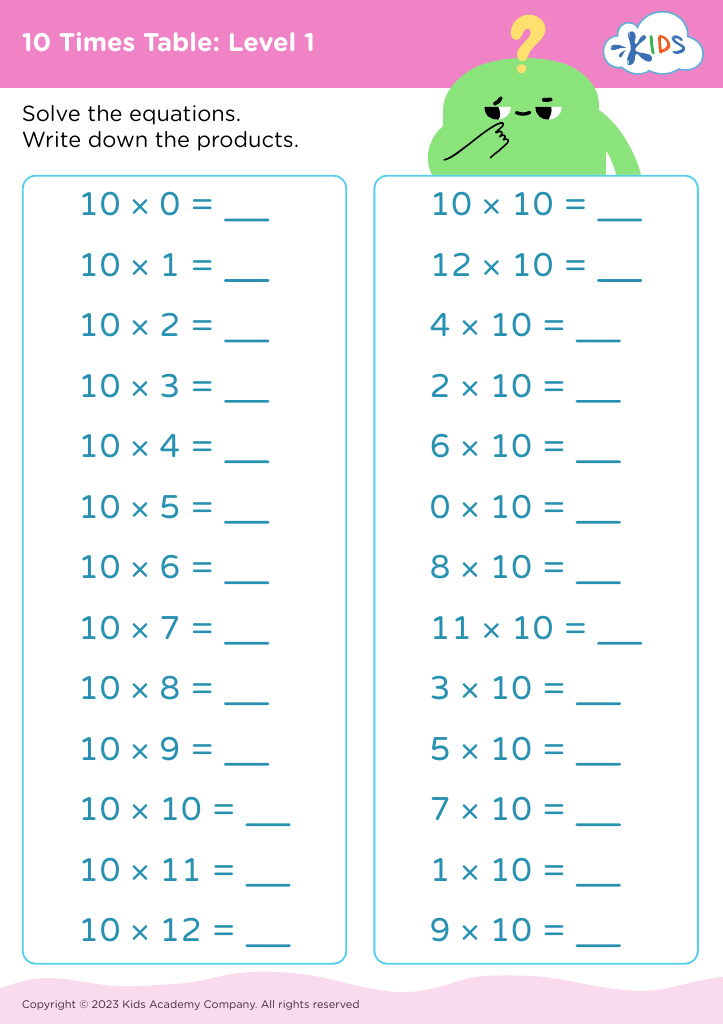
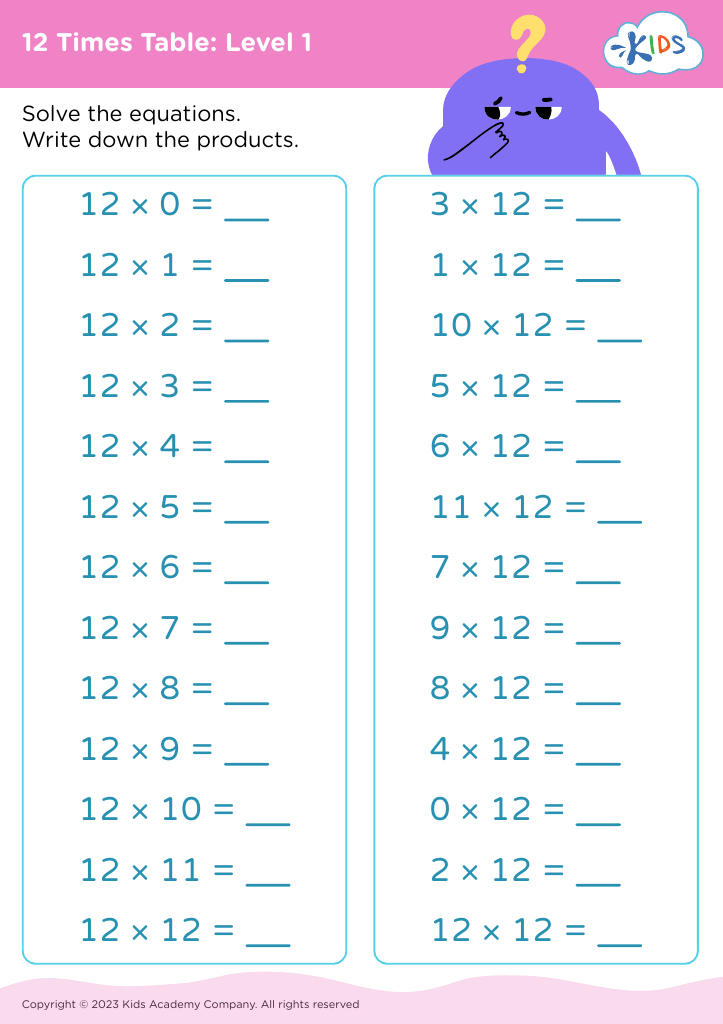







Understanding patterns is foundational in developing mathematical skills for children ages 7-8. This age group is critical for fostering cognitive abilities, and recognizing patterns enhances their problem-solving skills and logical thinking. When children grasp patterns, they can make predictions, identify relationships, and improve their ability to sequence events or numbers, which are essential skills in more complex math concepts.
Parents and teachers should care deeply about teaching these foundational concepts as they form the building blocks for more advanced topics like algebra and geometry. Children who are adept at recognizing and predicting patterns tend to have greater confidence in their mathematical abilities, leading to a more positive attitude toward math in general. Furthermore, understanding patterns encourages creativity and critical thinking, allowing students to approach problems from different angles.
Moreover, pattern recognition can be integrated across subjects, enhancing overall learning experiences. For instance, identifying patterns in language helps with reading fluency, while recognizing patterns in nature connects math to the real world. By emphasizing these skills, teachers and parents can set up children for long-term academic success, making math an engaging and essential part of their development. Ultimately, a strong understanding of patterns lays the groundwork for lifelong learning and curiosity in various fields.








