
Time reading skills Easy Time Worksheets for Ages 7-8
3 filtered results
Difficulty Level
Grade
Age
-
From - To
Subject
Activity
Standards
Enhance your child's time reading skills with our Easy Time Worksheets designed for ages 7-8! Our expertly crafted worksheets help young learners master telling time to the nearest hour, half-hour, and quarter-hour. By practicing with engaging activities and colorful analog clock visuals, kids will build confidence and accuracy in reading both digital and analog clocks. Perfect for in-class exercises or home practice, our worksheets cater to various learning styles, ensuring every child can succeed. Make time reading fun and educational with resources from Kids Academy – helping young minds shine with essential math skills!
Favorites
With answer key
Interactive
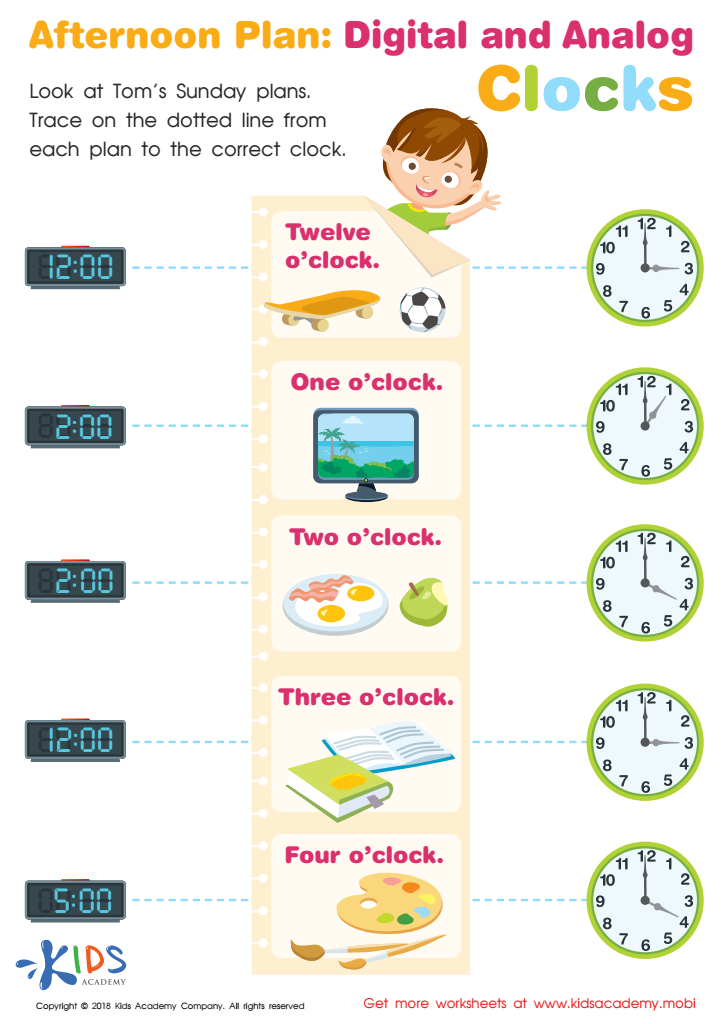
Afternoon Plan: Digital and Analog Clocks Worksheet
Tom's got Sunday plans and your kids can use this worksheet to help them learn how to tell the time. With tracing dotted lines from plans to the correct clock, they'll gain the skills to accurately convert digital time to analog. It'll be a great way to get them better at telling the time.
 Assign to My Students
Afternoon Plan: Digital and Analog Clocks Worksheet
Worksheet
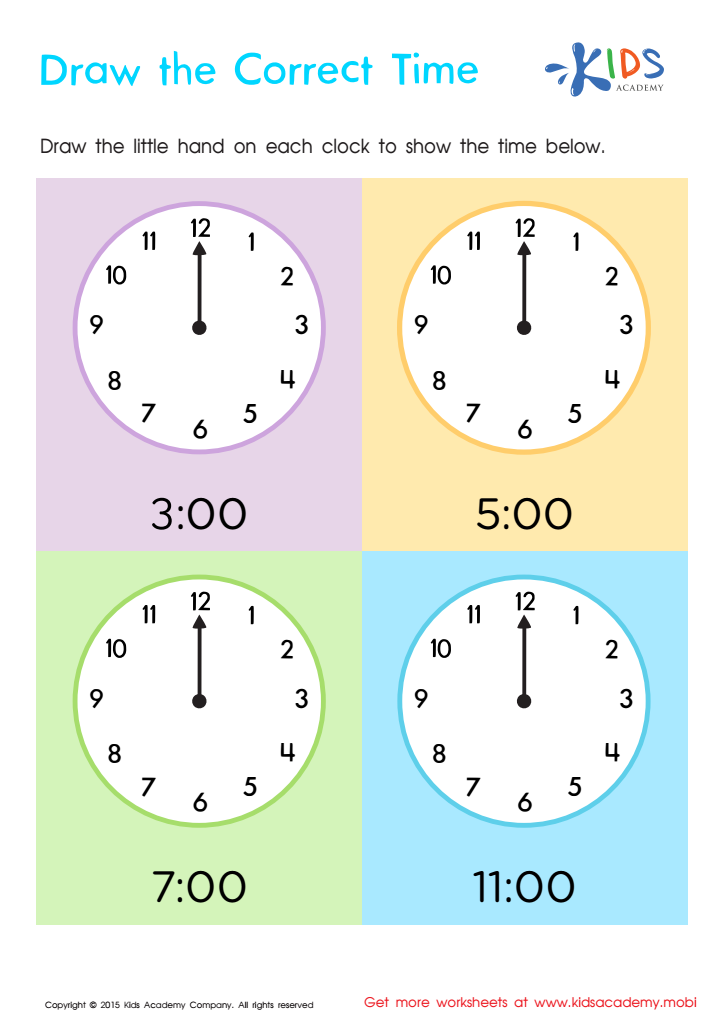
Telling The Time Worksheet: Part 1
Practice telling the time with Kids Academy. Our worksheets make it fun for kindergarteners to learn about clocks and reading the time. Find our free math worksheets on telling the time and draw the little hand on the clock faces to show the time. Let's learn together!
Telling The Time Worksheet: Part 1
Worksheet
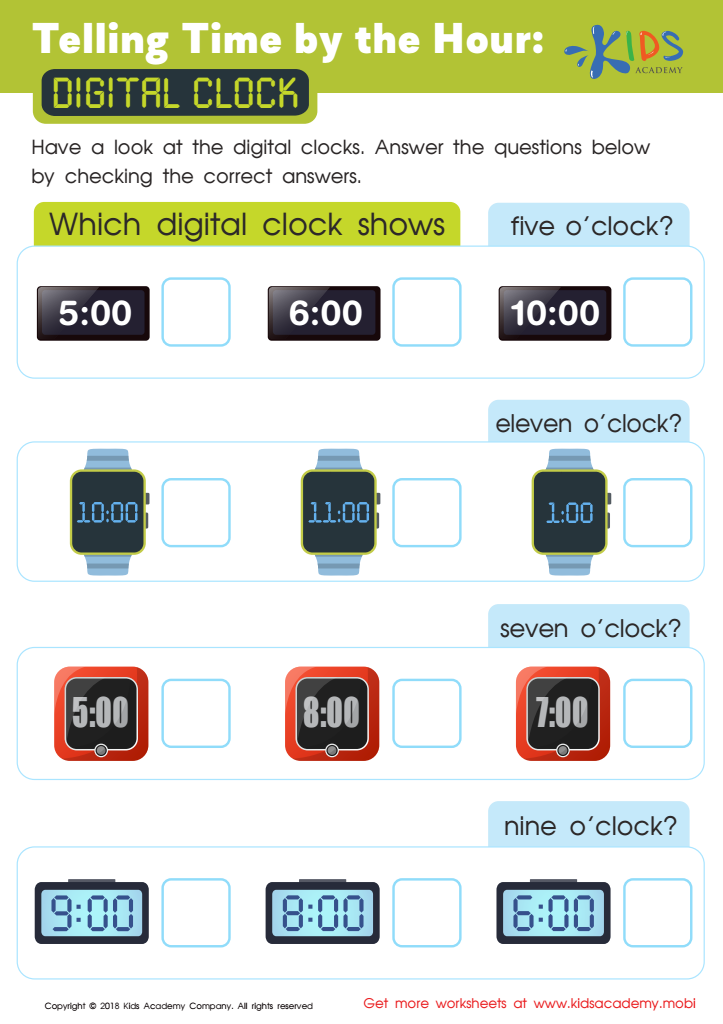
Telling Time by the Hour: Digital Clock Worksheet
Introduce your students to digital clocks. This worksheet will help them become familiar with them. Guide them through answering the questions - they're simple and stimulating. Encourage their young minds to explore the digital clocks in the exercise.
Telling Time by the Hour: Digital Clock Worksheet
Worksheet
Join Kids Academy for Free
Who is primarily going to use this learning content?








Developing strong reading skills at an early age is crucial for students' overall academic success and lifelong learning. For children aged 7-8, these skills become a foundation for future education. Reading enhances vocabulary, comprehension, and critical thinking abilities, which are essential across all subjects. Engaging with age-appropriate content, such as TIME for Kids, fosters not only these skills but also curiosity about the world.
Parents and teachers should care because proficient reading impacts standard academic achievement. At this stage, children transition from learning to read to reading to learn. If they struggle with reading now, it could affect their understanding of other subjects like math and science. Encouraging consistent practice helps them become confident and independent readers.
Moreover, reading expands a child's imagination and empathy. It introduces them to diverse cultures, promotes moral development, and enriches their understanding of different perspectives. Teachers and parents can nurture a love for reading by making it enjoyable, ensuring it aligns with the child's interests, and celebrating their progress.
In sum, focusing on reading for children aged 7-8 sets a positive trajectory for their future education and personal growth. It equips them with the tools they need to navigate academia and life effectively.








