Visual Learning Easy Addition & Subtraction Worksheets for Ages 7-9
4 filtered results
-
From - To
Discover the power of visual learning with our Easy Addition & Subtraction Worksheets tailored for ages 7-9. Designed to enhance understanding and foster confidence, these engaging activities use visual aids and fun illustrations to teach math concepts. Perfect for young learners, our worksheets make adding and subtracting simple and enjoyable. They are aligned with educational standards and ideal for both classroom use and at-home practice. Download now to help your child develop essential math skills while enjoying the learning process. Turn early math challenges into success with these expert-crafted resources from Kids Academy!
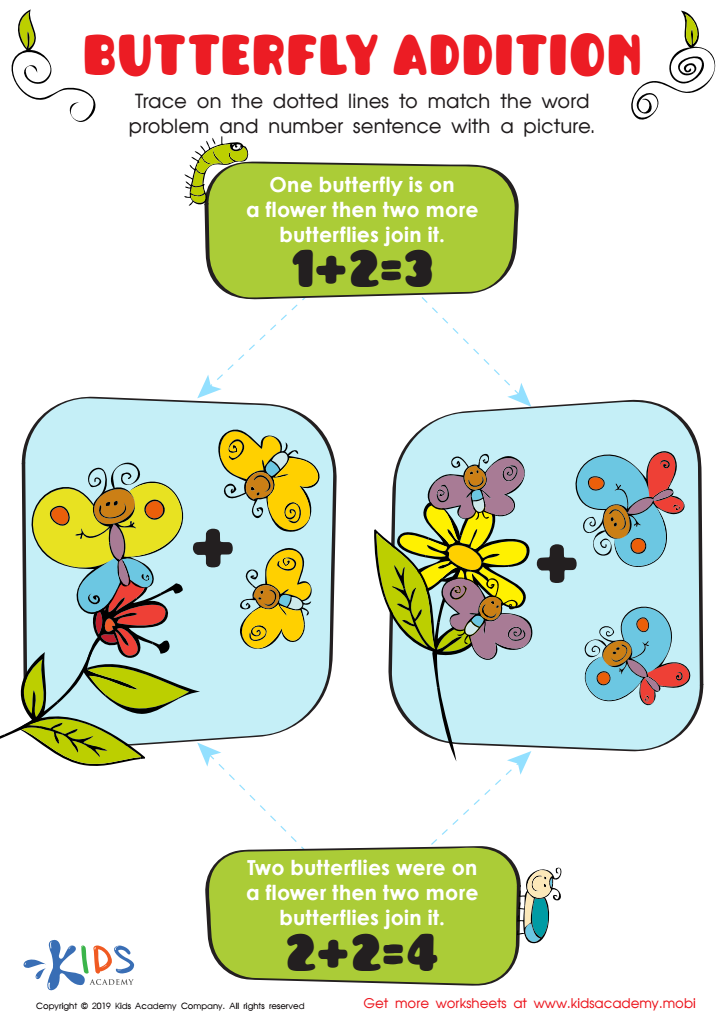
Butterfly Addition Worksheet
 Assign to My Students
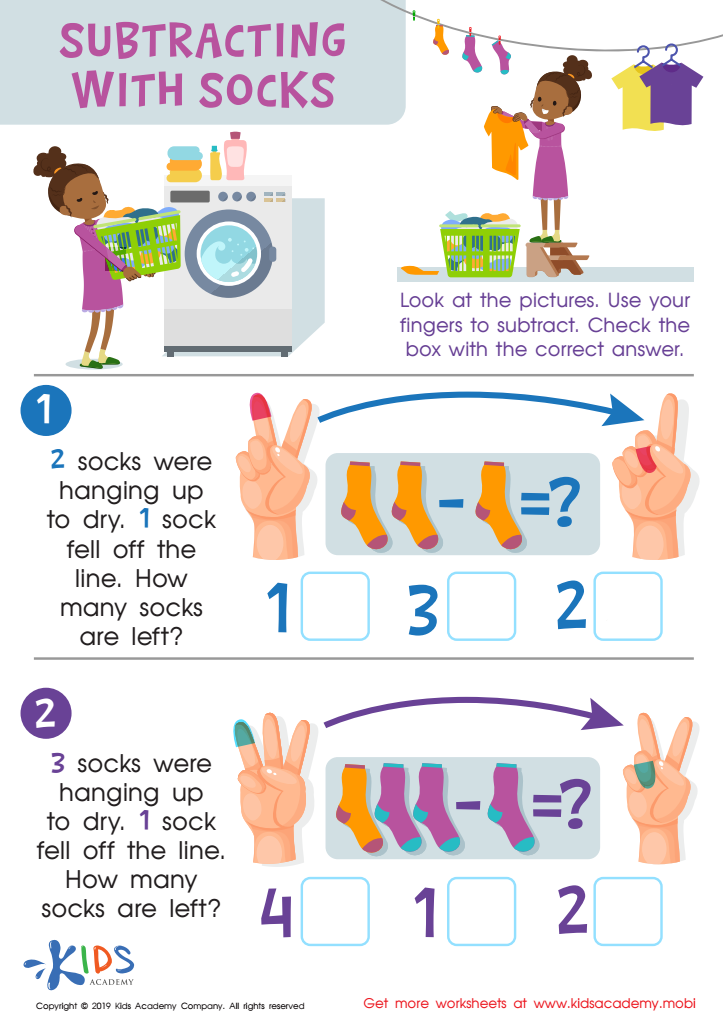
Subtracting Socks Worksheet
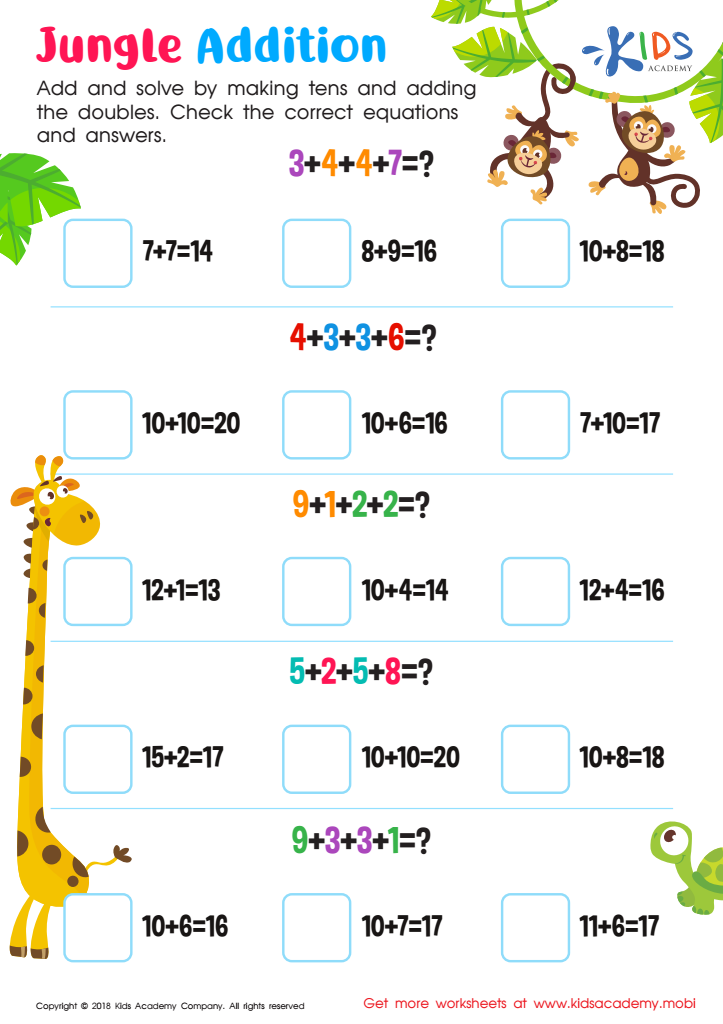
Jungle Addition Worksheet
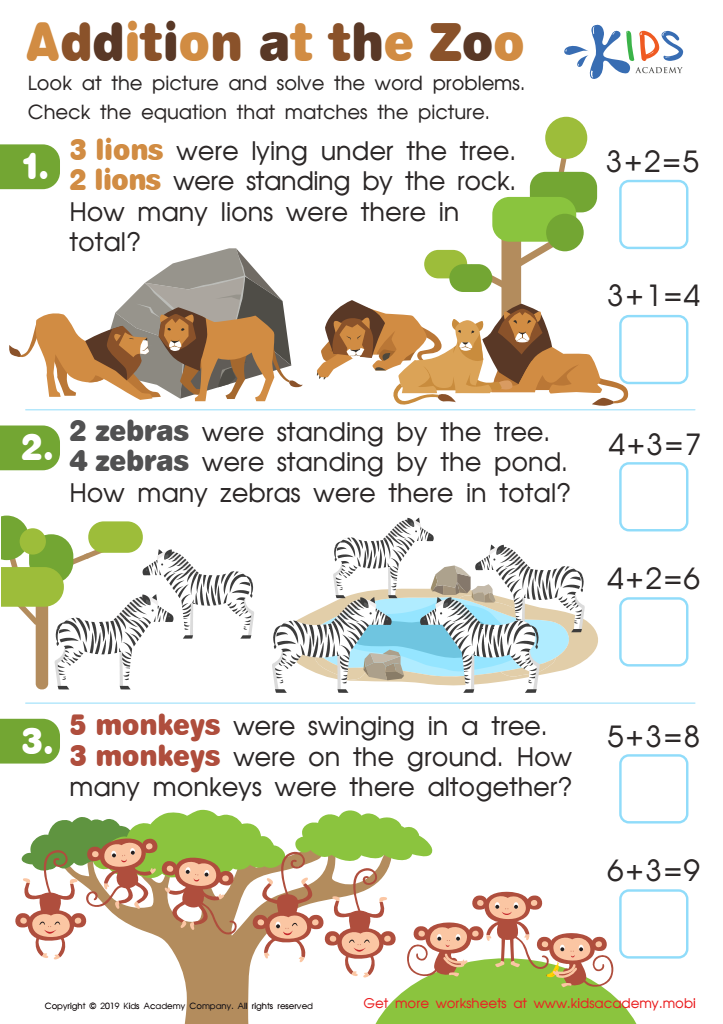
Addition at the Zoo Worksheet








Visual learning techniques for easy addition and subtraction are incredibly beneficial for children ages 7-9, a developmental period when foundational math skills are established. Parents and teachers caring about this approach is crucial because it taps into the visual processing strengths widely present in children at this age, fostering a deeper understanding and retention of mathematical concepts.
Firstly, visual learning makes abstract math concepts more concrete. Using visuals like number lines, colorful charts, and interactive games, children can see the immediate consequences of adding or subtracting numbers, which enhances their comprehension. This differs markedly from rote memorization, which may not engage all types of learners equally.
Secondly, visual aids can reduce math anxiety. Engaging and colorful representations of problems can make math feel like a game rather than a chore. Feeling more confident, children are likely to develop a positive association with math-learning and are encouraged to engage with it more often.
Furthermore, these techniques foster critical thinking. Visualization helps children recognize patterns and relationships between numbers, which is invaluable for more advanced math concepts they will encounter later. By caring about and integrating visual learning strategies, parents and teachers build robust and enthusiastic math learners prepared for future academic challenges. Thus, these tools contribute to a lifelong appreciation and understanding of mathematics.








