
Basic Math Skills Easy Numbers Worksheets for Ages 7-9
5 filtered results
Difficulty Level
Grade
Age
-
From - To
Subject
Activity
Standards
Explore our "Basic Math Skills Easy Numbers Worksheets" designed specifically for children aged 7-9. These fun and engaging worksheets introduce fundamental concepts, helping young learners master essential math skills like addition, subtraction, and number recognition. Tailored to support varying learning styles, each activity promotes critical thinking and problem-solving while boosting confidence in math. Ideal for classroom use or at-home practice, our worksheets offer clear instructions and a variety of problem types to keep your child motivated. Join on the journey to math mastery and watch your child's numerical knowledge grow! Suitable for all skill levels, this resource is your go-to for foundational learning.
Favorites
With answer key
Interactive
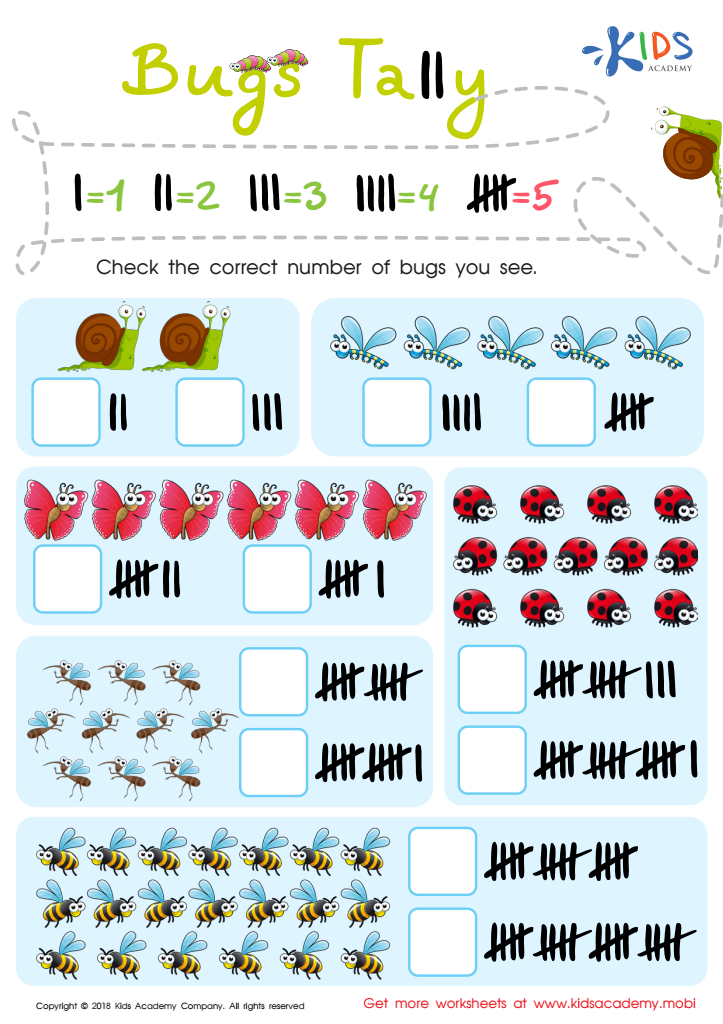
Bugs Tally Worksheet
This fun worksheet uses friendly bugs to help young mathematicians learn numbers and tally marks. They'll gain real-world skills to help with adding, subtracting and counting. Representations will solidify number reasoning, aiding with game playing and more.
 Assign to My Students
Bugs Tally Worksheet
Worksheet
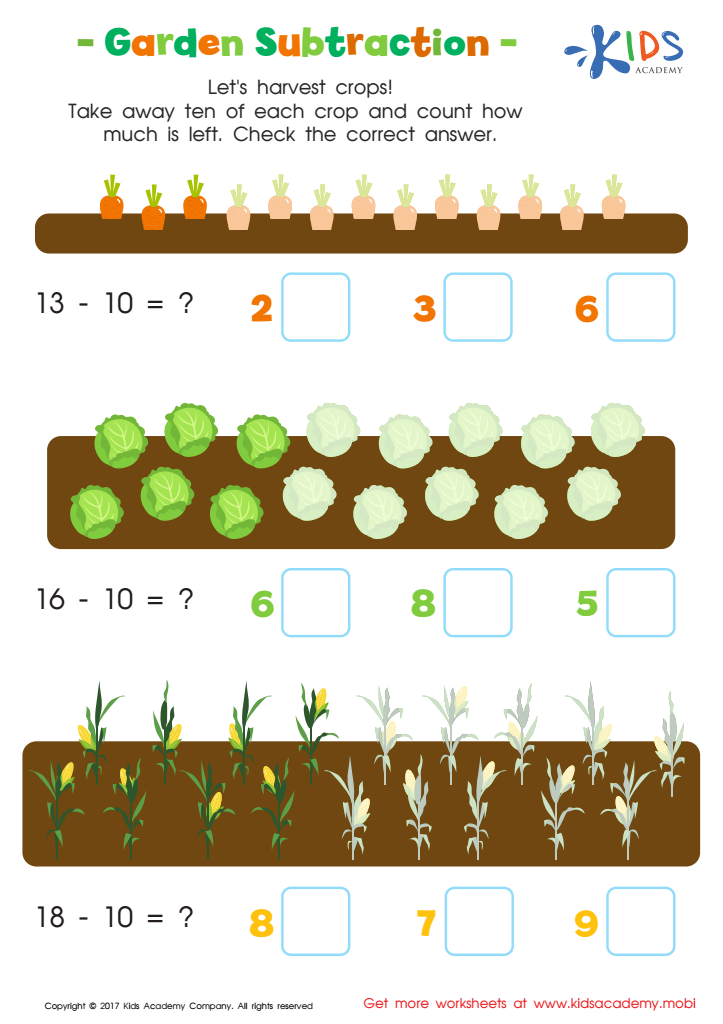
Garden Subtraction Worksheet
Help your kids understand math with this fun, garden-themed subtraction worksheet! Have them read the number sentences and count the veggies in each row. Then, subtract 10 from each row to find the answer. They'll love counting the colorful veggies and solving the problems!
Garden Subtraction Worksheet
Worksheet
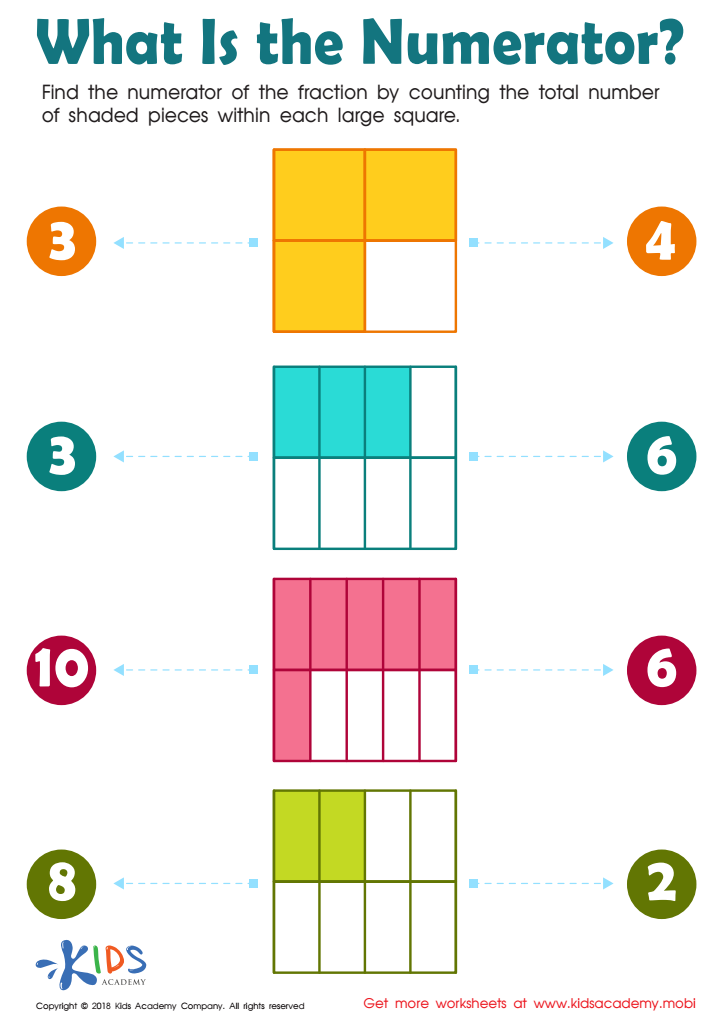
What Is the Numerator? Worksheet
Help your kids learn fractions with this simple worksheet. Explain that the numerator is the number atop another number, then have them count the shaded pieces in each large square to find the numerator of the fraction. This activity is perfect for young kindergartners starting out with fractions.
What Is the Numerator? Worksheet
Worksheet
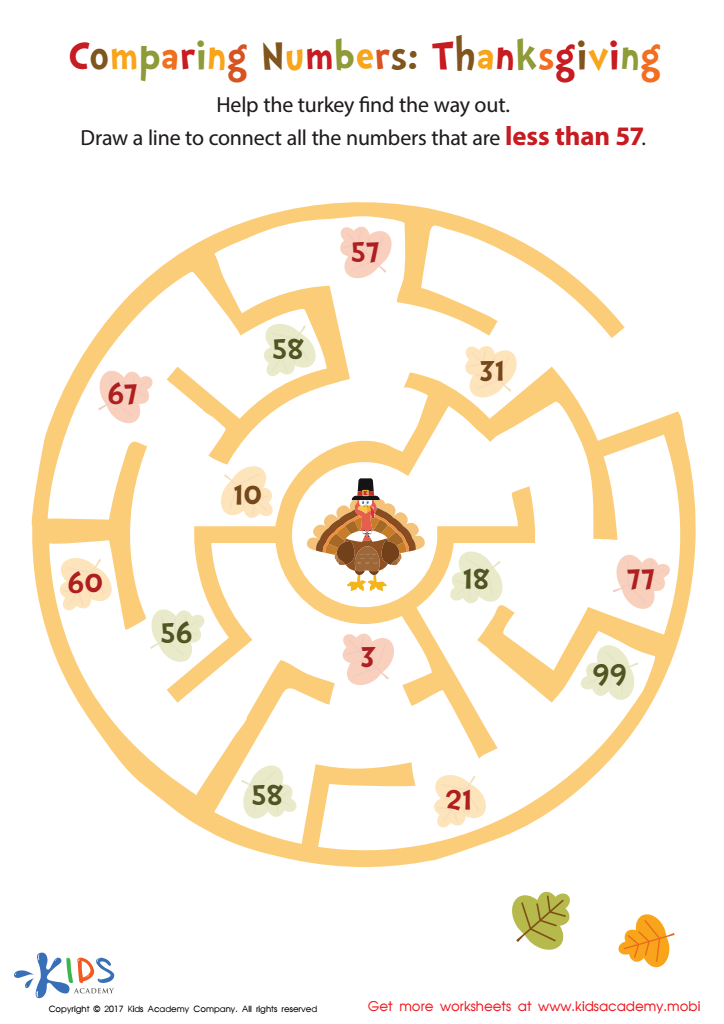
Comparing Numbers Printable
Test your child's number skills with this fun and tricky maze! This Thanksgiving worksheet lets them explore a maze, using numbers less than 57 to get to the tasty goal: A Thanksgiving turkey! Develop their number sense in a fun and engaging way!
Comparing Numbers Printable
Worksheet
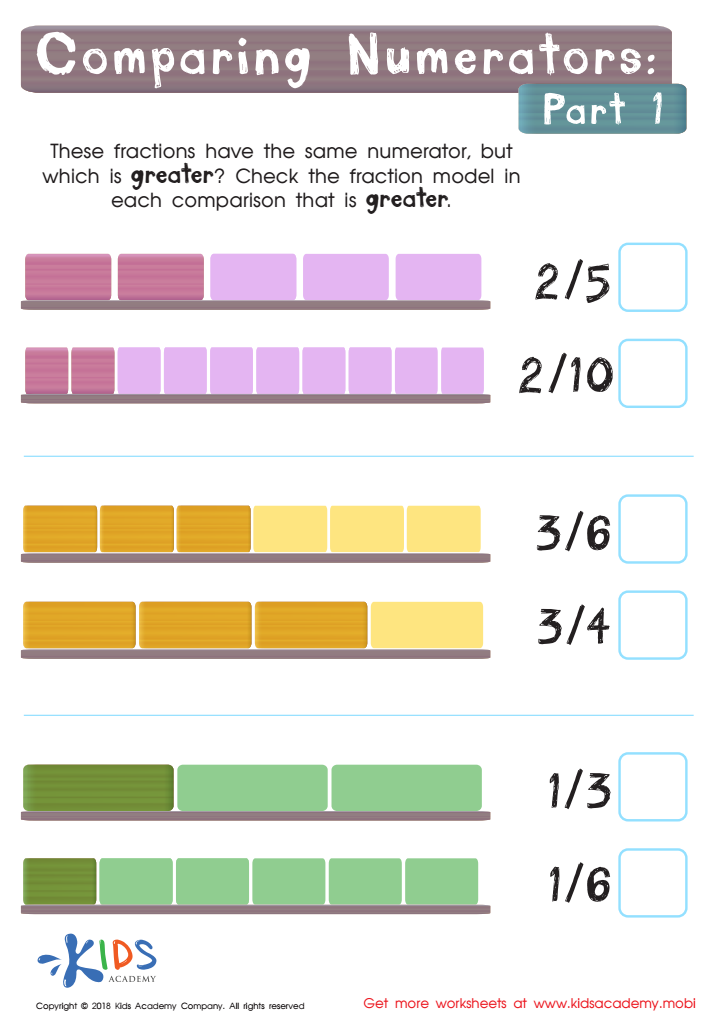
Comparing Numerators Part 1 Worksheet
This worksheet has 3 fractions groups with the same numerator. Your child must determine which fraction is greater in each comparison. Check the fraction model to see the greater one.
Comparing Numerators Part 1 Worksheet
Worksheet
Join Kids Academy for Free
Who is primarily going to use this learning content?







Parents and teachers should prioritize basic math skills for children aged 7-9 because these foundational abilities are crucial for a child’s cognitive development and future academic success. At this age, students typically transition from concrete operational thinking to more abstract reasoning, making it a vital time for them to grasp fundamental concepts such as addition, subtraction, multiplication, and division. Proficiency in these areas not only enhances mathematical understanding but also builds confidence and fosters problem-solving skills that are applicable in real-world scenarios.
Furthermore, mastering basic math at this stage establishes a strong foundation for more complex math in later years, including algebra and geometry. Early intervention can prevent learning gaps that may hinder progress as curricula become more challenging. Engaging with math in fun and practical ways—through games, everyday activities, or visual aids—can make the subject less intimidating and more enjoyable.
Lastly, math literacy is key to everyday life, from budgeting to cooking, making these skills essential for overall life competence. As such, supporting children in building solid math skills fosters resilience and equips them for future challenges, reinforcing the importance of academic and life readiness.








