Counting practice Easy Word Problems Worksheets for Ages 7-9
3 filtered results
-
From - To
Boost your child's math skills with our “Counting Practice Easy Word Problems Worksheets for Ages 7-9!”. These expertly crafted worksheets are designed to engage young learners with relatable scenarios, enhancing their counting and problem-solving abilities. Strategically aligned with educational standards, these worksheets feature fun, age-appropriate problems that help children improve their numerical comprehension and logical thinking. Whether working in class or at home, students will benefit from the engaging, step-by-step exercises that promote confidence in their counting skills. Start today and see how these interactive worksheets can make counting a fun and rewarding experience for your child!
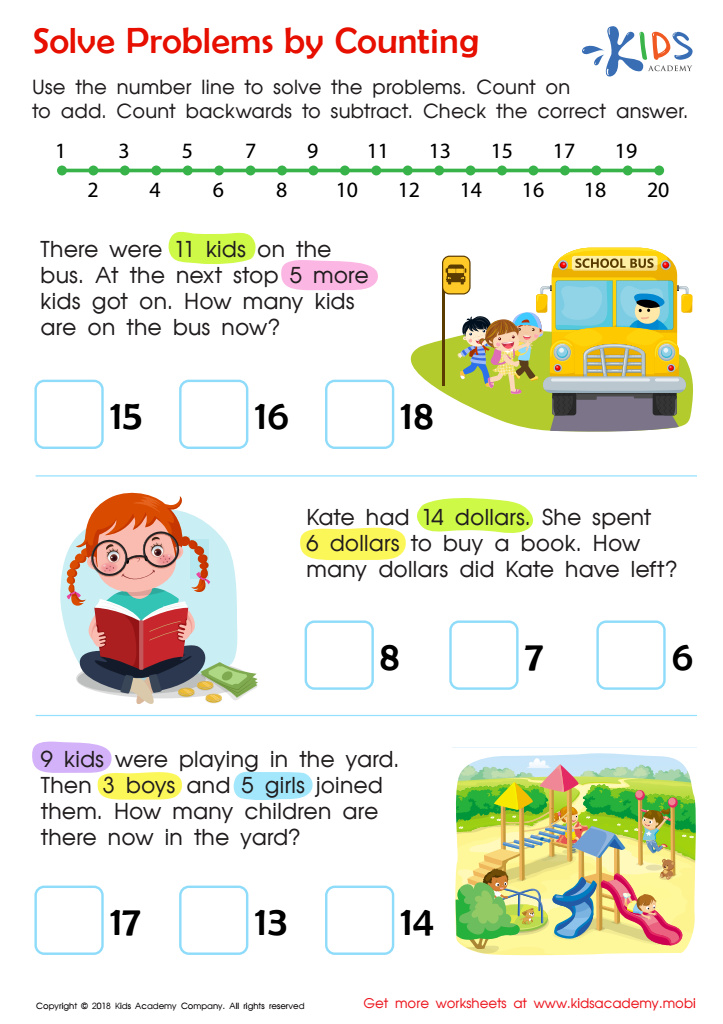
Solve Problems by Counting Worksheet
 Assign to My Students
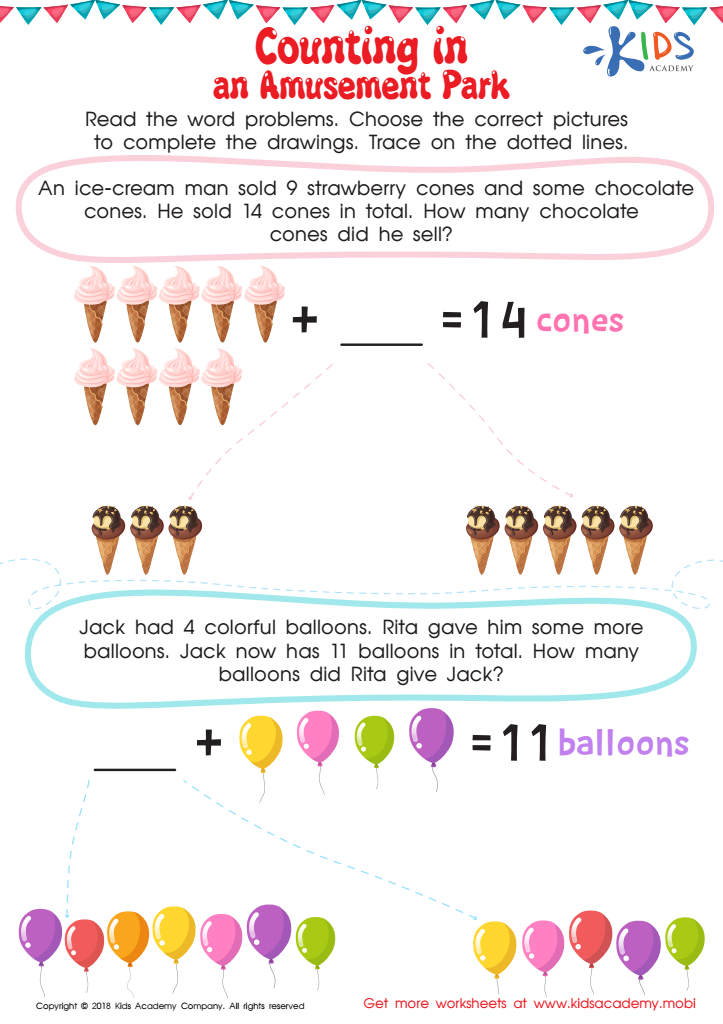
Counting in an Amusement Park Worksheet
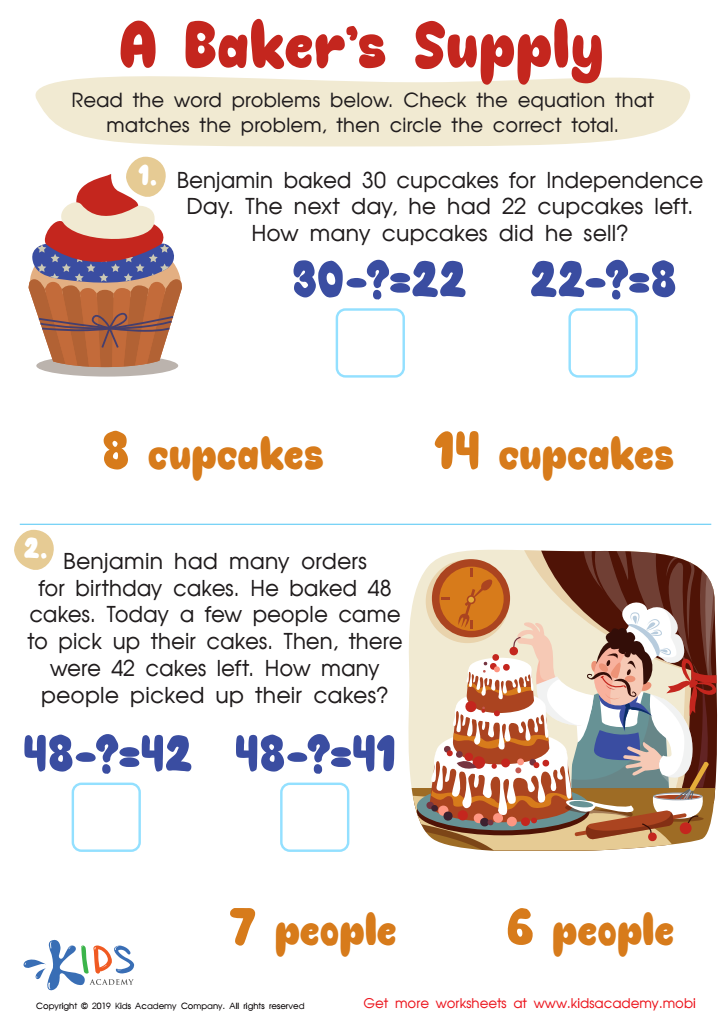
A Baker's Supply Worksheet








Counting practice and engaging with easy word problems are foundational skills that are crucial for children ages 7-9, helping to set the stage for more advanced mathematical reasoning. During these formative years, children are developing their number sense and ability to manipulate numbers, which are critical skills needed for future mathematical success.
Engaging with counting practice sharpens their ability to recognize patterns, understand number relationships, and perform basic arithmetic operations like addition and subtraction. This solid foundation is essential for tackling more complex concepts in later years, such as multiplication, division, fractions, and problem-solving techniques.
Additionally, easy word problems help students learn to apply mathematical concepts to real-world situations. This fosters critical thinking and encourages them to make connections between numbers and their practical applications. Understanding how to translate a verbal scenario into a mathematical equation improves comprehension, promotes logical reasoning, and enhances problem-solving skills.
For parents and teachers, focusing on these skills supports overall cognitive development and builds a students' confidence in their abilities. Furthermore, a strong grasp of basic math early on can reduce anxiety around the subject and foster a positive attitude towards learning, which can have long-lasting academic benefits. Therefore, prioritizing these practices helps equip children with the essential tools they need for continuous success in math and beyond.








