Chess strategy understanding Easy Chess Worksheets for 7-Year-Olds
3 filtered results
Difficulty Level
Grade
Age
-
From - To
Subject
Activity
Standards
Enhance your child's chess skills with our "Chess Strategy Understanding Easy Chess Worksheets" designed specifically for 7-year-olds! These engaging and age-appropriate worksheets are perfect for young learners eager to grasp the fundamentals of chess strategy. Each worksheet features fun illustrations and clear instructions, making it easy for kids to identify chess pieces, understand their functions, and learn essential tactics. Our resources promote critical thinking and problem-solving skills while keeping kids excited about chess. Encourage your child’s strategic thinking and cognitive development with these interactive and educational worksheets suitable for playful learning at home or in the classroom!
Favorites
With answer key
Interactive
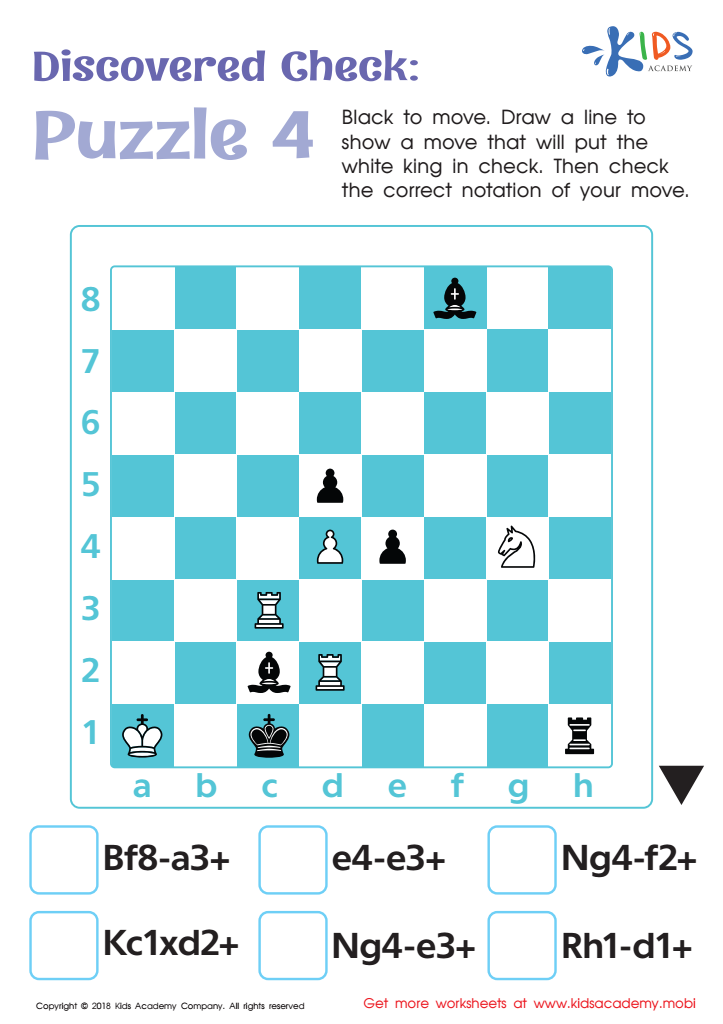
Discovered Check: Puzzle 4 Worksheet
Let your child test their chess skills with this easy worksheet. Have them take control of the black pieces and try to put the white king in checkmate. Ask them to draw a line from their chess piece to the white king, showing the move they'll make, then check the correct answer.
Discovered Check: Puzzle 4 Worksheet
Worksheet

Discovered Check: Puzzle 2 Worksheet
This worksheet exercise will stimulate your child's thinking and let them show off their chess skills. Ask them to use the white pieces and draw a line, pointing to the move that will put the black king in checkmate. Then they should check the correct option. Challenge your child and help them learn more about chess with this fun and educative activity.
Discovered Check: Puzzle 2 Worksheet
Worksheet
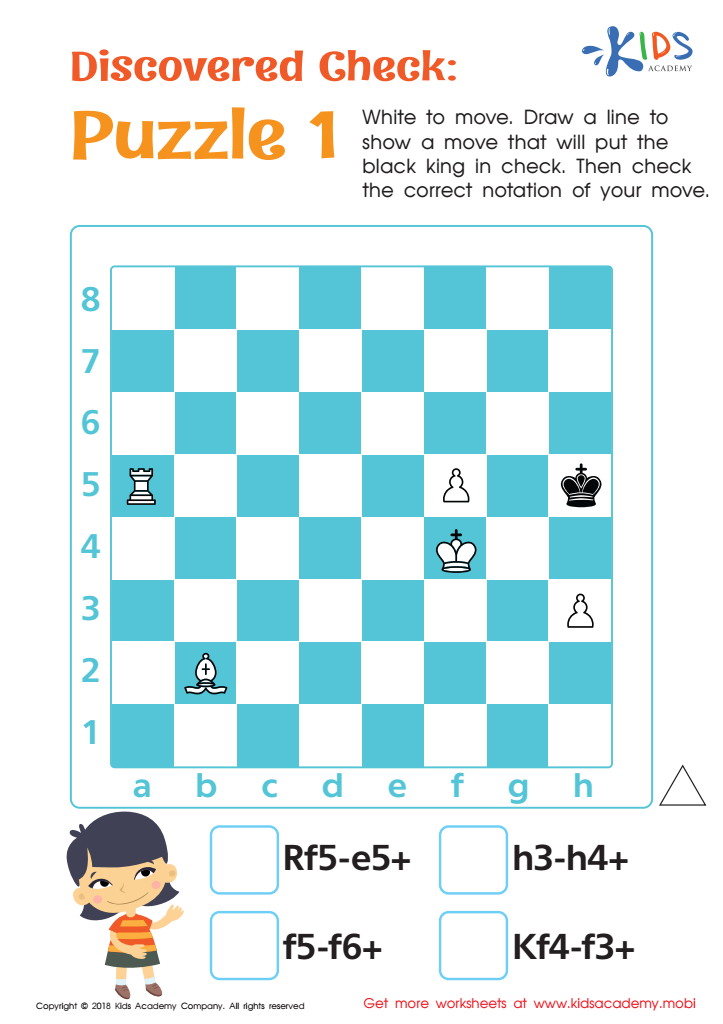
Discovered Check: Puzzle 1 Worksheet
Chess is an excellent way to engage your kids' brains and strengthen thinking skills. This worksheet is ideal for inspiring and growing their interest in the game. Have your child take the white pieces and move them to checkmate the black king. Compare their move against the provided notations to check accuracy.
Discovered Check: Puzzle 1 Worksheet
Worksheet
Join Kids Academy for Free
Who is primarily going to use this learning content?





Chess is more than just a game; it is a tool for cognitive development that can significantly benefit young learners, particularly 7-year-olds. Understanding chess strategy fosters critical thinking, problem-solving, and decision-making skills. When parents and teachers encourage children to grasp easy chess strategies, they engage in recognized techniques such as developing pieces effectively, controlling the center of the board, and planning ahead. These strategies require children to assess situations, anticipate opponents’ moves, and create long-term plans—skills that are transferable to academic contexts and daily life.
Moreover, chess helps improve concentration and patience. As children learn to contemplate multiple outcomes before making a move, they develop the ability to focus on tasks and resist impulsive responses. This mental discipline is crucial not only in the game of chess but also in their schoolwork and interpersonal relationships.
Furthermore, incorporating chess into educational settings can promote social skills through shared learning experiences. Whether it's collaborating in a group setting or competing against a friend, children cultivate camaraderie and sportsmanship.
Investing time in teaching young children chess strategy is an investment in their intellectual, emotional, and social growth, providing them with invaluable tools for success beyond the chessboard.