Map reading skills Easy Worksheets for 7-Year-Olds
3 filtered results
-
From - To
Help your 7-year-old master the basics of map reading with our easy and engaging worksheets specifically designed for young learners. At Kids Academy, we offer a variety of fun and educational resources to introduce children to essential map reading skills. These worksheets feature colorful maps, simple exercises, and interactive activities that make learning enjoyable and straightforward. Kids will learn how to interpret symbols, follow directions, and understand map keys through exciting tasks that enhance their spatial awareness. Perfect for parent-led study sessions or classroom use, these worksheets lay a solid foundation for geography and navigation abilities.
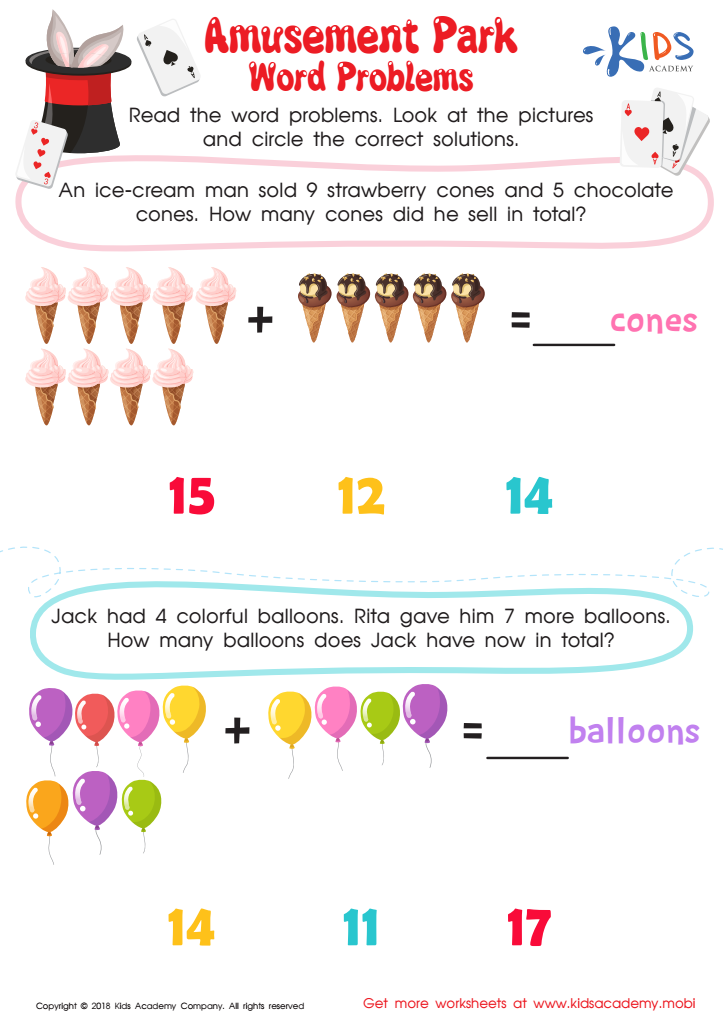
Amusement Park Word Problems Worksheet
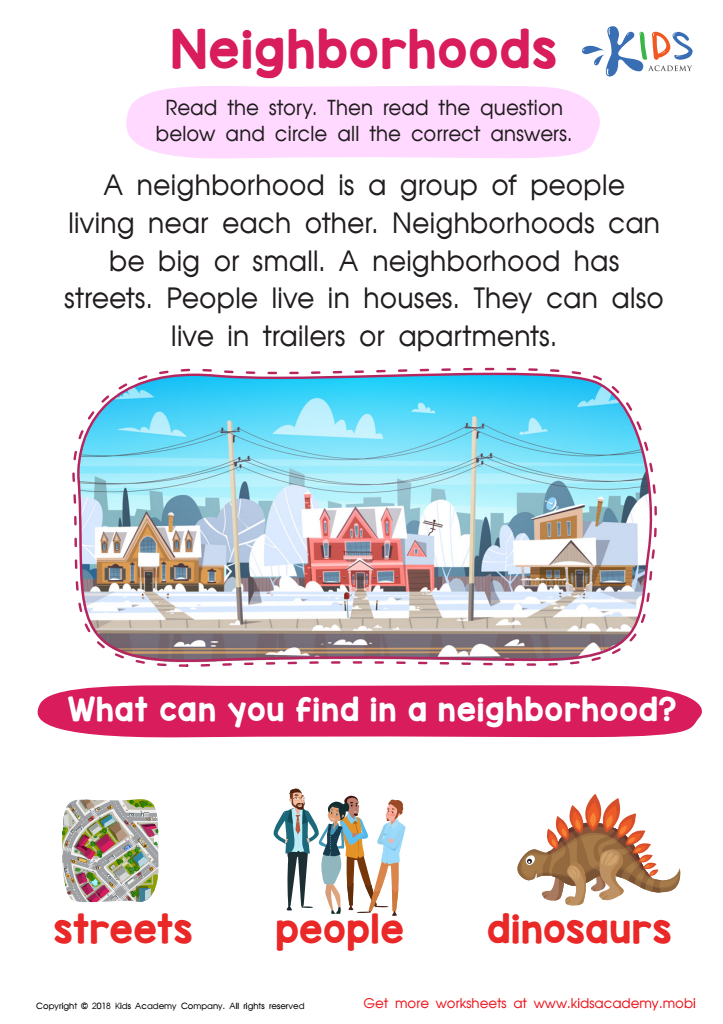
Neighborhoods Worksheet
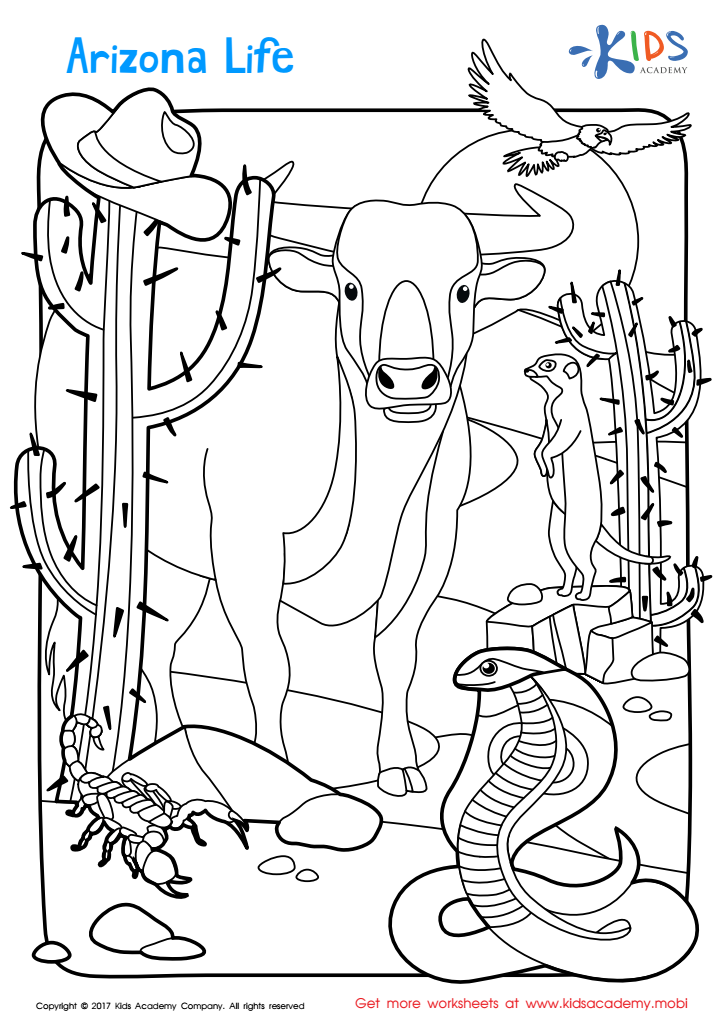
Arizona Coloring Page Worksheet
 Assign to My Students







Map reading skills are essential for 7-year-olds as they contribute significantly to cognitive and practical learning. Firstly, maps introduce children to spatial thinking and geography, helping them understand the world beyond their immediate environment. This enlarges their worldview and nurtures curiosity about different places and cultures. Secondly, maps improve problem-solving abilities. When kids interpret maps and locate destinations, they're applying critical thinking and logical reasoning, fundamental skills for academic success.
Furthermore, map reading is integrative, combining math skills such as measuring distances, understanding coordinates, and interpreting scales with visual literacy, as kids decode symbols and legends. This interdisciplinary approach makes learning diverse and stimulating. Additionally, map-reading can enhance social studies lessons, providing a tangible way to connect history, places, and events.
On a practical note, this skill fosters independence and confidence. As children become proficient map readers, they can navigate spaces more effectively, whether it's a school campus, a museum, or a zoo. This self-sufficiency can build self-esteem and a sense of adventure.
Overall, teaching map reading to seven-year-olds equips them with life skills that are educationally enriching, academically beneficial, and practically empowering. For these reasons, both parents and teachers should prioritize and support the development of this important skill.








