Understanding time Easy Worksheets for 7-Year-Olds
3 filtered results
-
From - To
Welcome to our "Understanding Time" worksheets designed specifically for 7-year-olds! These engaging and easy-to-follow activities help young learners grasp the concept of telling time, reading clocks, and understanding AM and PM. Our thoughtfully crafted worksheets include fun exercises that promote critical thinking and enhance motor skills. From matching clocks to digital times to solving time-related puzzles, these resources make learning about time enjoyable and impactful. Perfect for classroom or home learning, our worksheets support a robust understanding of time, laying a strong foundation for future math skills. Dive into our collection today and watch your child develop a love for learning!
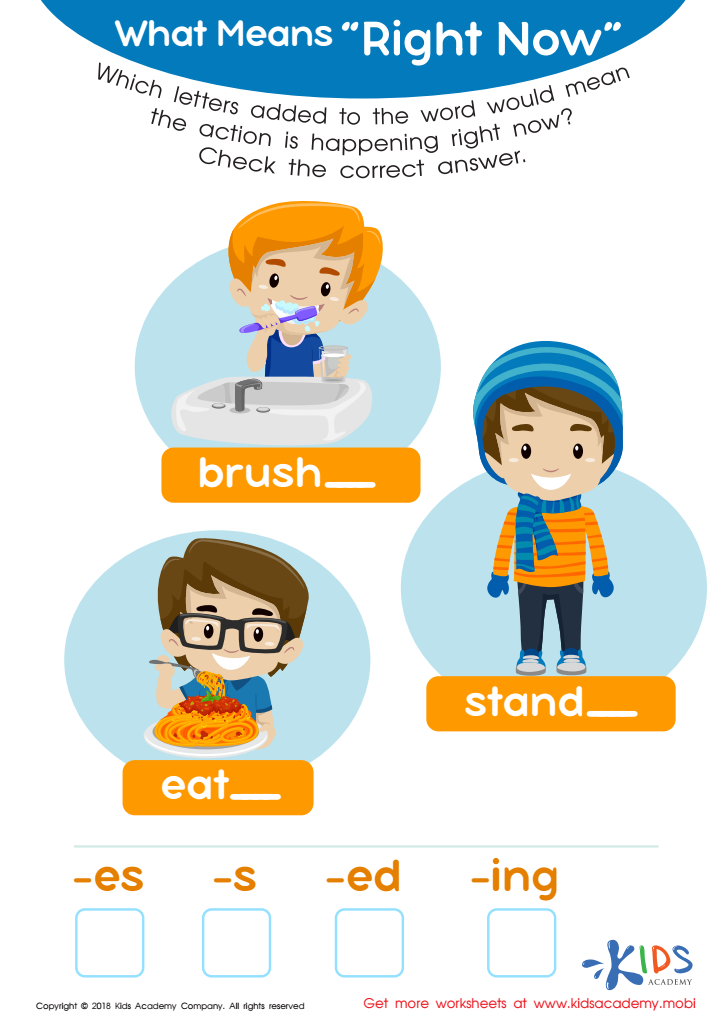
What Means "Right Now" Worksheet
 Assign to My Students
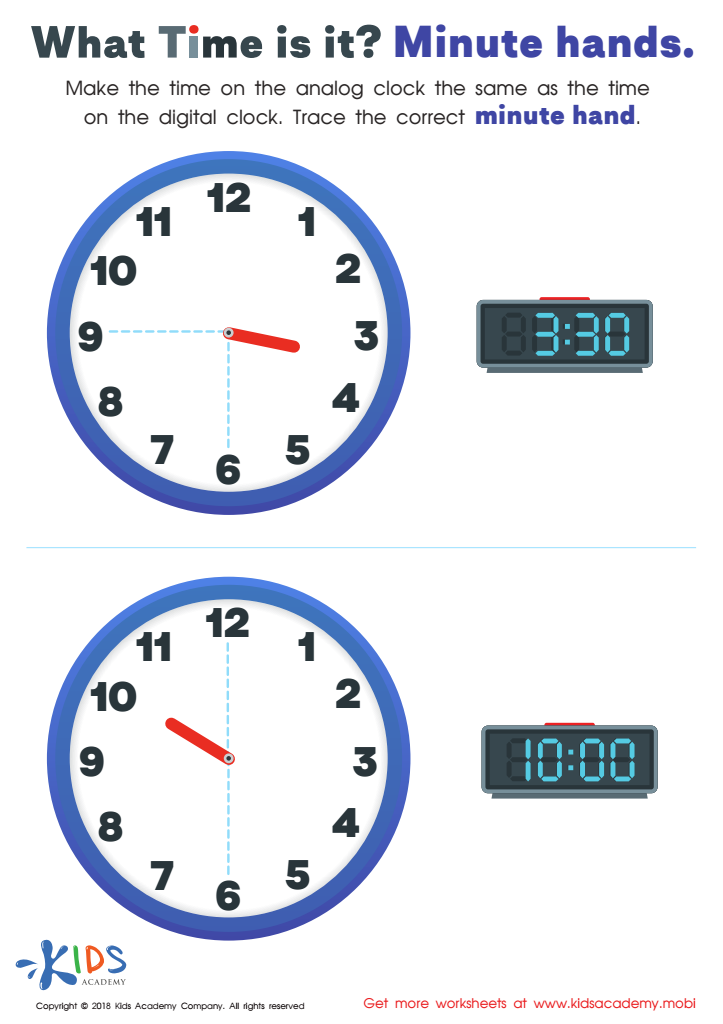
What Time Is it? Minute Hands Worksheet
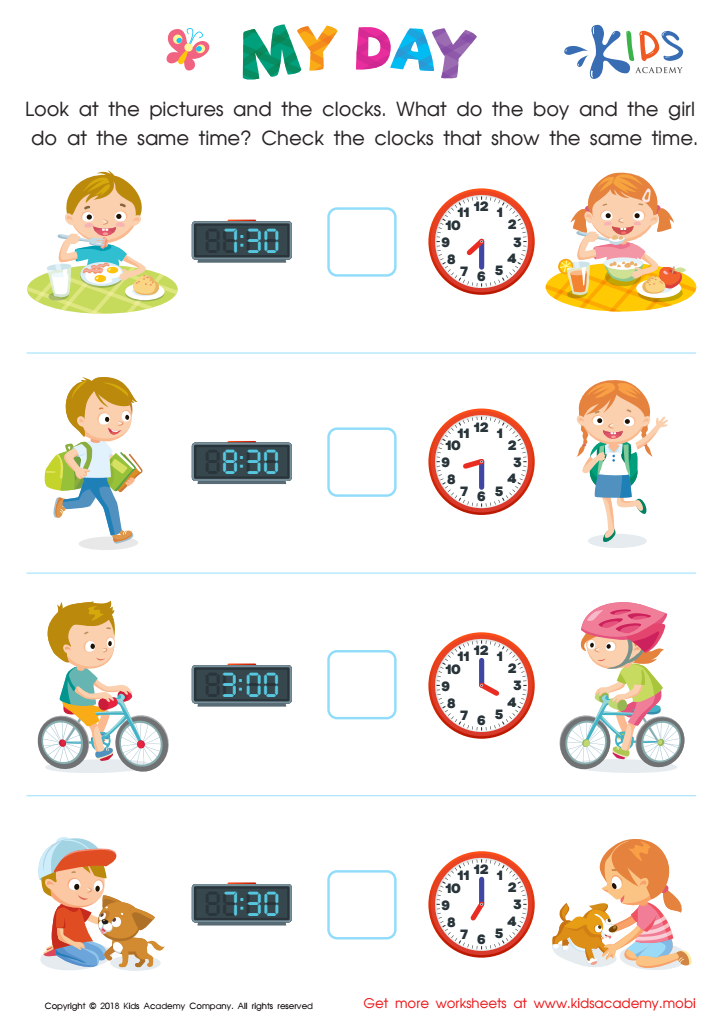
My Day Worksheet








Understanding time is a crucial skill for 7-year-olds as it lays the foundation for their daily routines, academic endeavors, and future independence. When children grasp the concept of time, they can effectively organize their day, manage tasks, and navigate their schedules. This understanding enhances their ability to arrive at school on time, participate in activities, and develop good study habits.
For parents and teachers, it's essential to support children in learning about time because it fosters responsibility and self-discipline. Knowing how to read clocks, differentiate between minutes and hours, and comprehend the significance of time intervals cultivates essential cognitive skills. Additionally, understanding time can enhance a child's social development, as they learn to respect others' schedules and partake in shared activities.
Moreover, teaching time helps instill a sense of patience and anticipation, allowing children to appreciate events and milestones more fully. Emphasizing time-related concepts in a fun and engaging manner, such as through games or storytelling, can also strengthen the parent-child and teacher-student bond. Overall, fostering a comprehension of time not only aids academic success but also contributes to holistic social and emotional growth.








