Fine Motor Skills Easy Fractions of Shapes Worksheets for 7-Year-Olds
4 filtered results
-
From - To
Enhance your 7-year-old's learning experience with our Fine Motor Skills Easy Fractions of Shapes Worksheets! These engaging printable worksheets are designed to help children grasp the concept of fractions while developing crucial fine motor skills. Each worksheet features colorful shapes that encourage kids to cut, paste, and manipulate, making math fun and interactive. As they explore fractions, they’ll strengthen hand-eye coordination and dexterity, essential for their academic growth. Perfect for classroom use or at-home learning, our worksheets make math approachable and enjoyable, fostering a lifelong love for learning. Download now and watch your child thrive in both math and fine motor skills!
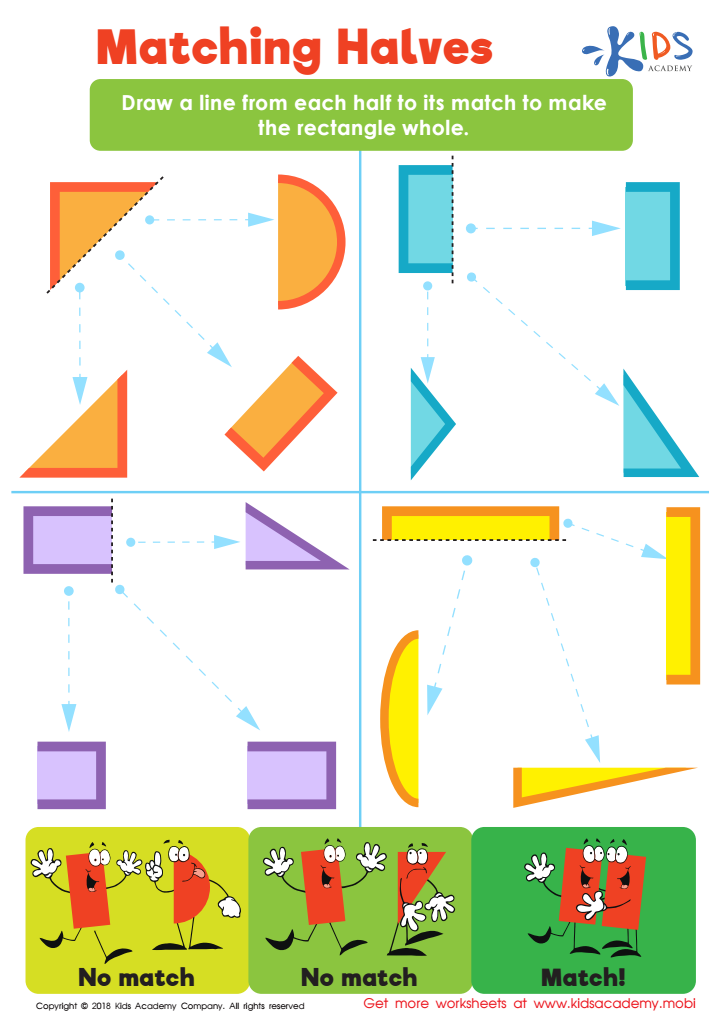
Matching Halves Worksheet
 Assign to My Students
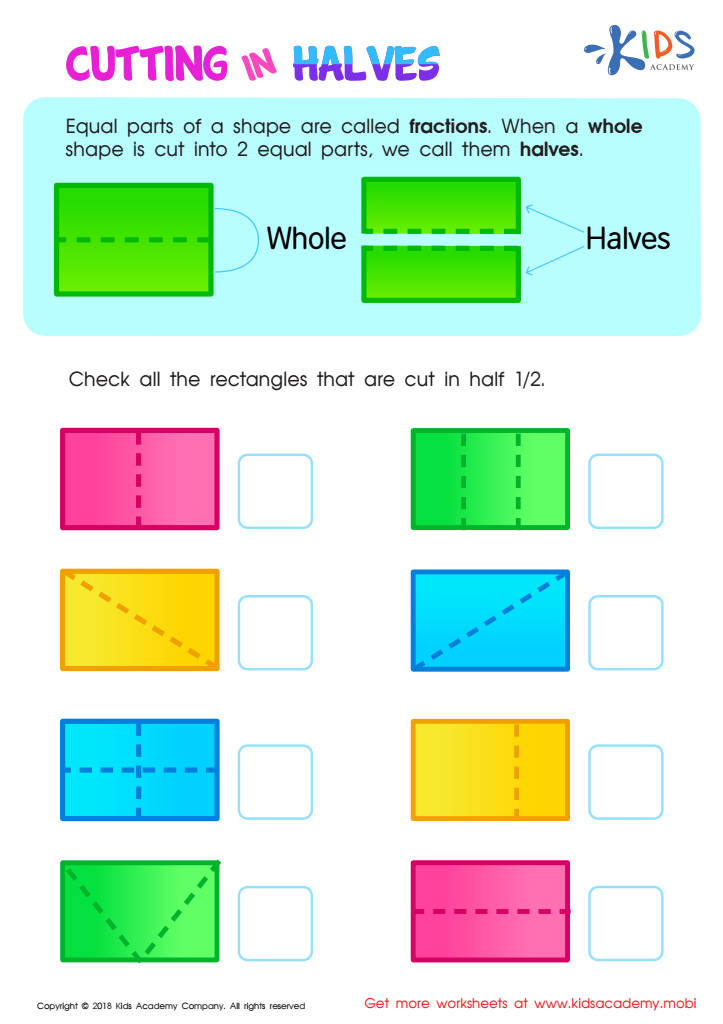
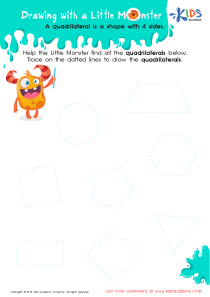
Cutting in Halves Worksheet
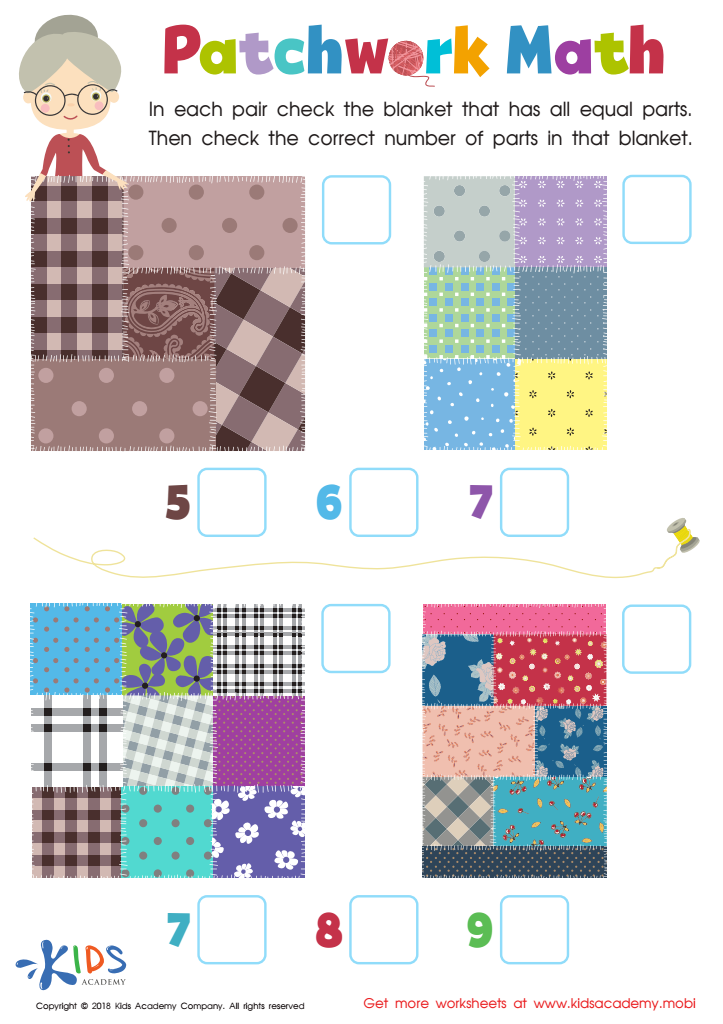
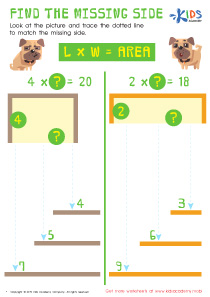
Patchwork Math Worksheet
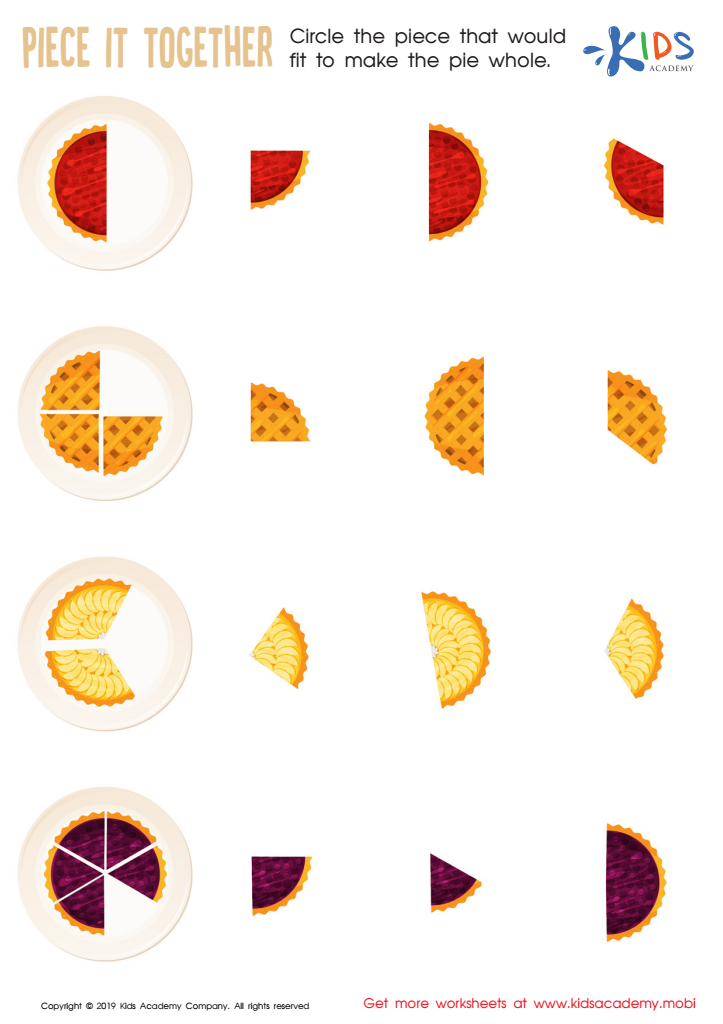
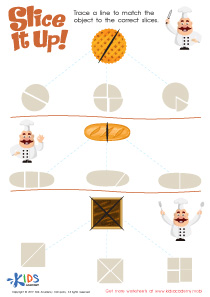
Piece it together Worksheet








Fine motor skills are pivotal for young children's overall development and learning, particularly in activities involving precise movements like writing, drawing, or handling small objects. At around age seven, children are often introduced to concepts like fractions, often illustrated through shapes like circles, squares, or triangles. Mastering fine motor skills not only empowers children to manipulate materials comfortably but also enhances their ability to engage meaningfully with academic content.
When learning about easy fractions of shapes, such as dividing a circle into halves or quarters, children need to physically interact with shapes, whether by cutting, coloring, or folding. These activities demand the use of fine motor skills, thus supporting the development of hand-eye coordination and dexterity. Moreover, fine motor proficiency allows children to express their understanding of such mathematical concepts creatively and confidently.
Additionally, teachers and parents should prioritize these skills as they form a foundation for future learning. Whether it's using scissors, writing neatly, or completing math problems, strong fine motor abilities significantly influence a child's success in academic and everyday activities. Therefore, fostering these skills through engaging activities around fractions becomes essential for holistic child development.