
Visual Learning Easy Math Worksheets for 7-Year-Olds
4 filtered results
Difficulty Level
Grade
Age
-
From - To
Subject
Activity
Standards
Discover tailored easy math worksheets designed specifically for 7-year-olds, focusing on visual learning to enhance understanding and retention. Our engaging, visually-appealing materials help young learners grasp essential math concepts such as addition, subtraction, patterns, and geometry through colorful illustrations and practical exercises. Perfect for building a strong foundation in mathematics, these worksheets aim to make learning fun and interactive while catering to varied learning styles. Ideal for parents and teachers seeking effective educational tools, our Easy Math Worksheets for 7-Year-Olds ensure a meaningful and enjoyable learning experience for every child.
Favorites
With answer key
Interactive
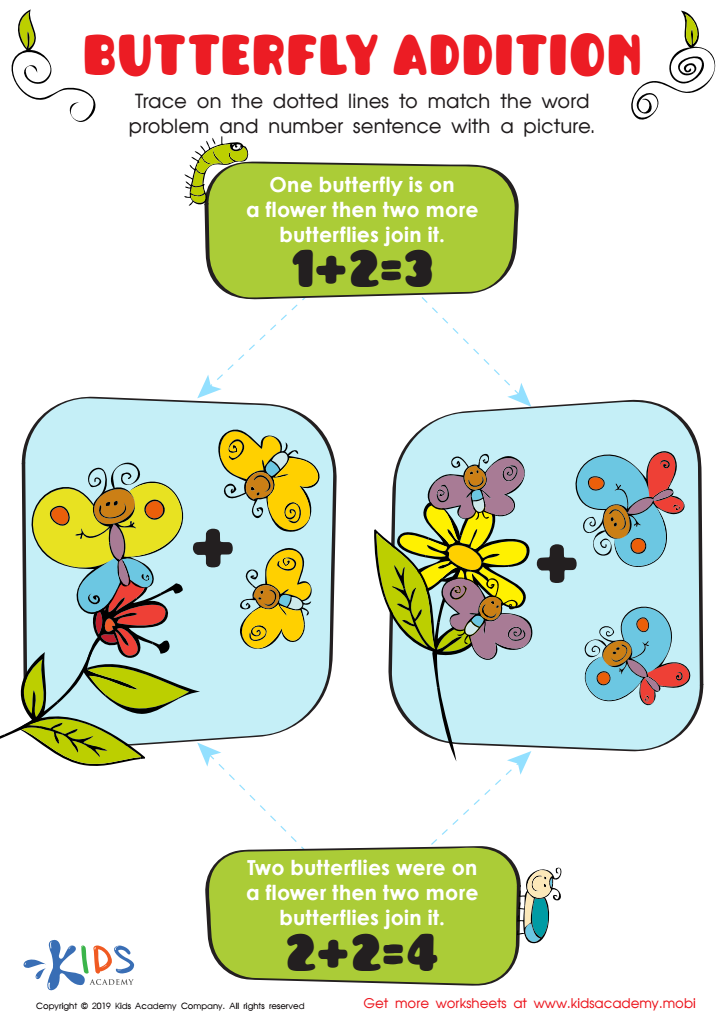
Butterfly Addition Worksheet
This tracing sheet is great for kids to work on math skills and have fun too. Read the word problems to them, then help them trace the dotted lines to match the problem and number sentence to a picture. Not only is it educational, it's beautiful too - your kids will love learning about butterflies!
 Assign to My Students
Butterfly Addition Worksheet
Worksheet
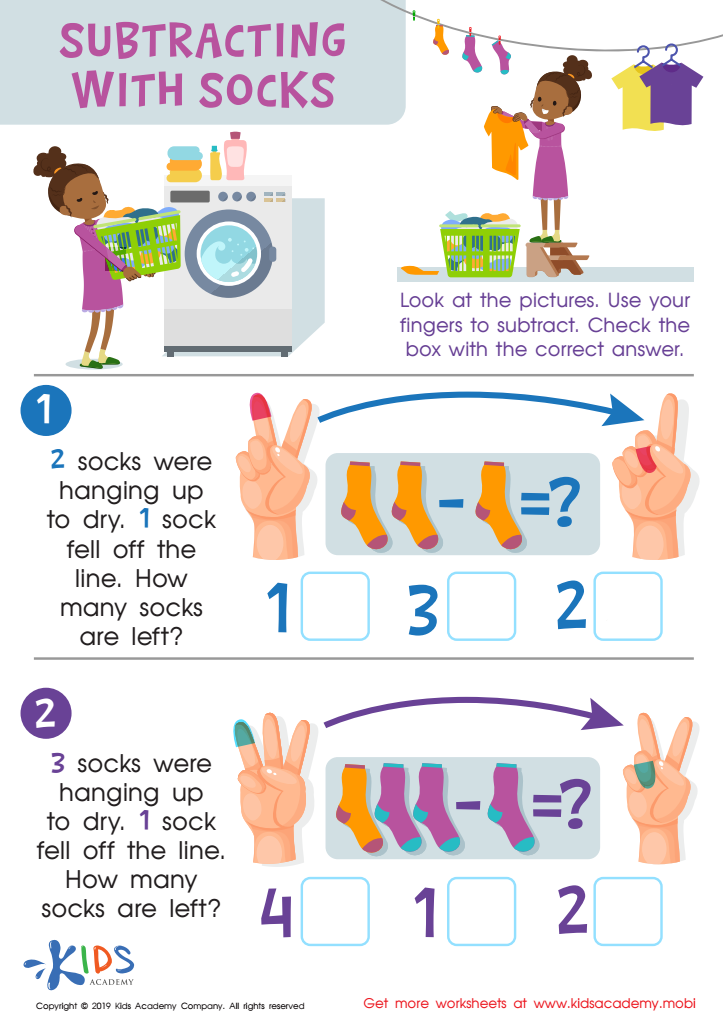
Subtracting Socks Worksheet
Before beginning this exercise with your children, warm them up with a counting game. If math is not their favorite subject, use this worksheet. Help them read the two word problems, then use their fingers to count and subtract. Ask them to select the correct answer and check the box.
Subtracting Socks Worksheet
Worksheet
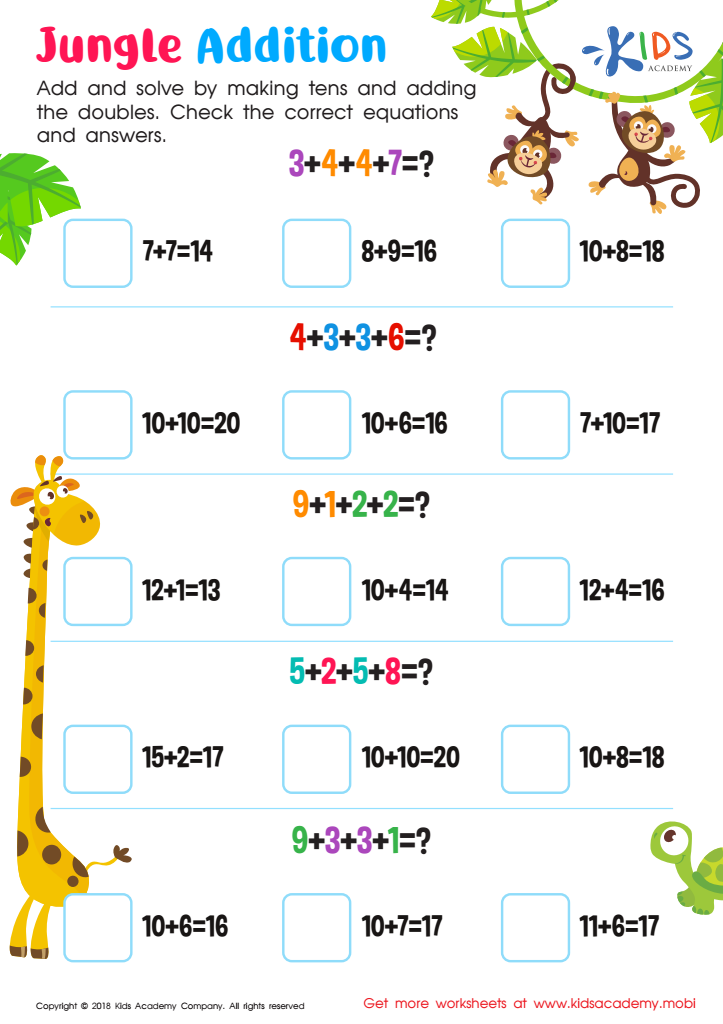
Jungle Addition Worksheet
With this worksheet, kids can use the strategies of making tens and adding doubles to add numbers with more than three addends. They'll practice choosing the right method and become more confident in their calculations, enabling quicker, more efficient computation.
Jungle Addition Worksheet
Worksheet
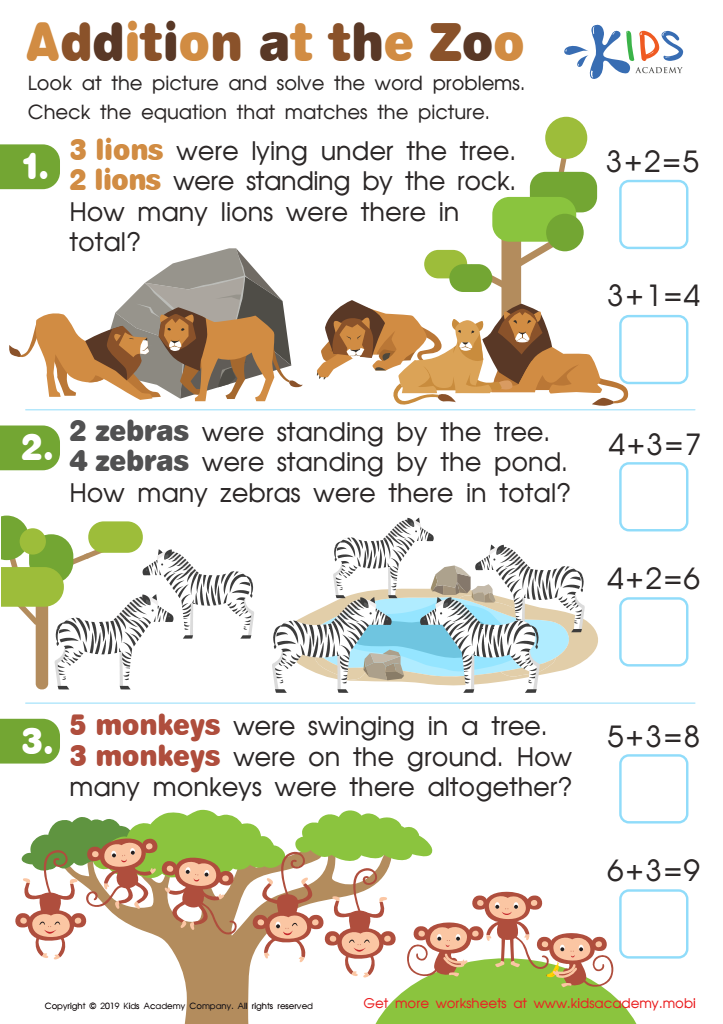
Addition at the Zoo Worksheet
Visit the zoo with your kids and point out all the different animals. Ask them to name their favorites and identify animals on a worksheet. Challenge them to solve word problems related to the pictures. Ask them for the equation that fits the picture and check the answer.
Addition at the Zoo Worksheet
Worksheet
Join Kids Academy for Free
Who is primarily going to use this learning content?








Visual Learning Easy Math for 7-year-olds is an invaluable resource for both parents and teachers. At this age, children are developing foundational math skills that are crucial for their future academic success. Visual learning supports this developmental stage by making abstract concepts more concrete. Human brains are naturally wired to process and remember visual information more effectively than text or spoken word. By incorporating visual aids such as diagrams, charts, and interactive tools, Visual Learning Easy Math can help young learners grasp complex ideas like geometry, fractions, and basic arithmetic much quicker and more easily.
Furthermore, visual learning caters to different learning styles. Not all children learn in the same way, and visual aids can be an excellent bridge for those who struggle with traditional methods of learning. By seeing math problems broken down visually, children can develop a deeper understanding of the material and build confidence in their abilities.
Another reason for the effectiveness of visual learning tools is their ability to capture and retain children’s attention. Animated lessons and colorful illustrations can make learning feel like play rather than work, resulting in a more engaged and motivated student.
By incorporating Visual Learning Easy Math into the curriculum, parents and teachers can offer a more inclusive and effective learning experience, ensuring that children not only understand math but also enjoy it.








