Visual perception Easy Math Worksheets for 7-Year-Olds
4 filtered results
-
From - To
Boost your 7-year-old's math skills with our Visual Perception Easy Math Worksheets! Designed to enhance visual recognition and critical thinking, these worksheets combine fun and learning through engaging activities. Children will practice identifying patterns, shapes, and spatial relationships, essential for solving math problems. Our user-friendly format encourages independent learning and builds confidence. These worksheets are perfect for homeschooling or supplementary practice, allowing kids to explore math in a stimulating way. With entertaining illustrations and age-appropriate challenges, your child will enjoy developing crucial skills that lay the foundation for future academic success. Explore our collection and watch your young learner thrive!
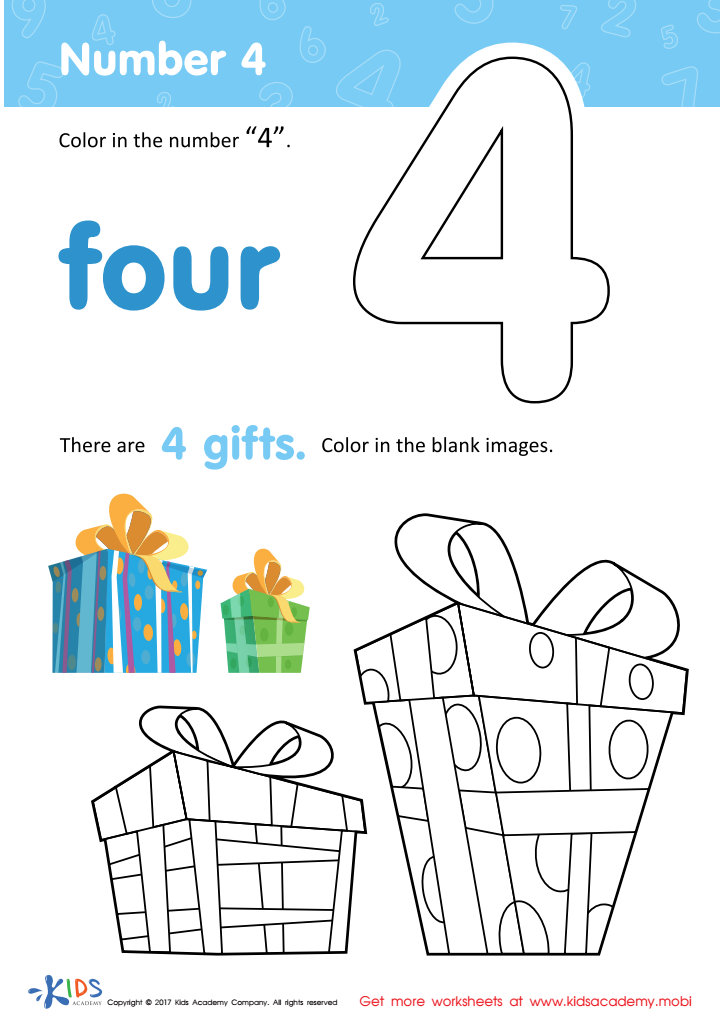
Number 4 Printable
 Assign to My Students
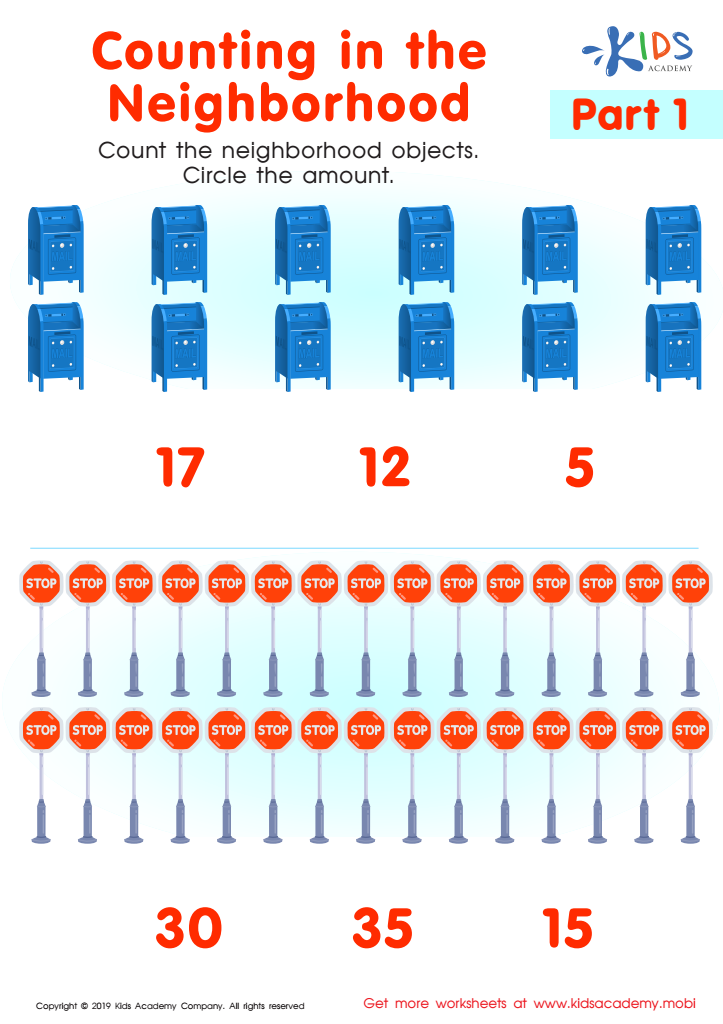
Counting in the Neighborhood Part1 Worksheet
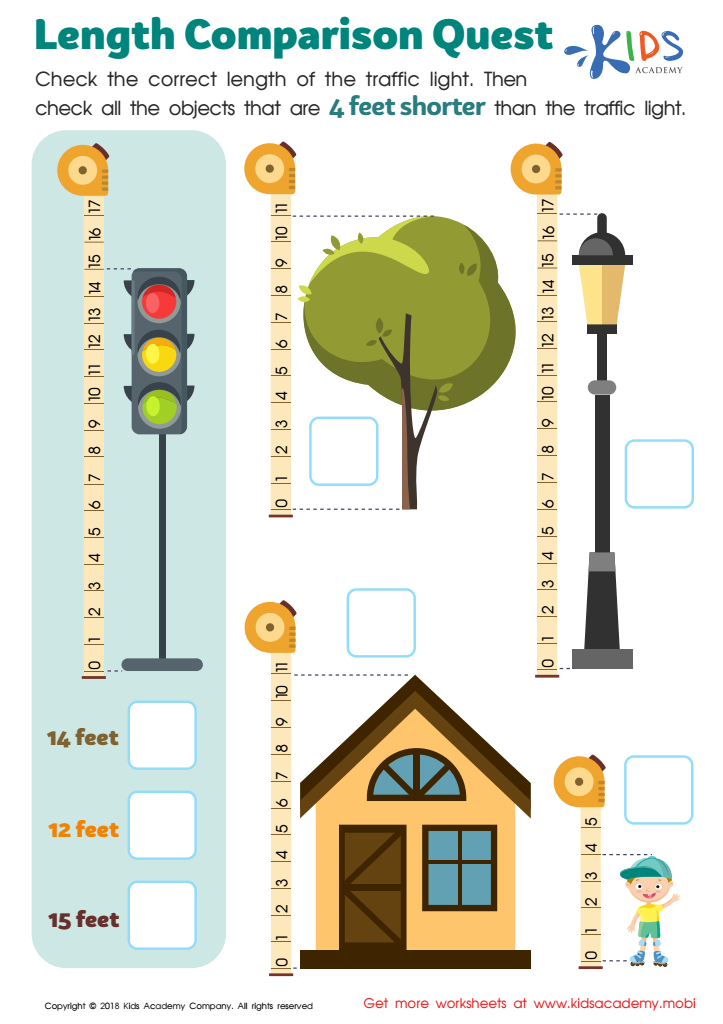
Length Comparison Quest Worksheet
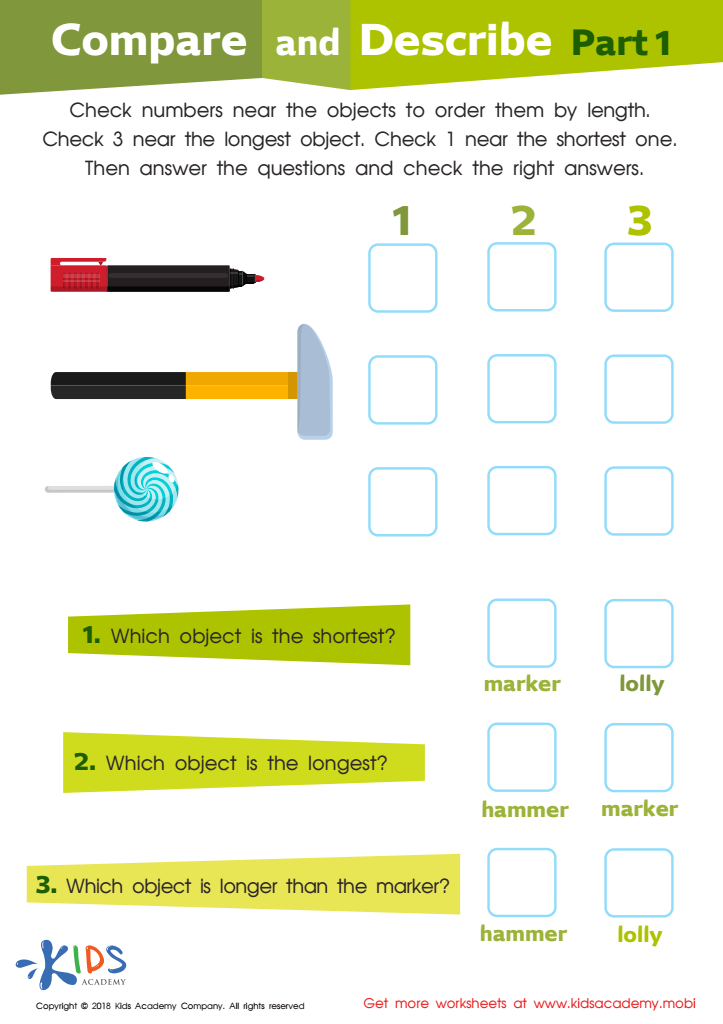
Compare and Describe: Part 1 Worksheet








Visual perception is a critical skill that young children, particularly those around seven years old, use daily in their learning experiences. Parents and teachers should prioritize visual perception in subjects like math because it significantly influences a child’s ability to understand numerical concepts and process visual representations of information.
When children develop strong visual perception skills, they can better interpret shapes, patterns, and spatial relationships, which are essential for grasping mathematical ideas. For instance, recognizing different geometric shapes and understanding their attributes enhances problem-solving abilities and improves their ability to work with visual aids such as graphs and charts.
Moreover, visual perception aids in mental math skills. Children who are adept in visual perception can "see" solutions in their minds and estimate answers without relying solely on fingers or calculators. This ability fosters confidence and encourages a positive attitude toward learning.
Furthermore, visual perception promotes critical thinking and cognitive development. Activating these skills early helps children build a solid foundation for future mathematical learning and interconnected subjects. By focusing on activities that enhance visual perception, parents and teachers can support a child's academic journey, enhancing their overall learning experience in both math and beyond.








