Fine Motor Skills Easy Reading Non-Fiction Worksheets for 7-Year-Olds
3 filtered results
-
From - To
Enhance your 7-year-old's learning experience with our Fine Motor Skills Easy Reading Non-Fiction Worksheets! Designed to engage young learners, these worksheets combine essential reading comprehension with fun fine motor activities. Each worksheet features age-appropriate non-fiction texts that spark curiosity and encourage exploration of diverse topics. As children read and interact with these materials, they'll practice vital skills such as cutting, gluing, and tracing, fostering both literacy and dexterity. Perfect for home or classroom use, our worksheets are an excellent way to promote independent learning while developing critical fine motor skills. Unlock your child’s potential with our engaging, educational resources!
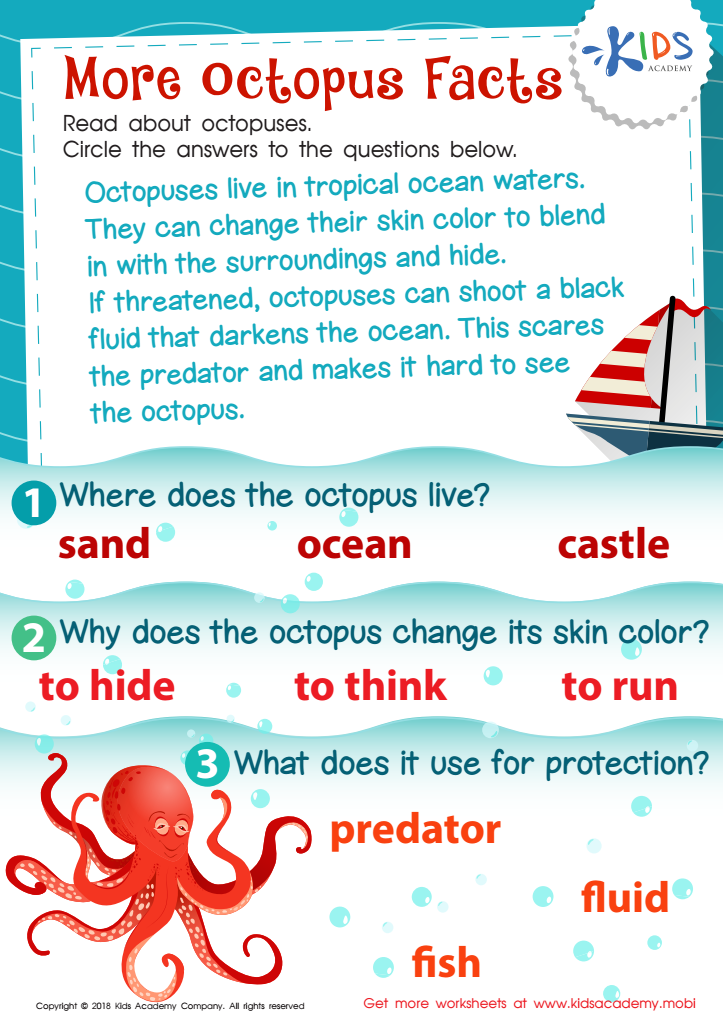
More Octopus Facts Worksheet
 Assign to My Students
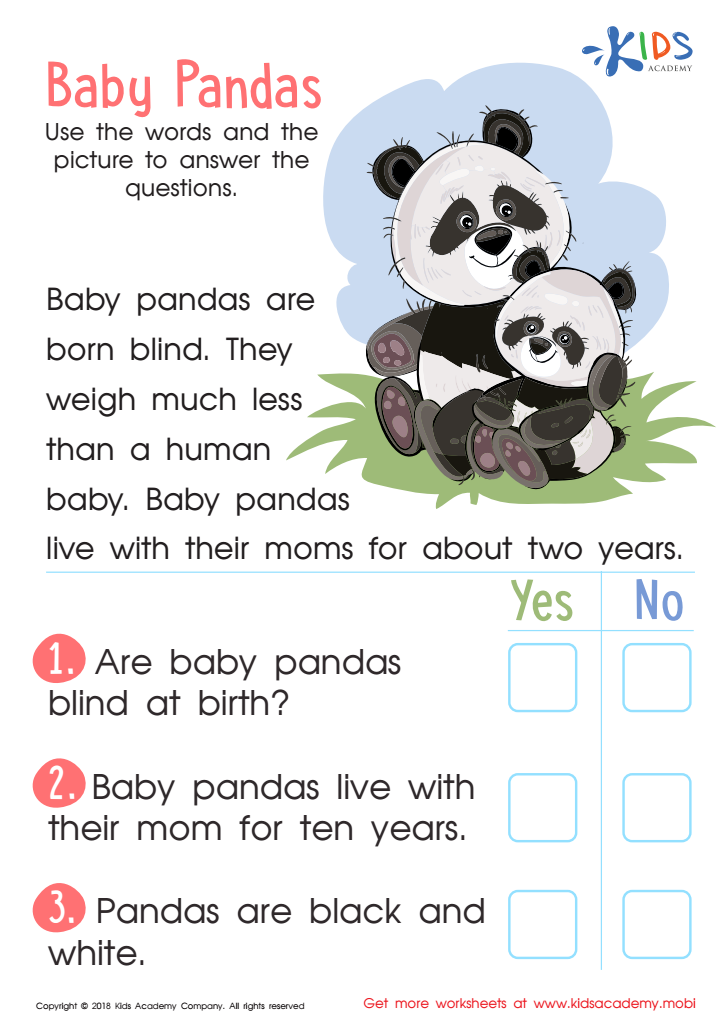
Baby Pandas Worksheet
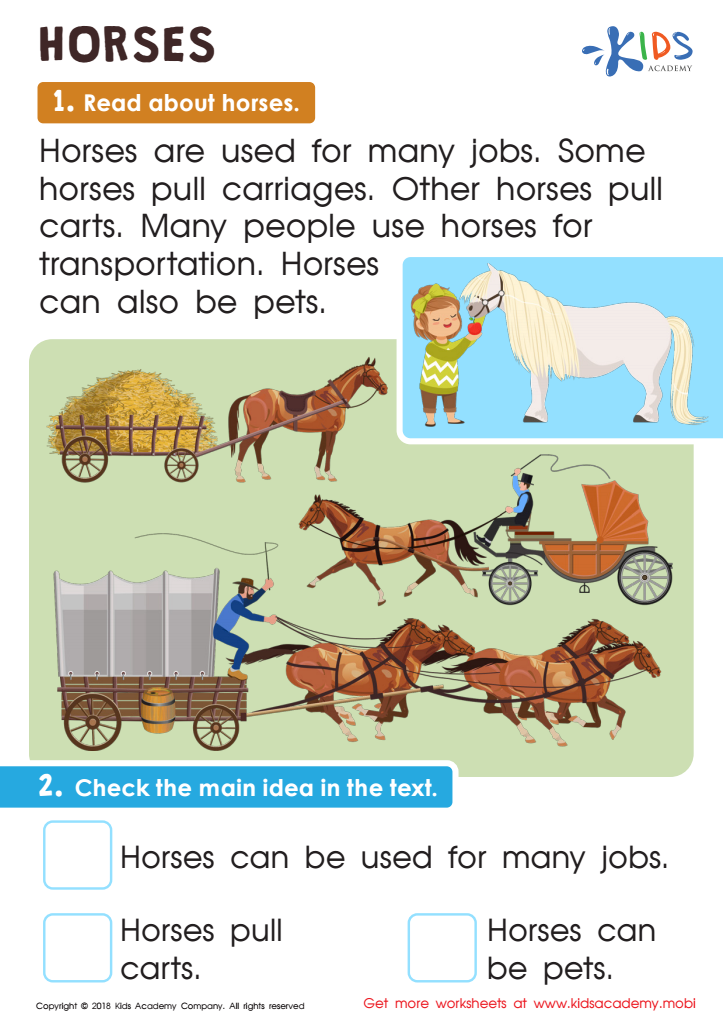
Horses Worksheet








Parents and teachers should prioritize fine motor skills development because these abilities are essential for children's overall growth and day-to-day tasks. Fine motor skills involve the coordination of small muscles in the hands and fingers, enabling children to perform precise movements. By age seven, kids are often expected to execute tasks like writing, drawing, and manipulating small objects, all of which require refined motor skills.
Reading non-fiction texts about fine motor skills can engage children in understanding their own development. Such resources can illustrate activities like cutting, drawing, and crafts, which create engaging opportunities to practice these skills. As children learn about the importance of fine motor skills, they become more motivated to improve them.
Additionally, strong fine motor skills can boost a child's confidence, both academically and socially. They help with tasks ranging from handwriting in school to participating in arts and crafts, fostering creativity and self-expression. By integrating easy-to-read non-fiction resources that focus on fine motor skill activities, parents and teachers can provide informative, engaging, and enjoyable ways to enhance children's learning, ensuring they are well-prepared for the future both in and out of the classroom.







