Understanding life cycles Easy Science Worksheets for 7-Year-Olds
4 filtered results
-
From - To
Discover the wonders of life cycles with our Easy Science Worksheets for 7-Year-Olds! Designed specifically for young learners, these engaging worksheets make understanding life cycles fun and accessible. Each activity guides children through the fascinating stages of growth and development in plants and animals. Kids will love the bright illustrations and simple, interactive exercises that both educate and entertain. Perfect for home or classroom use, these worksheets help students build fundamental science skills while nurturing their natural curiosity. Unlock your child’s potential with our comprehensive, kid-friendly resources on life cycles today!
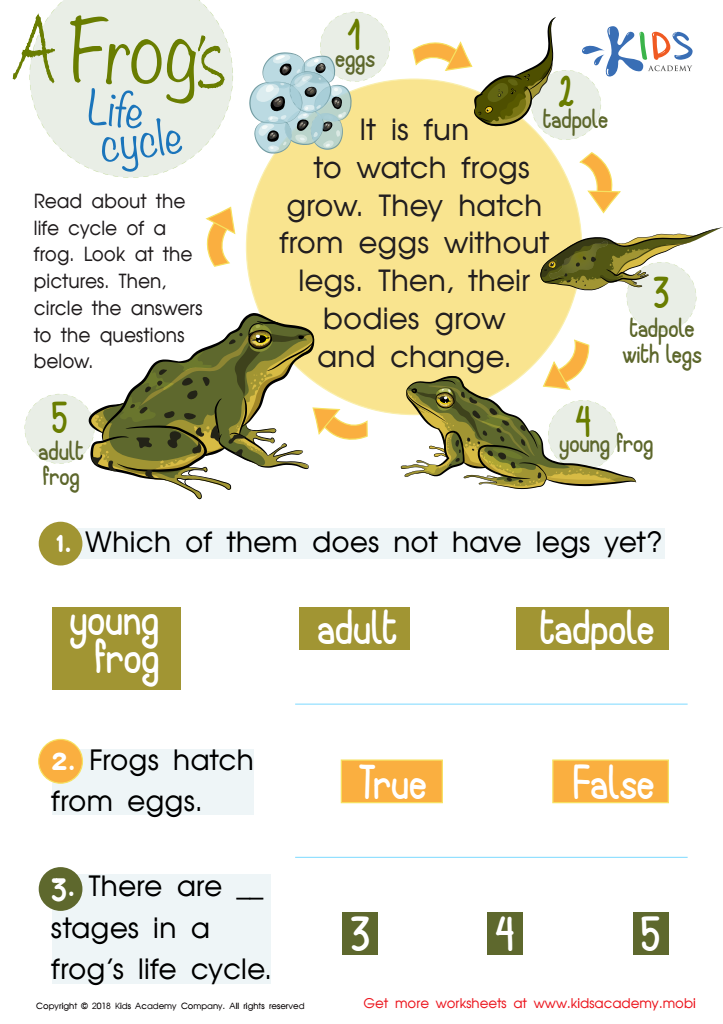
A Frog’s Life Cycle Worksheet
 Assign to My Students
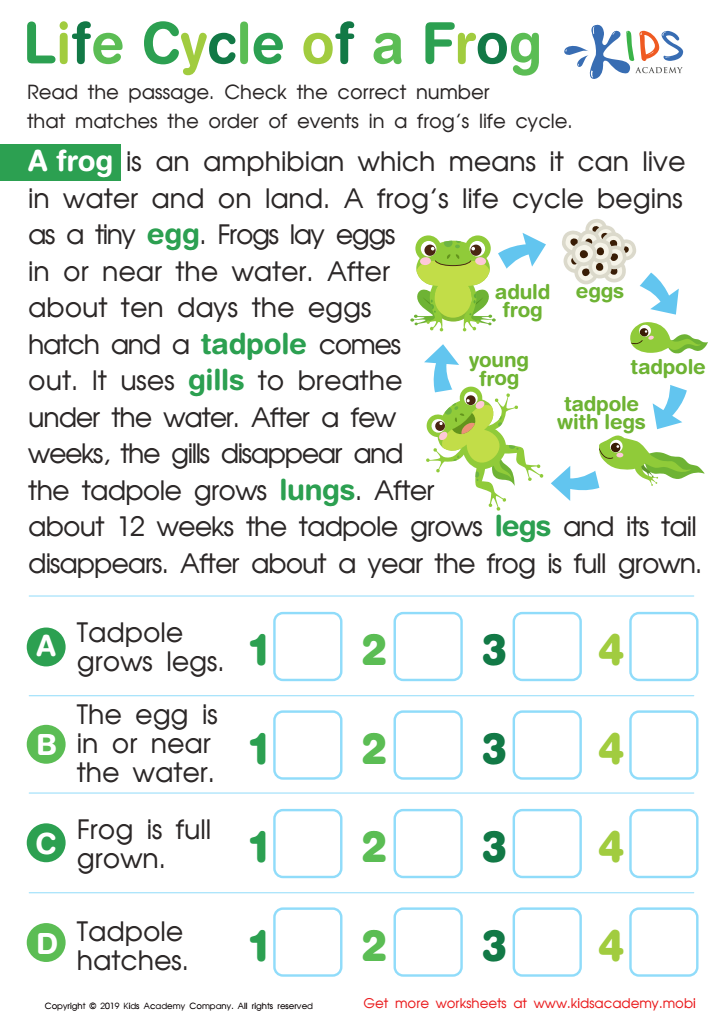
Life Cycle of a Frog Worksheet
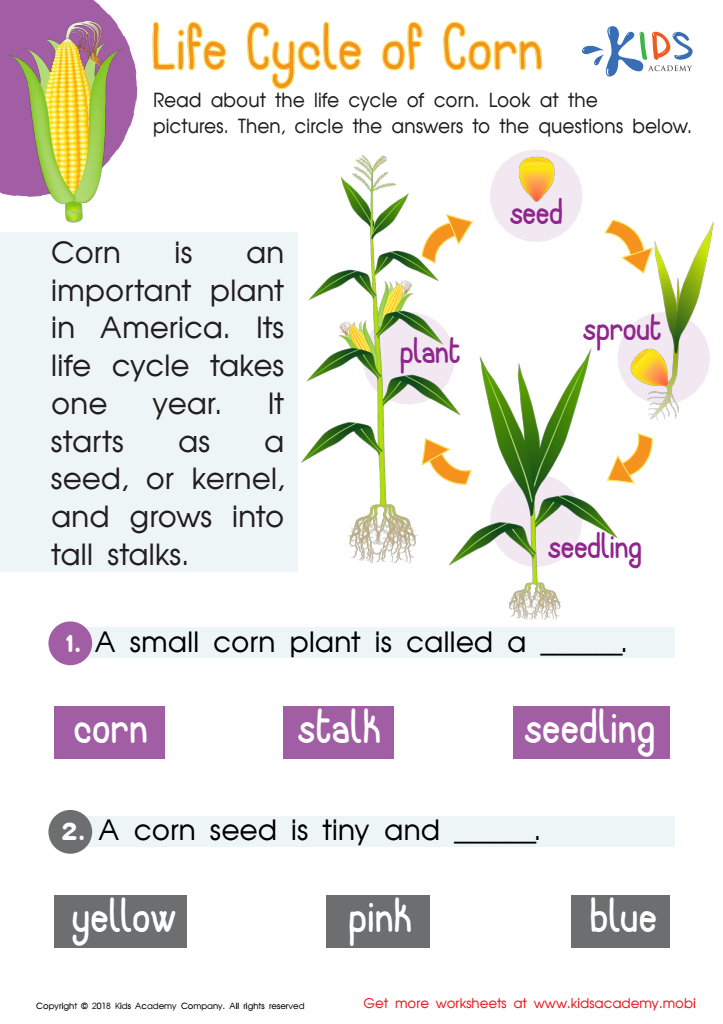
Life Cycle of Corn Worksheet
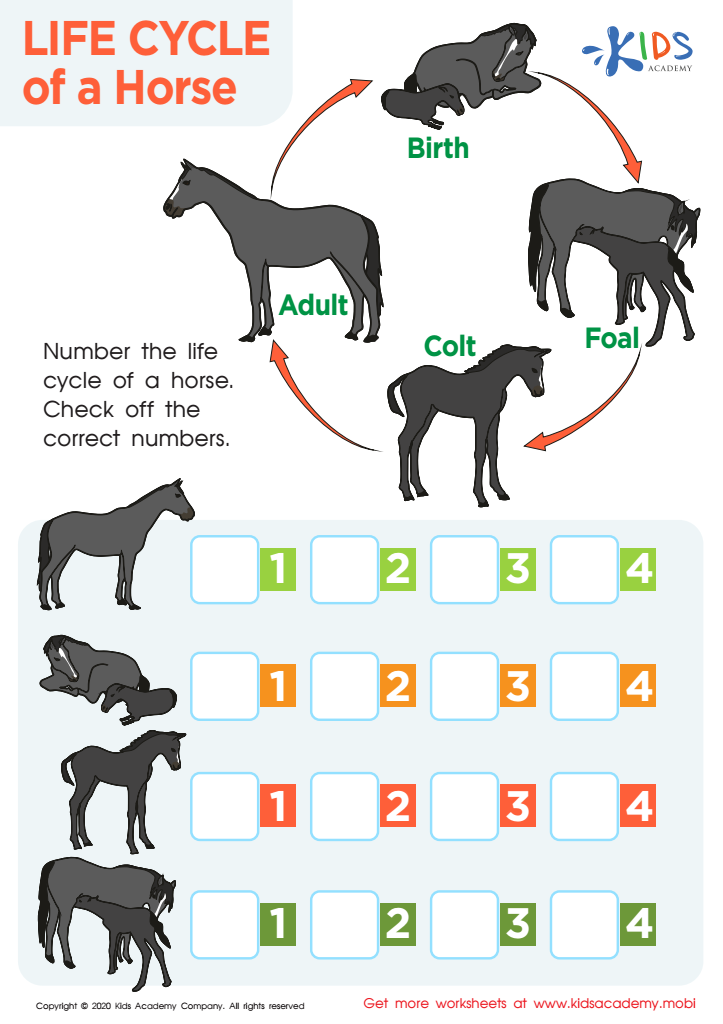
Life Cycle of a Horse Worksheet





.jpg)

Understanding life cycles is fundamental for 7-year-olds because it lays the groundwork for their broader comprehension of the natural world. At this age, children are curious and eager to learn about the environment around them. Here's why parents and teachers should invest in teaching life cycles using easy, science-based methods:
-
Foundation for Science Education: Early exposure to biological processes helps children grasp complex scientific concepts later. Describing simple life cycles of plants, insects, or animals ensures they understand growth, survival, and reproduction basics.
-
Encourages Curiosity and Observational Skills: By observing and documenting different stages, children start to ask questions and develop critical thinking skills. Encouraging this curiosity fosters a lifelong love for learning and science.
-
Environmental Awareness: Understanding life cycles helps children appreciate the interconnectedness of ecosystems. They learn the importance of conservation and become more aware of how their actions impact the environment.
-
Enhances Empathy and Responsibility: Becoming knowledgeable about the needs and struggles of different species can nurture empathy in children. They learn the roles various organisms play in sustaining life, fostering a sense of responsibility toward other living beings.
By making life cycles engaging and accessible, parents and teachers help students build a solid, enthusiastic foundation in science while promoting important virtues like curiosity, empathy, and responsibility.