Comparing lengths Easy Worksheets for Ages 8-9
4 filtered results
-
From - To
Discover exciting and engaging "Comparing Lengths Easy Worksheets" designed specifically for children aged 8-9 at Kids Academy! These printable worksheets help students develop crucial measurement skills by comparing and contrasting different lengths. Fun illustrations and interactive activities make learning enjoyable and accessible. Enhance your child's ability to understand relative sizes, foster problem-solving skills, and boost confidence in math. Each worksheet is crafted by educational experts to align with common core standards. Perfect for home practice or classroom use, these worksheets cater to every child’s learning pace. Visit Kids Academy for more learning resources!
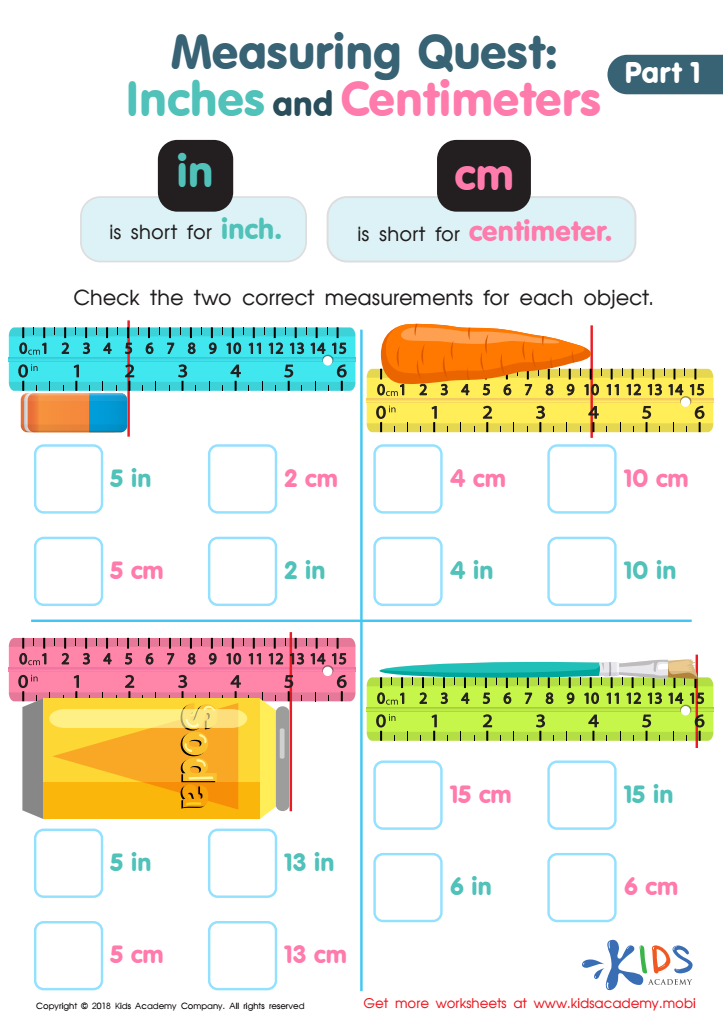
Measuring Quest: Inches and Centimeters Worksheet
 Assign to My Students
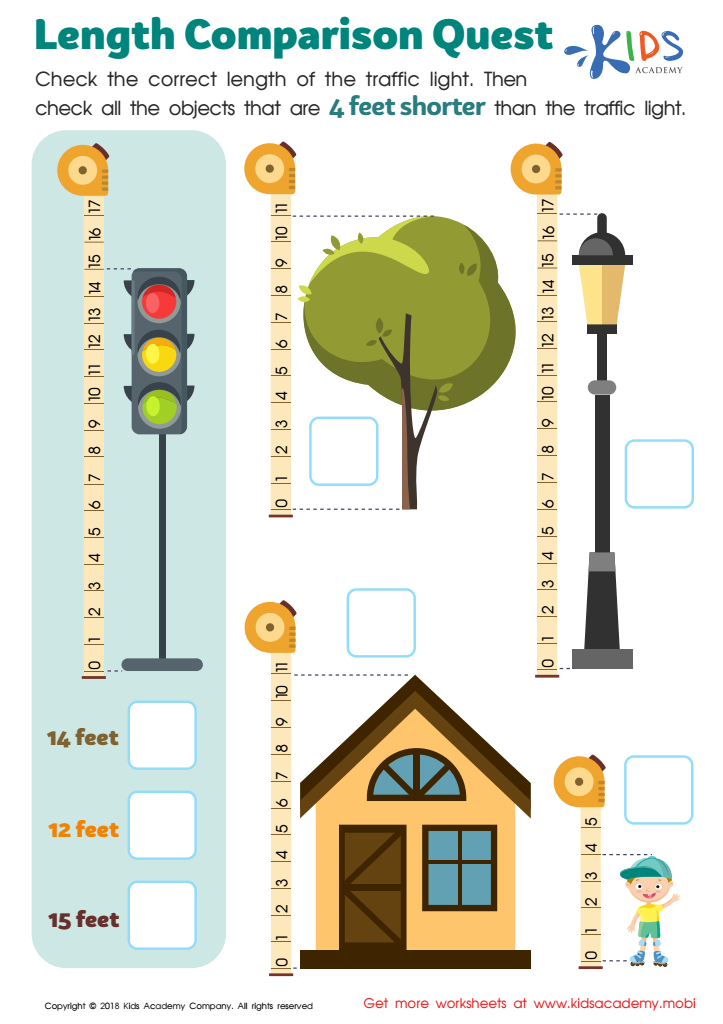
Length Comparison Quest Worksheet
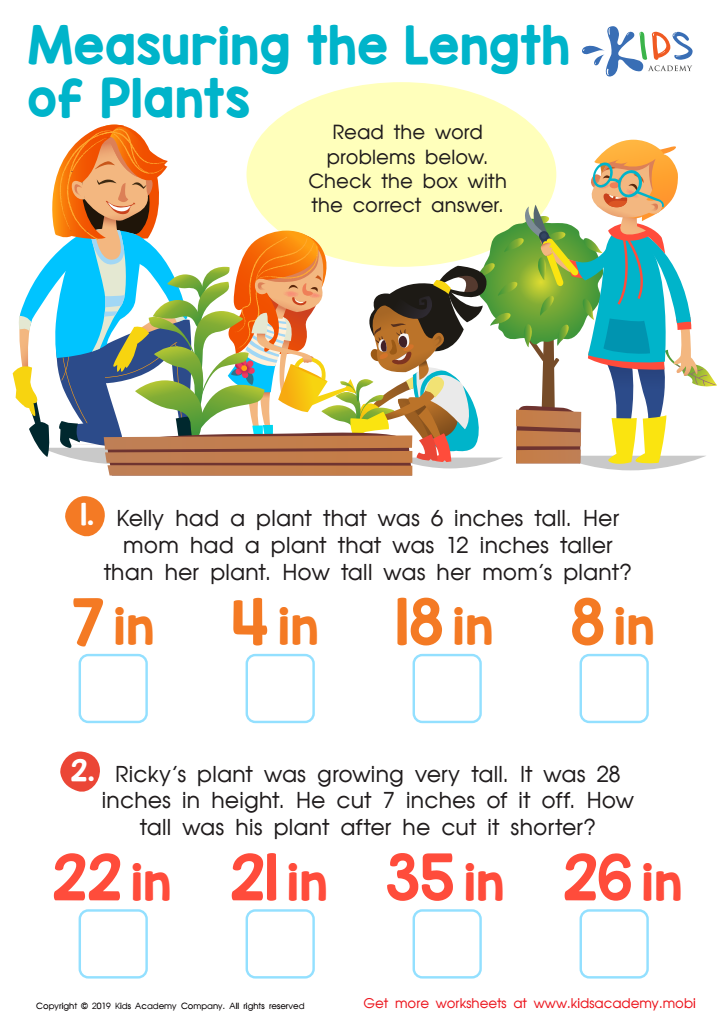
Measuring the Length of Plants Worksheet
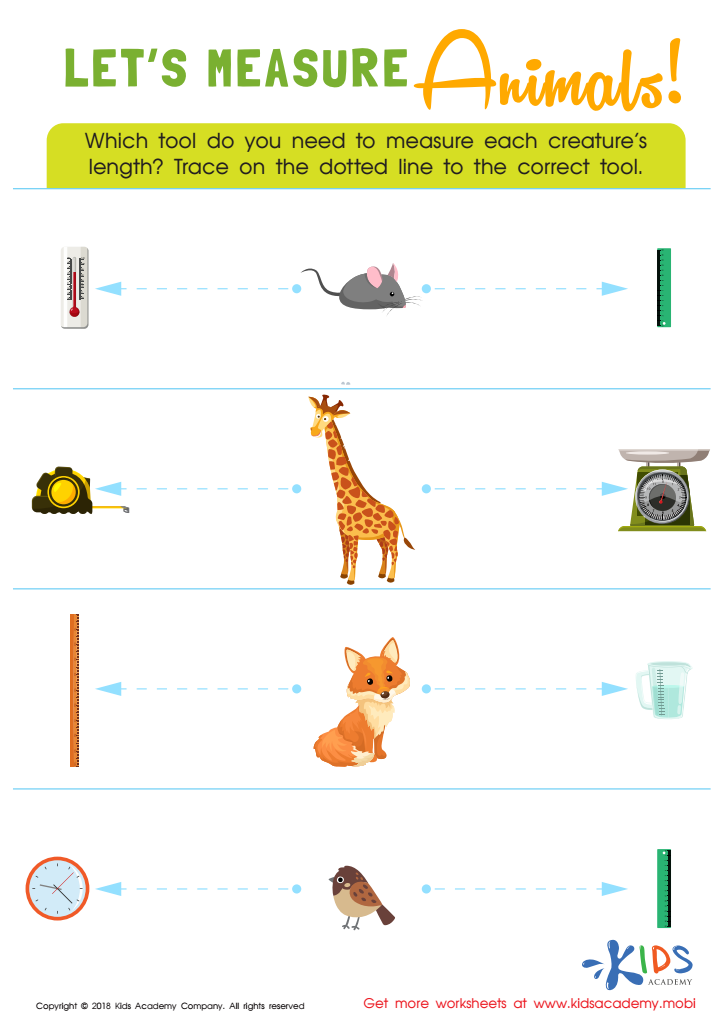
Let's Measure Animals! Worksheet







Comparing lengths is a fundamental mathematical skill that plays a crucial role in the cognitive and academic development of children aged 8-9. At this critical stage, children are transitioning from basic arithmetic to more complex mathematical concepts, and learning how to compare lengths lays the groundwork for understanding measurement, geometry, and spatial reasoning.
By grasping the concept of comparing lengths, children enhance their problem-solving and critical thinking abilities. These skills are not only essential for math-focused subjects but also for real-life situations. For example, determining whether a pencil fits in a pencil case or if a book will fit on a shelf involves assessing lengths.
Moreover, comparing lengths encourages children to use and understand important vocabulary related to measurement, such as "longer," "shorter," "equal," and various units of measurement. This expands their language skills and helps them to better communicate their thoughts and reasoning.
Teachers and parents can provide hands-on learning experiences, like measuring objects around the classroom or home, fostering an engaging and practical approach to the concept. This practical application reinforces their learning and ensures retention.
Ultimately, caring about teaching children to compare lengths can spark curiosity, enhance mathematical understanding, and build a strong foundation for future education in STEM (Science, Technology, Engineering, and Mathematics) fields.








