
Cultural awareness Easy Worksheets for Ages 8-9
4 filtered results
Difficulty Level
Grade
Age
-
From - To
Subject
Activity
Standards
Discover our engaging Cultural Awareness Easy Worksheets, specifically designed for ages 8-9. These educational resources help children explore and appreciate diverse cultures through fun activities and interactive content. Featuring vibrant illustrations and age-appropriate exercises, our worksheets aim to broaden young minds, fostering a sense of inclusion and understanding. Perfect for classroom use or at-home learning, these tools not only elevate critical thinking but also celebrate global diversity. Encourage your child's curiosity and cultural sensitivity today with Kids Academy’s expertly crafted worksheets. Dive into a world of multicultural discovery and make learning an adventurous journey!
Favorites
With answer key
Interactive
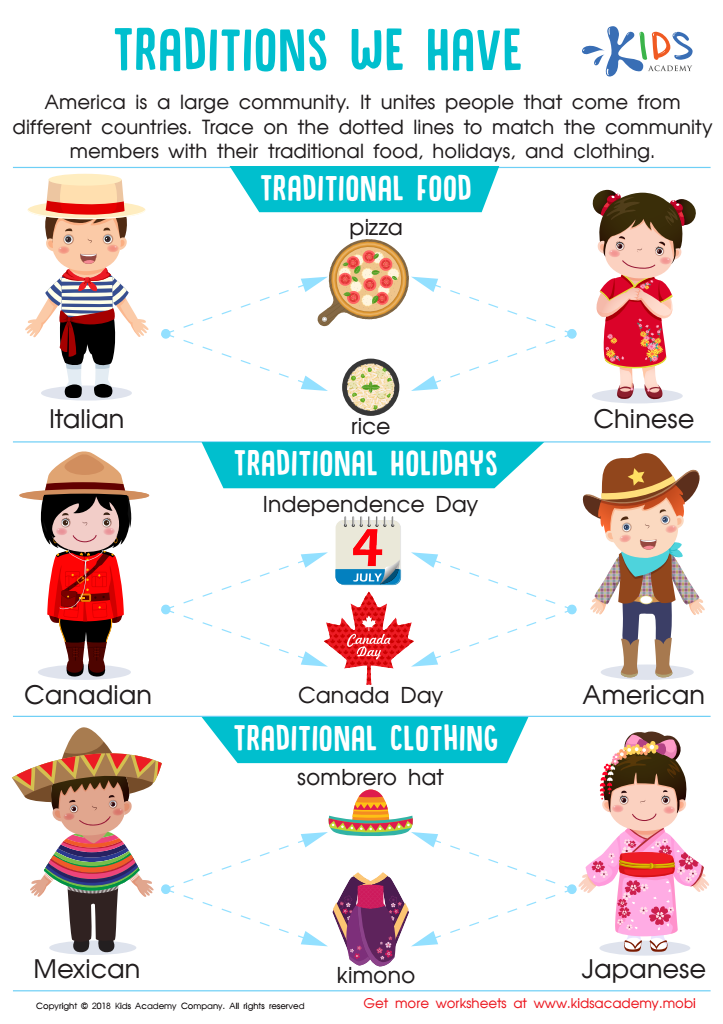
Traditions We Have Worksheet
Help your child learn about the world's diverse cultures with this tracing sheet. Trace the dotted lines to match different community members with their traditional holidays, foods and clothing. America is just one of many countries with multiple communities living together - teach your child that everybody has different backgrounds and customs, opening their minds to an even bigger world.
 Assign to My Students
Traditions We Have Worksheet
Worksheet
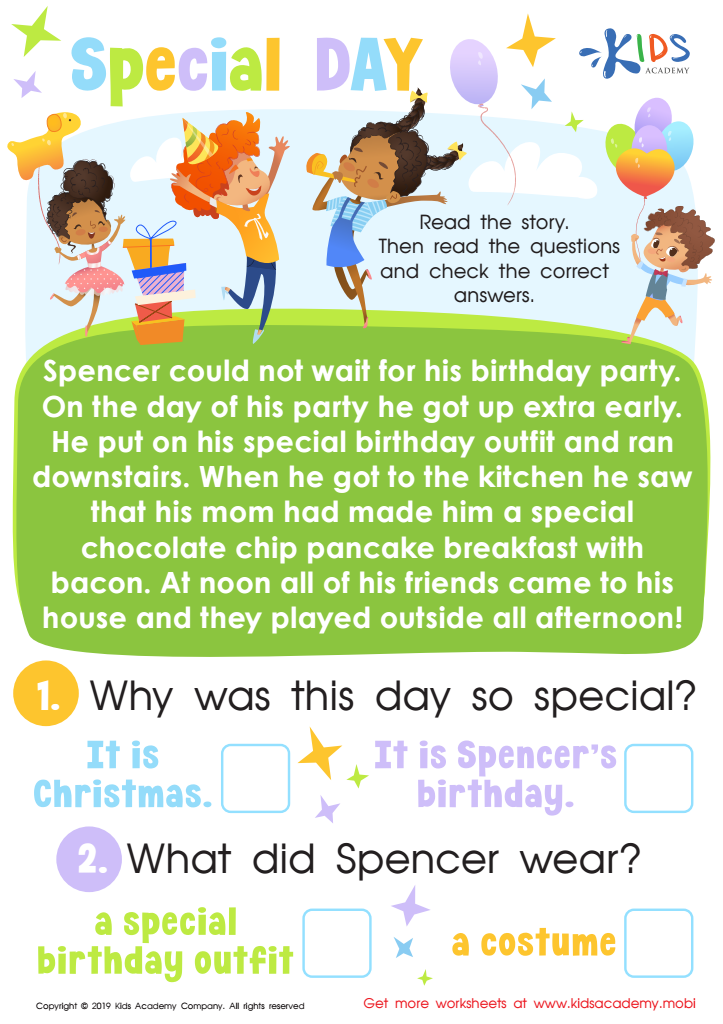
Special Day Worksheet
What's your child's favorite day? Let them tell you what makes it special and what they enjoy most. With the worksheet, show them the picture and ask them to identify the day. Read the story aloud, and help them answer the questions and check the right responses.
Special Day Worksheet
Worksheet
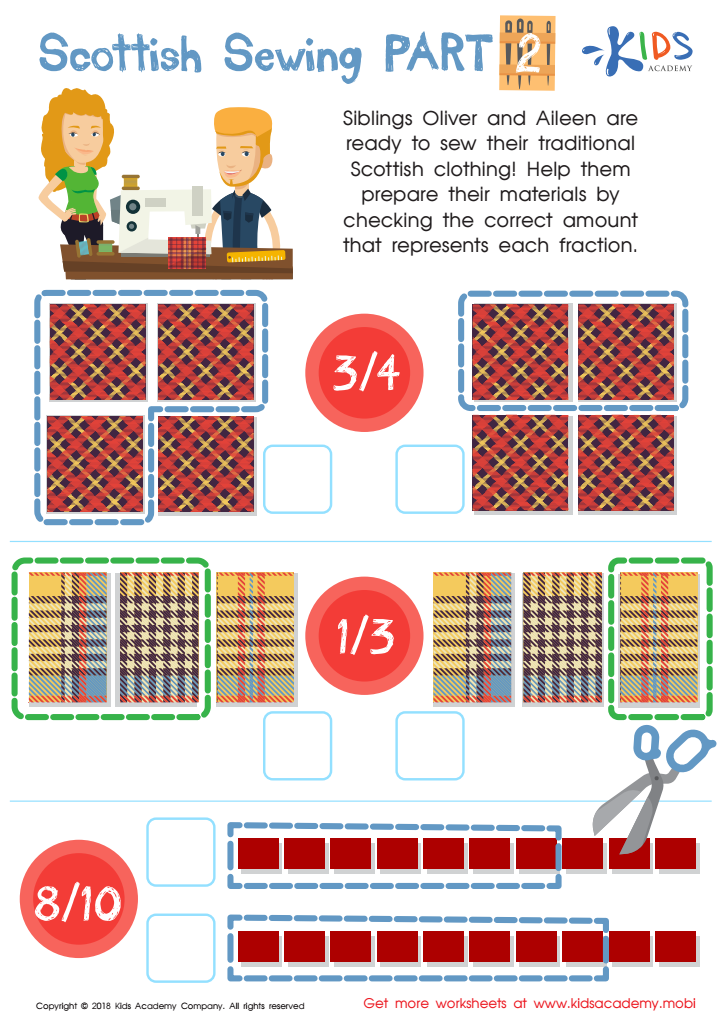
Scottish Sewing Part 2 Worksheet
Oliver and Alleen are sewing traditional Scottish attire. Help your kids count the cloth and check the correct fraction to support them. Have your kids check the correct amount that represents each fraction to help the brother-sister duo prepare their material.
Scottish Sewing Part 2 Worksheet
Worksheet
Join Kids Academy for Free
Who is primarily going to use this learning content?






Cultural awareness is important for children, especially at ages 8 to 9, because it helps them appreciate and respect people from different backgrounds. When parents and teachers emphasize cultural awareness, it nurtures empathy and understanding in young minds.
Firstly, learning about diverse cultures teaches kids that even though people may look, dress, or celebrate differently, everyone deserves respect. This can help prevent prejudice and bullying by encouraging children to be more accepting of others. Understanding various traditions and practices also broadens their worldview, making them more open and curious learners.
Additionally, cultural awareness enriches a child's learning experience. When students explore different cultures, they often discover similarities and differences that deepen their knowledge in subjects like geography, history, and social studies. Celebrating world traditions in the classroom or at home can make lessons more engaging and fun.
Moreover, children who grow up with appreciation for diversity are generally better prepared for our increasingly global society. They become great communicators and team players, which are important life skills. Cultivating cultural awareness fosters a sense of community, tolerance, and a harmonious environment both at school and in everyday life.
In summary, parents and teachers should prioritize cultural awareness to build respectful, knowledgeable, and empathetic future citizens.








