Understanding patterns Easy Basic Times Tables up to 12 Worksheets for Ages 8-9
3 filtered results
-
From - To
Explore our engaging "Understanding Patterns: Easy Basic Times Tables up to 12" worksheets designed for children ages 8-9. These carefully crafted resources help young learners grasp multiplication concepts through fun patterns and visual aids. As students practice, they will uncover the relationships within times tables, promoting number sense and enhancing their problem-solving skills. With a variety of exercises, including colorful visuals and interactive formats, these worksheets make learning enjoyable and effective. Ideal for classroom use or home study, our materials support your child’s development of foundational math skills while building confidence in their abilities. Start your multiplication journey today!
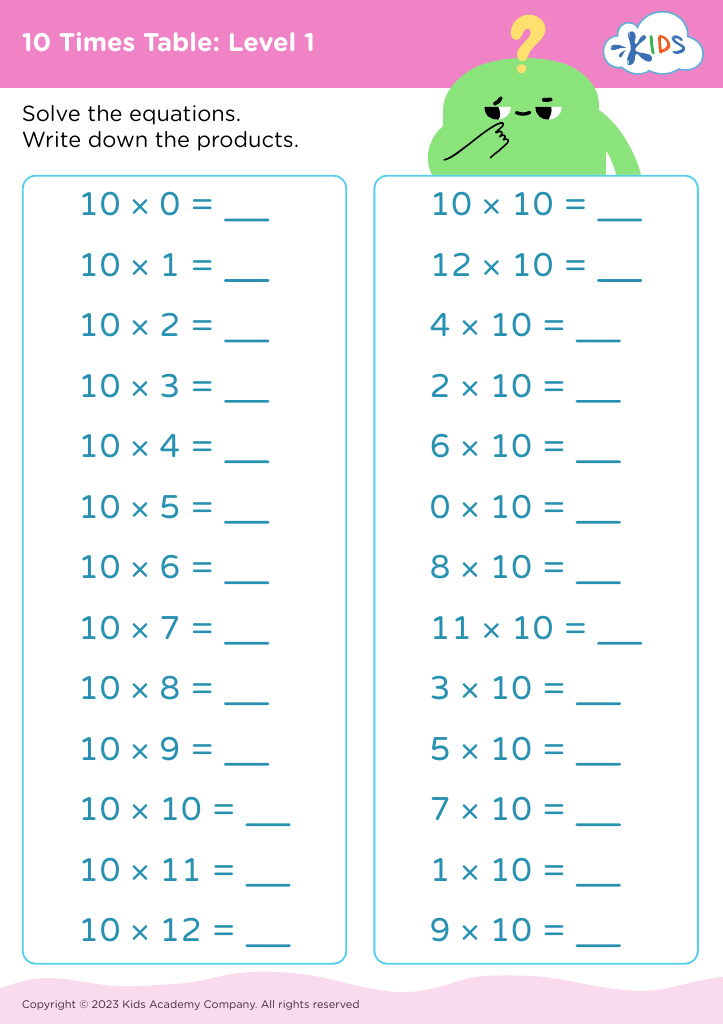
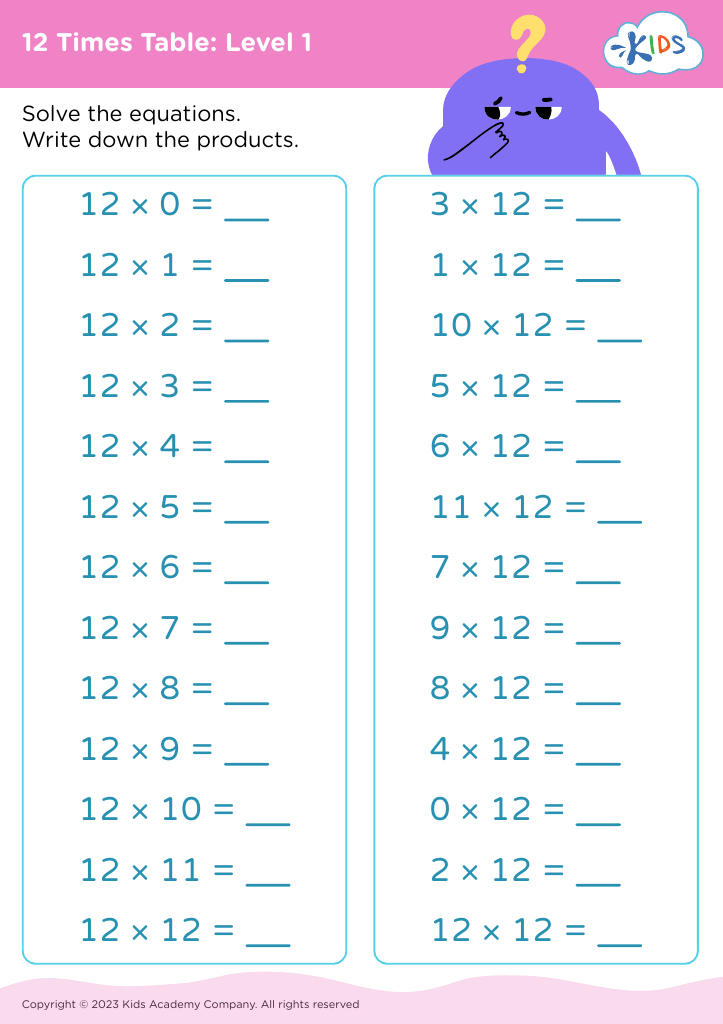
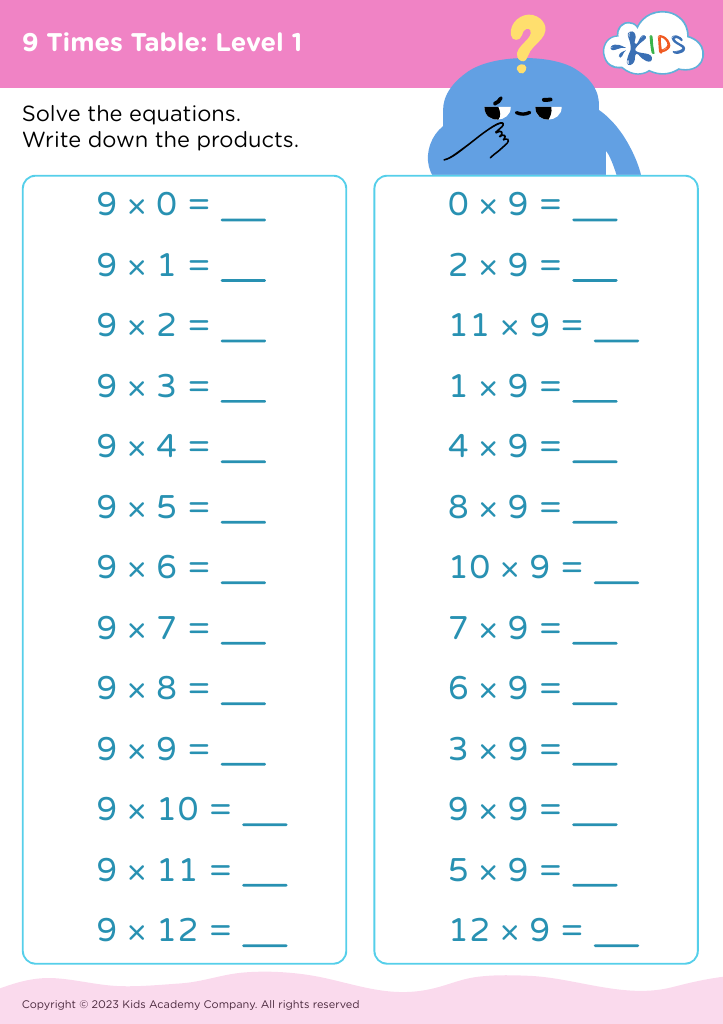


Understanding patterns in basic times tables up to 12 is crucial for children aged 8-9, as it lays a strong foundational skill in mathematics. At this age, students transition from arithmetic to more complex problem-solving, and mastering times tables enhances their numerical fluency. Recognizing patterns, such as the relationship between multiplication and addition, can simplify learning and improve retention.
Teachers and parents should care about this because it not only fosters confidence in math but also encourages critical thinking skills. When children see that 6 times 3 is the same as 3 times 6, they learn the commutative property, which promotes a deeper understanding of numbers. Furthermore, understanding patterns helps students tackle more advanced concepts in the future, such as division, fractions, and algebra.
Moreover, proficiency in times tables can lead to better performance in standardized tests, where mathematical speed and accuracy are vital. For parents, reinforcing this skill at home reinforces learning and aids in building a positive attitude towards math. This mastery promotes independence in problem-solving, allowing children to tackle real-world scenarios confidently. Therefore, ensuring that children grasp patterns in times tables provides lifelong benefits, creating a solid mathematical foundation for academic success.








