Fine Motor Skills Easy Fractions of Shapes Worksheets for Ages 8-9
4 filtered results
-
From - To
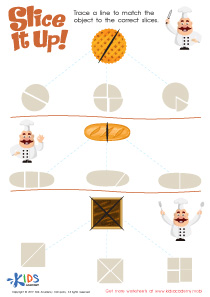
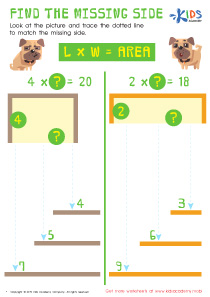
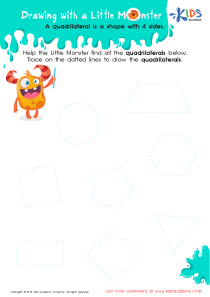
Enhance your child's fine motor skills and understanding of fractions with our Fine Motor Skills Easy Fractions of Shapes Worksheets, tailored for ages 8-9. These engaging activities seamlessly combine the intricacies of fine motor development with foundational math concepts. By tracing, drawing, and coloring shapes divided into fractions, kids sharpen their hand-eye coordination while gaining confidence in recognizing and working with parts of a whole. Ideal for both classroom and at-home practice, these worksheets provide a fun, interactive way to build essential skills in young learners. Discover a harmonious blend of fun and education today!
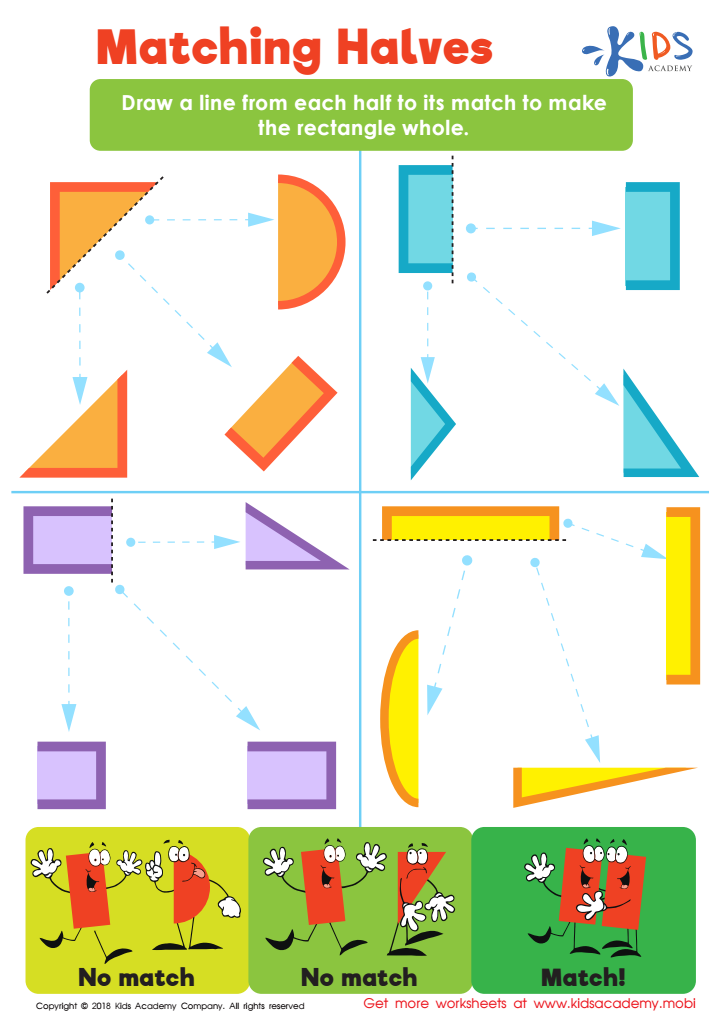
Matching Halves Worksheet
 Assign to My Students
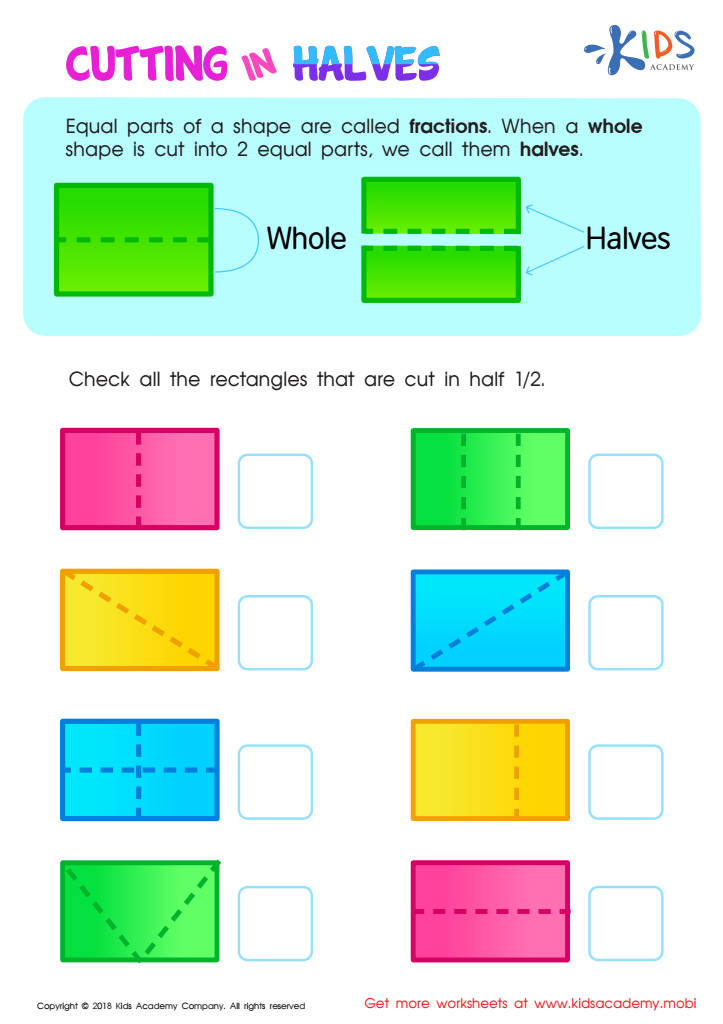
Cutting in Halves Worksheet
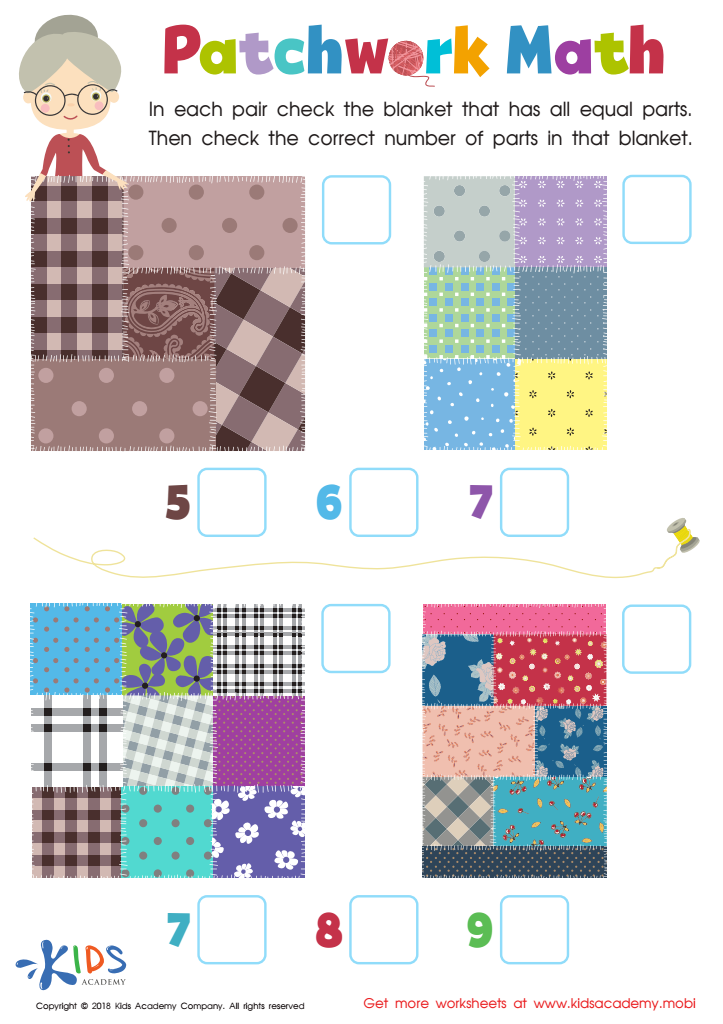
Patchwork Math Worksheet
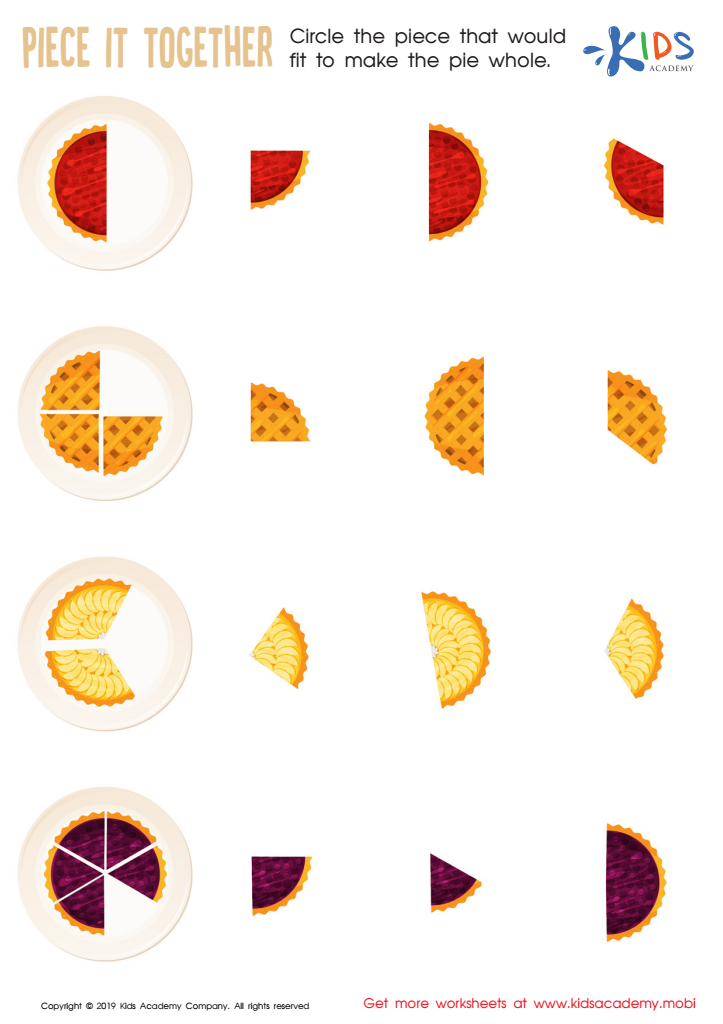
Piece it together Worksheet








Fine motor skills are crucial for young children as they form the foundation for various daily activities and advanced learning skills. When children engage in activities like mastering easy fractions of shapes, they naturally develop and refine their fine motor skills, which hold significant importance for their development.
Firstly, fine motor skills are essential for handwriting. At ages 8-9, children are expected to write more extensively and legibly, which involves precise control of their hand muscles. Tasks requiring fine motor control, like drawing fractions of shapes, help strengthen the necessary muscles in hands and fingers, promoting better penmanship.
Secondly, these activities enhance cognitive development. Manipulating shapes to understand fractions aids in spatial awareness – an important concept not only in mathematics, but in organizing and functioning in their environment. Understanding fractions through shapes also reinforces foundational math skills, fostering a deeper comprehension that benefits future learning.
Thirdly, fine motor skills are linked to independence in everyday tasks such as buttoning clothes, tying shoelaces, and using utensils. As children practice controlling their hand movements through academic activities like fractions, they simultaneously build confidence and autonomy in self-care activities.
Therefore, by focusing on Fine Motor Skills through easy fractions of shapes, parents and teachers contribute significantly not only to the academic but also to the personal and independent growth of children, laying a robust groundwork for their overall development.