Subtraction practice Easy Math Worksheets for Ages 8-9
12 filtered results
-
From - To
Enhance your child's math skills with our "Subtraction Practice Easy Math Worksheets" designed specifically for ages 8-9! These engaging worksheets offer a variety of fun and interactive subtraction exercises to boost your child's confidence and proficiency in math. Each worksheet is tailored to facilitate understanding of key concepts through creative problems that make learning enjoyable. With a focus on both straightforward calculations and word problems, kids will develop critical thinking skills while refining their subtraction abilities. Perfect for classroom use or at-home practice, our worksheets are a valuable resource for supporting your child’s educational journey. Get started today!
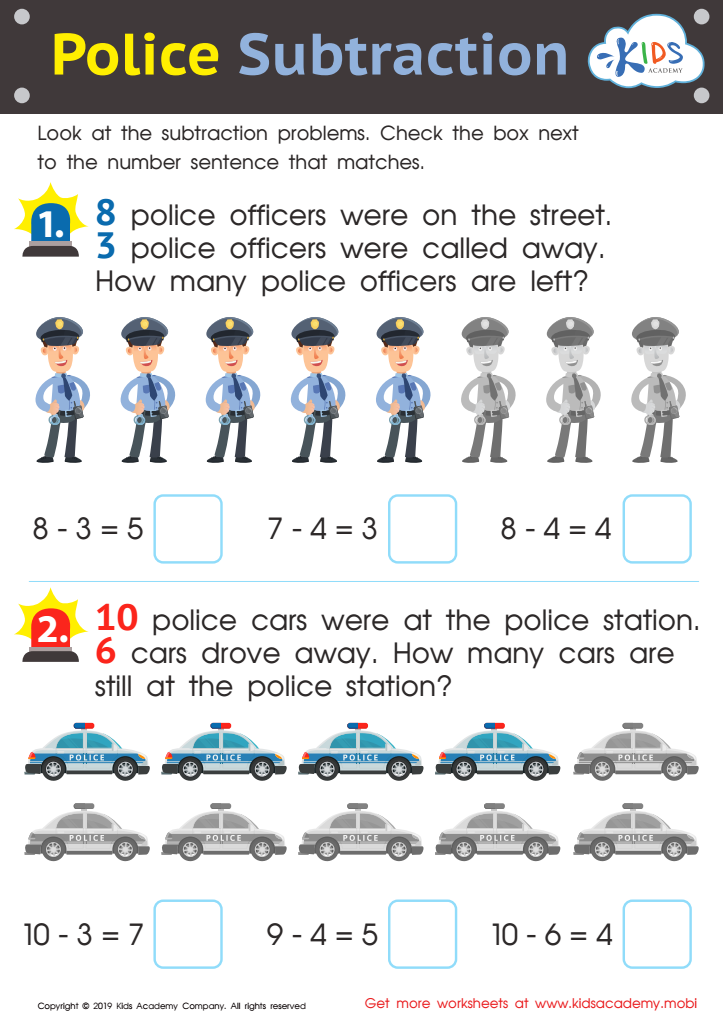
Police Subtraction Worksheet
 Assign to My Students
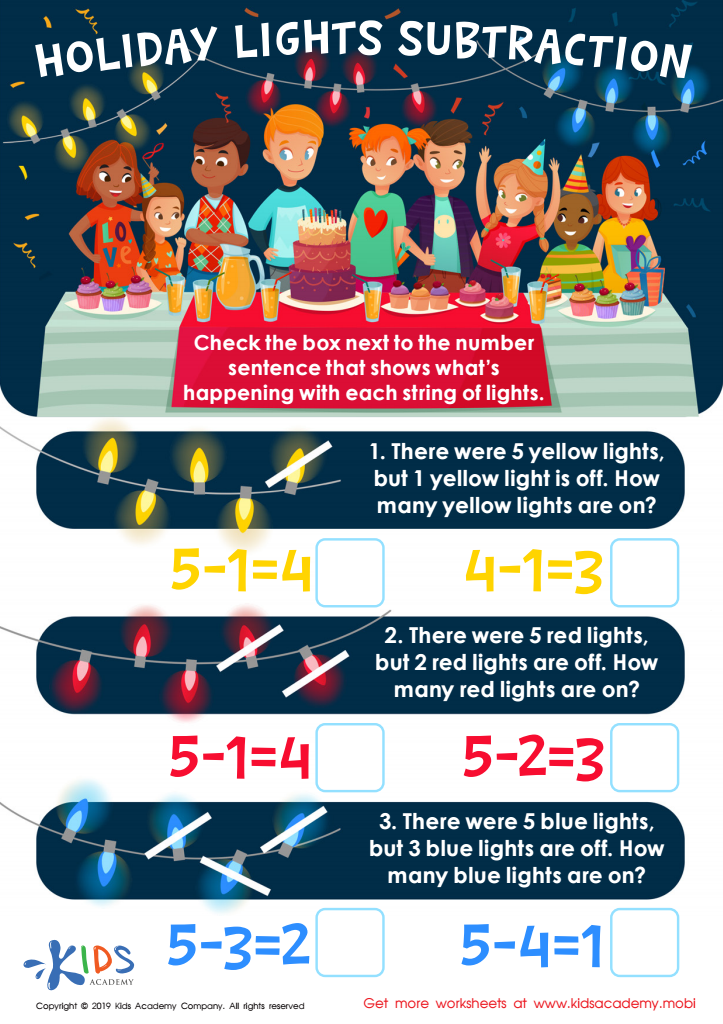
Holiday Lights Subtraction Worksheet
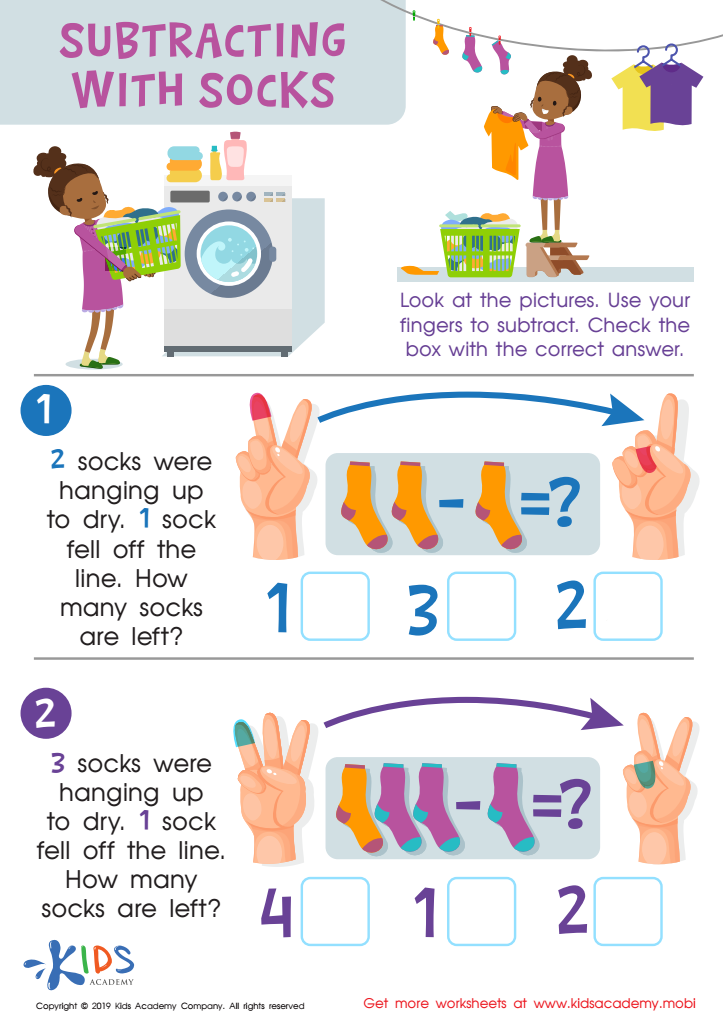
Subtracting Socks Worksheet
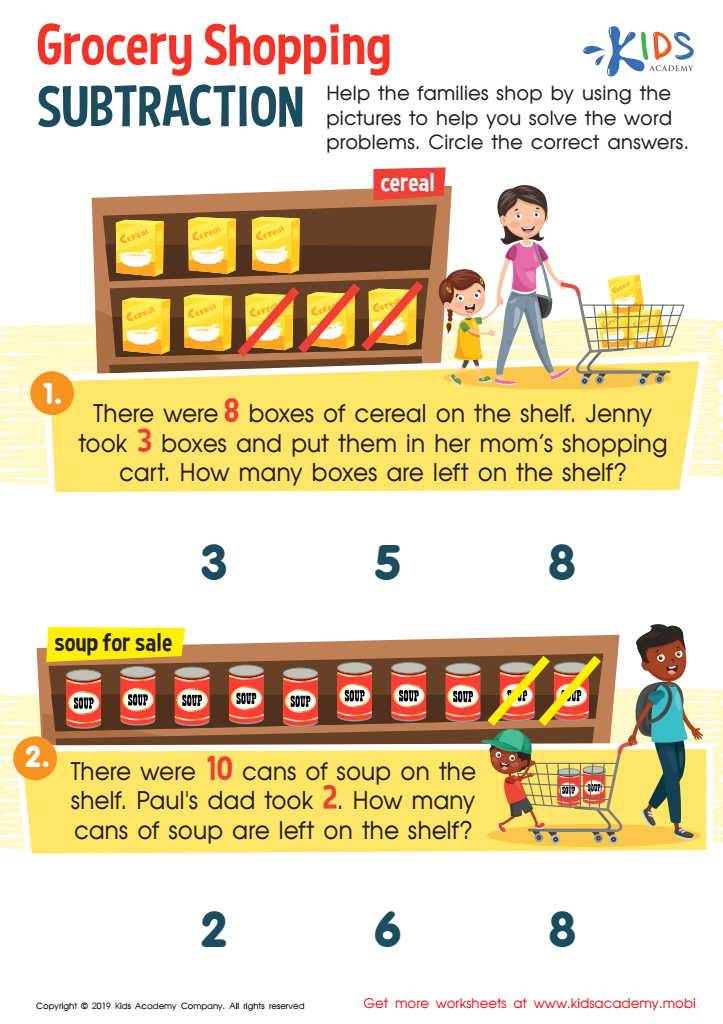
Grocery Shopping Subtraction Worksheet
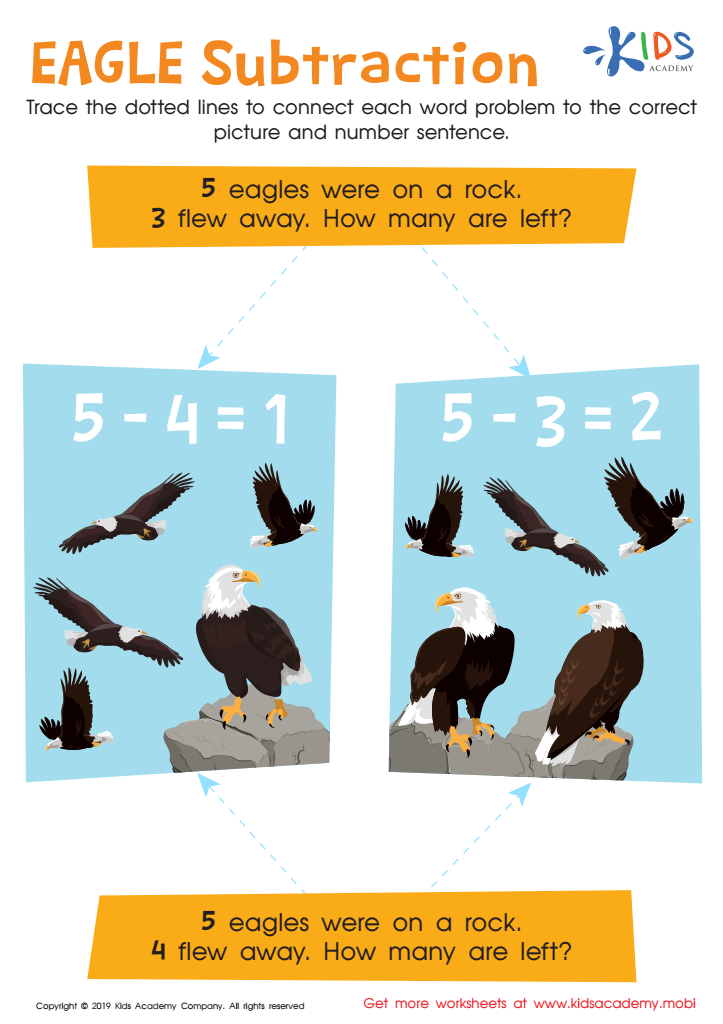
Eagle Subtraction Worksheet
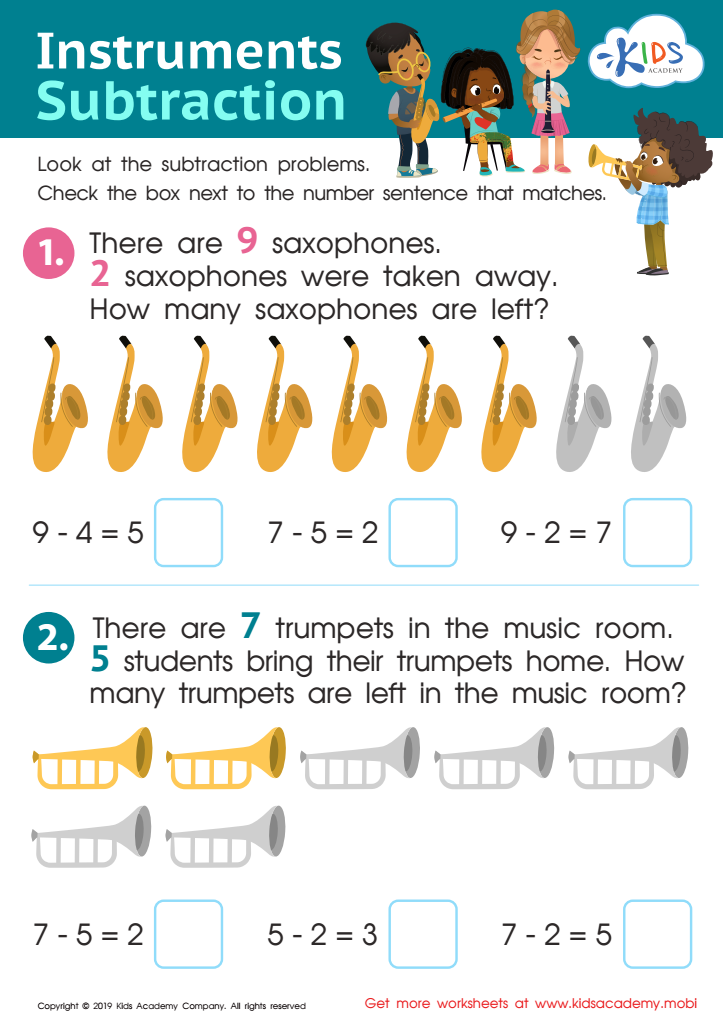
Instrument Subtraction Worksheet
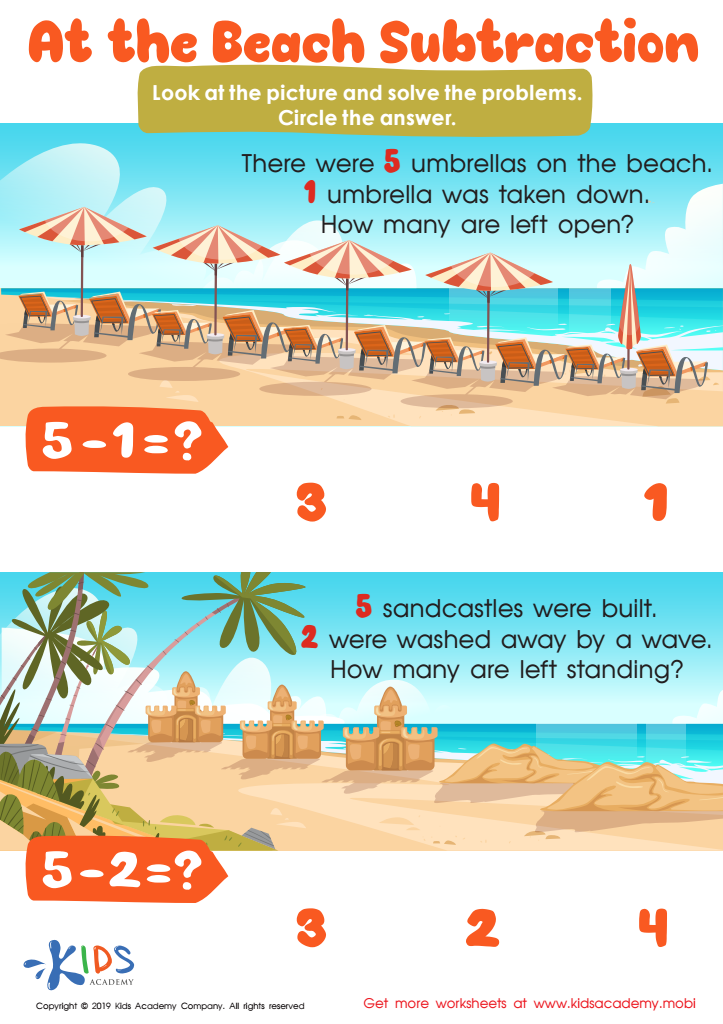
At the Beach Subtraction Worksheet
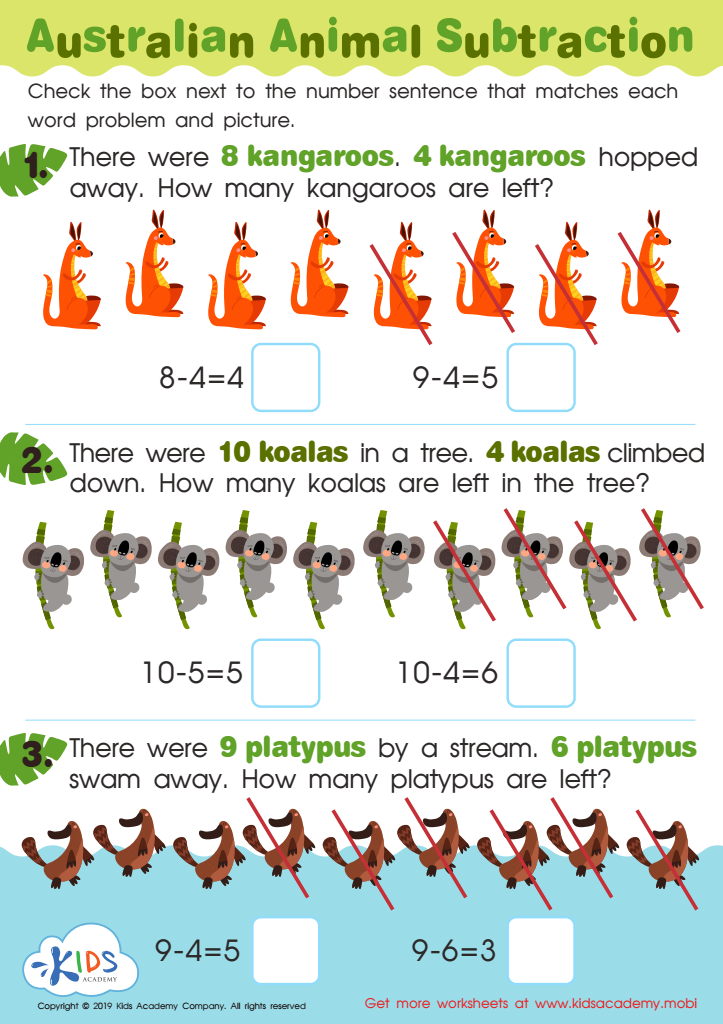
Australian Animal Subtraction Worksheet
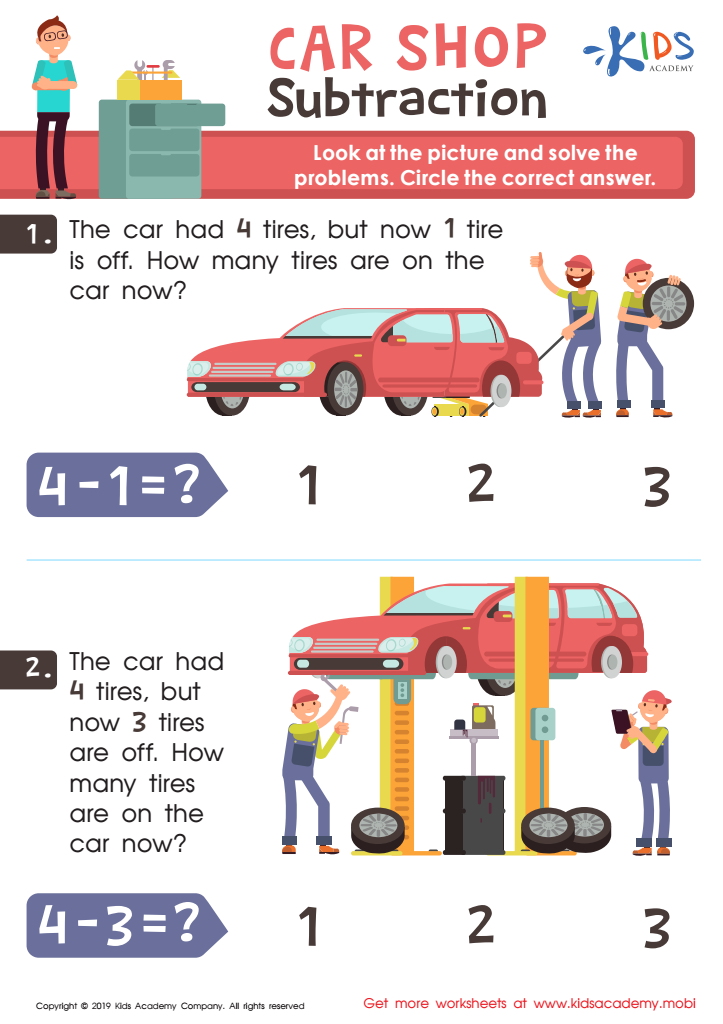
Car Shop Subtraction Worksheet
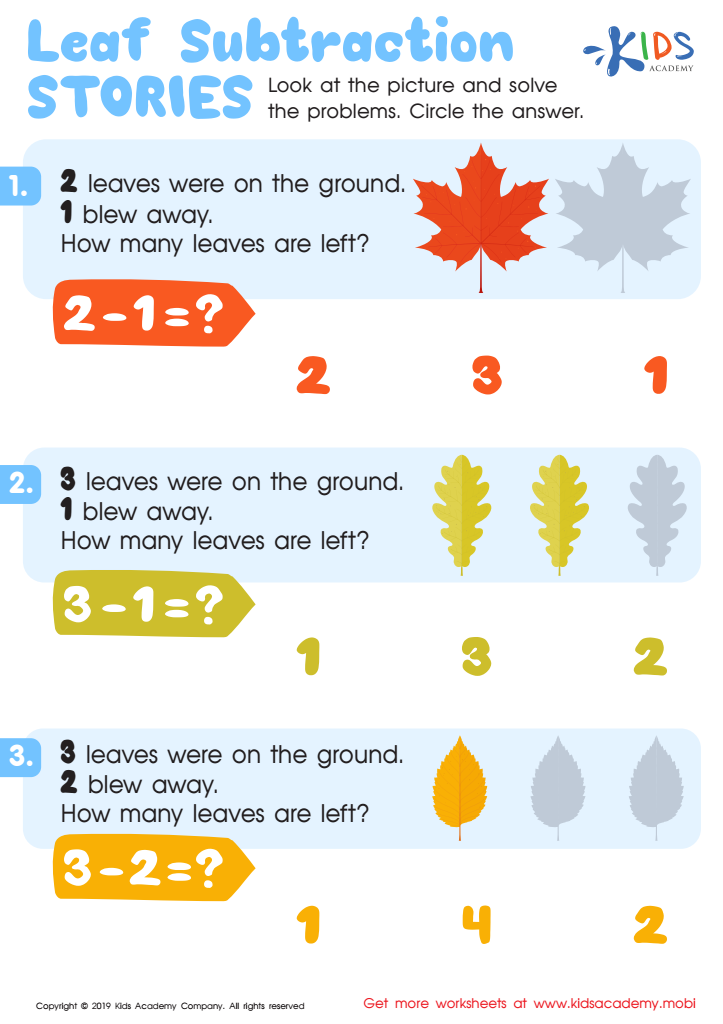
Leaf Subtraction Stories Worksheet
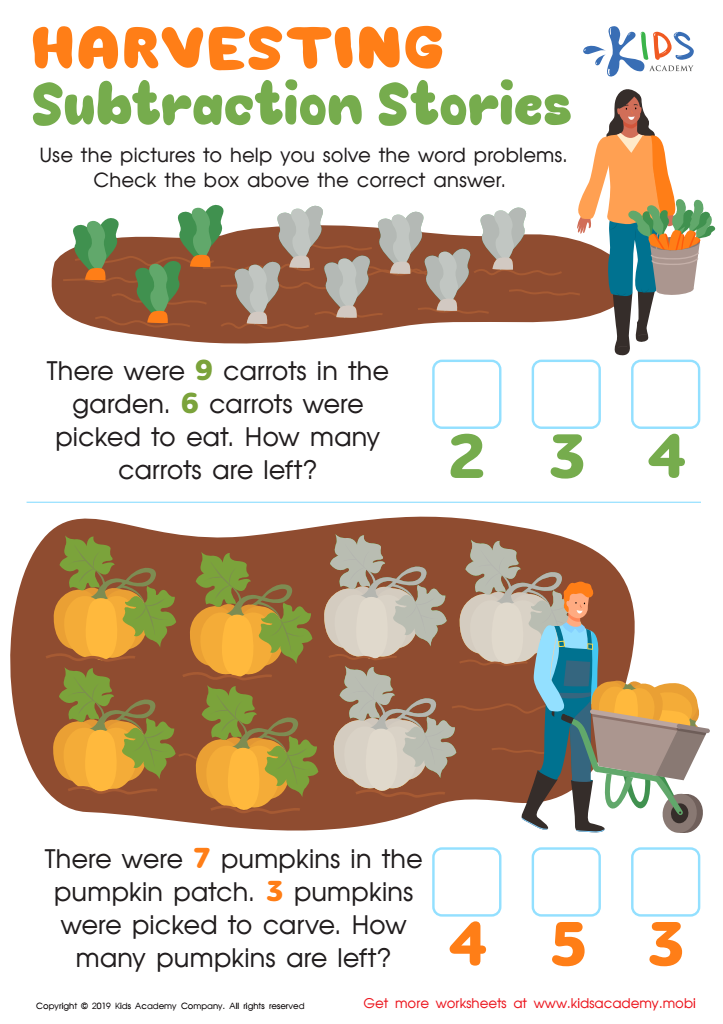
Harvesting Subtraction Stories Worksheet
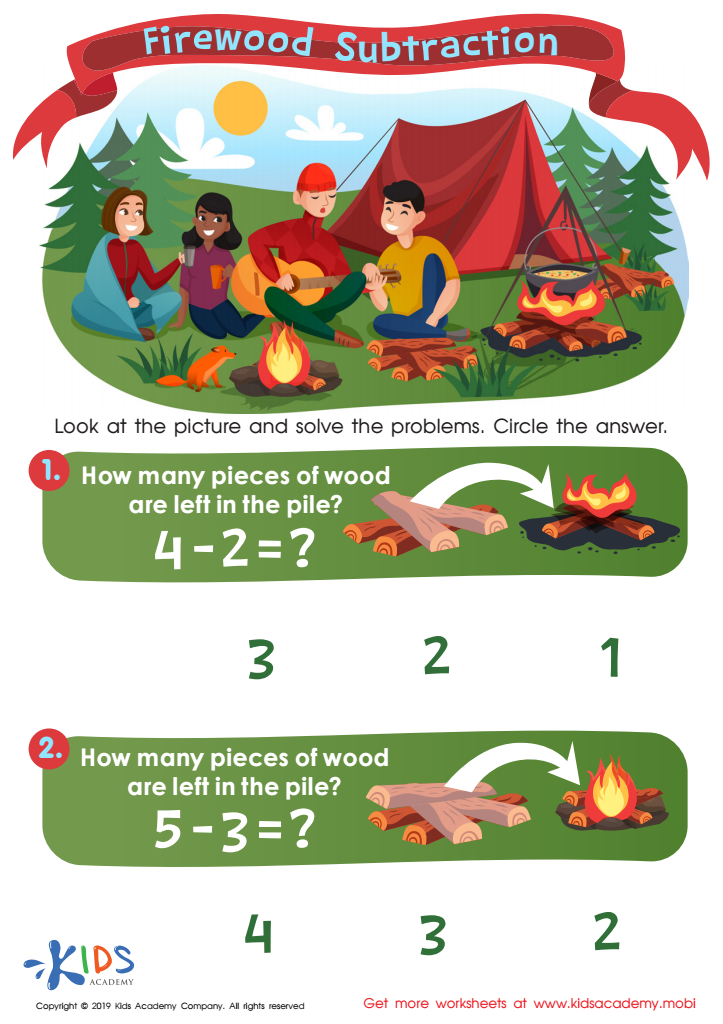
Firewood Subtraction Worksheet







Parents and teachers should prioritize subtraction practice for children aged 8-9 because this foundational math skill is vital for developing overall numeracy and problem-solving abilities. At this age, children are transitioning from basic arithmetic to more complex math concepts, and strong subtraction skills serve as a crucial building block for disciplines like algebra and geometry that they will encounter later.
Regular subtraction practice boosts confidence and helps improve children's mental arithmetic skills. As they become more proficient, they will tackle math problems with greater ease and less frustration, fostering a positive attitude towards learning. Additionally, mastery of subtraction enhances critical thinking and promotes analytical skills, as children learn to approach problem-solving methodically.
Moreover, understanding subtraction is essential for real-world applications, such as managing money, estimating quantities during cooking, or determining time. Parents and teachers can make subtraction both enjoyable and relatable through games, interactive activities, and practical examples. By emphasizing subtraction practice, parents and educators nurture a child’s mathematical understanding while also supporting their cognitive development, ultimately equipping them with essential skills that extend beyond the classroom. Engaging practice at this stage can lay the groundwork for lifelong learning and academic success in mathematics.








