Unlock the world of measurements with our Easy Math Worksheets for Ages 8-9. Designed to make learning fun, these engaging worksheets help children grasp essential measurement concepts effortlessly. From length and weight to volume and time, kids explore various units and tools, fostering a solid understanding of everyday math skills. Ideal for 8-9-year-olds, these printable activities enhance problem-solving abilities and boost confidence in mathematical reasoning. With vibrant visuals and interactive tasks, measuring becomes an exciting adventure. Download now to transform learning into enjoyable practice, guiding your child towards math proficiency with ease and enthusiasm.

Check out this FREE Trial Lesson on Math for age 8-9!

Generate Line Plots by Measuring Objects

Favorites
With answer key
Interactive
  • 8-9
  • Understanding measurements
  • Math
  • Easy
Kids Measurements Worksheet

Kids Measurements Worksheet

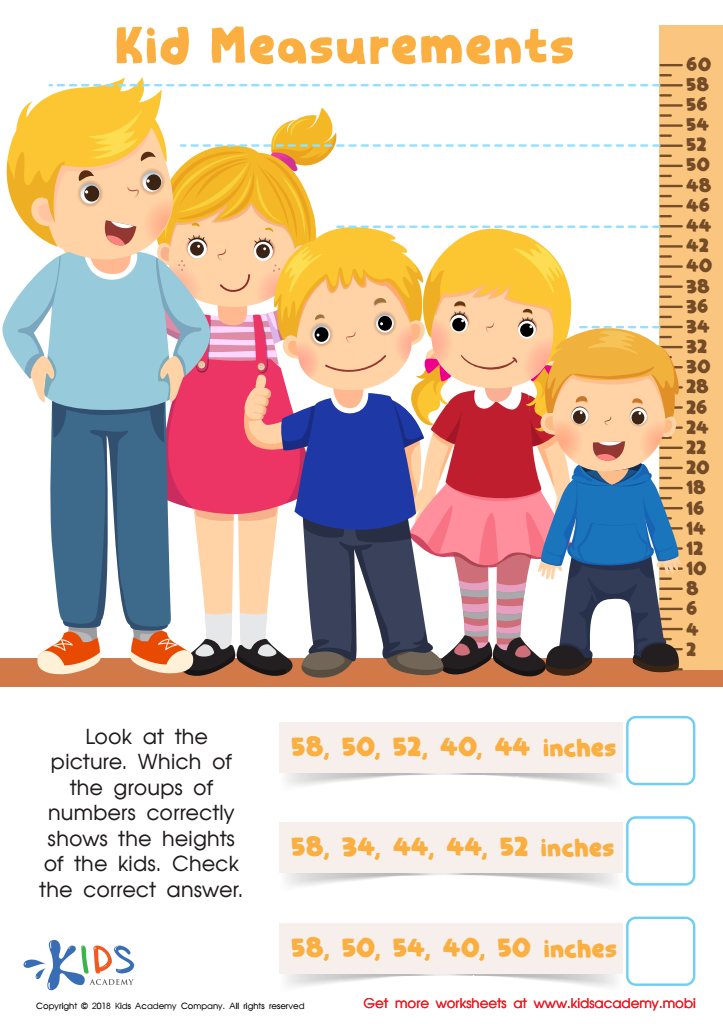
Help your kids look at the groupings on the bottom right of the worksheet. Compare the heights of the kids shown in the picture to the numbers in each group. Have them check which of the groups of numbers correctly shows the heights.
Kids Measurements Worksheet
Worksheet
Measuring Quest: Inches and Centimeters Worksheet

Measuring Quest: Inches and Centimeters Worksheet

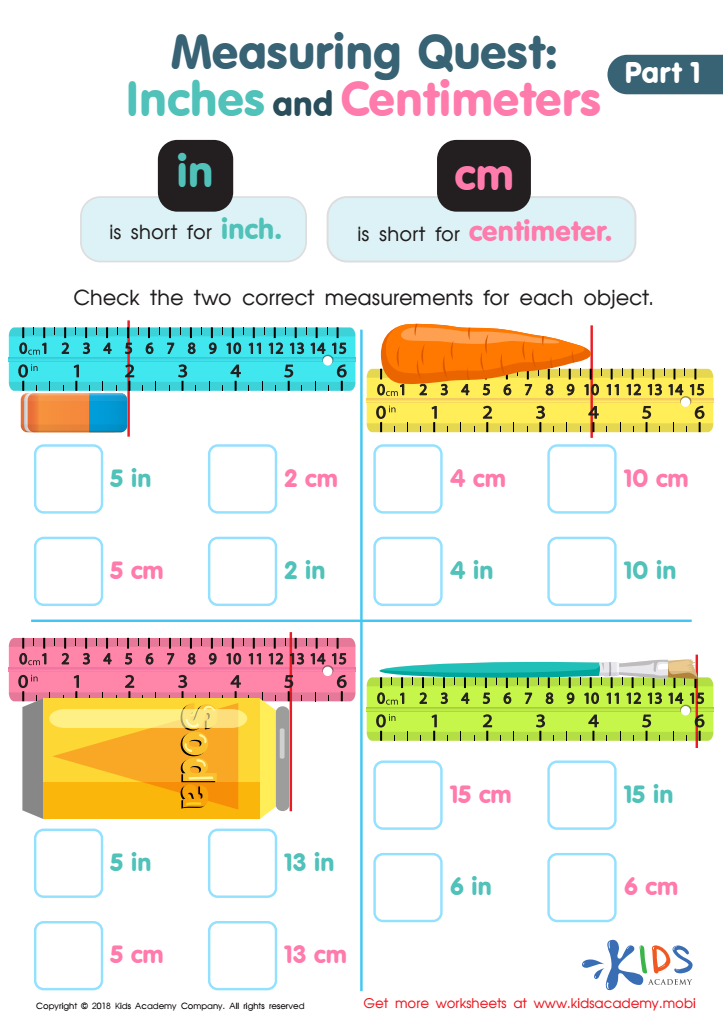
Your child will measure items in both inches and centimeters and check the correct measurements from the options given. The metric ruler states 2.5 cm equals 1 inch, and 15 cm equals 6 inches. This worksheet helps ensure accurate measurements, despite the different figures.
Measuring Quest: Inches and Centimeters Worksheet
Worksheet
Matching Measurements Worksheet

Matching Measurements Worksheet

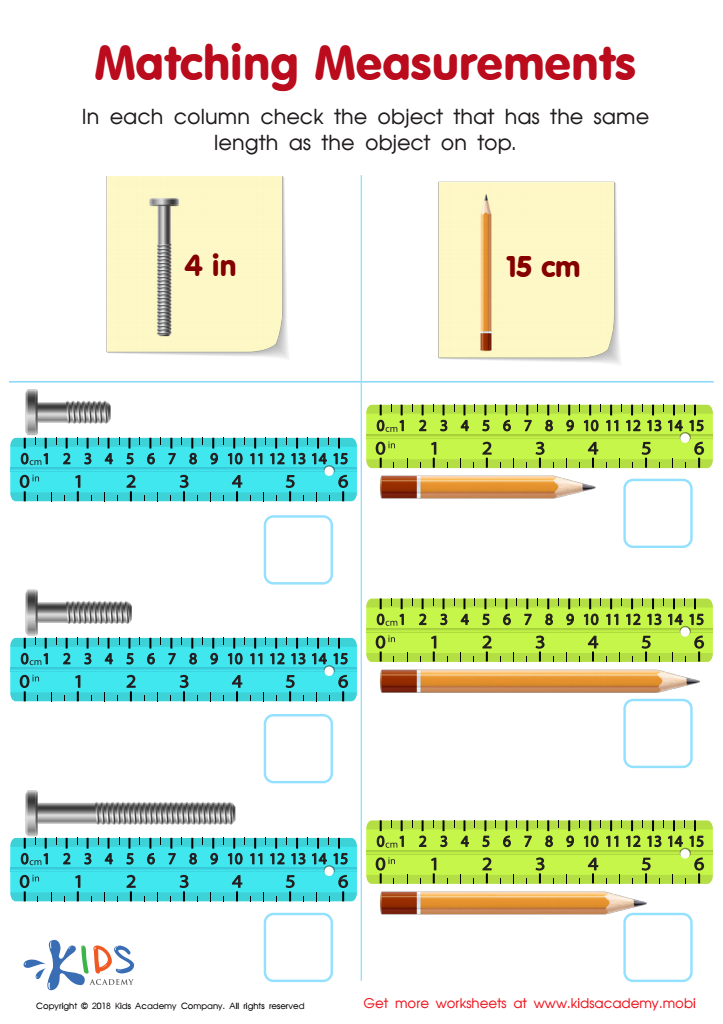
Get your students to measure different objects with this colorful worksheet. At the top of each column is a prefilled object. Ask them to look at the pictures below each column and identify the objects that are of the same length as the one at the top.
Matching Measurements Worksheet
Worksheet
Measuring the Length of Plants Worksheet

Measuring the Length of Plants Worksheet

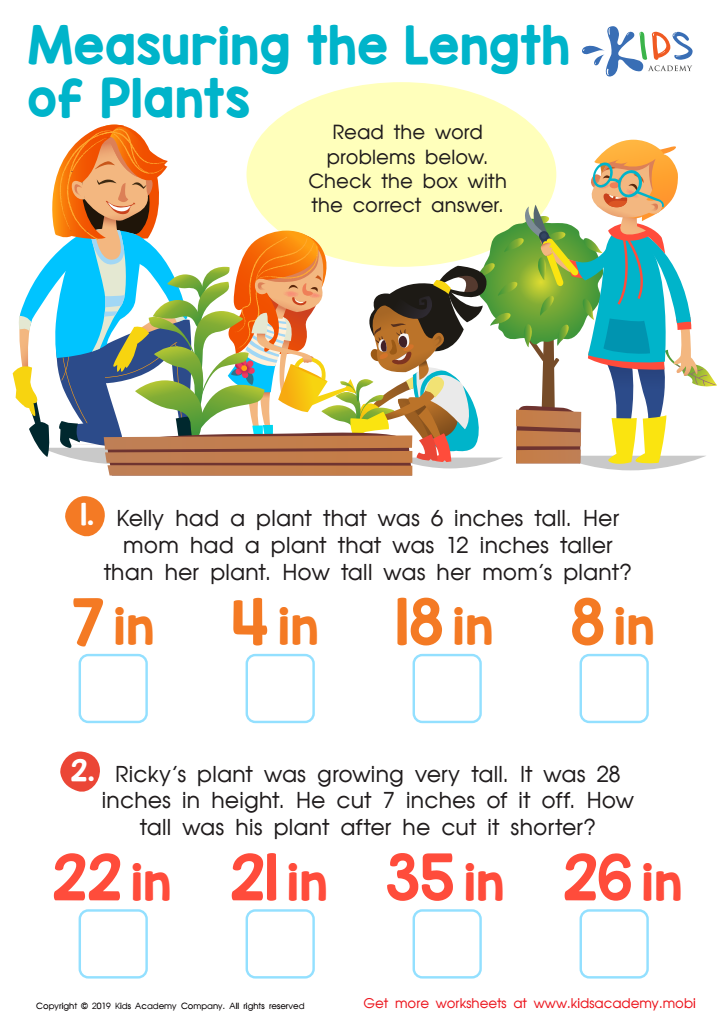
Help your kids practice their math skills with this worksheet. Read the word problems in the picture and help them check the correct box. Word problems are equations written in sentence form, so they must be interpreted and understood to be solved correctly.
Measuring the Length of Plants Worksheet
Worksheet
Centimeters and Meters Worksheet

Centimeters and Meters Worksheet

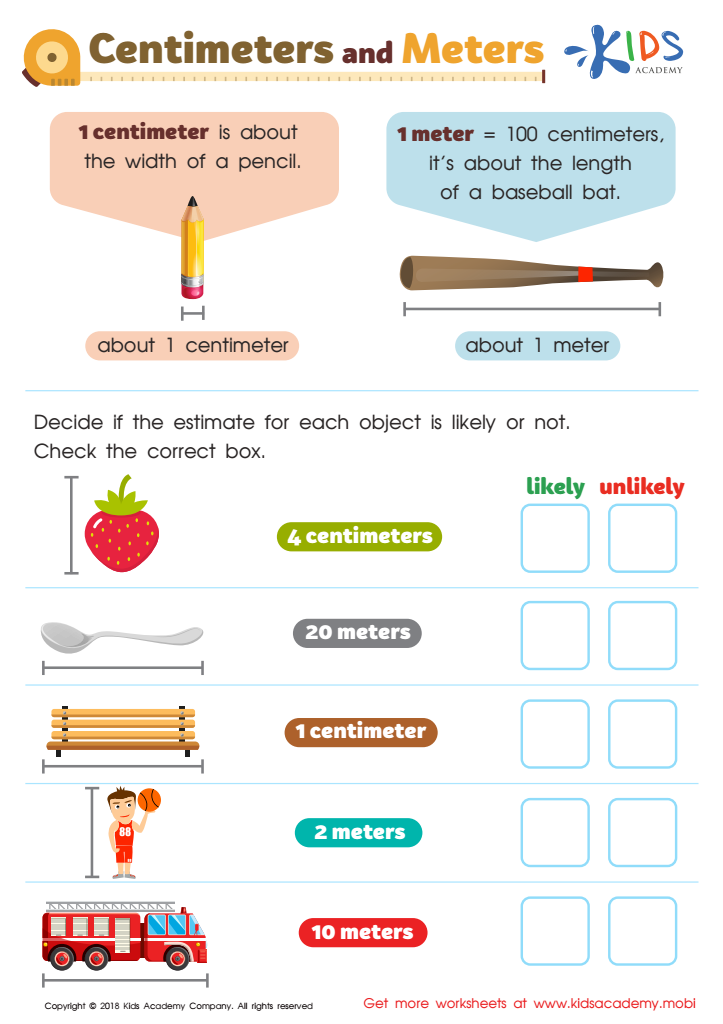
Get a pencil and show your child how wide 1 cm is (about the same width). Then, take a baseball bat and explain that 1 meter is around its entire length. Now your child has an idea of what to picture when hearing cm and m. Look through the worksheet together and show them each object. Ask if the object is likely or unlikely to be the length described.
Centimeters and Meters Worksheet
Worksheet
Let's Measure Animals! Worksheet

Let's Measure Animals! Worksheet

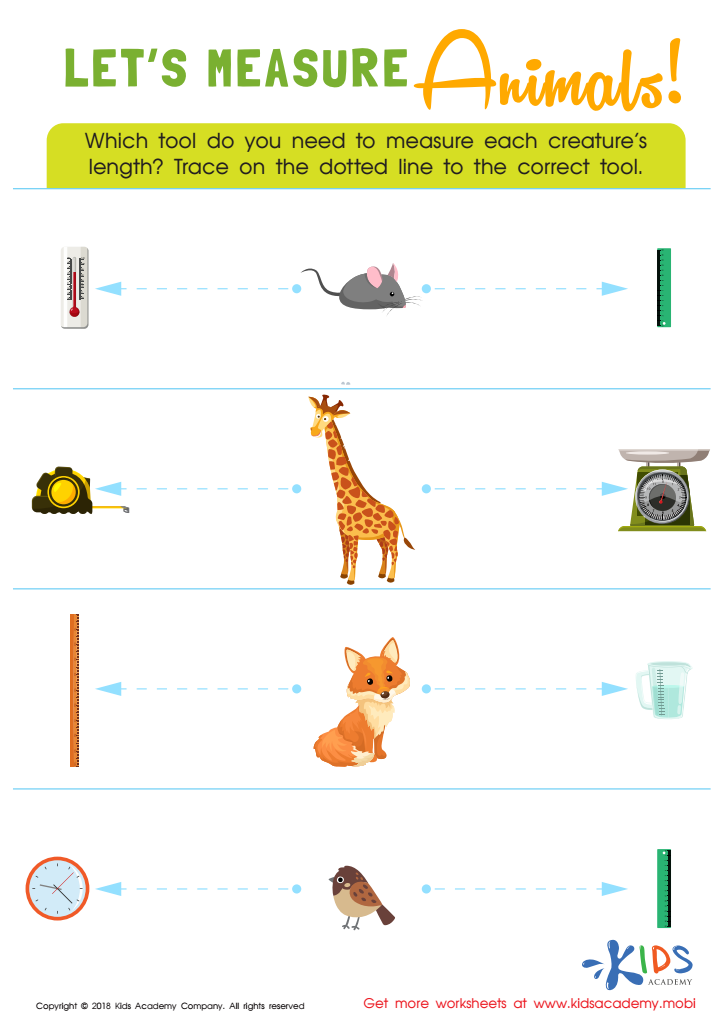
Have your students measure the length of animals like a mouse, giraffe, fox, and bird using this fun tracing sheet. They must carefully follow the dotted lines to the correct measuring tool, and by the end of the colorful worksheet, they'll know more about measuring and the different tools used.
Let's Measure Animals! Worksheet
Worksheet
Measure it in Feet Worksheet


Measure it in Feet Worksheet

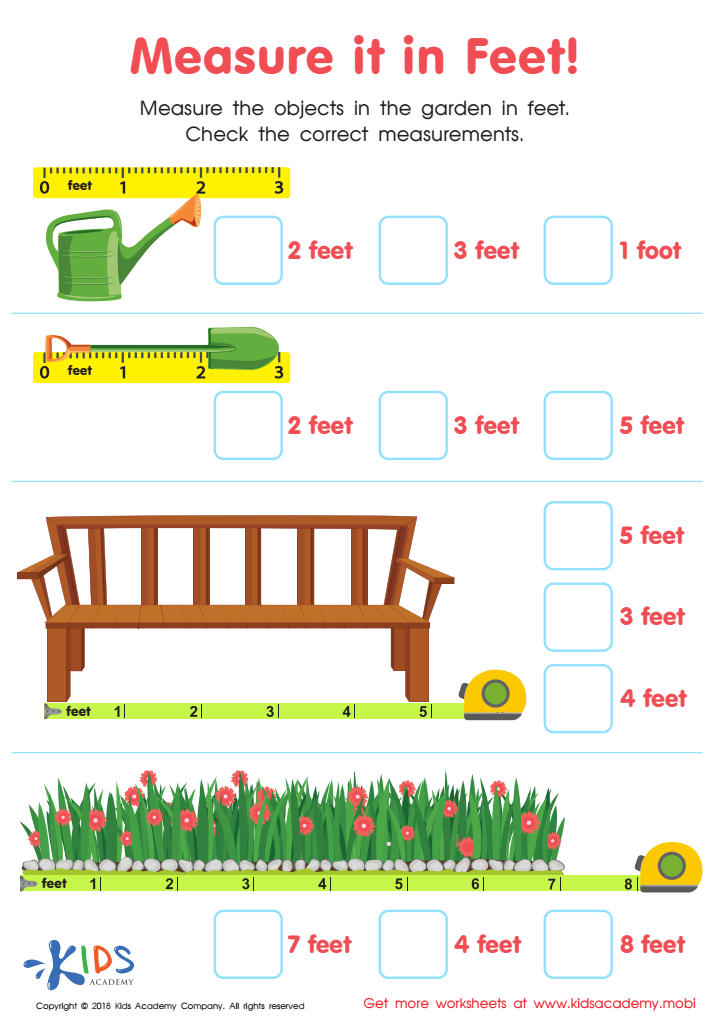
Put your kids' measuring skills to the test with this worksheet! Kids will measure garden objects in feet and check the correct measurements from the choices given. Assess how accurately they can measure objects around the house and help them hone those skills.
Measure it in Feet Worksheet
Worksheet


Understanding measurements is critical for children aged 8-9 because it lays the foundation for many real-world skills. For one, measurements find their application in daily activities, from cooking (measuring ingredients) to creating art (knowing dimensions and proportions). By learning measurements, children grasp the basics of both the metric and imperial systems, which fosters their problem-solving and critical-thinking abilities.

Moreover, the comprehension of measurements is integral for students' success in other math areas like geometry, algebra, and data analysis. A firm grasp on this topic broadenens their abilities to tackle complex topics in the future. From recognizing the importance of units to understanding perimeters, areas, and volumes, measurements help broaden their logical and spatial reasoning.

Parents and teachers play pivotal roles in making these concepts more relatable by tying them to everyday life, such as measuring furniture for a room or portioning out servings while baking. Engaging children in such hands-on, relatable activities promotes active learning and retention of knowledge.

Overall, foundational knowledge in measurements boosts students’ confidence with concepts across various subjects, setting them up for greater academic achievement. Understanding measurements at an early age supports a child’s cognitive development and equips them with vital life skills, making this an area worthy of attention and support from parents and teachers alike.