Counting skills Easy Measurement Worksheets for Ages 8-9
5 filtered results
-
From - To
Enhance your child's counting and measurement skills with our "Counting Skills Easy Measurement Worksheets for Ages 8-9." Designed to make learning fun and engaging, these printable worksheets help young learners master essential counting concepts while applying them to real-world measurement scenarios. Each worksheet focuses on fundamental skills such as identifying and comparing lengths, weights, and volumes, making it ideal for strengthening both math proficiency and practical understanding. With colorful illustrations and clear instructions, these activities encourage independent learning and confidence in mathematical abilities. Perfect for parents and teachers seeking valuable resources to support their child's educational journey. Browse now and watch your child excel!
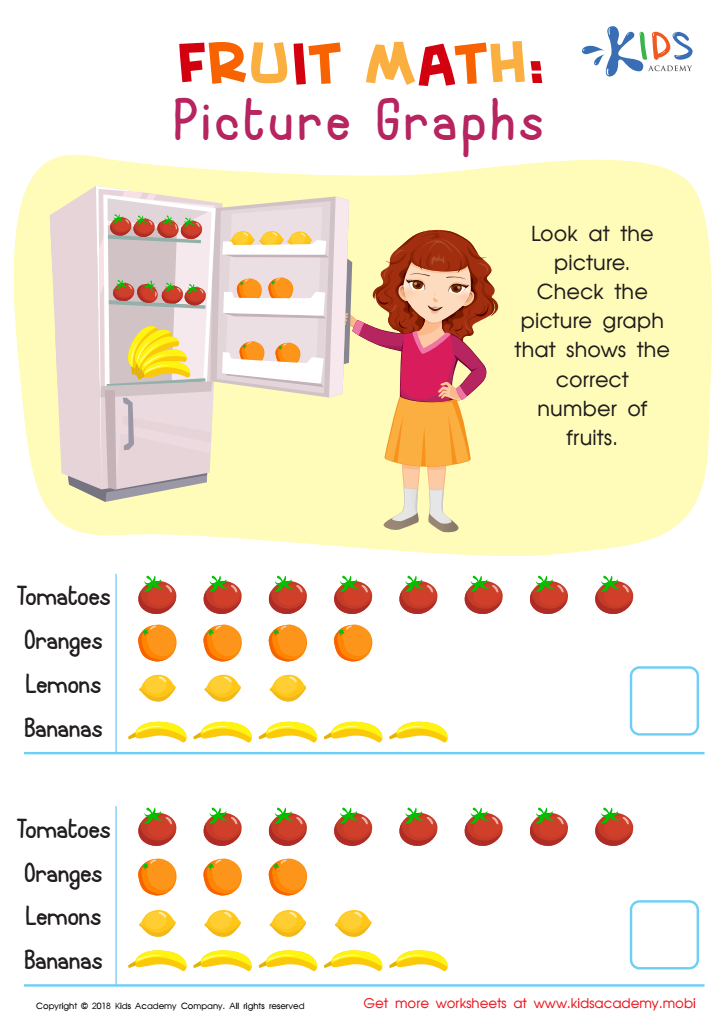
Fruit Math: Picture Graphs Worksheet
 Assign to My Students
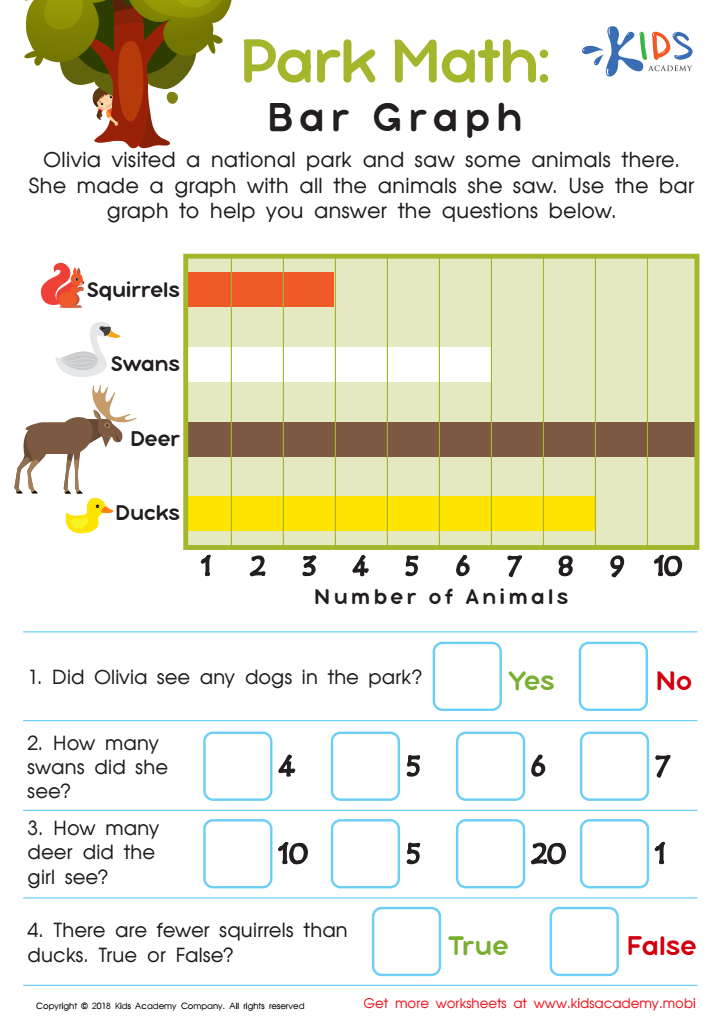
Park Math: Bar Graph Worksheet
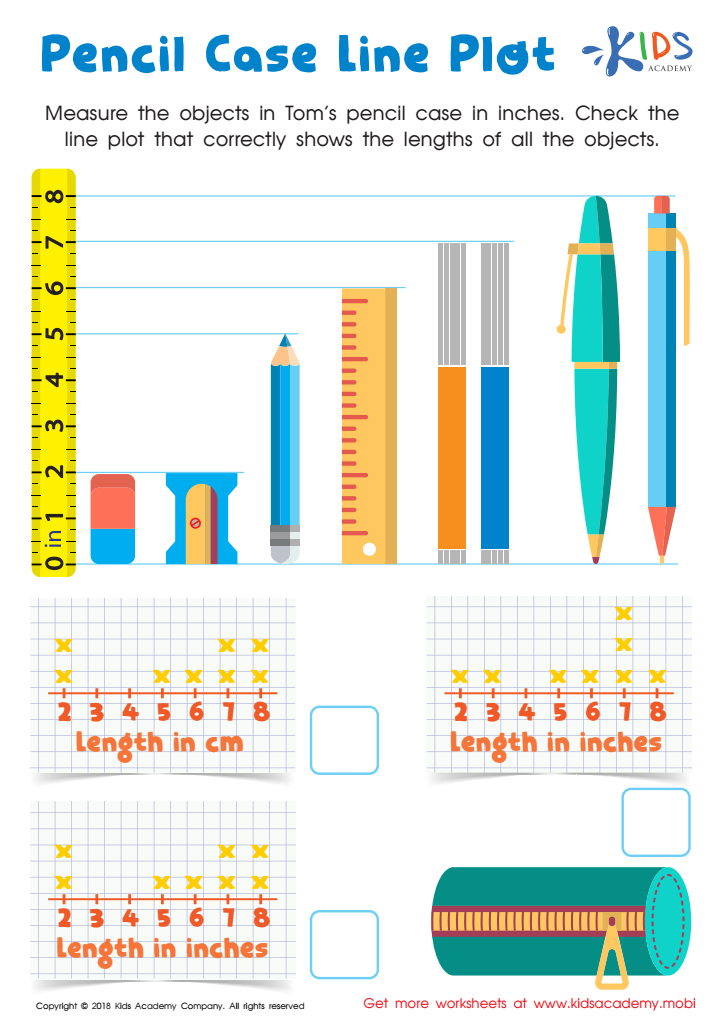
Pencil Case Line Plot Worksheet
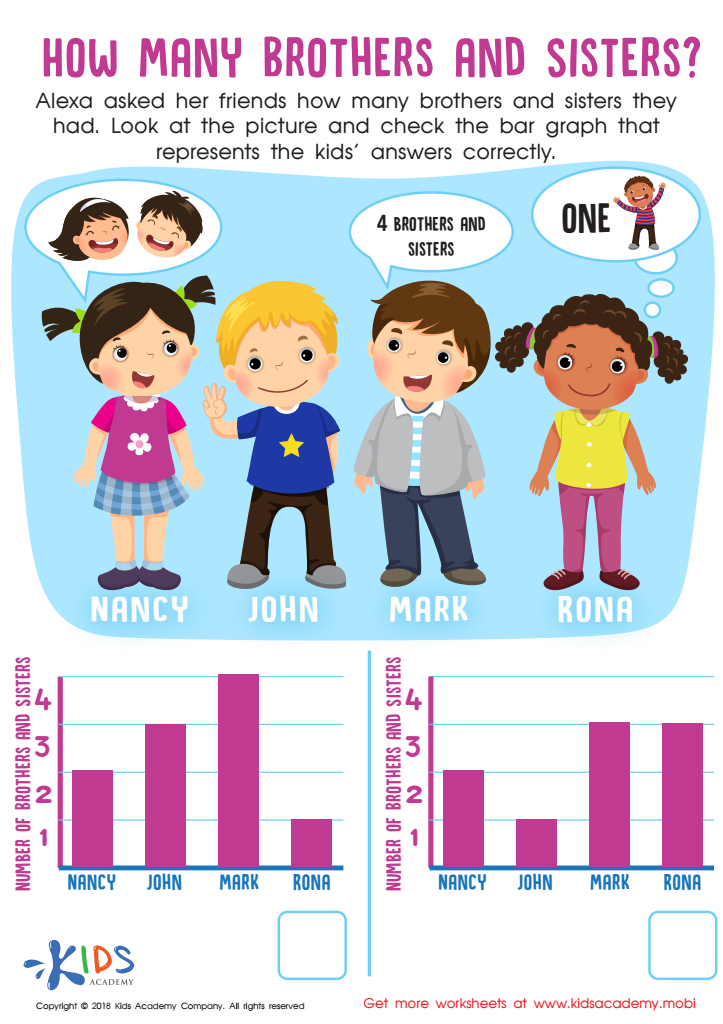
How Many Brothers and Sisters? Worksheet
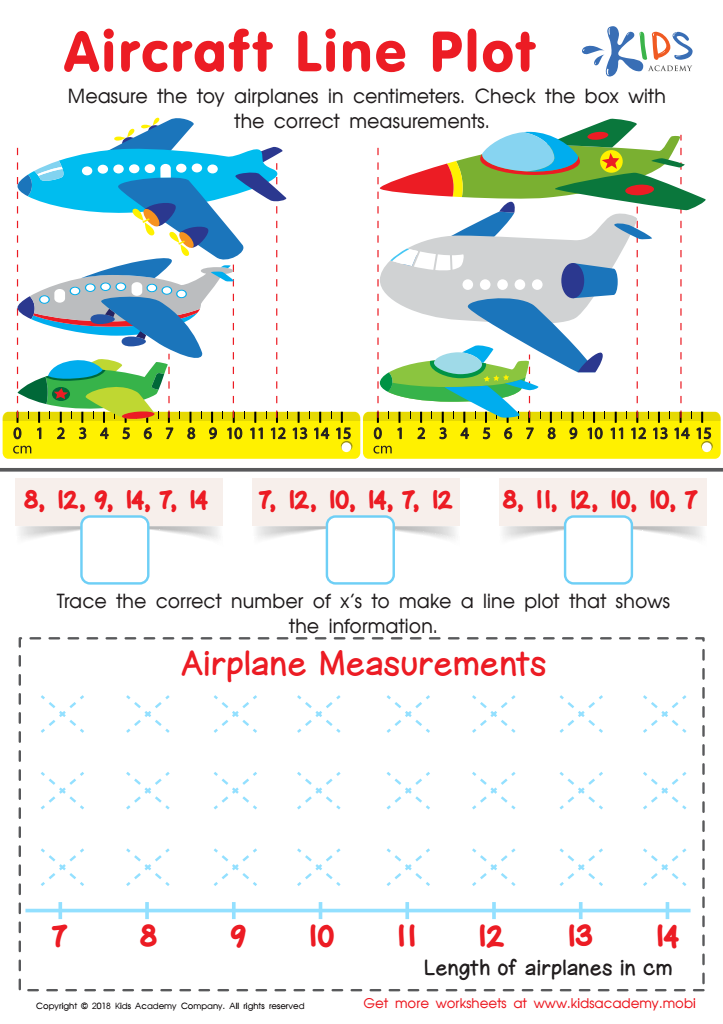
Aircraft Line Plot Worksheet








Counting skills and easy measurement are essential for children aged 8-9 because they form the foundation for more advanced mathematical concepts and practical life skills. Counting is more than just reciting numbers; it helps children understand numerical relationships, sequence, and order, which are critical for problem-solving and logical thinking.
First and foremost, proficiency in counting enables children to perform basic arithmetic operations like addition, subtraction, multiplication, and division. These operations are crucial for everyday tasks such as handling money, telling time, and managing quantities in cooking and crafting.
Easy measurement, on the other hand, brings abstract numerical concepts into tangible terms. It involves understanding length, weight, volume, and time, which are ubiquitous in everyday activities. For instance, cooking recipes, building projects, or even planning a day involve elements of measurement. When children grasp these early, they’re better equipped to handle more complex scientific and mathematical concepts in the future.
Moreover, mastery in counting and measurement boosts children’s confidence, reinforces their curiosity, and fosters a love for learning. This solid foundation eventually translates into better academic performance and a greater ability to understand the world around them.
Overall, ensuring that children are proficient in counting and measurement equips them with essential tools for both academic success and day-to-day activities, making life richer and more comprehensible.








