Understanding patterns Easy Times Tables Worksheets for Ages 8-9
3 filtered results
-
From - To
Explore our "Understanding Patterns Easy Times Tables Worksheets for Ages 8-9" that effortlessly blend fun with learning! Designed to make math engaging, these worksheets help young learners grasp complex multiplication concepts through simple patterns. Our interactive and visually appealing activities encourage children to identify and understand patterns in times tables, boosting their confidence and math skills. Perfect for home or classroom use, these printables support a solid foundation in multiplication while keeping students motivated and excited to learn. Transform math practice into a joyous adventure with our well-crafted, easy-to-follow worksheets today!
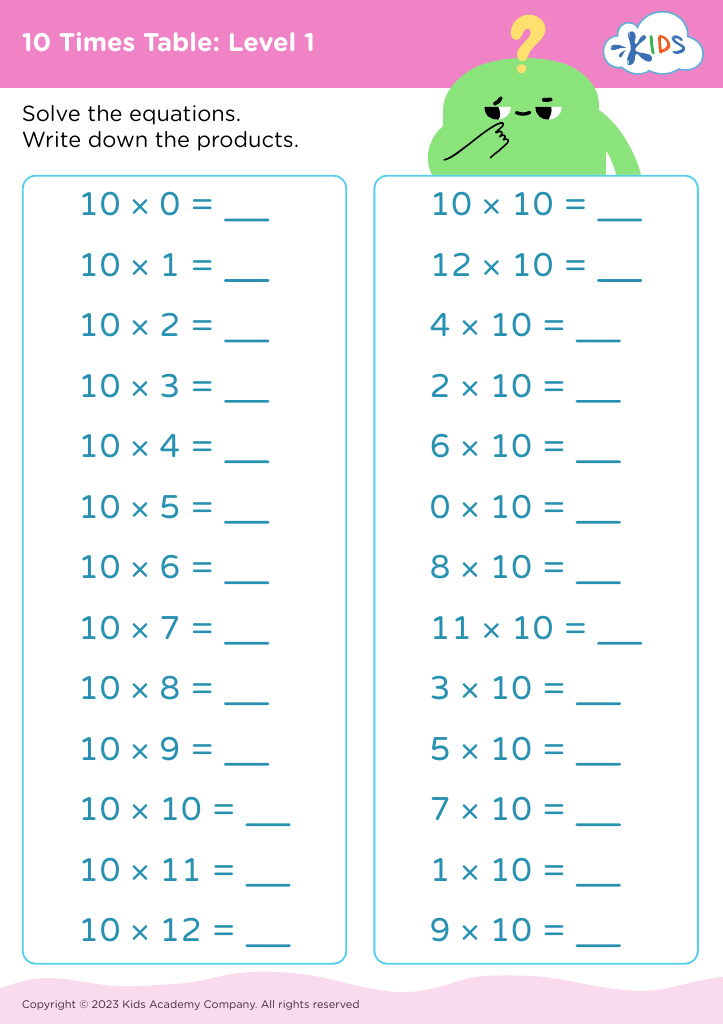
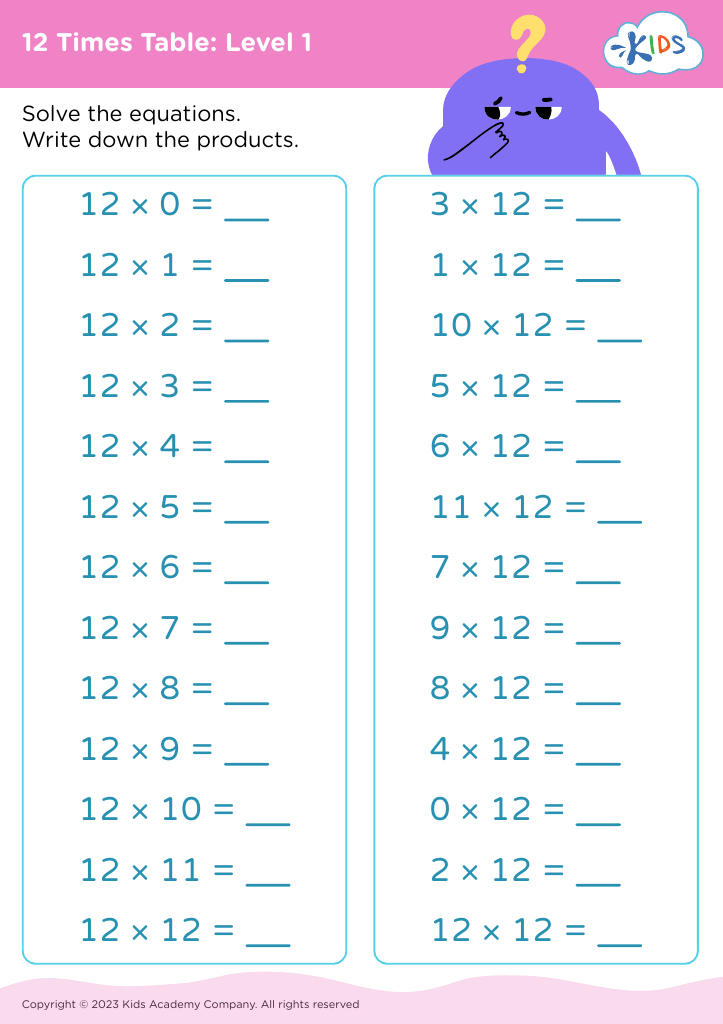
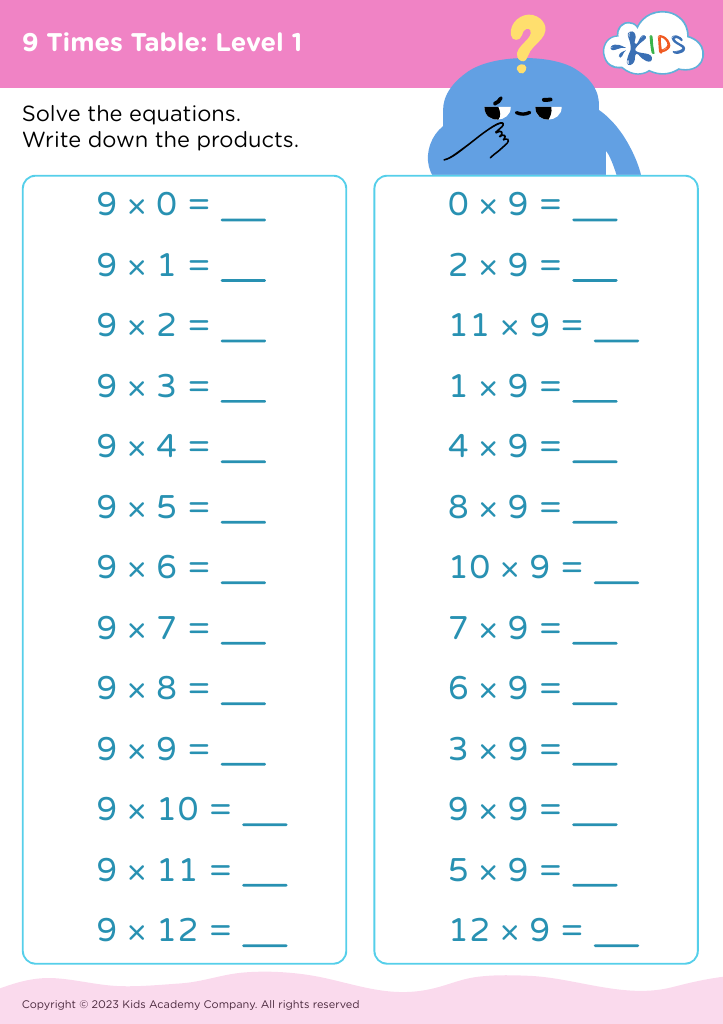





Understanding patterns in easy times tables for children aged 8-9 is crucial because it lays the foundation for more advanced mathematical concepts. At this early age, young minds are exceptionally receptive and capable of grasping new ideas. Patterns in times tables help simplify multiplication, turning what could seem like mere memorization into a meaningful and engaging learning experience.
Recognizing patterns aids in quicker problem-solving and enhances cognitive skills. For instance, noticing that every product in the two times table is even, or that the digits repeat in a specific manner in the five times table, demystifies multiplication. This not only boosts self-confidence but also reduces math anxiety, creating a positive attitude towards learning.
Moreover, pattern recognition is a key skill that transcends math, impacting logical thinking and problem-solving abilities in other areas, such as science and programming. By practicing these patterns early, children develop a strong mathematical foundation that will be crucial for future subjects involving more complex mathematics, like algebra and geometry.
Incorporating pattern recognition in times tables for young learners fosters a deeper understanding and equips them with essential skills needed for academic success. Parents and teachers should thus prioritize this aspect of mathematical learning, ensuring children build competence and confidence in their abilities.








