Reading comprehension Easy Building Vocabulary Worksheets for Ages 8-9
6 filtered results
-
From - To
Welcome to our curated collection of "Reading Comprehension Easy Building Vocabulary Worksheets" designed for children aged 8 to 9! These engaging worksheets help young learners enhance their vocabulary while improving their reading comprehension skills. With a variety of fun activities, our resources encourage critical thinking and foster a love for reading. Each worksheet features age-appropriate texts and questions that challenge students to understand and analyze what they read. Perfect for at-home learning or classroom use, our worksheets are tailored to support educators and parents in guiding children towards becoming confident readers. Explore our worksheets and watch your child's comprehension soar!
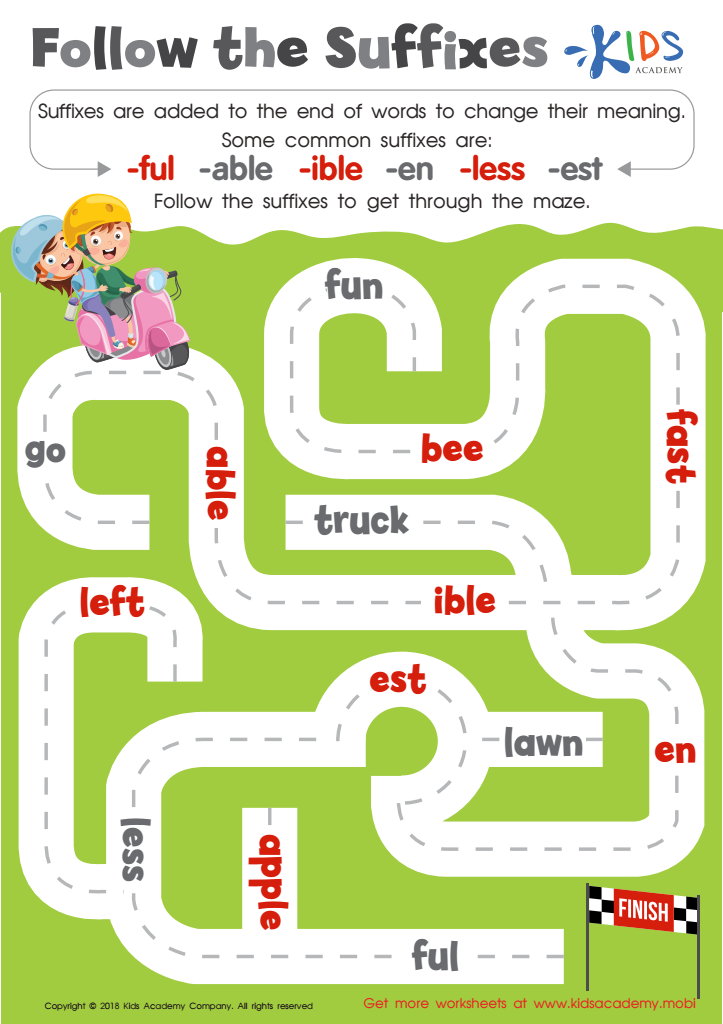
Reading: Follow the Suffixes Worksheet











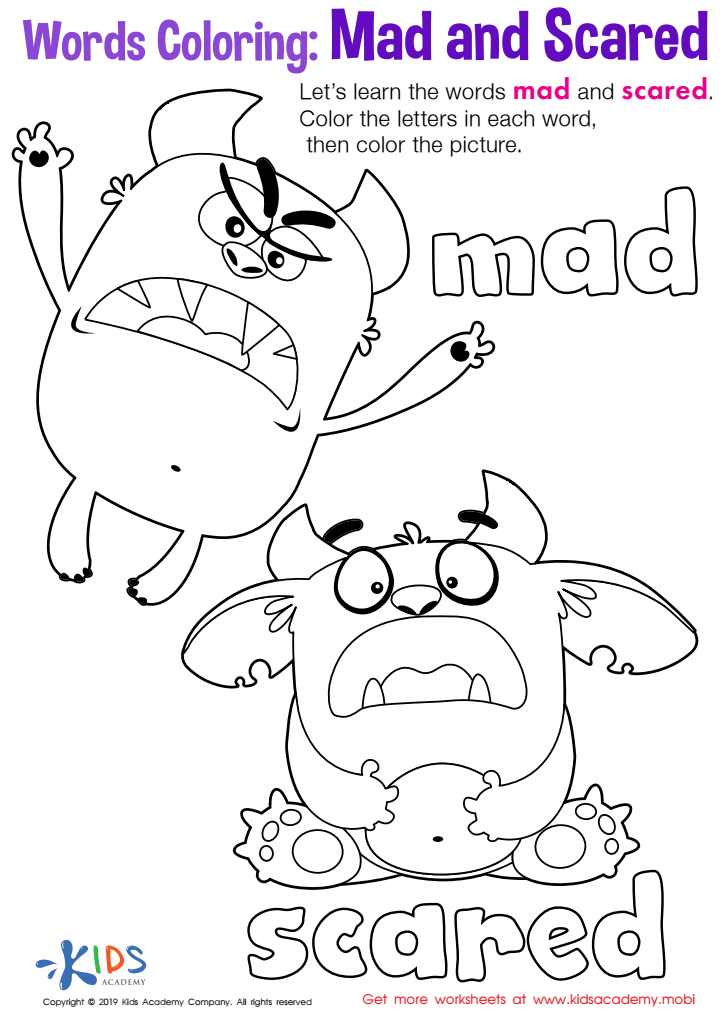
Mad and Scared Words Coloring Worksheet
 Assign to My Students
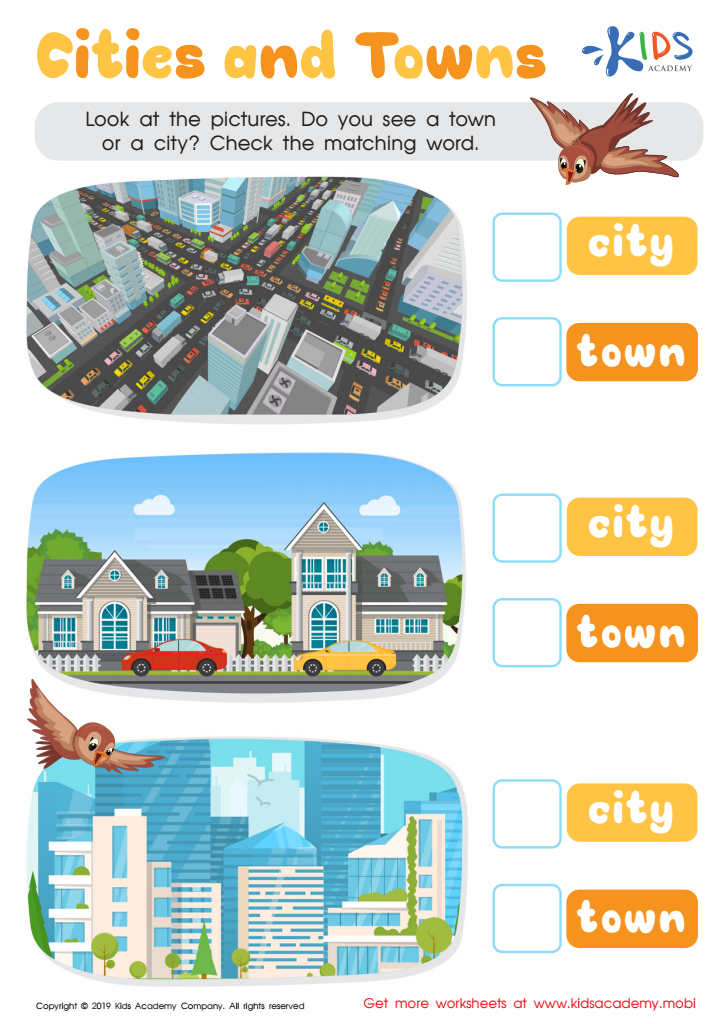
Cities and Towns Worksheet
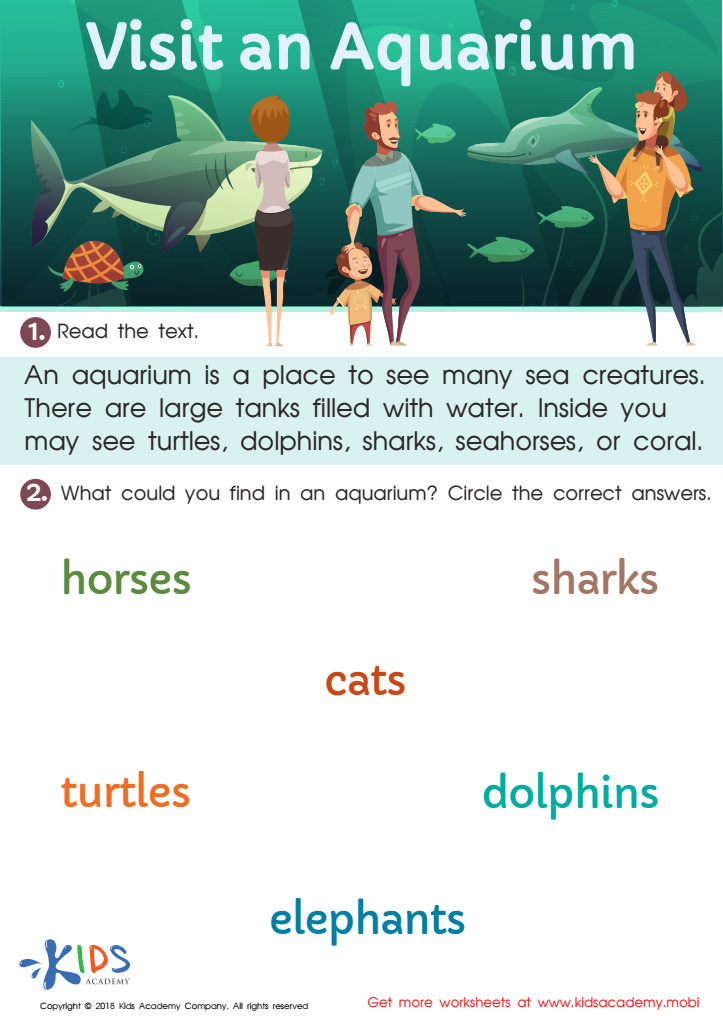
Visit an Aquarium Worksheet
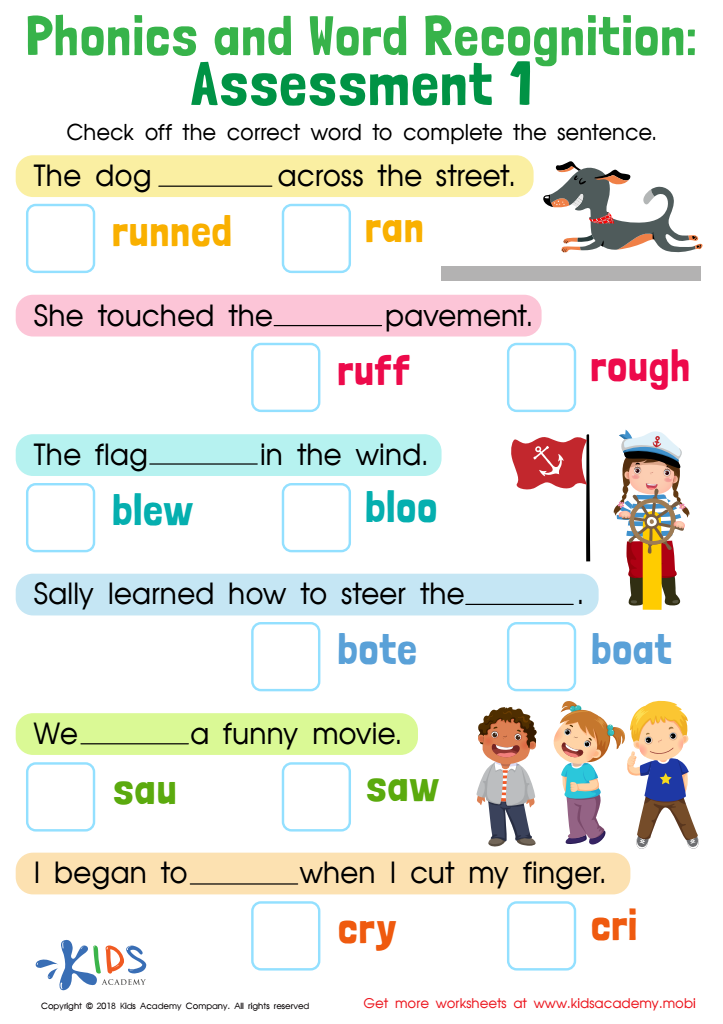
Phonics and Word Recognition: Assessment 1 Worksheet
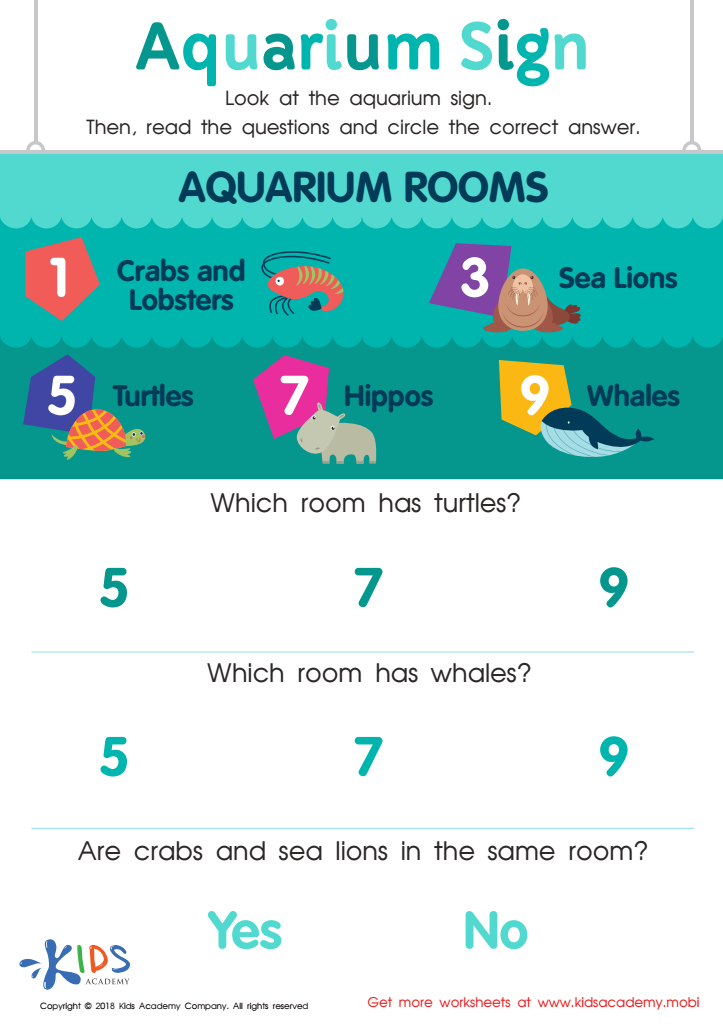
Assessment: Aquarium Sign Worksheet








Reading comprehension and vocabulary are crucial for children aged 8-9, as they form the foundation for successful learning and communication. At this age, children transition from learning to read to reading to learn. Strong reading comprehension skills enable them to understand, analyze, and engage with texts across various subjects, from history to science. This comprehension fosters critical thinking and the ability to synthesize information—a vital skill for academic success.
Building vocabulary is equally important. A rich vocabulary enhances a child's ability to express thoughts and ideas clearly. It not only aids in understanding complex texts but also improves writing skills. Children with a robust vocabulary are better equipped to navigate different contexts, work collaboratively, and approach problem-solving creatively.
Parents and teachers should prioritize reading comprehension and vocabulary development to support children's overall academic performance and self-confidence. Encouraging reading at home, engaging in discussions about stories, and playing word games can make learning enjoyable. This will not only prepare children for greater academic challenges ahead but also inspire a lifelong love for reading and learning, shaping well-rounded individuals equipped for future success. Ultimately, investing in these skills at a young age lays the groundwork for lifelong educational growth and personal development.