Fraction comparison Easy Worksheets for 8-Year-Olds
3 filtered results
-
From - To
Discover engaging Fraction Comparison Easy Worksheets designed specifically for 8-year-olds! These worksheets make learning about fractions enjoyable and accessible, helping young learners master the essential skill of comparing fractions with different numerators and denominators. Our colorful, interactive activities allow children to visualize fractions clearly, building their confidence in math through practice. With a variety of fun exercises tailored for this age group, these worksheets promote critical thinking and strengthen foundational math skills. Dive into the world of fractions with our user-friendly resources, perfect for parents and teachers alike. Empower your child’s learning today with our stimulating fraction comparison worksheets!
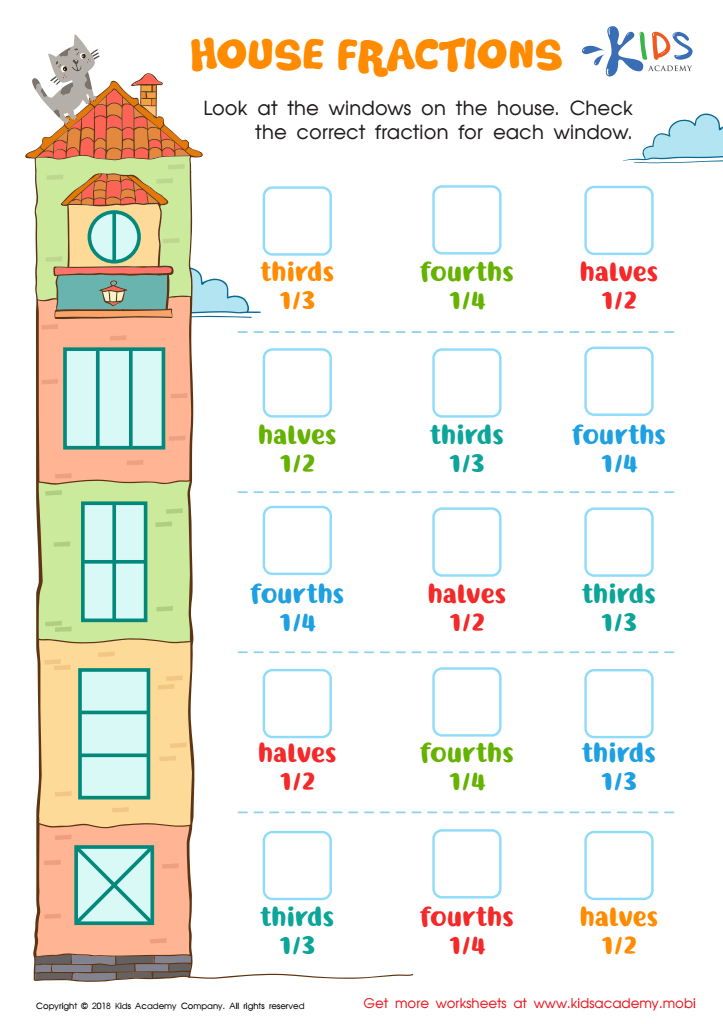
House Fractions Worksheet
 Assign to My Students
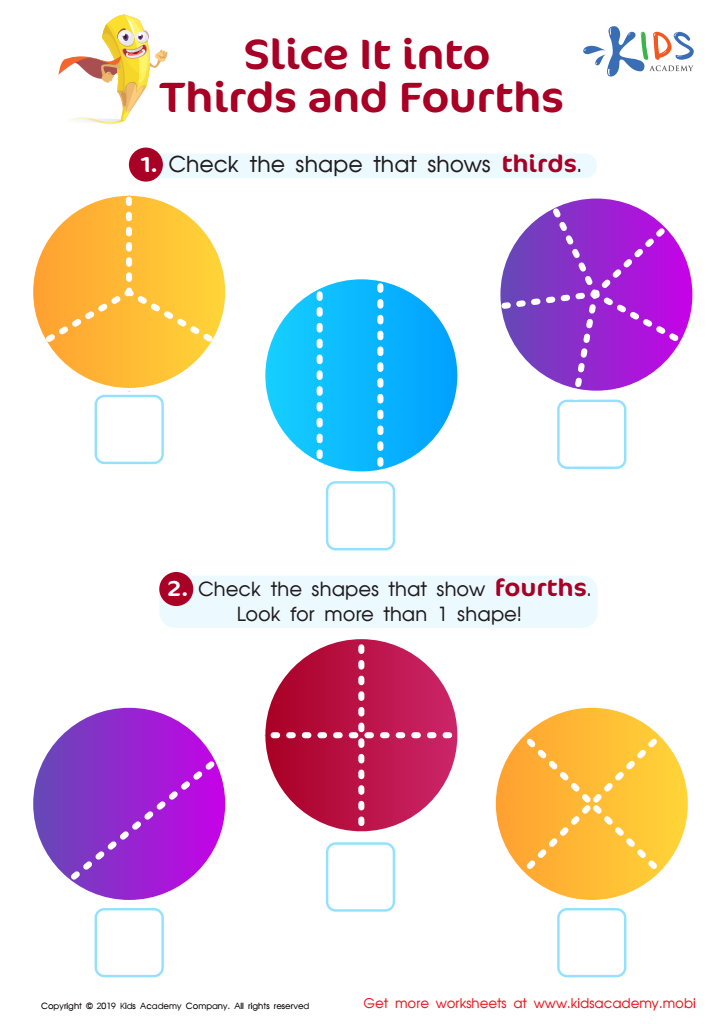
Slice in Thirds Fourths Worksheet
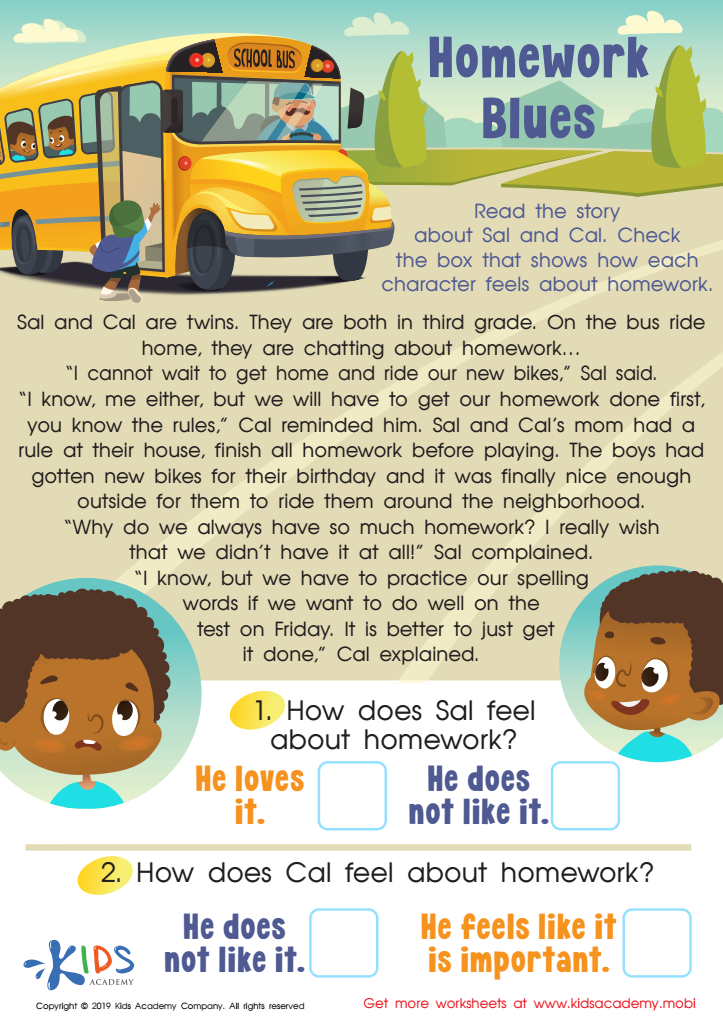
Homework Blues Worksheet






.jpg)
Fraction comparison is a crucial skill for 8-year-olds that lays the foundation for their understanding of more advanced mathematical concepts. Parents and teachers should care about this topic because it enhances critical thinking, problem-solving abilities, and lays the groundwork for later math skills such as addition, subtraction, and equivalence of fractions.
Understanding how to compare fractions helps children make sense of everyday situations, such as sharing a pizza or measuring ingredients for a recipe. When 8-year-olds grasp these concepts, they develop a stronger number sense, enabling them to navigate real-world scenarios effectively.
Moreover, comparing fractions fosters perseverance and resilience in problem-solving. It encourages students to analyze relationships between numbers, which is a valuable skill beyond mathematics.
In today’s data-driven world, these foundational skills become even more significant; they support interdisciplinary learning, as fractions play a vital role in subjects like science, art, and economics. By prioritizing fraction comparison, parents and teachers equip children with the tools they need for academic success and everyday life, ensuring they grow into confident, capable thinkers. Ultimately, fostering these skills at a young age promotes a lifelong love for learning and exploration in mathematics.








