Understanding life cycles Easy Worksheets for 8-Year-Olds
3 filtered results
-
From - To
Explore our engaging "Understanding Life Cycles Easy Worksheets" tailored specifically for 8-year-olds! Designed to make learning fun and accessible, these worksheets help children grasp the fascinating stages of various life cycles, from plants to animals. Each worksheet features age-appropriate illustrations and activities that promote critical thinking and creativity. Kids will enjoy interactive exercises like matching life cycle stages, completing diagrams, and answering insightful questions. Ideal for both classroom use and home learning, our worksheets foster a deeper connection to nature and life sciences. Ignite curiosity and build foundational knowledge in your young learners today!
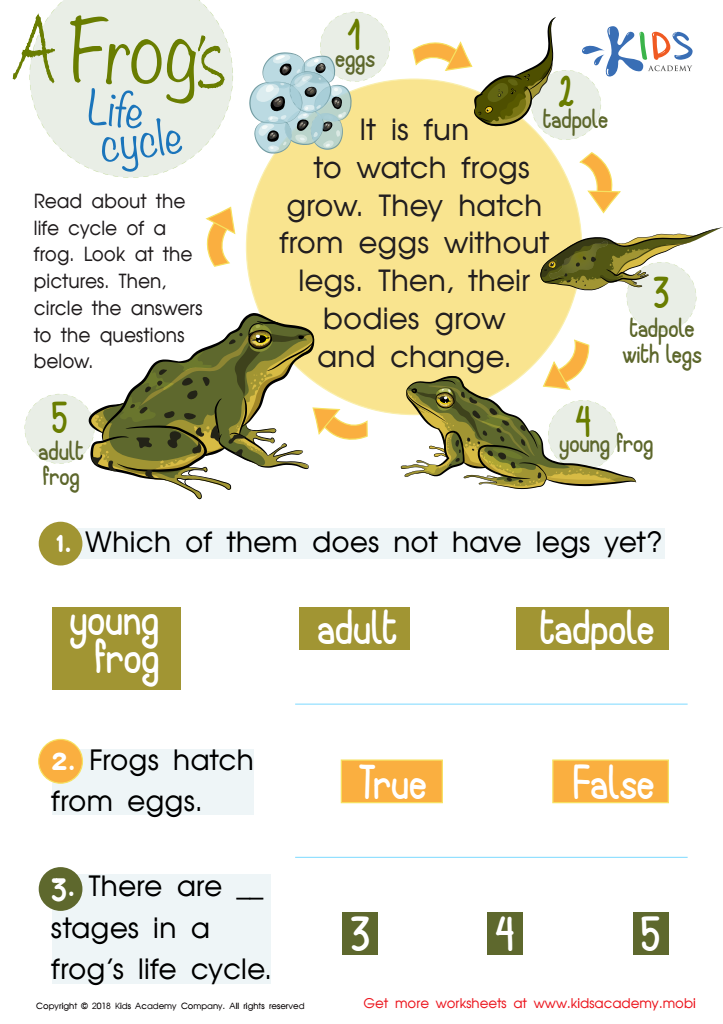
A Frog’s Life Cycle Worksheet
 Assign to My Students
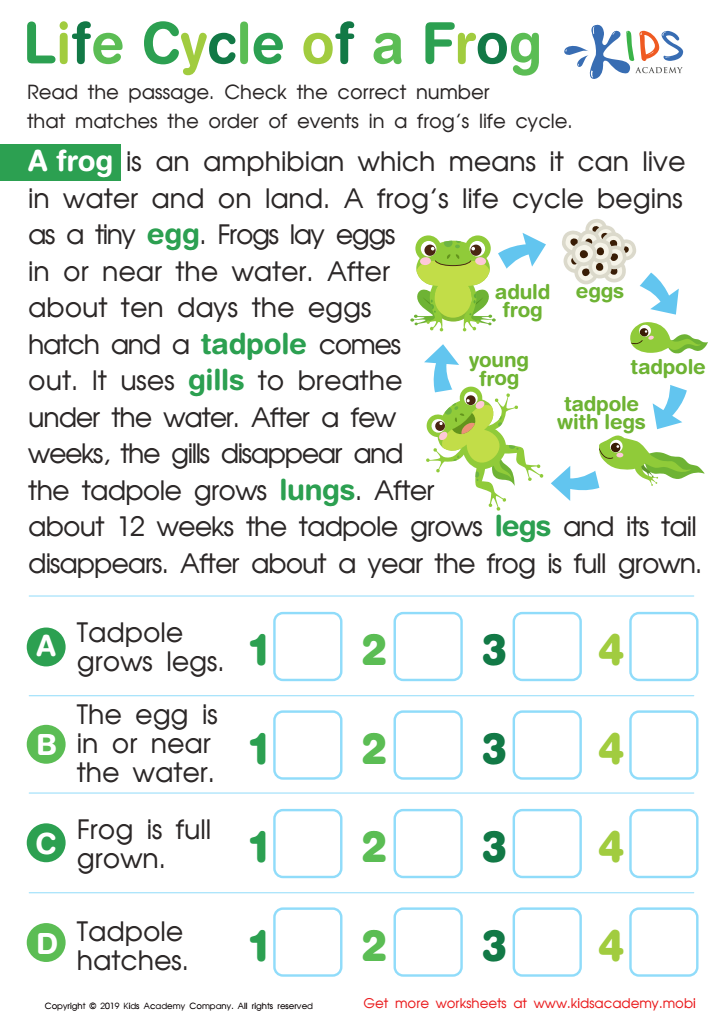
Life Cycle of a Frog Worksheet
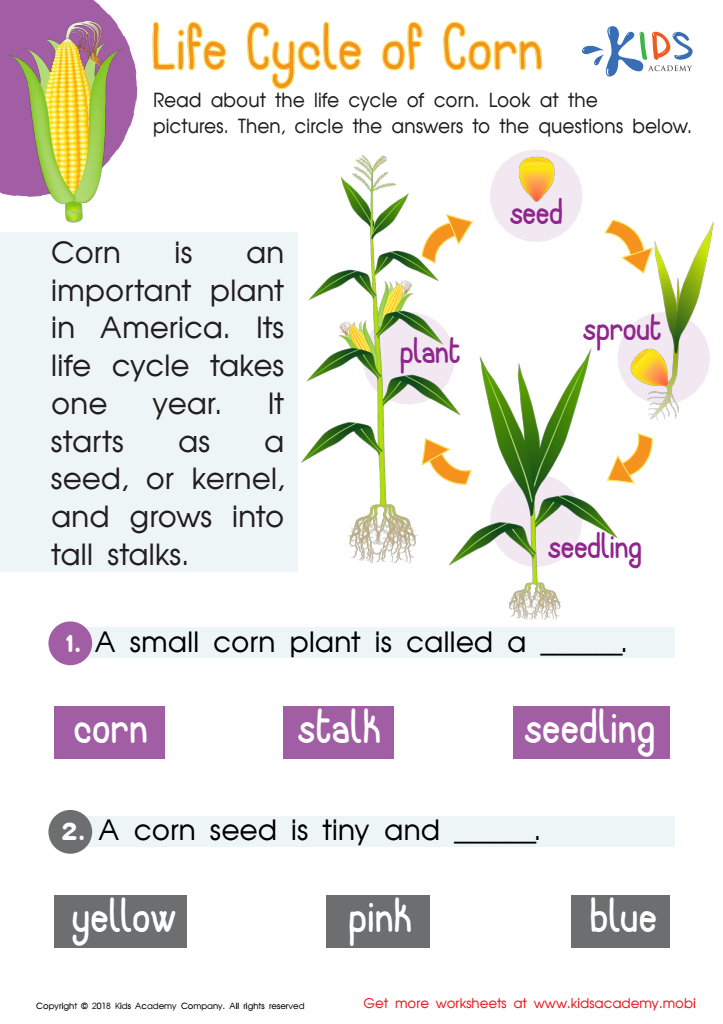
Life Cycle of Corn Worksheet






Understanding life cycles is important for both parents and teachers when educating children, especially 8-year-olds, for several reasons. Firstly, life cycles help kids learn about growth and change in nature. For example, observing how a butterfly transforms from a caterpillar to a chrysalis and then into a butterfly teaches children about metamorphosis and the beauty of change. This knowledge fosters curiosity and encourages kids to ask questions about the world around them.
Additionally, understanding life cycles promotes empathy and responsibility. By learning how living things grow and thrive, children start to appreciate the importance of caring for plants and animals, seeing them as part of a larger ecosystem. This awareness helps them develop values like kindness and stewardship toward the environment.
Moreover, life cycles support scientific learning. By exploring concepts such as reproduction, growth, and adaptation, children lay the groundwork for critical thinking and scientific inquiry. This understanding can spark a lifelong interest in science and nature.
Overall, incorporating lessons on life cycles into education supports children's cognitive, emotional, and environmental development, creating well-rounded individuals who are aware and considerate of the world they inhabit.








