Shape Recognition Easy 2D Shapes Worksheets for 8-Year-Olds
5 filtered results
-
From - To
Discover our engaging Shape Recognition Easy 2D Shapes Worksheets designed specifically for 8-year-olds! These interactive resources help young learners develop essential skills in identifying and classifying various two-dimensional shapes, including circles, squares, triangles, and more. With colorful visuals and fun exercises, children will not only learn to recognize shapes but also understand their properties and real-world applications. Perfect for homeschoolers and classroom settings, our worksheets promote essential math skills while keeping kids engaged and motivated. Enhance your child’s learning experience with easy-to-use, printable worksheets that make shape recognition enjoyable and educational! Start exploring today for a fun learning journey!
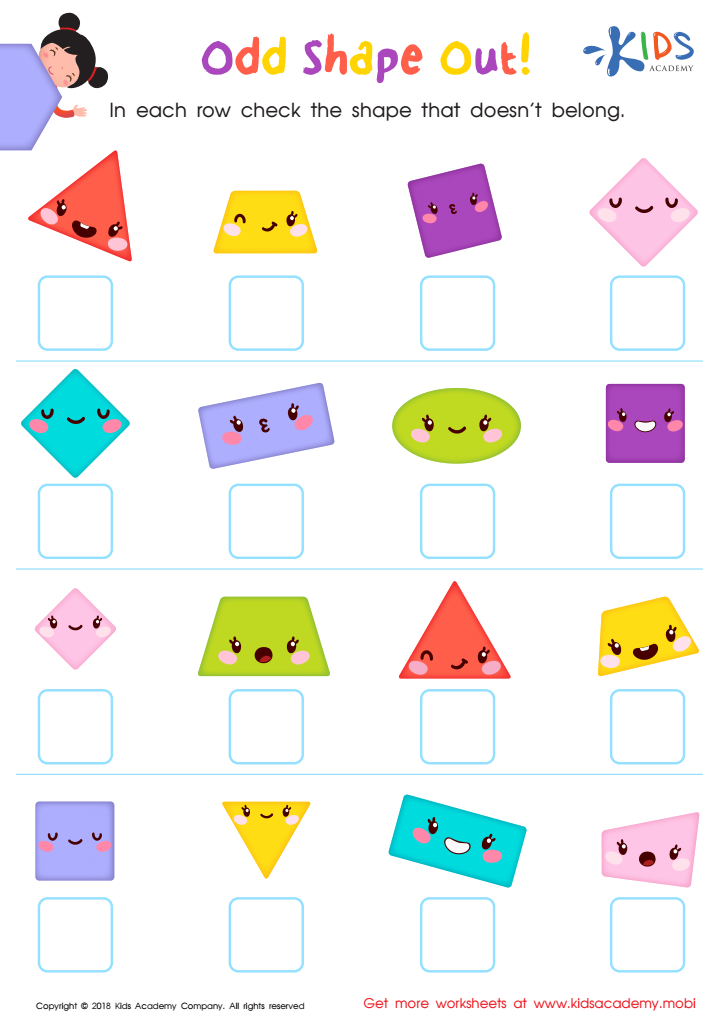
Odd Shape Out Worksheet for Grade 3
 Assign to My Students




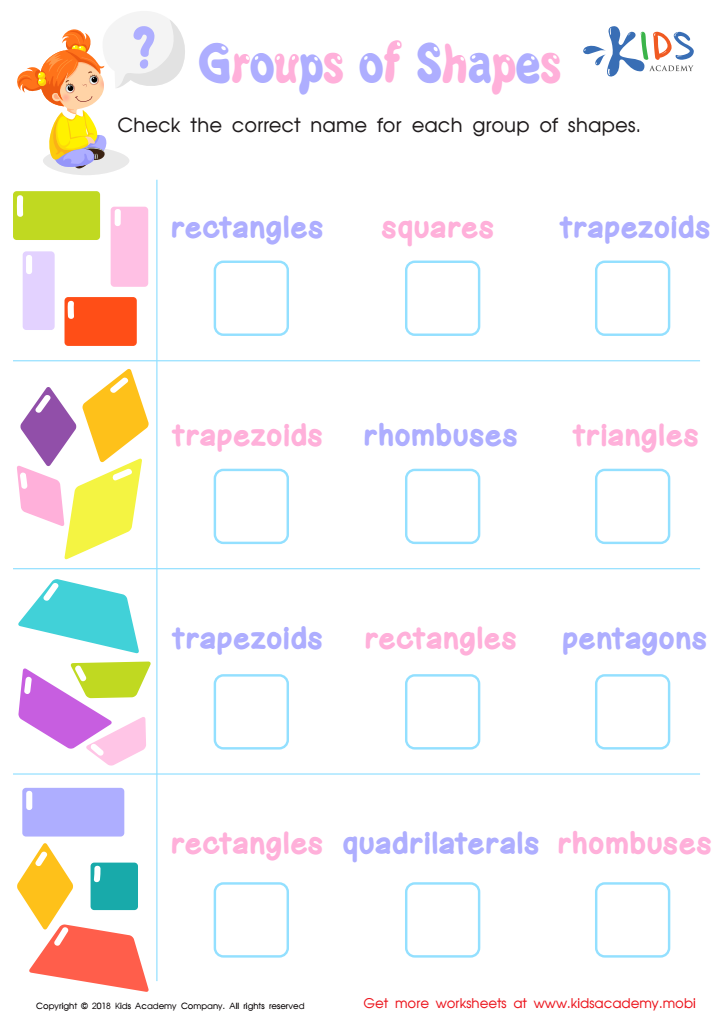
Groups of Shapes Worksheet
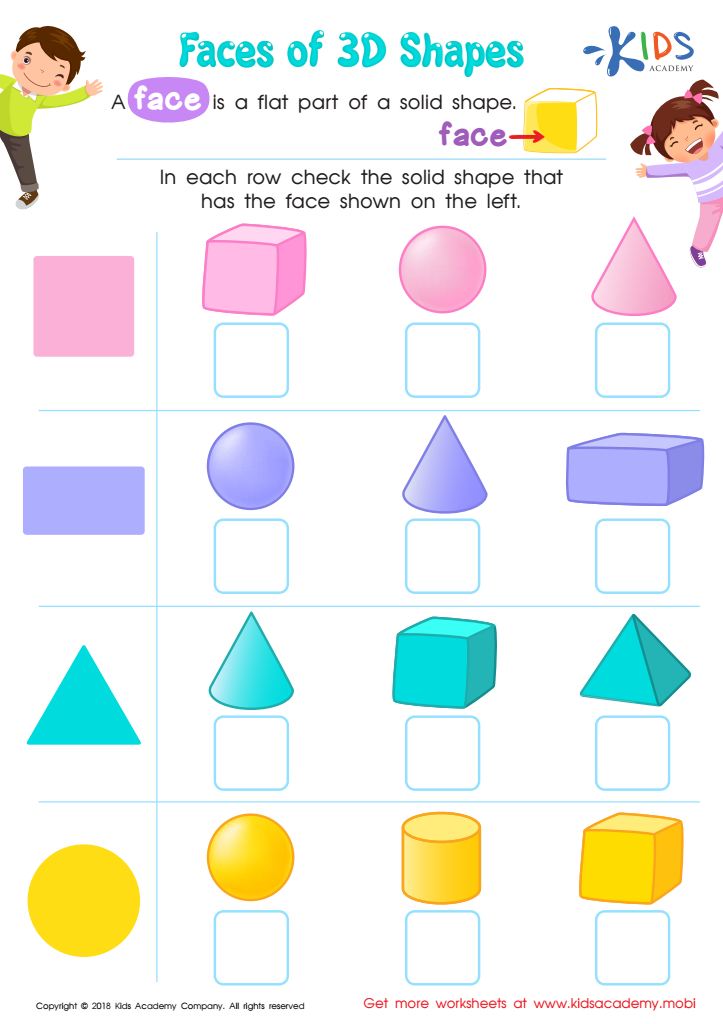
Faces of 3D Shapes Worksheet
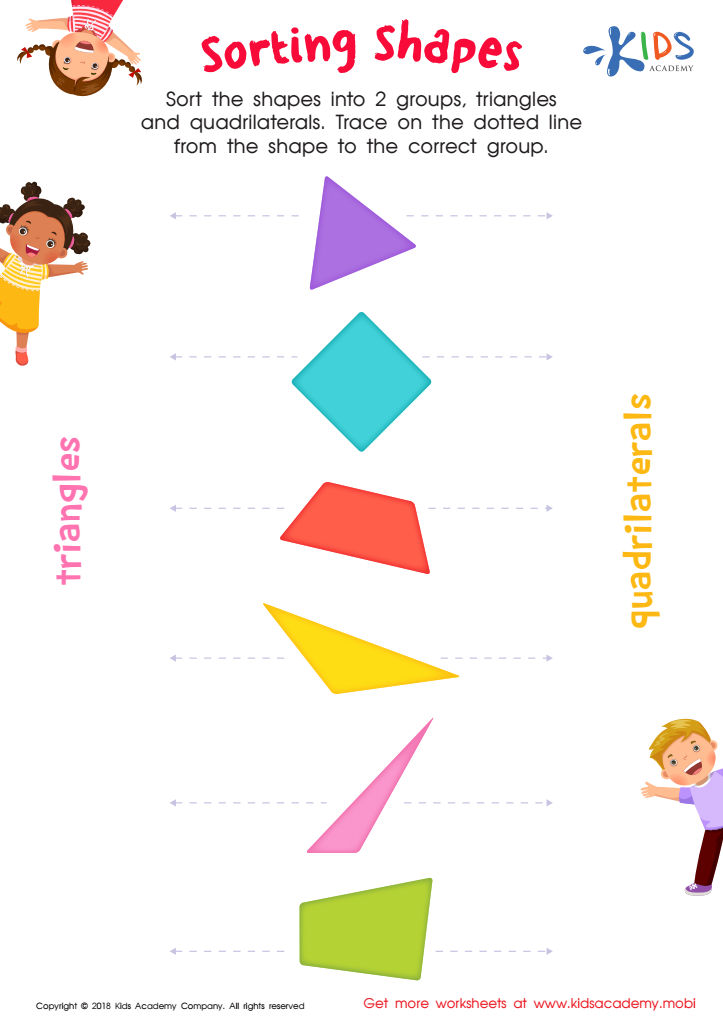
Sorting Shapes Worksheet
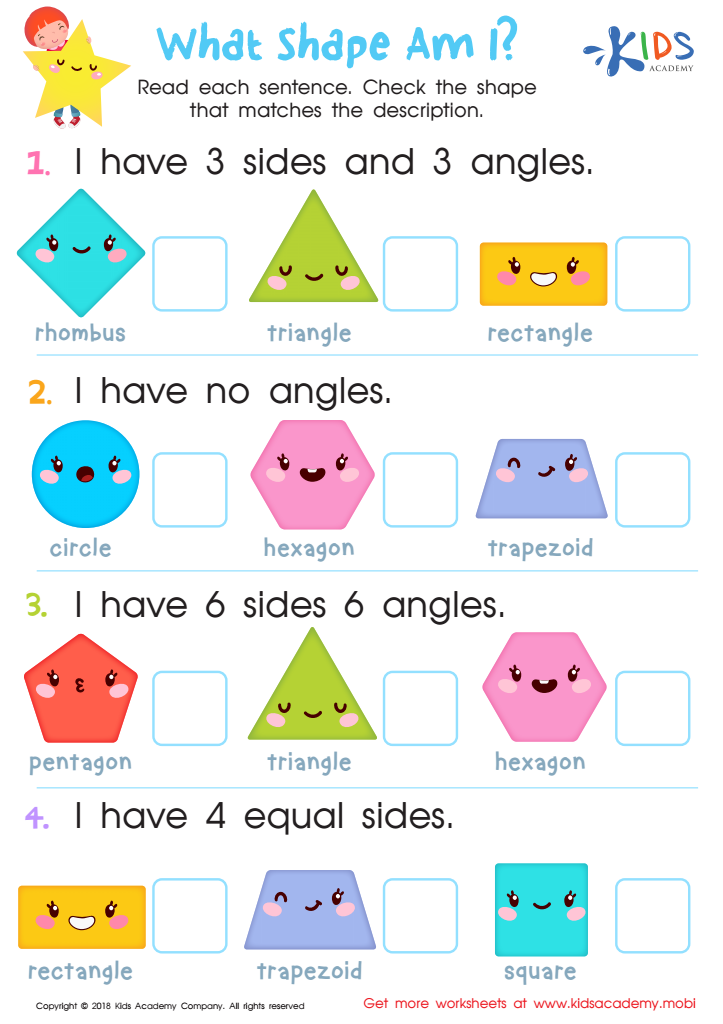
What Shape Am I? Worksheet








Shape recognition is a fundamental skill that lays the groundwork for various mathematical concepts and critical thinking in children. For 8-year-olds, understanding easy 2D shapes—such as circles, squares, triangles, and rectangles—is crucial in developing spatial awareness. Parents and teachers should prioritize shape recognition because it enhances children's ability to comprehend and interact with the world around them.
Firstly, recognizing shapes aids in building mathematics skills, as it often leads to an understanding of more complex concepts, such as geometry. When children can identify shapes, they are better equipped to solve problems related to area, perimeter, and even fractions. Moreover, visual-spatial skills are critical for reasoning and problem-solving in many subjects, including math and science.
Additionally, shape recognition supports cognitive development and boosts creativity. By recognizing shapes, children can categorize and organize their observations, enhancing their analytical skills. Furthermore, engaging with shapes through art, architecture, and design opens the door to imaginative exploration, allowing children to express themselves.
In conclusion, promoting knowledgeable shape recognition in children enables a strong foundation for future learning, fostering both academic growth and creative expression. This skill is essential for holistic development and should be a priority in early education.