Fine Motor Skills Easy Fractions of Shapes Worksheets for 8-Year-Olds
4 filtered results
-
From - To
Nurture your child's fine motor skills and understanding of basic fractions with our "Fine Motor Skills Easy Fractions of Shapes Worksheets for 8-Year-Olds." These engaging activities are designed to make learning fun, helping kids to effortlessly grasp fractions through hands-on practice. Each worksheet is carefully crafted to enhance their dexterity while they color, cut, and manipulate shapes. Perfect for developing precision, control, and mathematical thinking, our printable resources ensure your child builds a solid foundation in fractions, all while enjoying the process. Ideal for parents and teachers aiming to combine creativity with essential math skills.
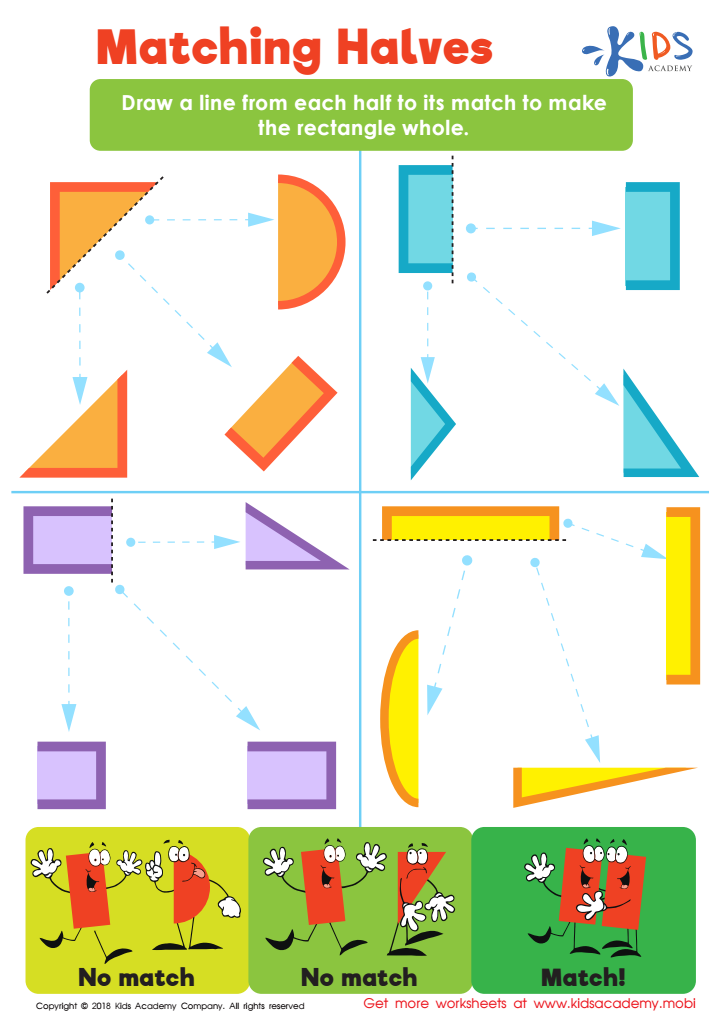
Matching Halves Worksheet
 Assign to My Students
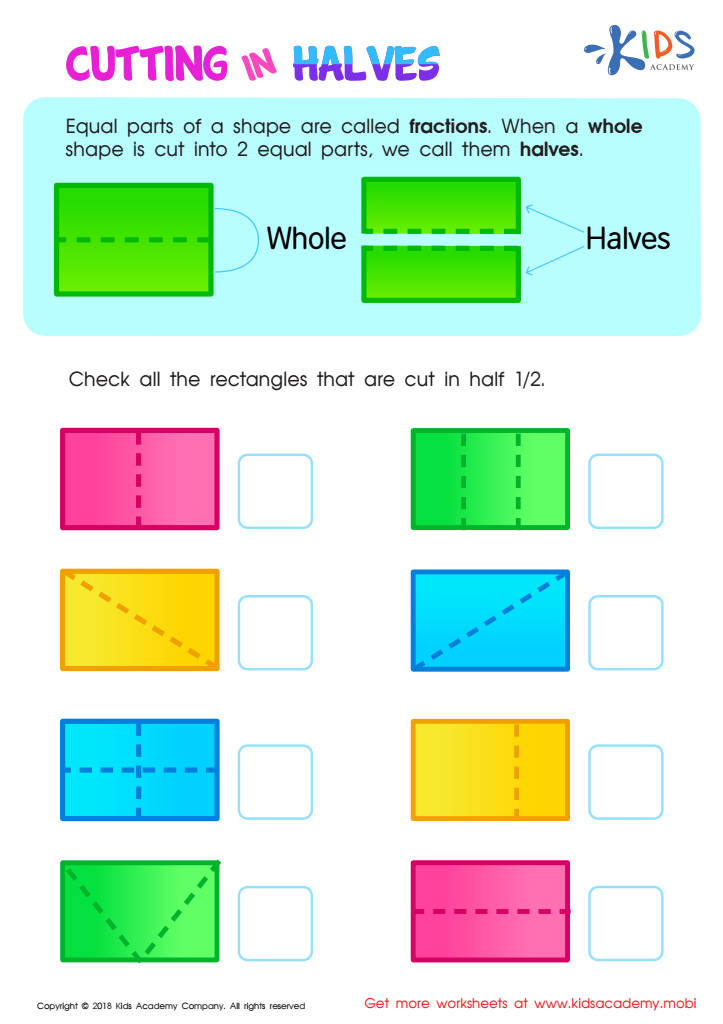
Cutting in Halves Worksheet
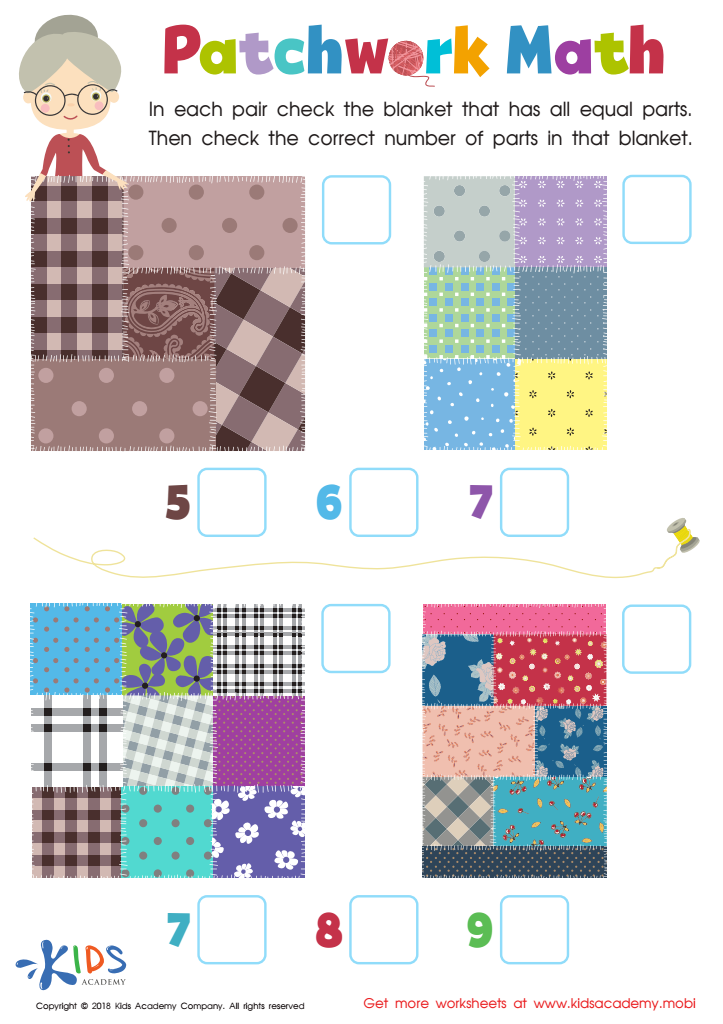
Patchwork Math Worksheet
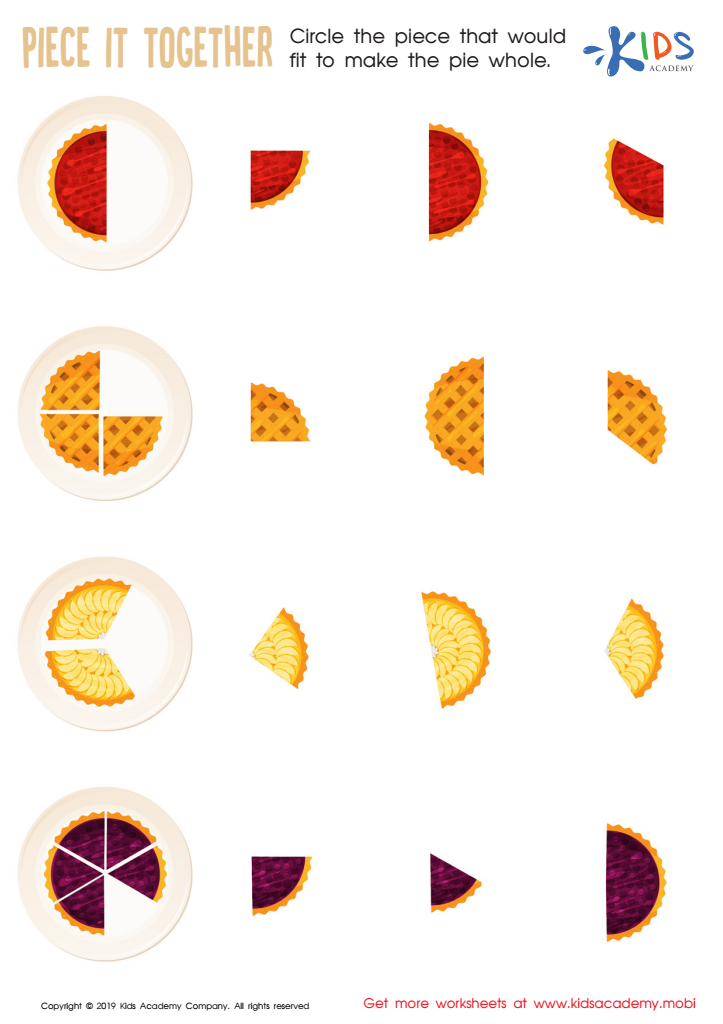
Piece it together Worksheet








Parents and teachers should prioritize ensuring that 8-year-olds develop fine motor skills required for easy fractions of shapes because these abilities lay a crucial foundation for their academic and daily life success. Fine motor skills involve the precise coordination of small muscles in the hands and fingers, facilitating essential activities like writing, cutting, and manipulating objects. Understanding fractions of shapes simultaneously nurtures spatial awareness and problem-solving skills, promoting mathematical thinking crucial for future learning.
When children master the fine motor skills needed to cut shapes or draw fractions accurately, they gain confidence in their academic abilities, fostering a positive attitude towards challenging subjects like mathematics. Moreover, this practice strengthens hand-eye coordination, dexterity, and concentration, which are vital for overall educational development.
For 8-year-olds, the ability to engage in detailed activities, such as dividing shapes into fractions, enhances cognitive skills, including critical thinking and visual-spatial reasoning. Teachers who incorporate tasks that blend fine motor development with basic math concepts help bridge gaps between abstract mathematical ideas and tangible experiences.
Parents can support this growth at home through crafts and activities that reinforce these skills, further solidifying the connection between motor development and academic achievement. Thus, fostering fine motor skills intertwined with mathematical concepts prepares children for more complex tasks, enhancing both their immediate and long-term educational outcomes.