Color recognition Easy Math Worksheets for 8-Year-Olds
5 filtered results
-
From - To
Our "Color Recognition Easy Math Worksheets for 8-Year-Olds" blend fun and education seamlessly! Designed to engage young learners, these worksheets incorporate vibrant colors while reinforcing key math skills. Activities include pattern recognition, basic arithmetic, and sorting exercises, all underpinned by the educational benefits of color recognition. Ideal for enhancing children's cognitive abilities and making learning delightful, our worksheets add spark to typical math lessons. Whether you are a parent or teacher, these printable resources are perfect for classroom and home use. Let's make math exciting and colorful for 8-year-olds with our dynamic worksheets!
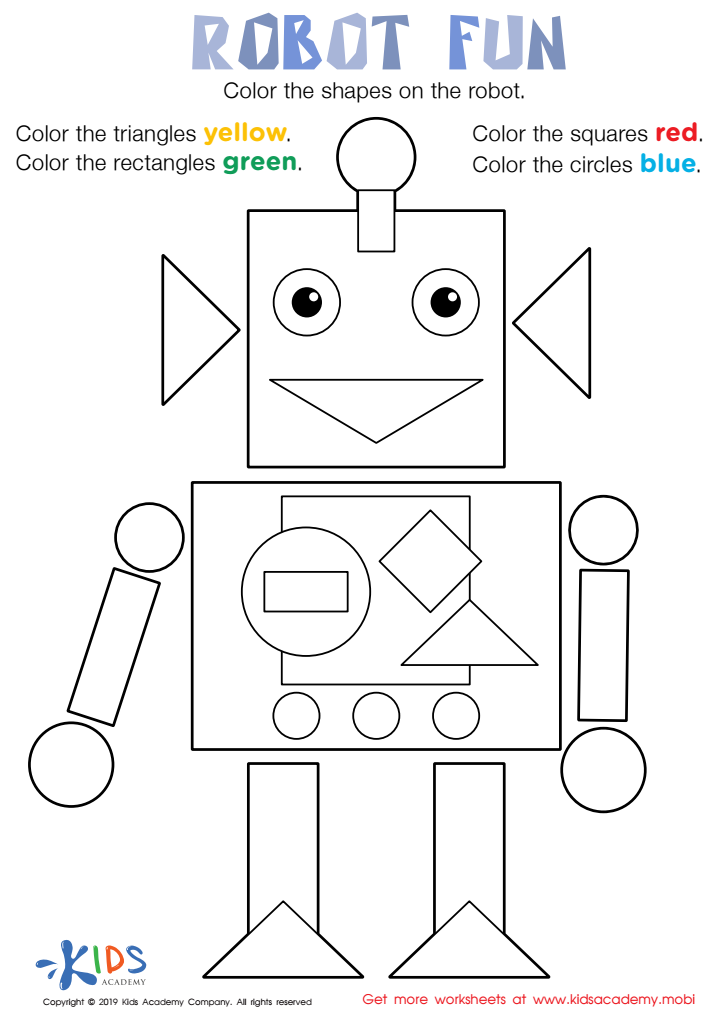
Robot Fun Worksheet
 Assign to My Students
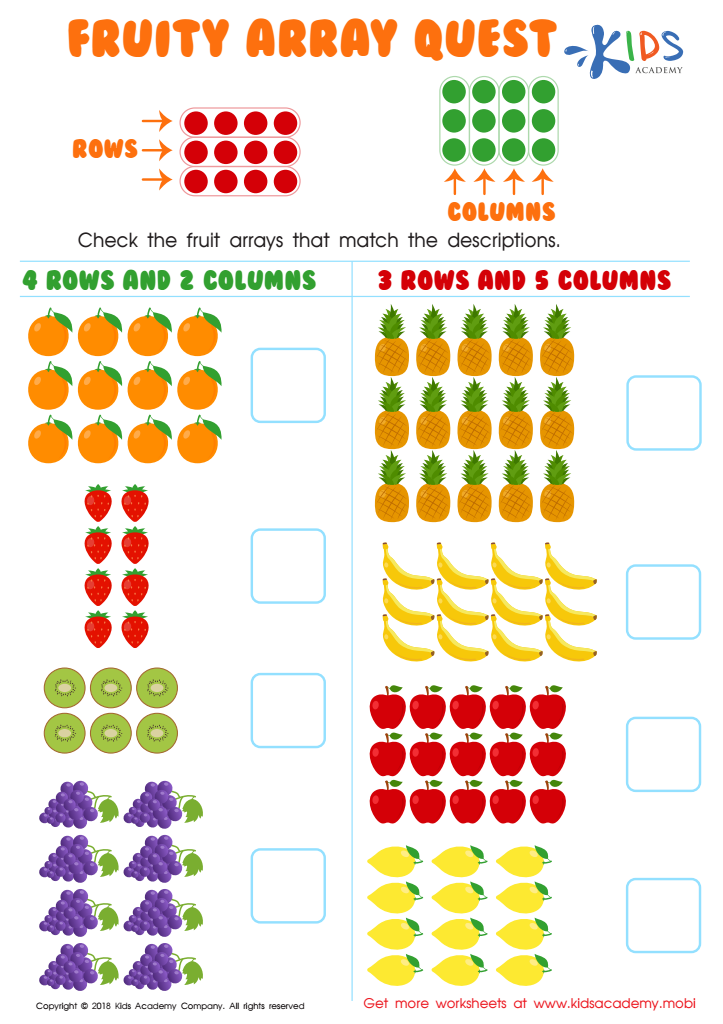
Fruity Array Quest Worksheet
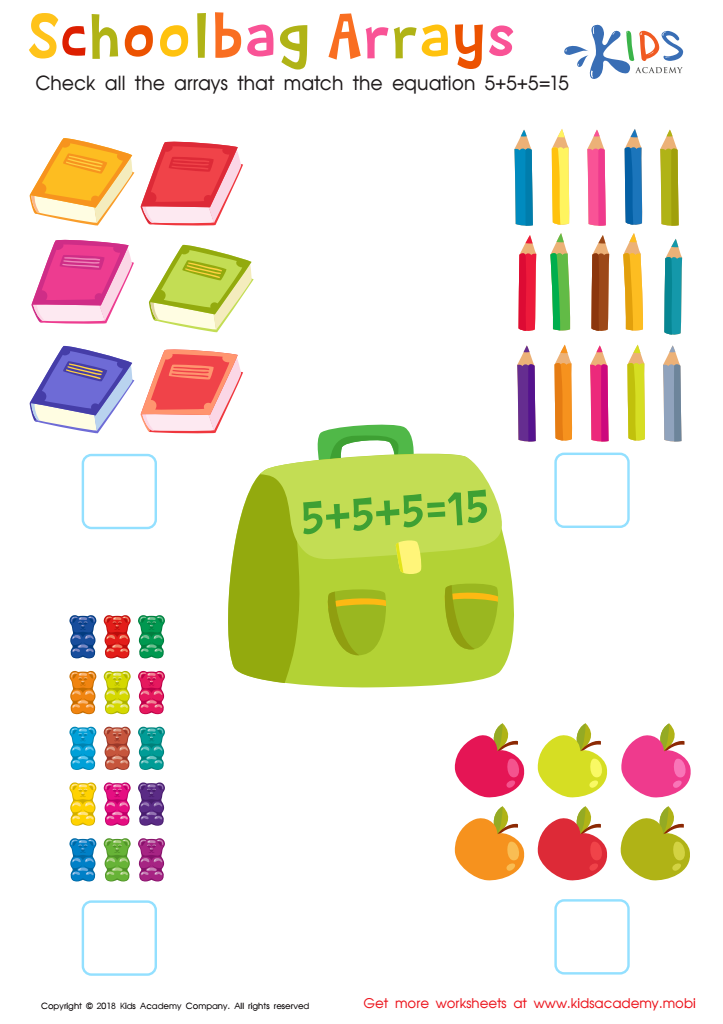
Schoolbag Arrays Worksheet
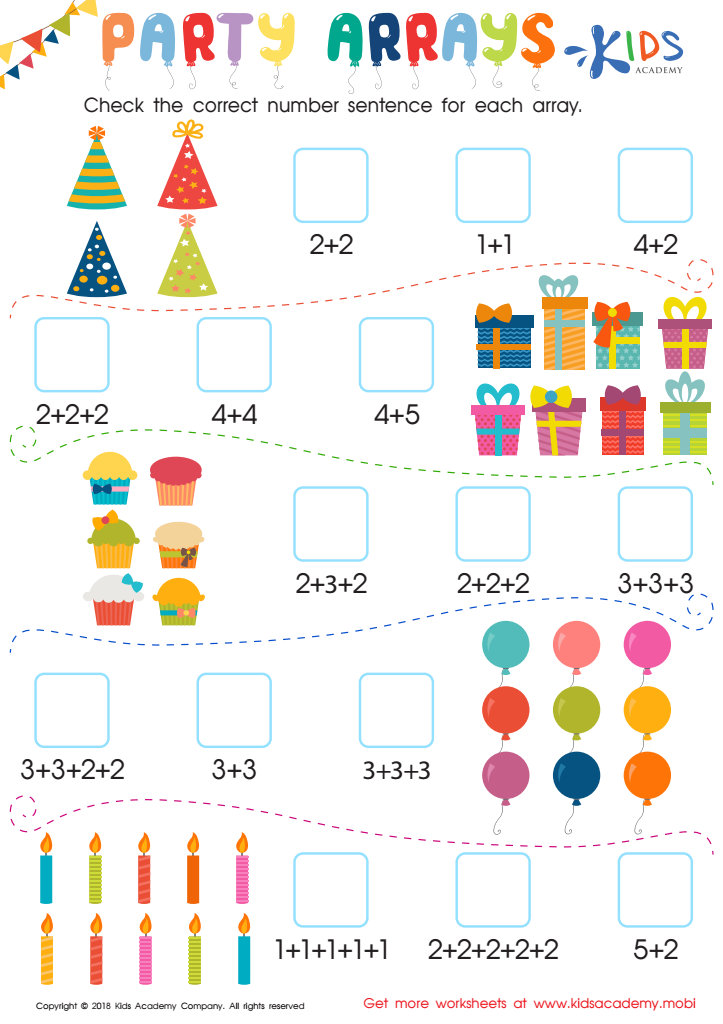
Party Arrays Worksheet
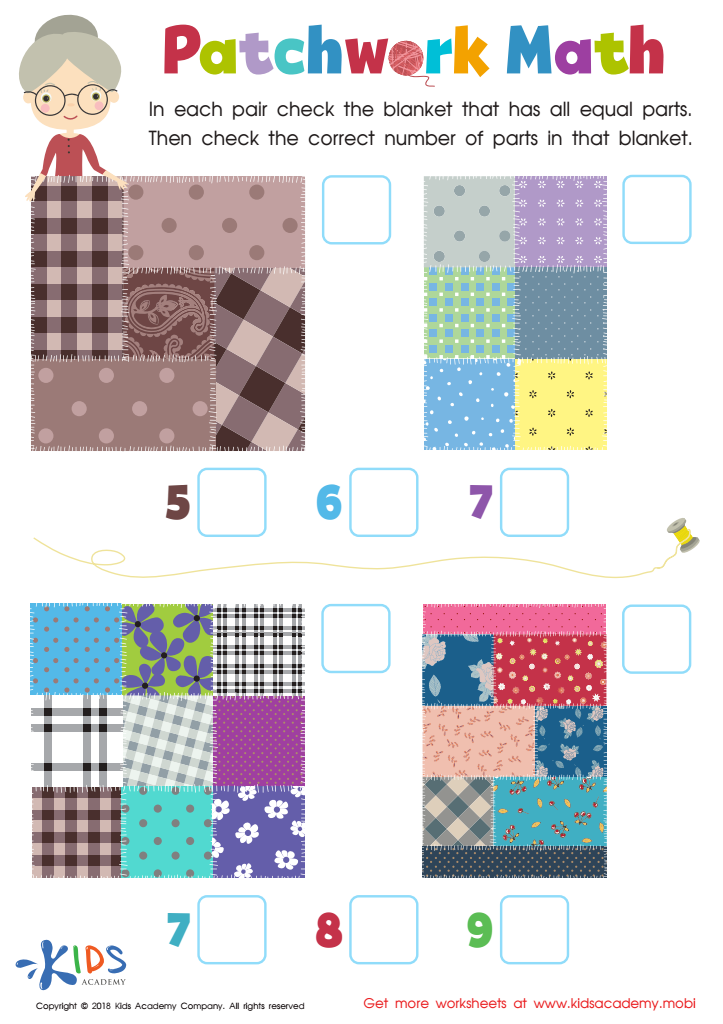
Patchwork Math Worksheet








Color recognition and easy math skills are foundational elements in a child's early education, foundational blocks necessary for cognitive development and future academic success. At the age of eight, children are versatile learners, positioned at a crucial developmental stage whereby nurturing these skills can have long-lasting benefits.
Firstly, color recognition enhances visual learning and memory. Identifying and distinguishing different colors can improve a child’s attention to detail and boost perceptual abilities. These skills translate into better coordination and can also make learning more engaging and enjoyable, as colors are inherently attractive and stimulating to young learners.
Moreover, easy math concepts, like basic addition and subtraction or understanding shapes, serve as stepping stones for more complex mathematical learning in later years. Proficiency in early math contributes significantly to problem-solving, logical thinking, and critical analysis skills. When pupils grasp these fundamental concepts early, they gain the confidence needed to tackle more advanced topics.
Integrating color with math – for example, using colored objects for counting or color-coded prompts for math problems – can make learning multi-sensory and inclusive, addressing various learning styles. Parents and teachers should emphasize these early educational milestones to lay down strong, versatile learning habits that will benefit children throughout their schooling years and beyond.








