Critical Thinking Easy Math Worksheets for 8-Year-Olds
5 filtered results
-
From - To
Transform math learning into a fun and engaging experience with our "Critical Thinking Easy Math Worksheets for 8-Year-Olds". These carefully crafted worksheets are designed to promote critical thinking skills while reinforcing essential math concepts. Tailored for young minds, each activity encourages students to explore different problem-solving strategies and boosts their confidence in tackling complex questions. Our collection covers a variety of topics including addition, subtraction, patterns, and logical puzzles, ensuring a comprehensive math practice. Foster your child's analytical abilities and enhance their cognitive development with math challenges that ignite curiosity and joy in learning.
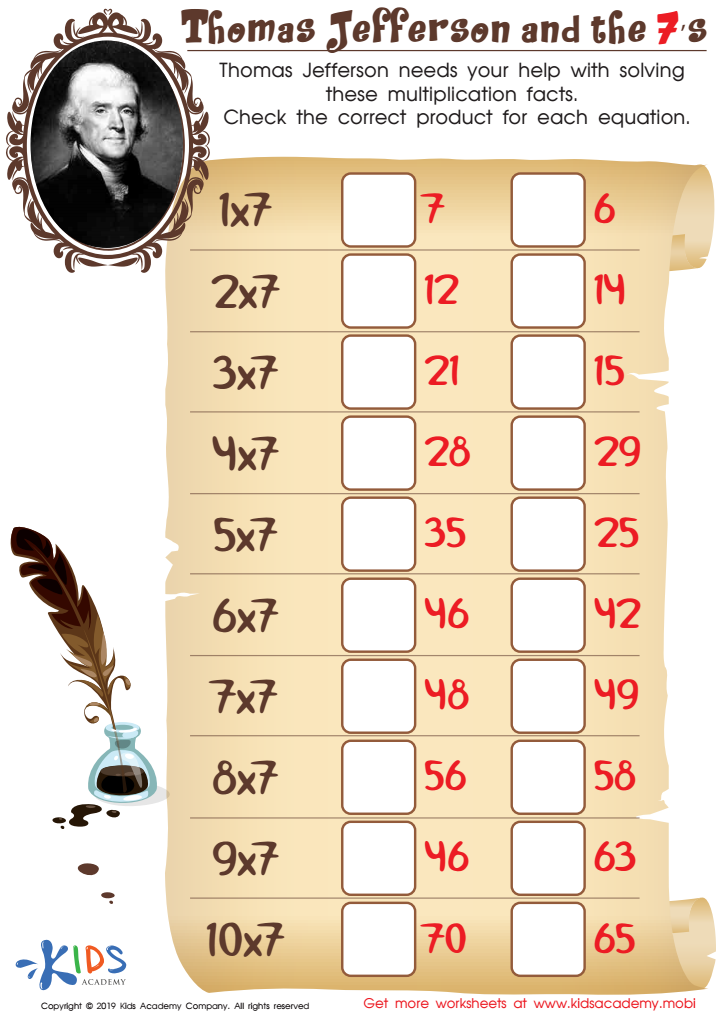
Thomas Jefferson and the 7’s Worksheet
 Assign to My Students
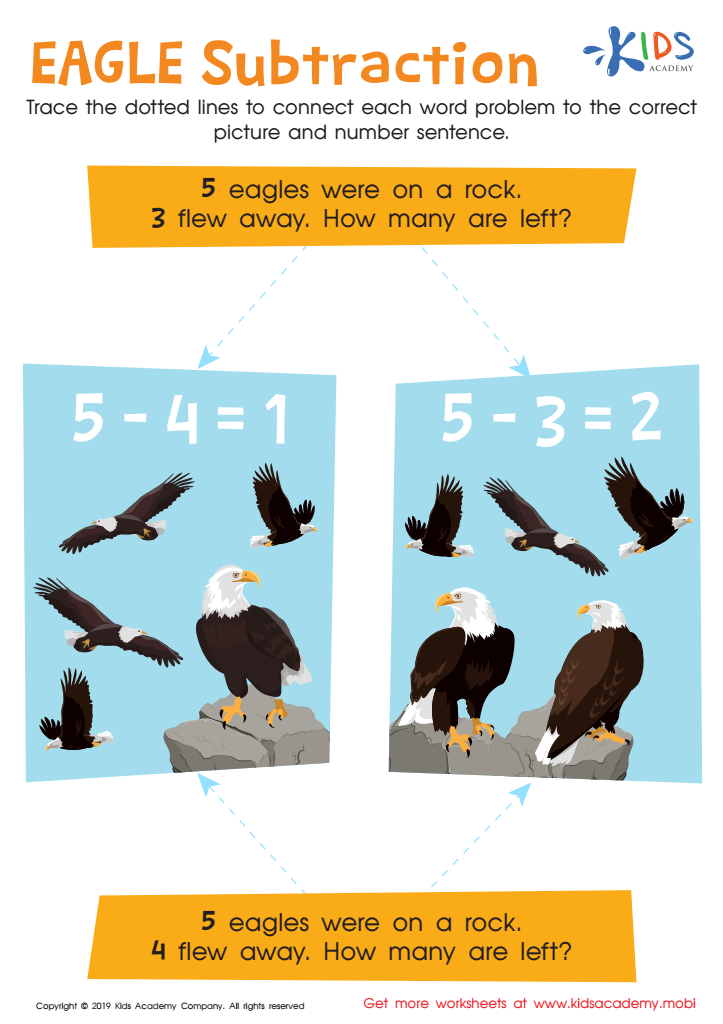
Eagle Subtraction Worksheet
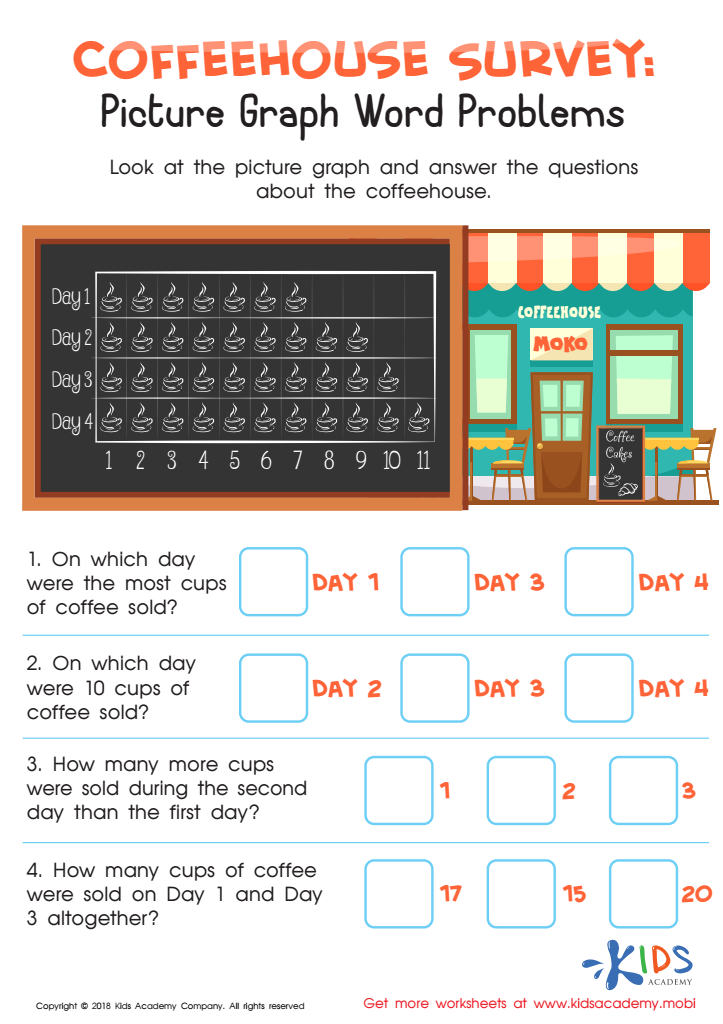
Coffeehouse Survey: Picture Graph Word Problems Worksheet
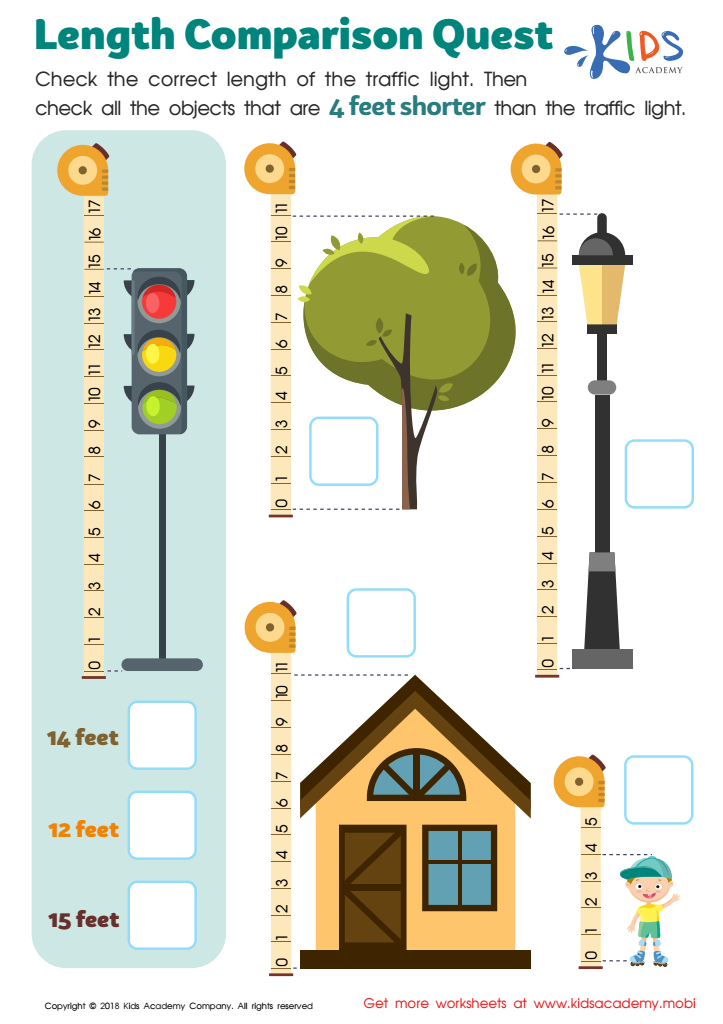
Length Comparison Quest Worksheet
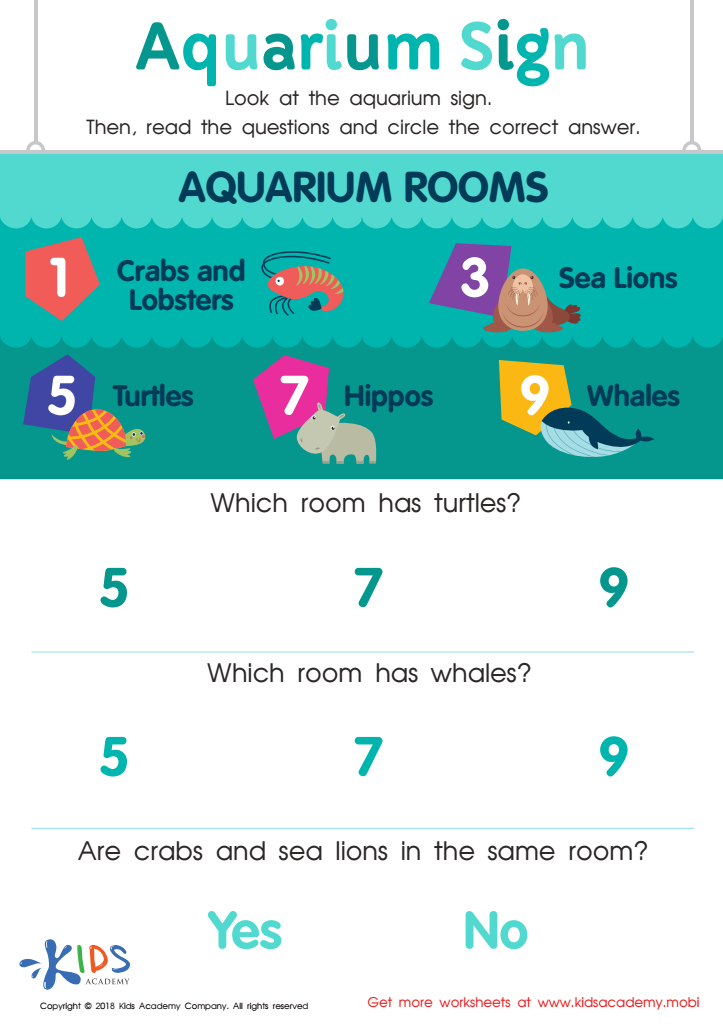
Assessment: Aquarium Sign Worksheet








Parents and teachers should care about fostering critical thinking in math for 8-year-olds because these skills lay the foundation for lifelong learning and problem-solving abilities. Critical thinking encourages children to analyze, reason, and reflect, rather than simply memorize facts or follow preset procedures. When incorporated into math lessons, it helps young learners understand the 'why' and 'how' behind mathematical concepts, promoting deeper comprehension.
For example, instead of merely teaching addition through rote memorization, a critical thinking approach might present a real-world problem that requires addition to solve. This method promotes curiosity and engagement, showing children how math is applicable in everyday life. It also helps develop essential cognitive skills such as logic, pattern recognition, and the ability to think outside the box.
Moreover, nurturing these skills at a young age prepares students for advanced education levels and various career paths, making them more adaptable in an ever-evolving job market. Critical thinking in math can also boost confidence through autonomous learning and decrease anxiety by providing clear reasoning tools to approach complex problems.
In sum, prioritizing critical thinking in early math education equips 8-year-olds with valuable skills not just for academic success, but for practical, everyday problem-solving and informed decision-making throughout their lives.








