Number Recognition Easy Math Worksheets for 8-Year-Olds
17 filtered results
Difficulty Level
Grade
Age
-
From - To
Subject
Activity
Standards
Boost your child's math skills with our "Number Recognition Easy Math Worksheets for 8-Year-Olds"! Designed to make learning fun, these engaging worksheets help young learners master number recognition, promoting essential skills for future mathematical proficiency. By incorporating colorful graphics, interactive activities, and varied exercises, children will develop confidence and familiarity with numbers while enjoying the learning process. Ideal for classroom use or at-home practice, our worksheets align with educational standards and are perfect for reinforcing key concepts. Empower your 8-year-old with the foundational skills they need to excel in math. Explore our collection today and watch them thrive!
Favorites
With answer key
Interactive
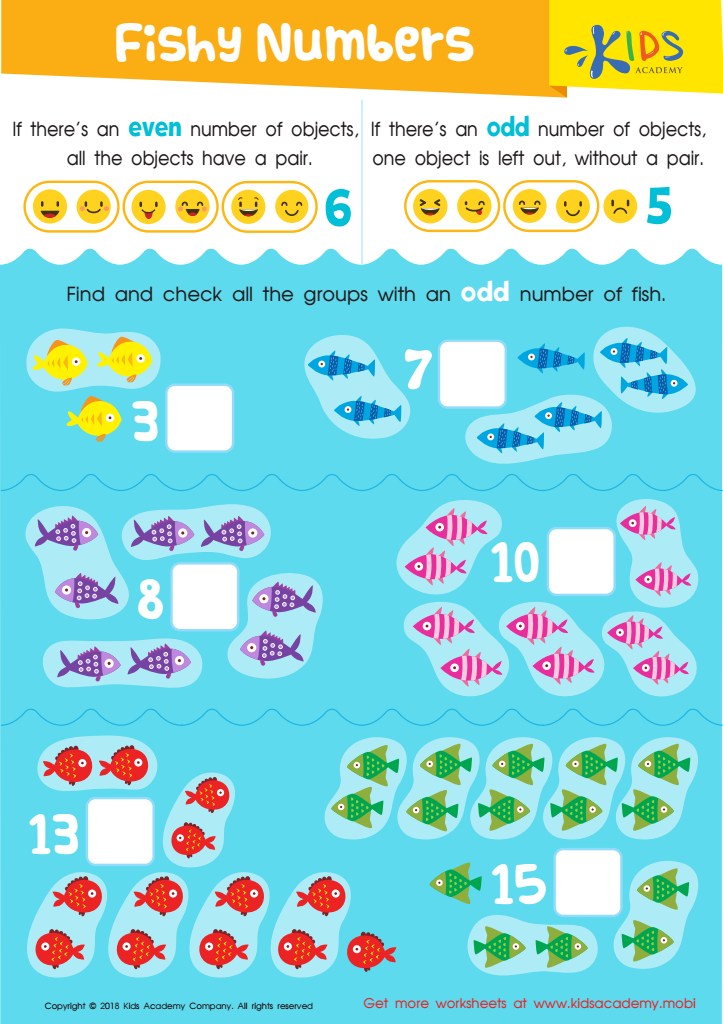
Fishy Numbers Worksheet
Explain to your kids even and odd numbers using this worksheet. All objects in a group of even numbers can be paired in twos, while an odd number leaves one object unpaired. Ask your students to find and check the groups with an odd number of fish, counting and figuring out which ones are odd.
 Assign to My Students
Fishy Numbers Worksheet
Worksheet
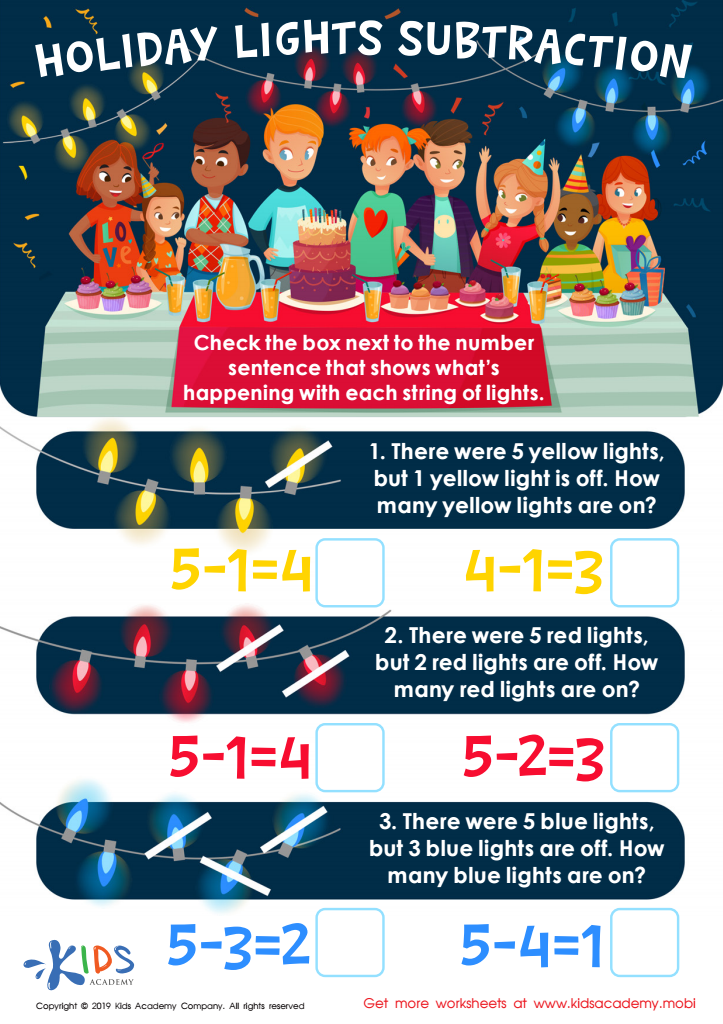
Holiday Lights Subtraction Worksheet
Before tackling the math problem, get your kids ready by asking them to share their favorite holiday and why. Then, look at the picture on the worksheet with them. Help them examine the numbers and problems, and select the number sentence that shows what's happening with each string of light. 80 words.
Holiday Lights Subtraction Worksheet
Worksheet
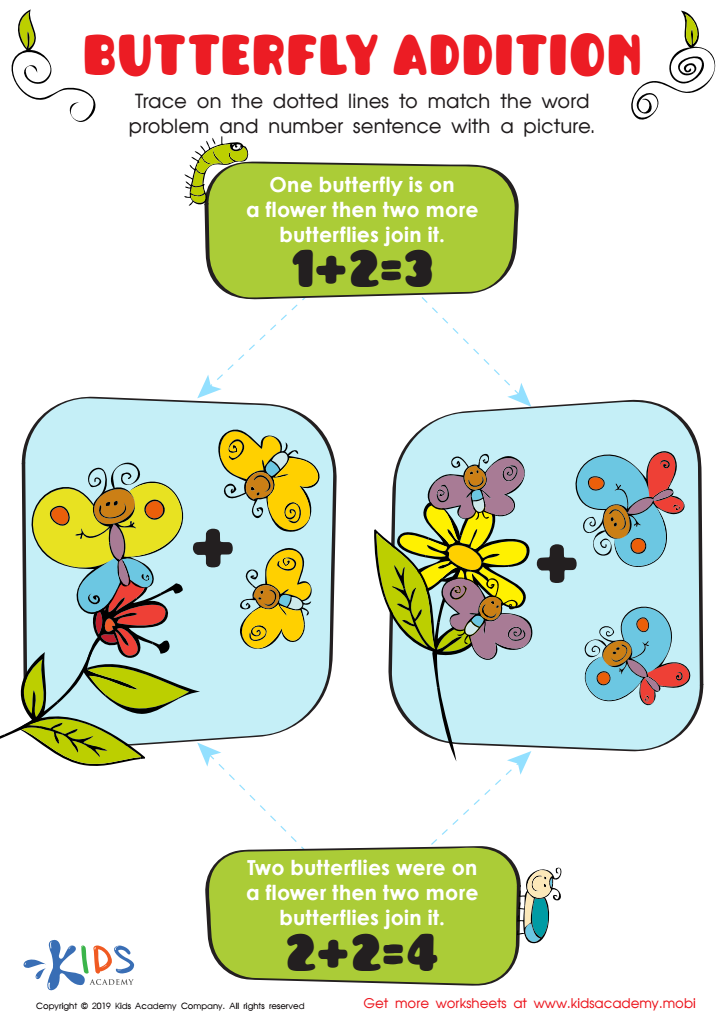
Butterfly Addition Worksheet
This tracing sheet is great for kids to work on math skills and have fun too. Read the word problems to them, then help them trace the dotted lines to match the problem and number sentence to a picture. Not only is it educational, it's beautiful too - your kids will love learning about butterflies!
Butterfly Addition Worksheet
Worksheet
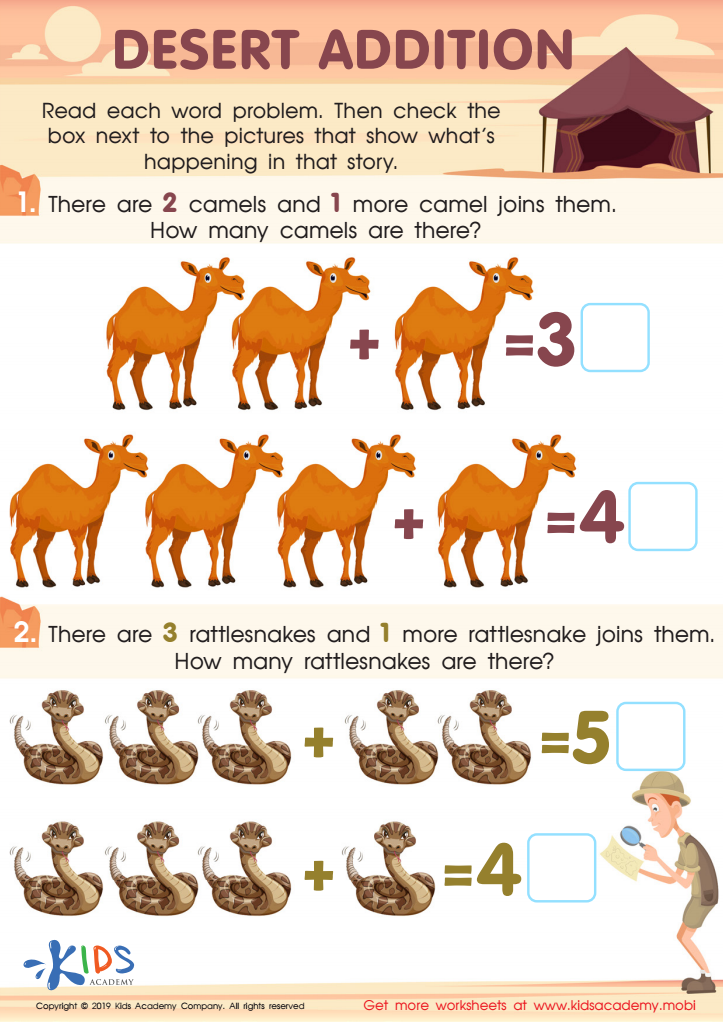
Desert Addition Worksheet
In the desert, scorching heat and little water mean animals must adapt to survive. Show kids pictures of these animals and teach their names. Then, read the word problems in the worksheet, and have them check the box next to the pictures that portray each story. 80 words
Desert Addition Worksheet
Worksheet
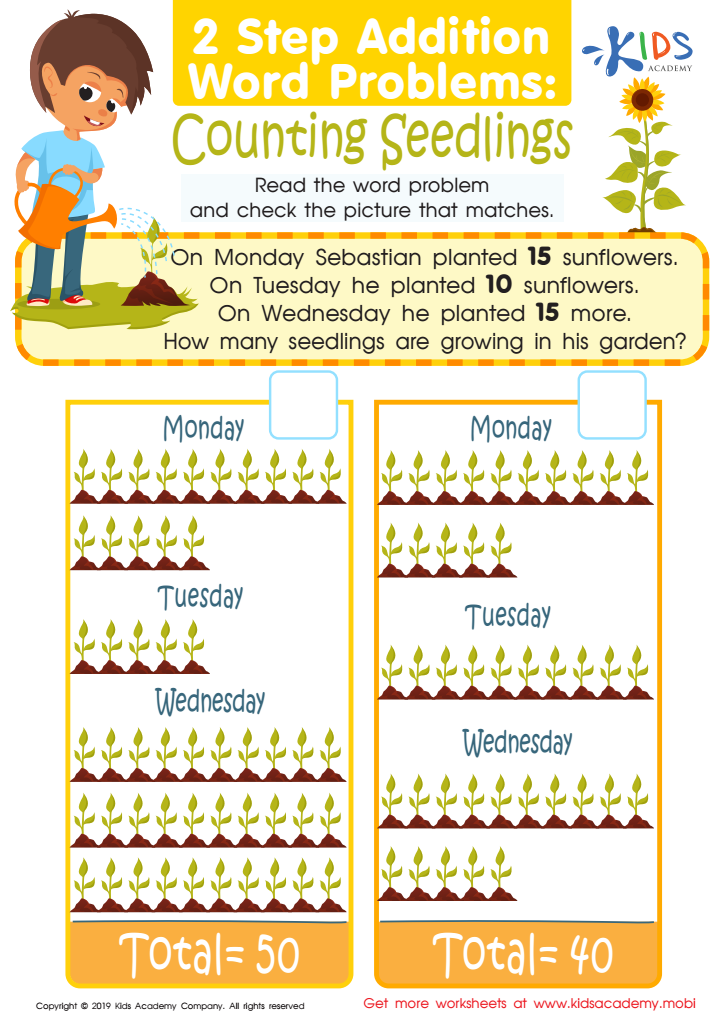
Counting Seedlings Worksheet
Understanding math word problems is key. Multiple steps can prove challenging - this free worksheet provides one-to-one picture representation to help kids solve multi-step addition word problems. Strengthen addition skills by choosing the matching picture to the answer.
Counting Seedlings Worksheet
Worksheet
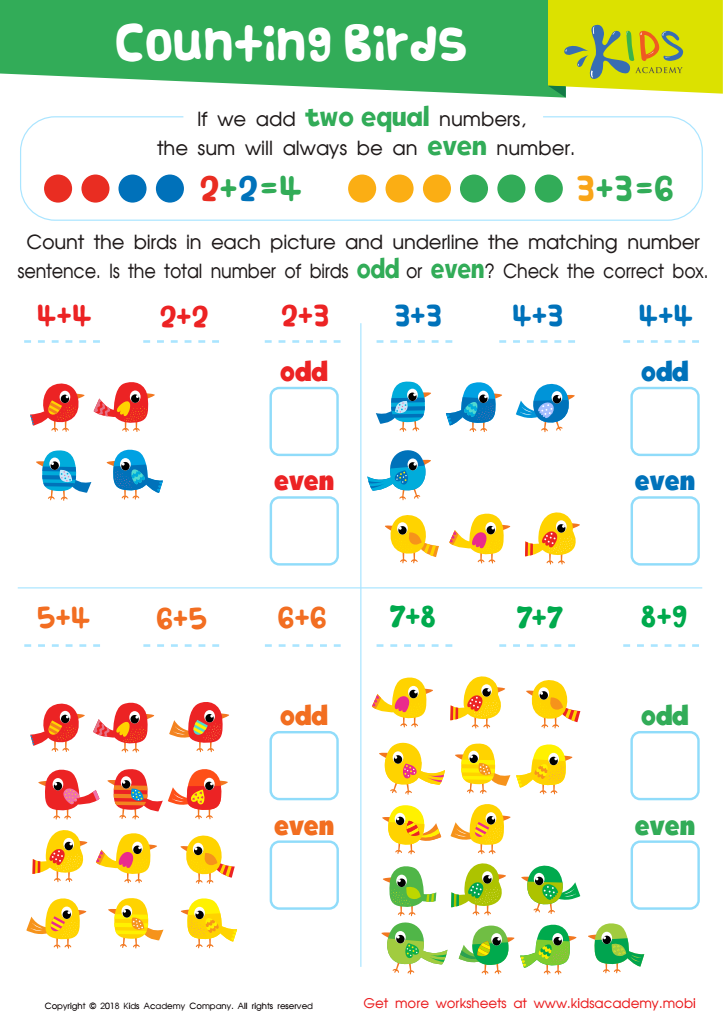
Counting Birds Worksheet
Help your child count and underline the matching number sentence in the worksheet. Ask them if the total number of birds in each picture is odd or even, then check the correct box. When two equal numbers are added, the sum is always an even number (e.g. 2+2=4, 4+4=8, both divisible by 2).
Counting Birds Worksheet
Worksheet
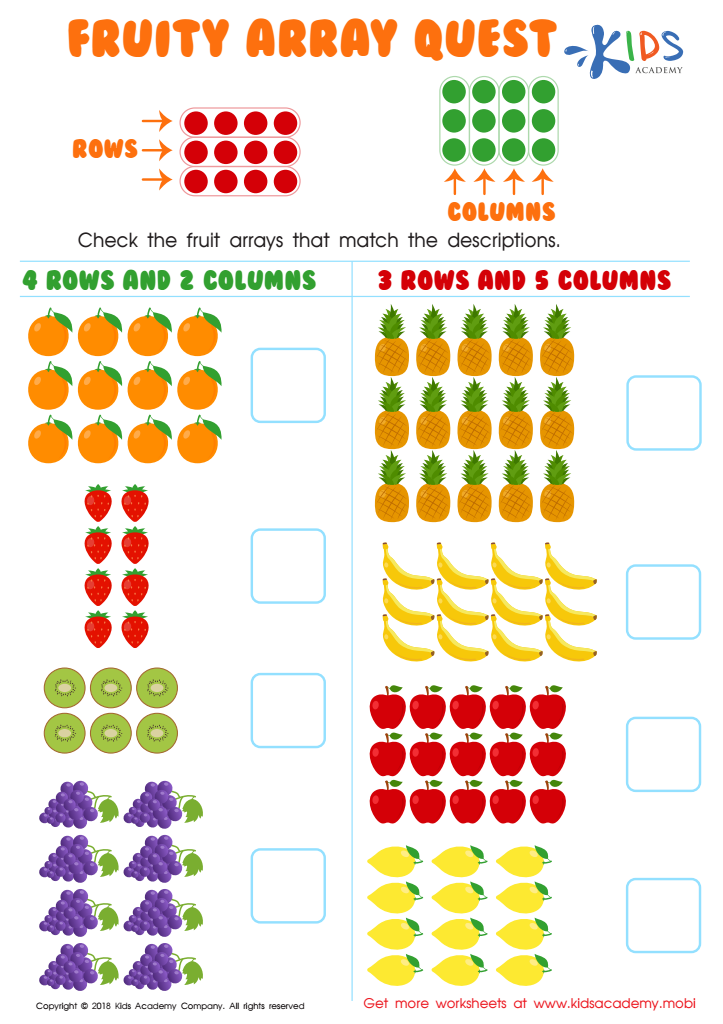
Fruity Array Quest Worksheet
Explain rows (horizontal) and columns (vertical) to your child before starting the worksheet. Show them the picture and the arrows indicating direction. Your child should be able to answer the questions easily after that. Help them match the fruit arrays that match the descriptions.
Fruity Array Quest Worksheet
Worksheet
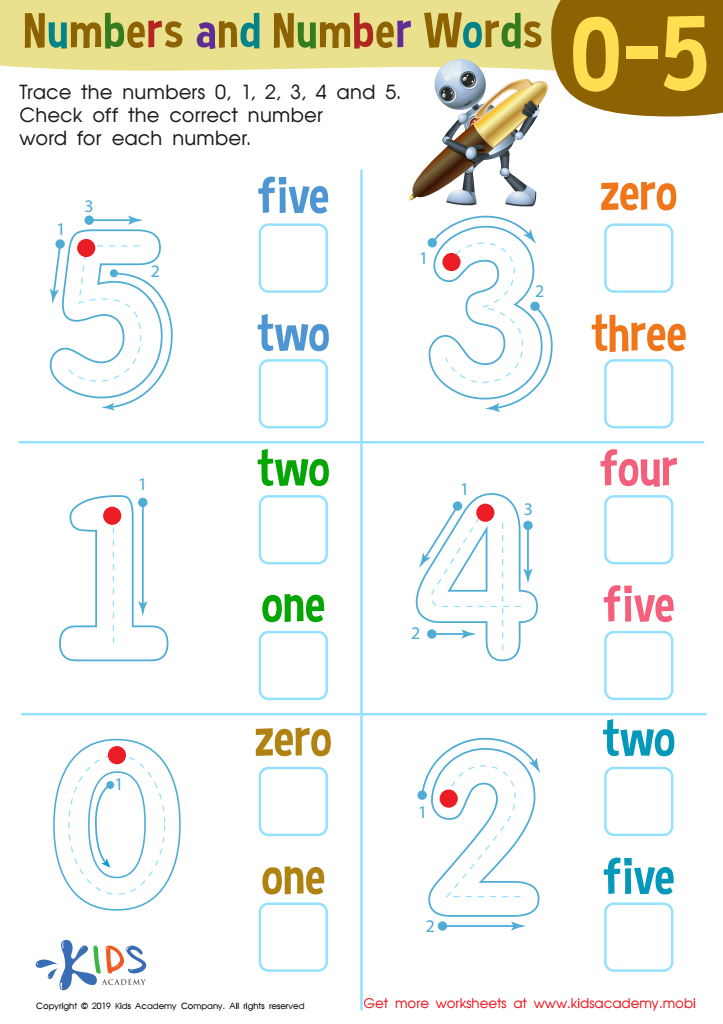
Numbers and Number Words Worksheet
Preschoolers can practice counting and recognizing numbers with this worksheet. Students trace the numbers zero through five and check the boxes next to each number to show the correct number word. Ideal for young kids, this printable helps them learn early math and number words.
Numbers and Number Words Worksheet
Worksheet
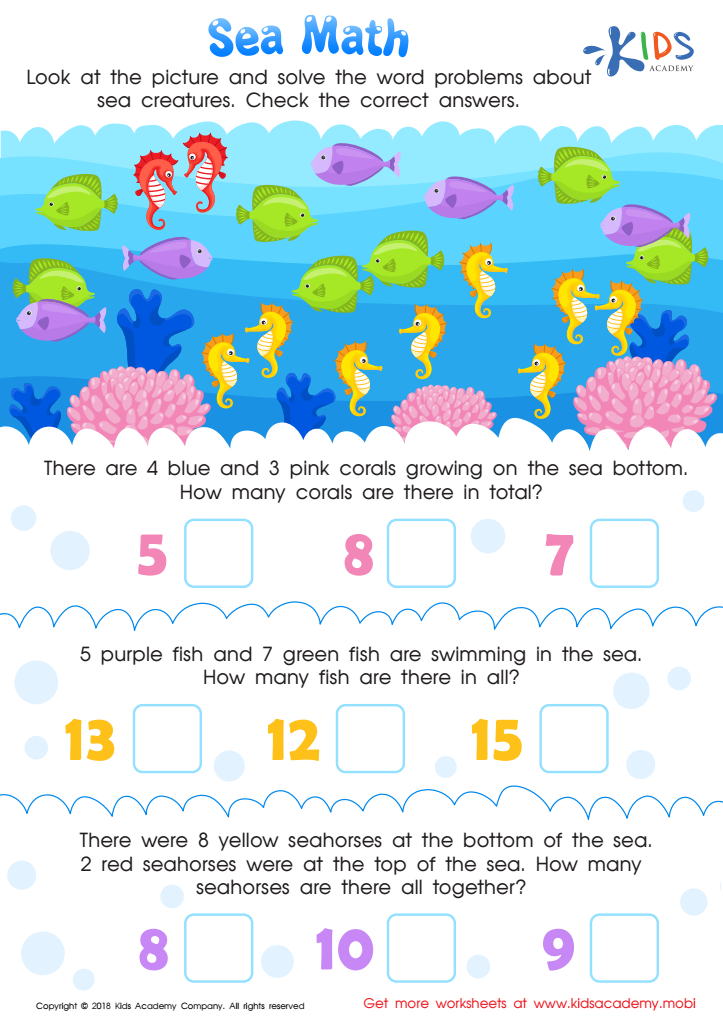
Sea Math Worksheet
Dive into an ocean of addition with this fun math worksheet! Help your little mathematician count and add colorful coral and fish. Point out phrases like "in total" or "all together" as a reminder to use addition. Watch them add to find the answer and check the boxes to finish!
Sea Math Worksheet
Worksheet
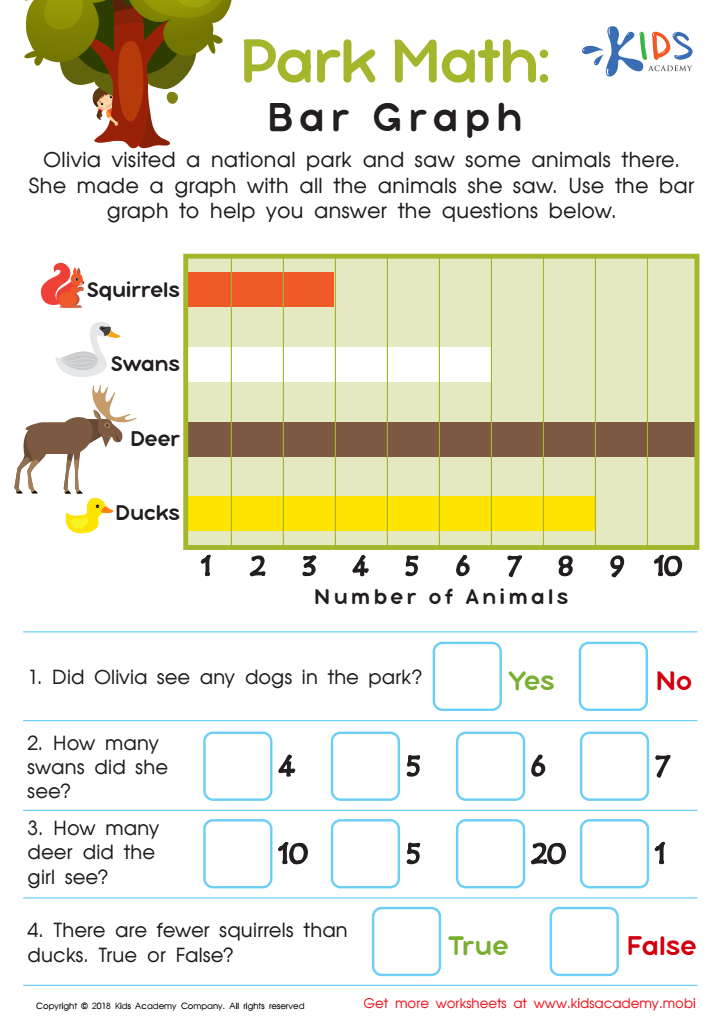
Park Math: Bar Graph Worksheet
Do your children love the park? Ask them to tell you some of their favorite animals. Then, have them look at Olivia's graph. She visited a National Park and recorded all the animals she saw. Use the graph to answer the questions given.
Park Math: Bar Graph Worksheet
Worksheet
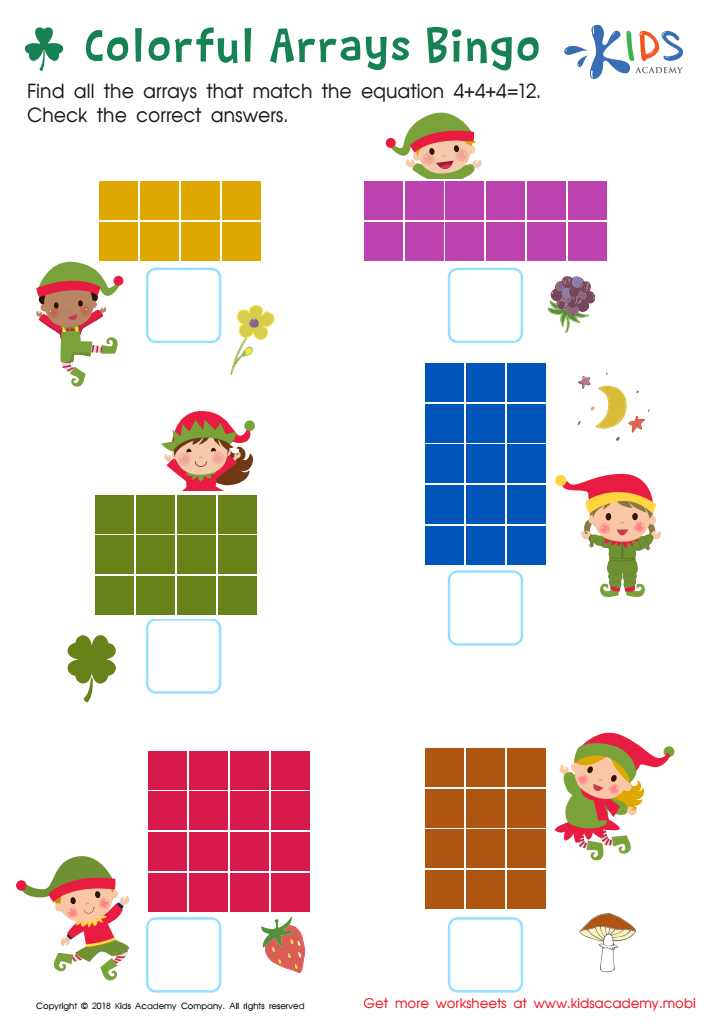
Colorful Arrays Bingo Worksheet
This worksheet stimulates thinking about arrays and how to represent them. Instruct students to count the 6 arrays and find which ones sum up to 12. Ask them to check the answers for accuracy.
Colorful Arrays Bingo Worksheet
Worksheet
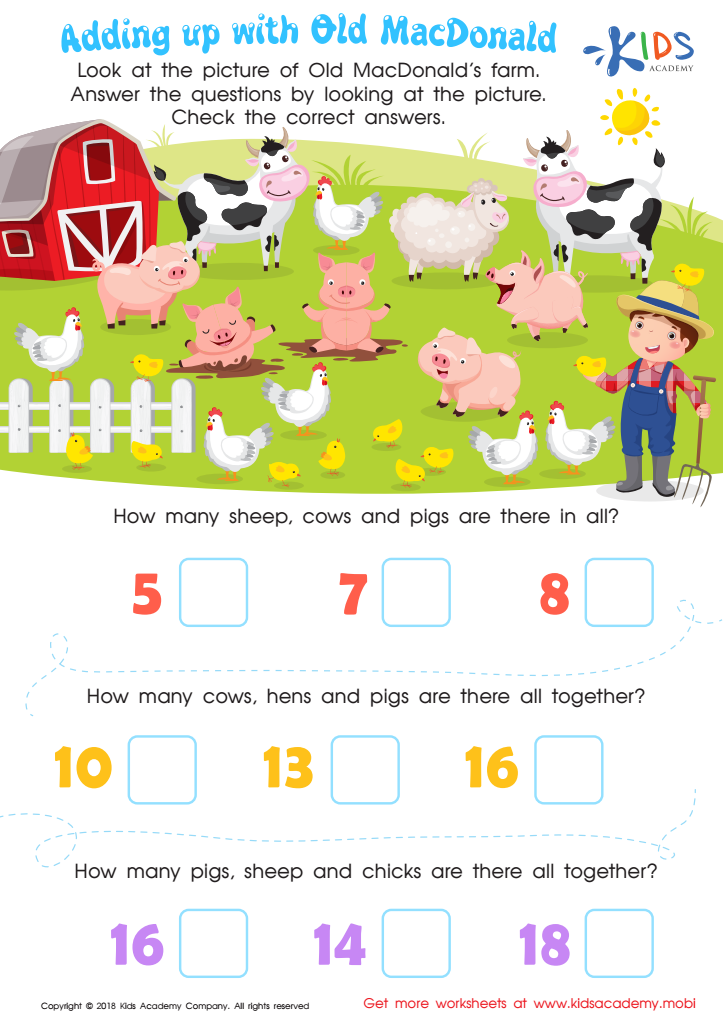
Adding Up with Old MacDonald Worksheet
Old MacDonald needs help counting his animals! Give your little math whiz a fun challenge with a free PDF worksheet. They'll love counting the animals and doing basic addition with two or three addends. Who knew math could be so much fun on the farm?
Adding Up with Old MacDonald Worksheet
Worksheet
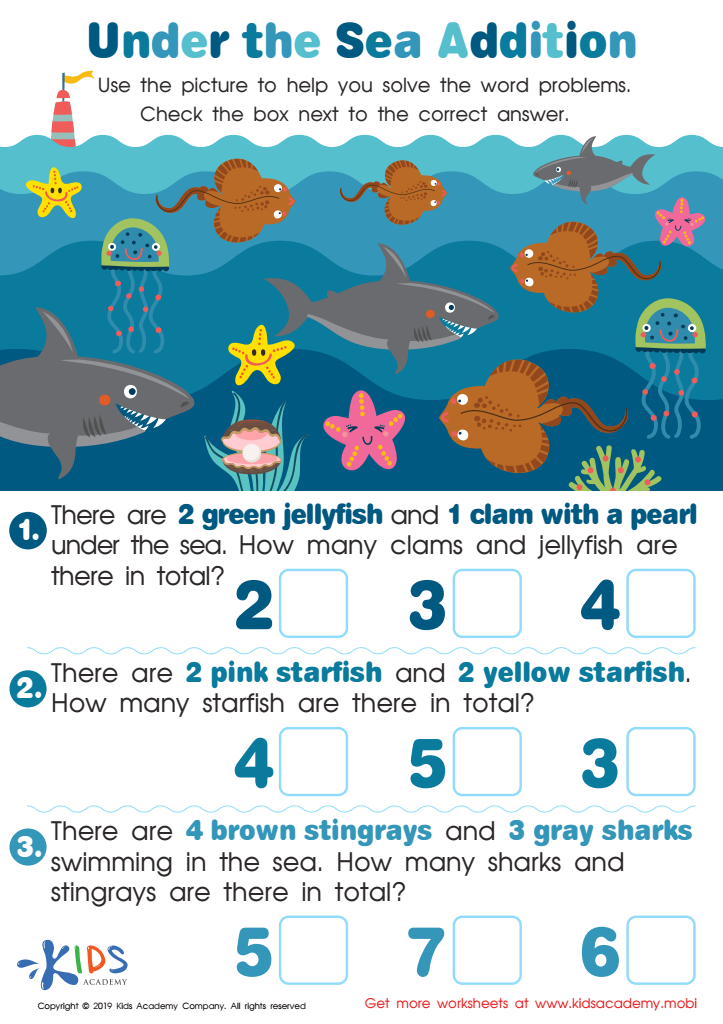
Under the Sea Addition Worksheet
Ask your kids to identify undersea animals in a picture, then solve the word problems at the bottom with it! If they're into the nature channel or marine life, they'll love this worksheet. Check the box next to the correct answer for each one. 80 words
Under the Sea Addition Worksheet
Worksheet
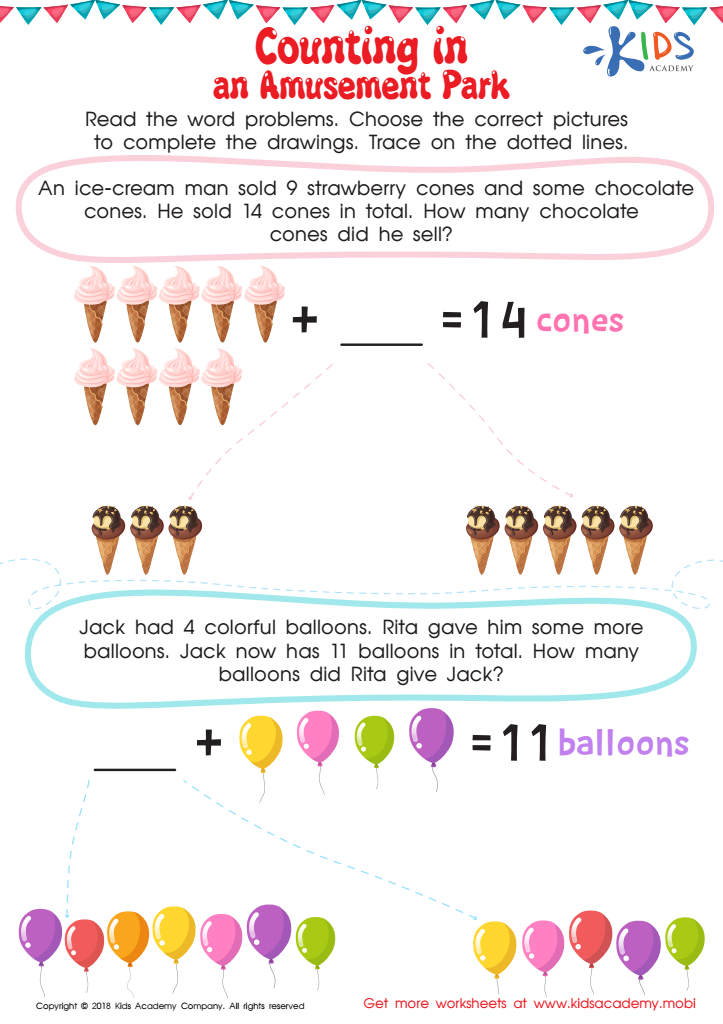
Counting in an Amusement Park Worksheet
Love amusement parks? This colorful worksheet is sure to delight your child as they solve basic addition problems with missing addends. Picture representations help them solve the math equations, while traceable lines help them accurately complete the drawings. No roller coaster ride here, but still loads of fun!
Counting in an Amusement Park Worksheet
Worksheet
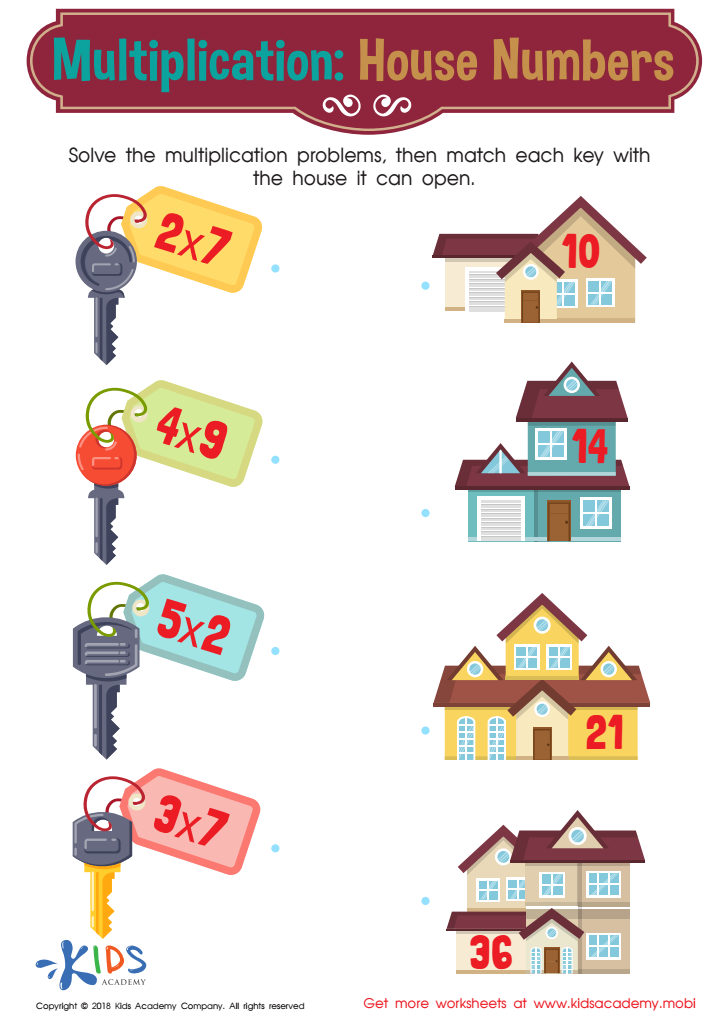
House Numbers Worksheet
This multiplication worksheet is perfect for grade 3 students to sharpen their math skills! Each problem unlocks the door to a house on the page - can they figure out which key fits which door? By solving each problem, they'll boost their multiplication skills and have fun along the way.
House Numbers Worksheet
Worksheet
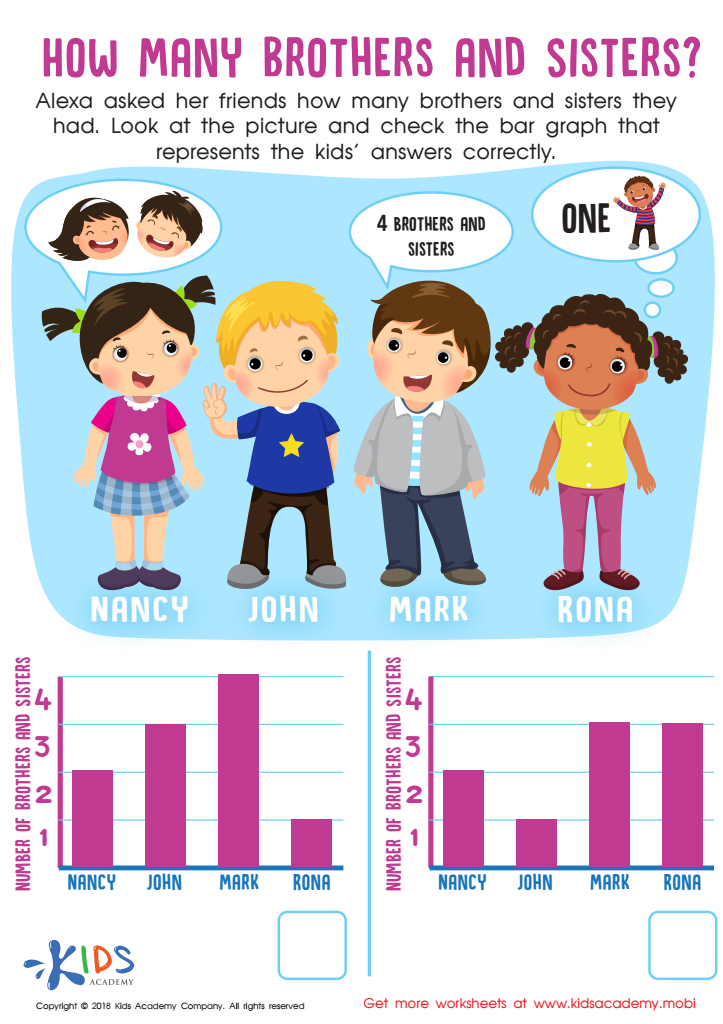
How Many Brothers and Sisters? Worksheet
With this worksheet, Alexa has asked her friends how many siblings they have. Have your child look at the picture and use it to answer the bar graph correctly. Can they tell you how many siblings their friends have? See if they can get it right!
How Many Brothers and Sisters? Worksheet
Worksheet
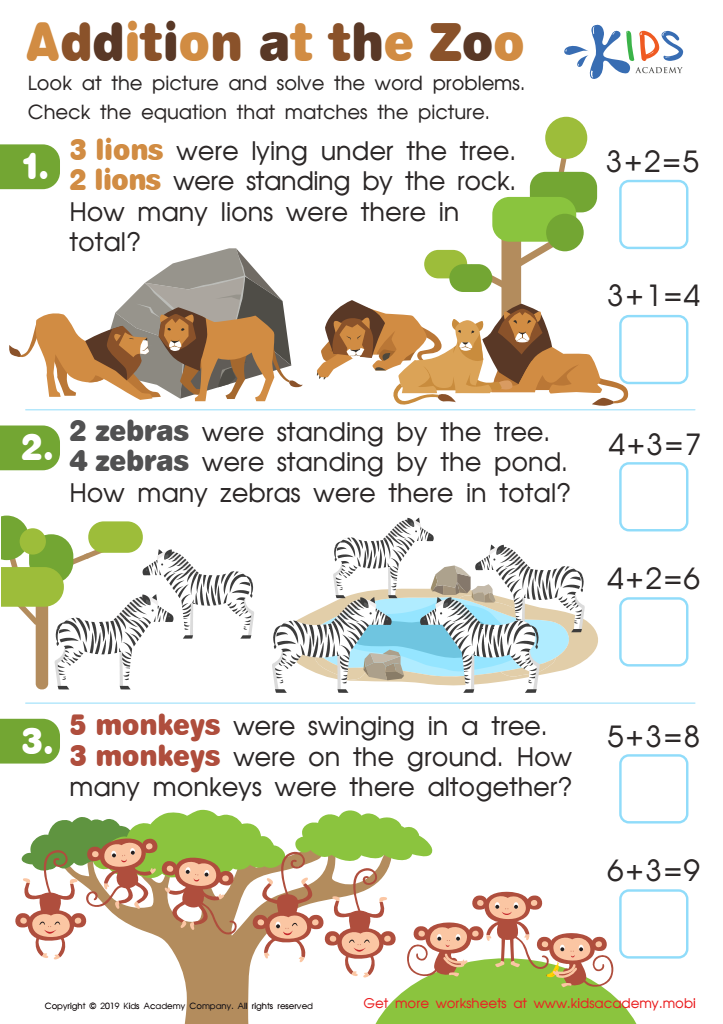
Addition at the Zoo Worksheet
Visit the zoo with your kids and point out all the different animals. Ask them to name their favorites and identify animals on a worksheet. Challenge them to solve word problems related to the pictures. Ask them for the equation that fits the picture and check the answer.
Addition at the Zoo Worksheet
Worksheet
Join Kids Academy for Free
Who is primarily going to use this learning content?






Number recognition is a crucial foundational skill for eight-year-olds and serves as a gateway to more complex mathematical concepts. Parents and teachers should care because this skill underpins a child’s ability to perform basic arithmetic, comprehend number patterns, and tackle word problems. When children can recognize and understand numbers, they gain confidence in their ability to approach math, reducing anxiety around the subject.
Moreover, number recognition fosters critical cognitive skills, such as problem-solving and logical thinking. It also helps in developing spatial awareness, essential for real-life applications like telling time or managing money. Early mastery of these skills can set the stage for future academic success, leading children to engage more positively with mathematics as they progress through school.
By prioritizing number recognition in the curriculum or at home, parents and teachers create a supportive learning environment that encourages exploration and curiosity. This attention can help bridge any learning gaps that may exist and reinforce a child's understanding, paving the way for more advanced mathematical concepts in the future. Ultimately, fostering strong number recognition skills contributes to a child’s overall development and lays the groundwork for mathematical literacy in daily life.