Understanding patterns Easy Basic Times Tables up to 12 Worksheets for 9-Year-Olds
3 filtered results
-
From - To
Unlock the world of mathematics for your 9-year-old with our "Understanding Patterns: Easy Basic Times Tables up to 12 Worksheets." Designed to make learning engaging and fun, these worksheets help children recognize and grasp key numerical patterns within multiplication tables. By exploring relationships and sequences, young learners will build a strong foundation in math while enhancing their problem-solving skills. Perfect for home practice or classroom activities, our resources support personalized learning. Give your child the tools they need to master multiplication and develop confidence in their math abilities. Start their journey to mathematical mastery today!
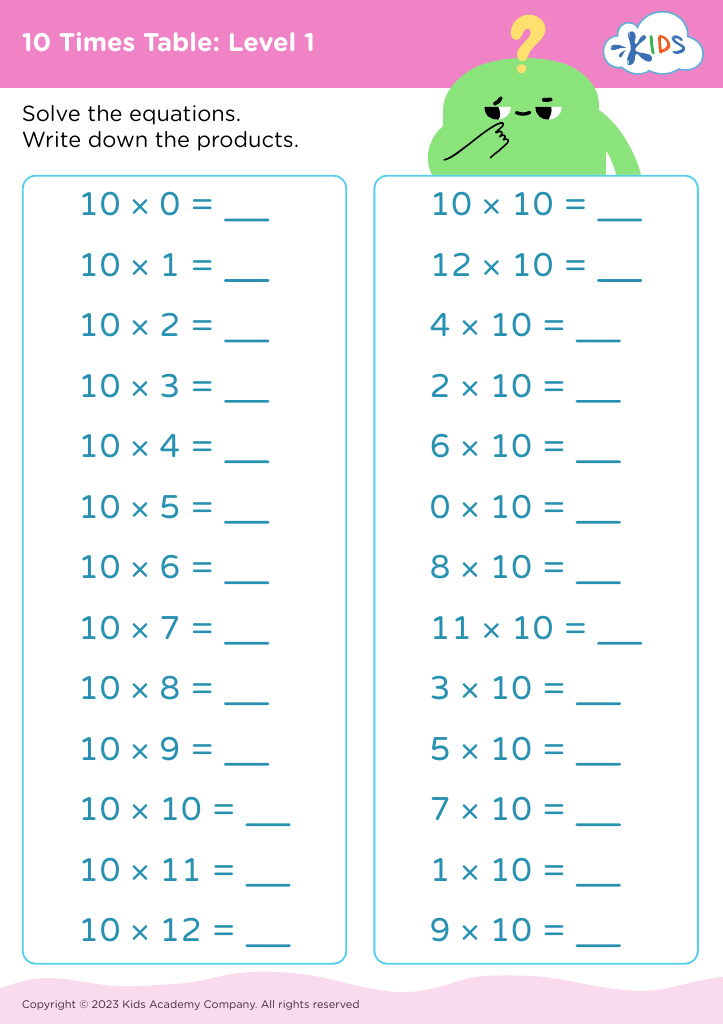
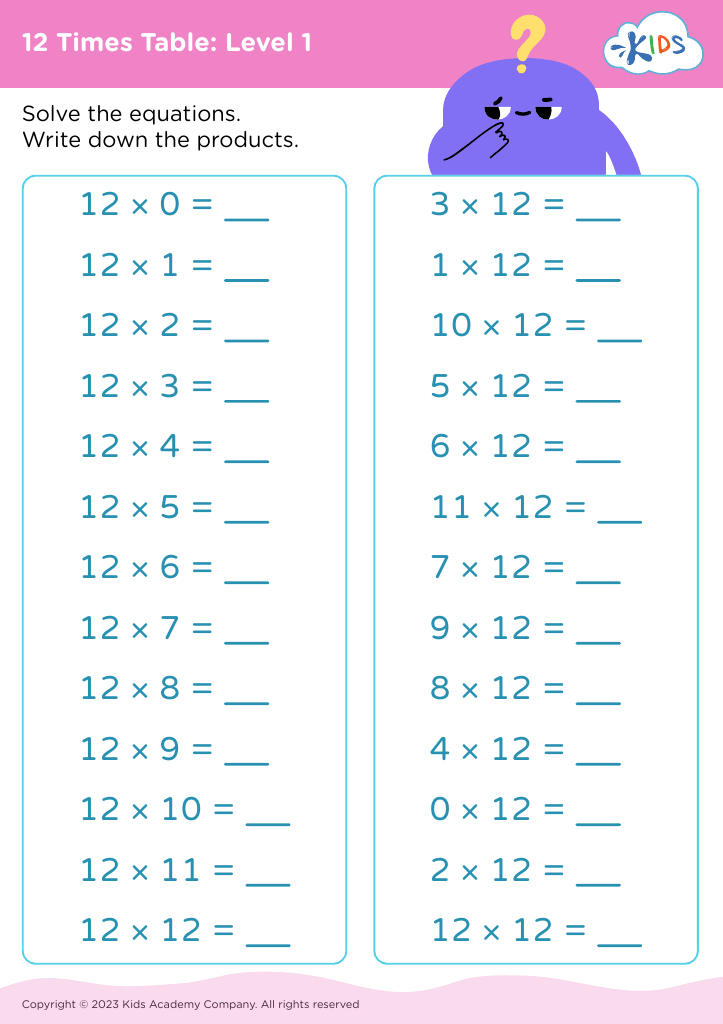
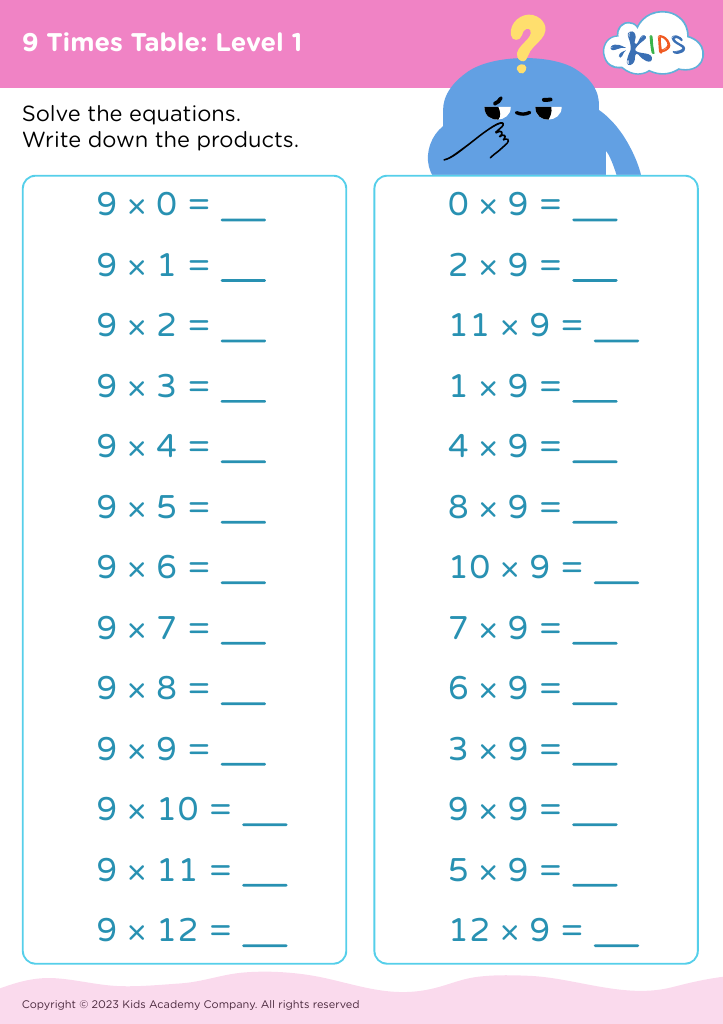


Understanding basic times tables up to 12 is crucial for 9-year-olds as it lays the foundation for more complex mathematical concepts. First, mastering these patterns enhances a child’s numerical fluency, making it easier for them to perform calculations. This fluency is essential not just in math class, but also in everyday life situations, such as budgeting or measuring.
Parents and teachers should care because familiarity with multiplication reduces math anxiety and builds confidence in children. When kids understand that multiplication is based on patterns, they can approach problems with a more strategic mindset. For instance, recognizing that 6 x 4 is the same as 4 x 6 helps reinforce the concept of commutativity, making further learning smoother.
Moreover, patterns in multiplication can facilitate engagement. Activities like games and songs that emphasize these patterns can make learning enjoyable, fostering a love for math. Encouraging the practice of times tables not only equips children with necessary skills for higher math, such as division and algebra, but also enhances critical thinking by developing their ability to recognize relationships in numbers. This foundational knowledge paves the way for future academic success across various subjects, ultimately benefiting children in their educational journey.








