Understanding patterns Easy Math Worksheets for 9-Year-Olds
4 filtered results
-
From - To
Discover our "Understanding Patterns" Easy Math Worksheets designed specifically for 9-year-olds! These engaging resources help young learners grasp the concept of patterns through interactive exercises that make math fun and relatable. Our worksheets focus on identifying, creating, and extending patterns using numbers, shapes, and colors, aligning with essential math skills for second to fourth graders. Each worksheet encourages critical thinking and strengthens problem-solving abilities, transforming abstract concepts into concrete learning experiences. Ideal for classroom use or at-home practice, our materials support diverse learning styles and make mastering patterns enjoyable! Explore our collection to boost your child's math confidence today!
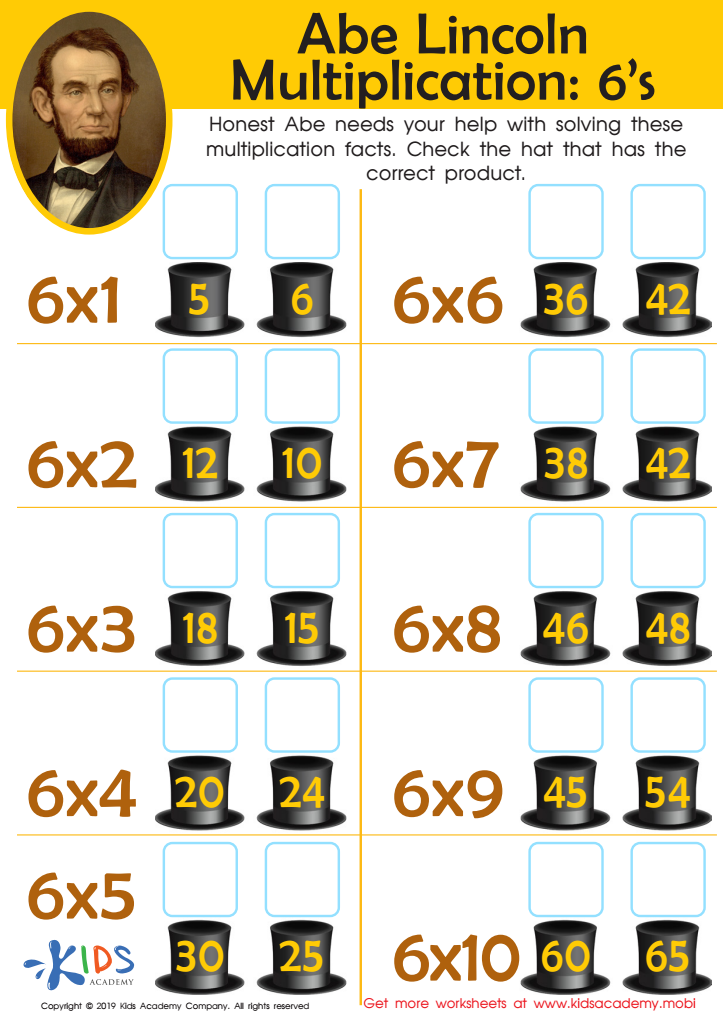
Abe Lincoln Multiplication: 6’s Worksheet
 Assign to My Students
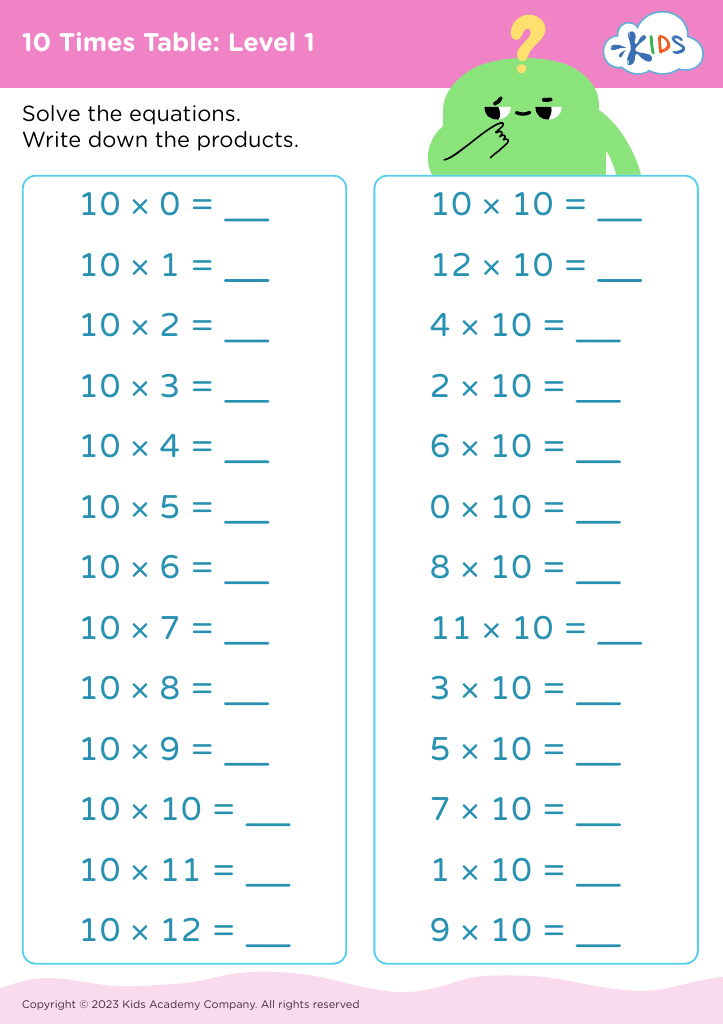
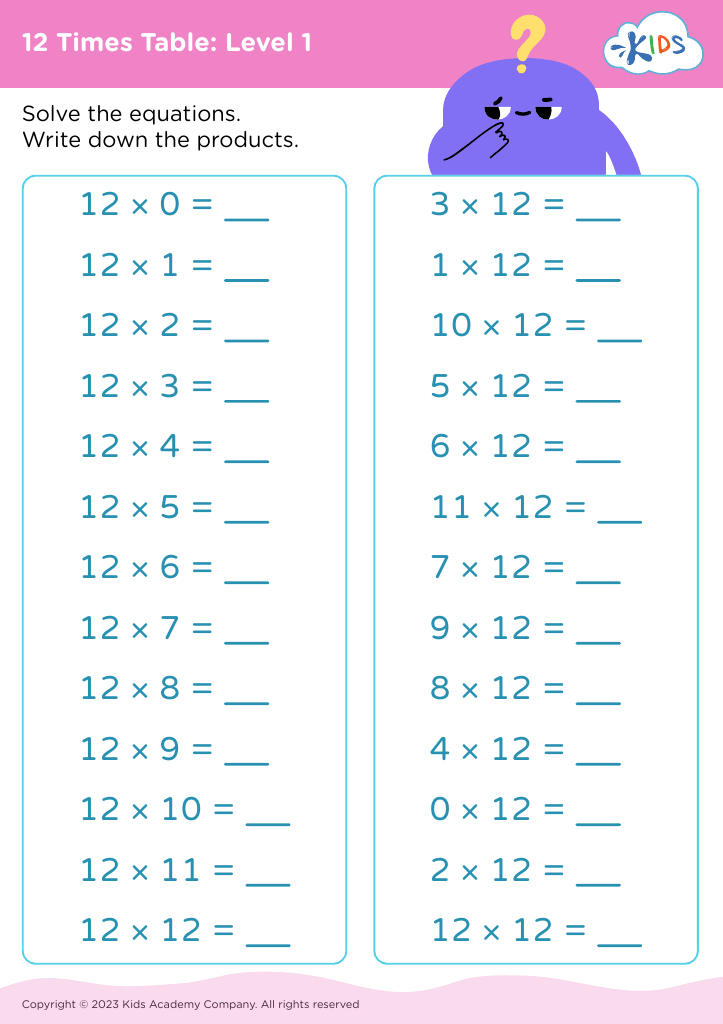
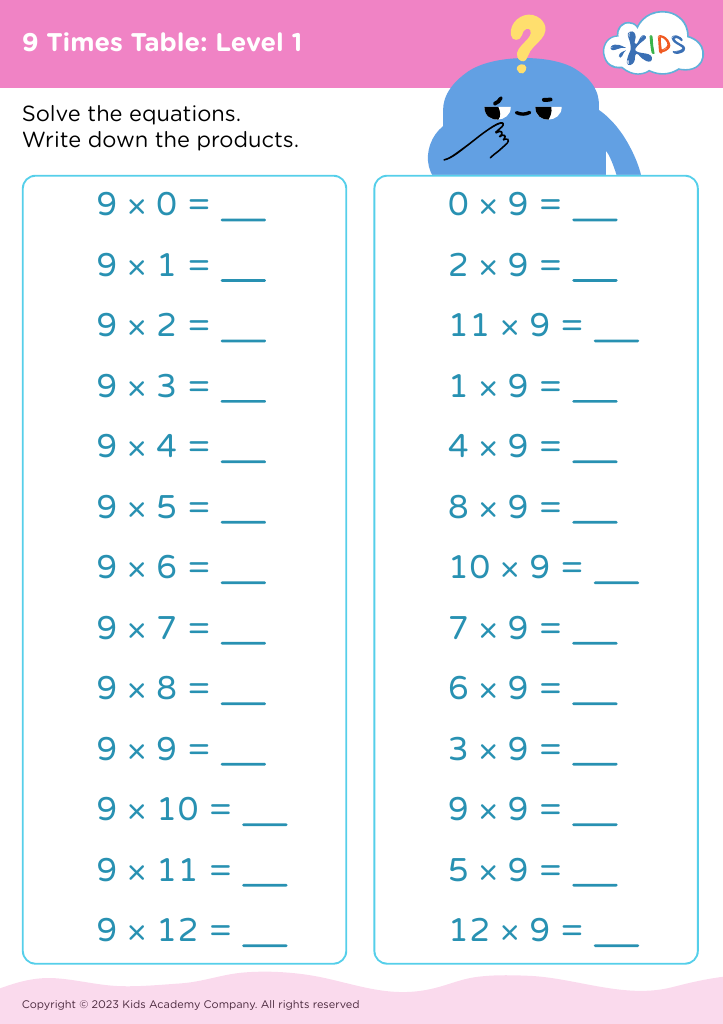






Understanding patterns in math is crucial for 9-year-olds as it lays the groundwork for their future mathematical learning and critical thinking skills. Patterns help children recognize relationships between numbers and concepts, enhancing their problem-solving abilities. By grasping patterns, children learn to predict outcomes, making math more intuitive and relatable.
Parents and teachers should prioritize this understanding because it cultivates a stronger foundation for advanced mathematical concepts, such as algebra and geometry, which they will encounter later in their education. A solid grasp of patterns also boosts confidence, as students see their ability to connect ideas and solve problems. This connection fosters a positive attitude towards learning, encouraging them to engage more deeply in math activities.
Moreover, teaching kids about patterns nurtures their analytical thinking and enhances cognitive development, which are essential skills not just in math but in life. Activities involving pattern recognition can be fun and interactive, making learning enjoyable and approachable. By investing time in helping children understand patterns, parents and teachers can set them on a path to succeed academically while also preparing them for a world that values critical thinking and analytical skills.








