Understanding patterns Easy Times Tables Worksheets for 9-Year-Olds
3 filtered results
-
From - To
Unlock your child's math potential with our "Understanding Patterns Easy Times Tables Worksheets" tailored for 9-year-olds! These engaging worksheets focus on recognizing and utilizing patterns in multiplication, enhancing critical thinking and math skills. Designed by educational experts, they feature fun activities that make learning about times tables exciting and interactive. Your child will grasp essential multiplication concepts through various exercises, improving their confidence and fluency in math. Suitable for classroom and home use, our resources support diverse learning styles and provide invaluable practice. Dive into a world of numbers and patterns today to set the foundation for future mathematical success!
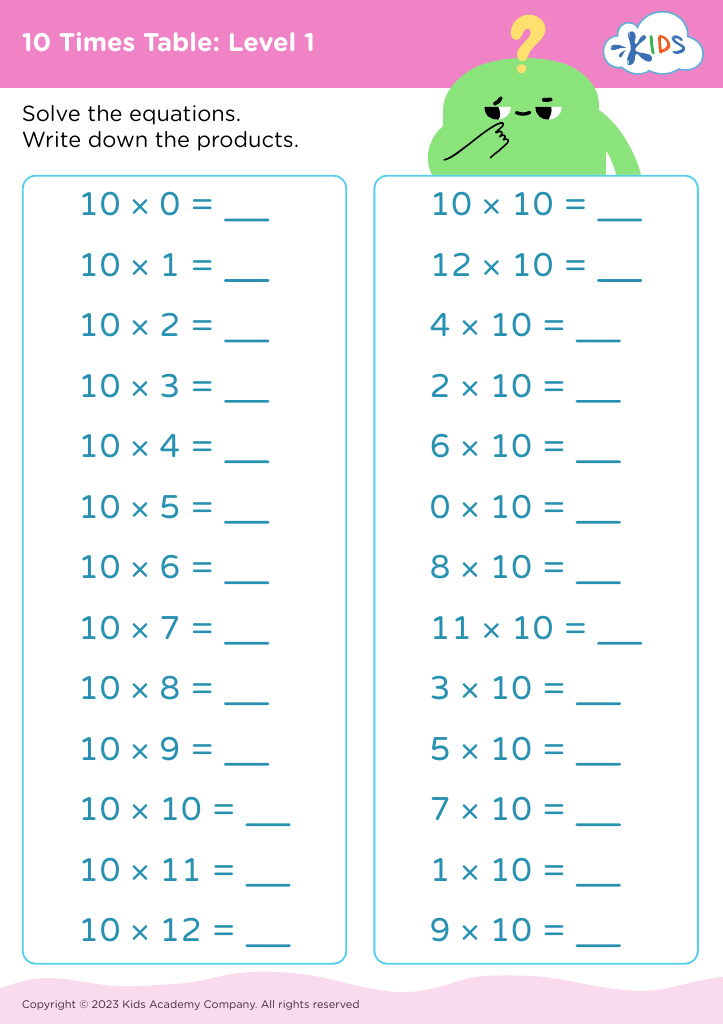
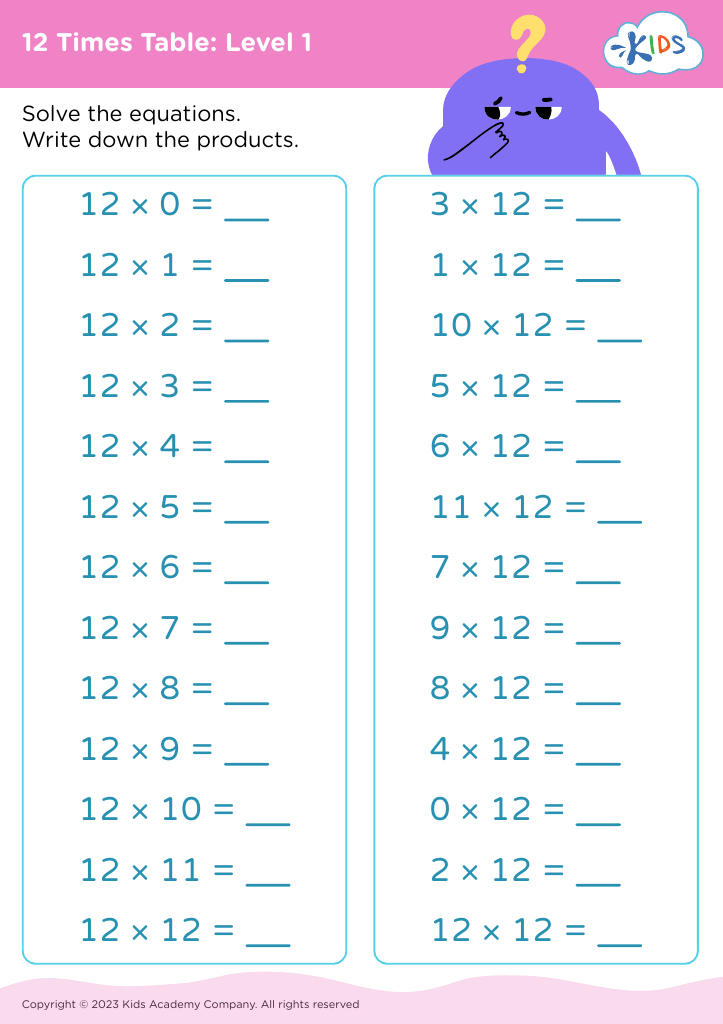
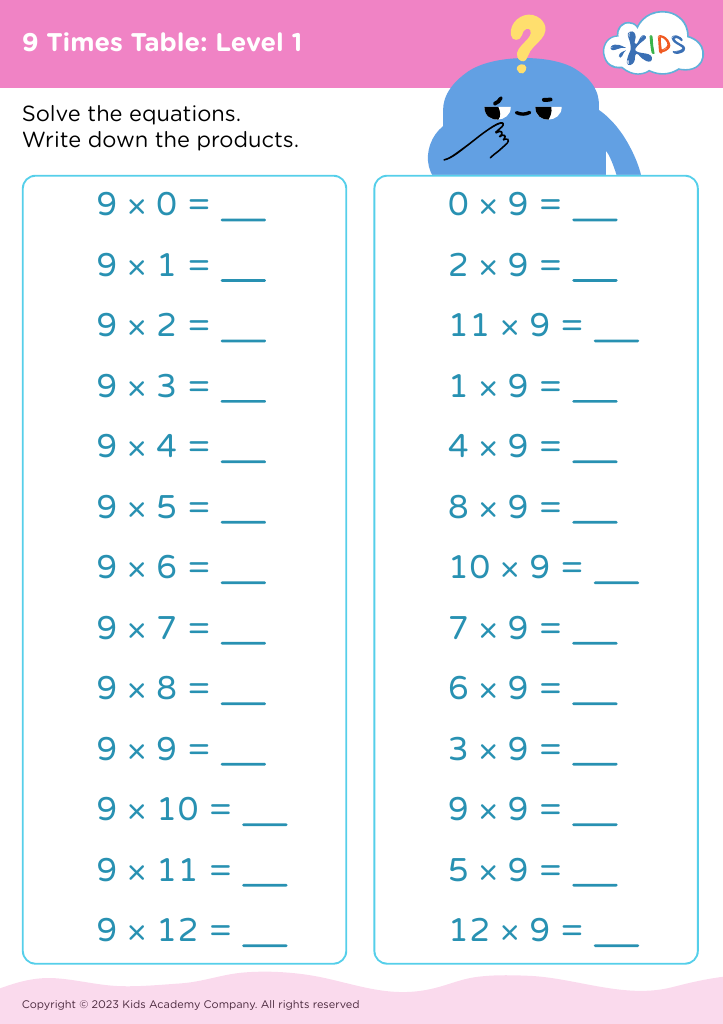





Understanding patterns, especially when learning Easy Times Tables, is crucial for 9-year-olds as it lays a strong foundation for mathematical reasoning and problem-solving. For parents and teachers, recognizing the importance of grasping these concepts is vital for several reasons.
Firstly, patterns in multiplication allow children to see relationships between numbers, making calculations more intuitive and less daunting. For instance, recognizing that the 5 times table alternates between ending in 0 and 5 can simplify learning and help students discover connections within their existing knowledge.
Secondly, engaging with patterns enhances critical thinking skills which are essential not only in mathematics but across various subjects. This mindset helps students approach challenges with confidence, fostering a love for learning.
Moreover, students who can identify patterns are better equipped to tackle more complex mathematical concepts later on, such as fractions, decimals, and algebra. This early foundation supports their academic journey, leading to improved performance in standardized tests.
Finally, when parents and teachers emphasize pattern recognition, they create a more supportive learning environment, promoting collaboration in overcoming difficulties. Overall, empowering students to understand patterns in multiplication enriches their educational experience and sets the stage for future success.








