Fine Motor Skills Easy Grade 1 Letter Recognition Worksheets
6 filtered results
-
From - To
Discover our "Fine Motor Skills Easy Grade 1 Letter Recognition Worksheets," designed to enhance children's foundational skills while making learning fun. These engaging printable activities support first graders in developing essential fine motor coordination through tracing, writing, and hands-on tasks. With a focus on letter recognition, our worksheets combine educational value with creativity, helping young learners confidently identify and form letters. Perfect for classroom use or extra practice at home, these resources foster early literacy skills and hand dexterity, setting the stage for academic success. Empower your child's learning journey with our expertly crafted, easy-to-use worksheets.
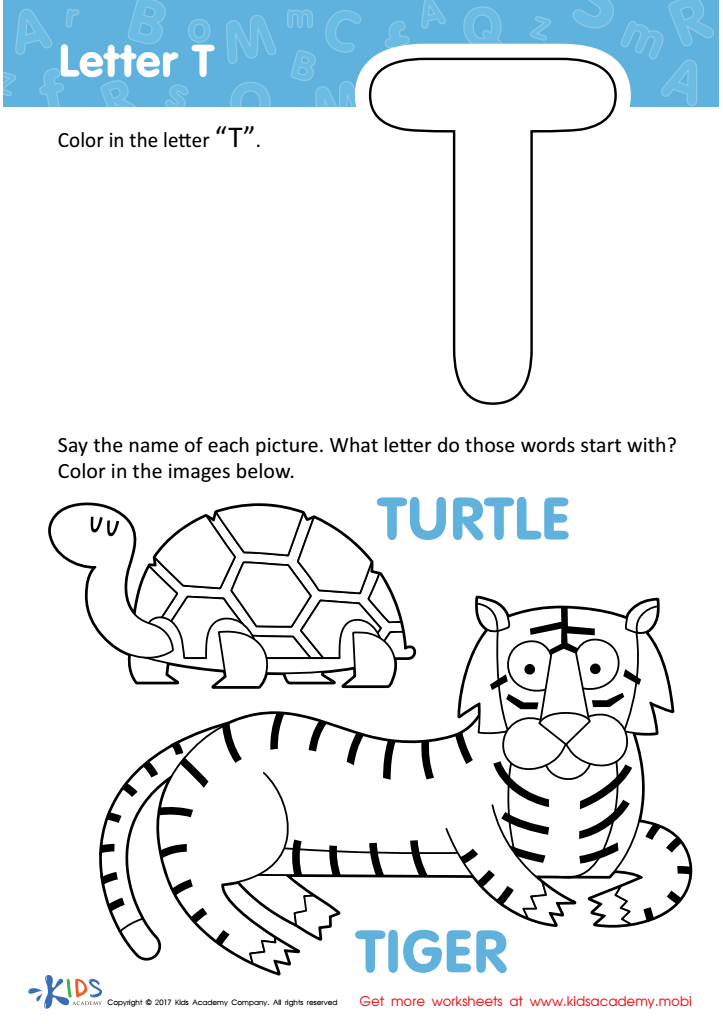
Letter T Coloring Sheet
 Assign to My Students
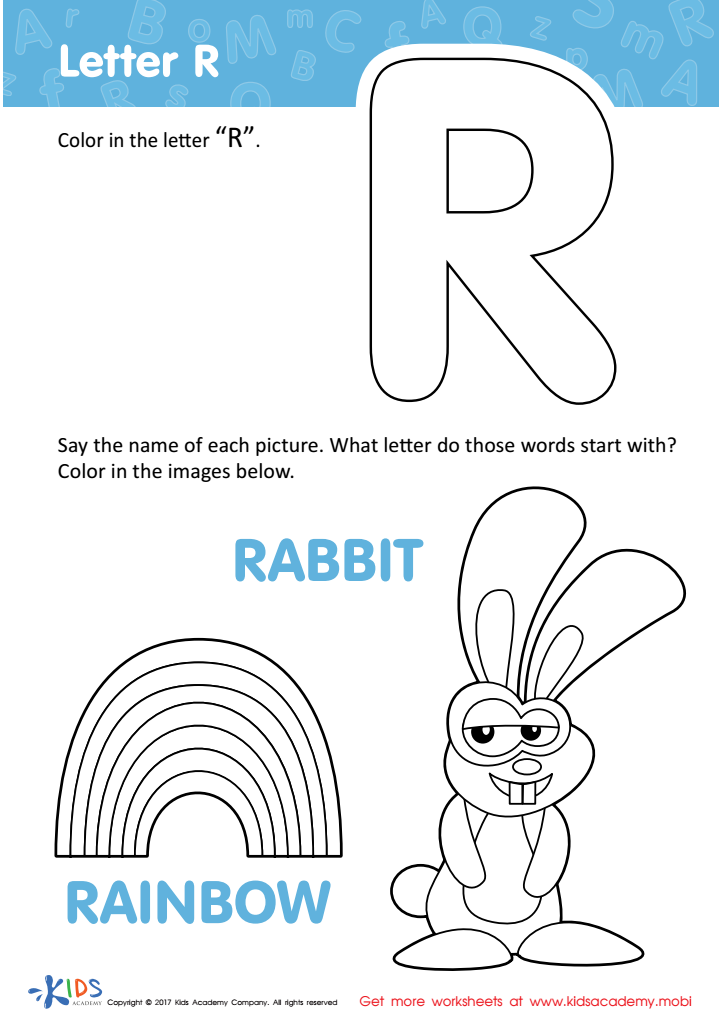
Letter R Coloring Sheet
Assign to My Students
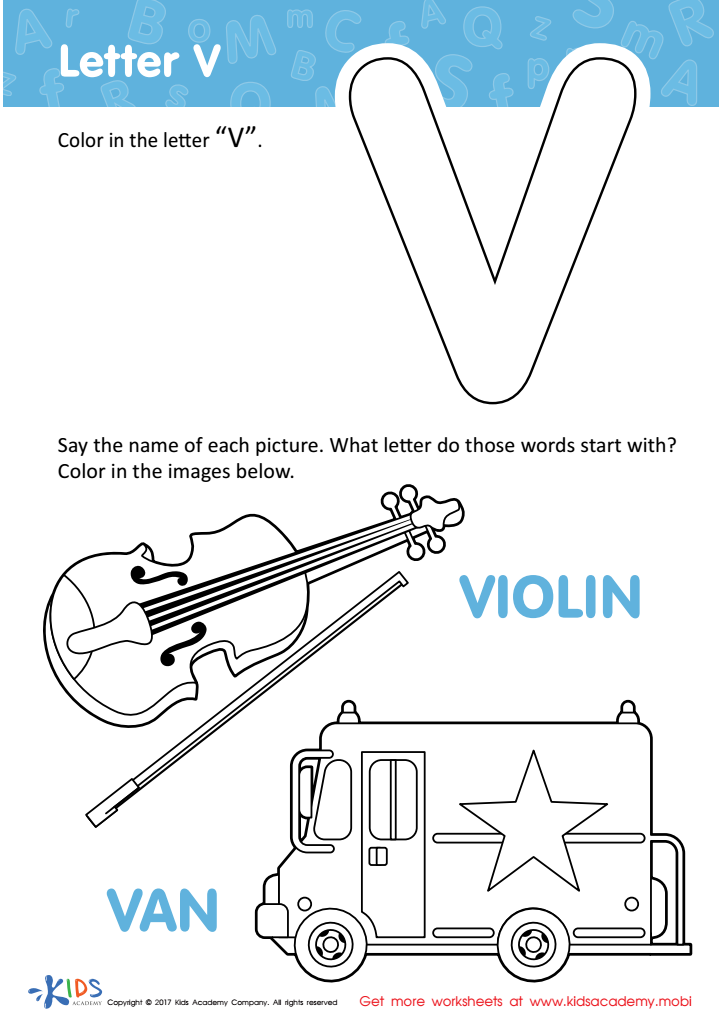
Letter V Coloring Sheet
Assign to My Students
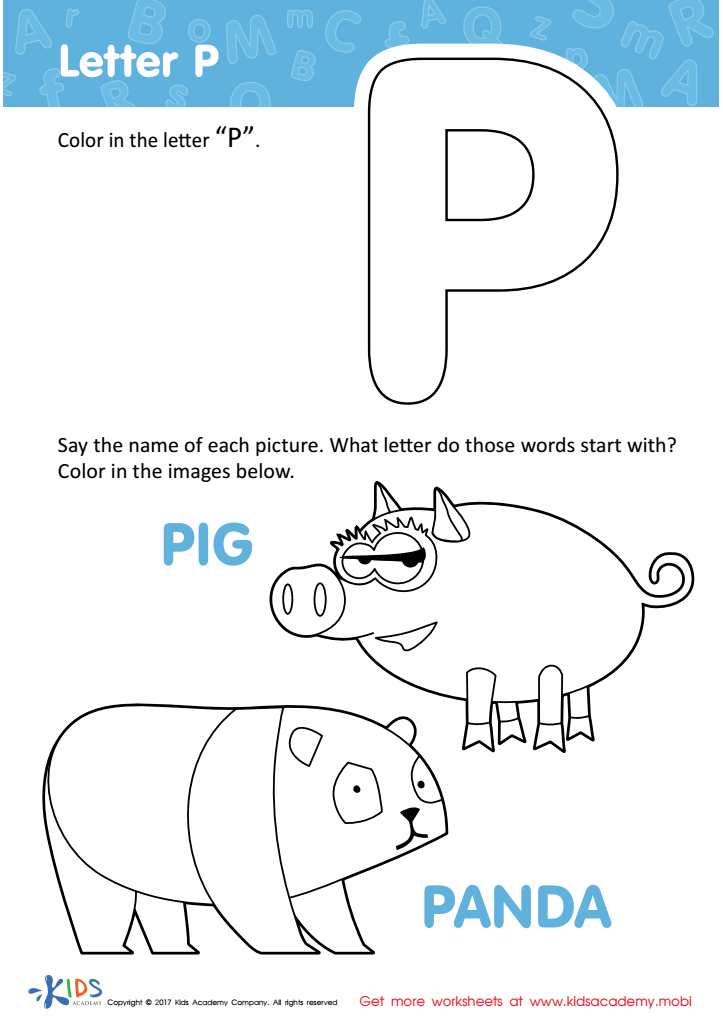
Letter P Coloring Sheet
Assign to My Students
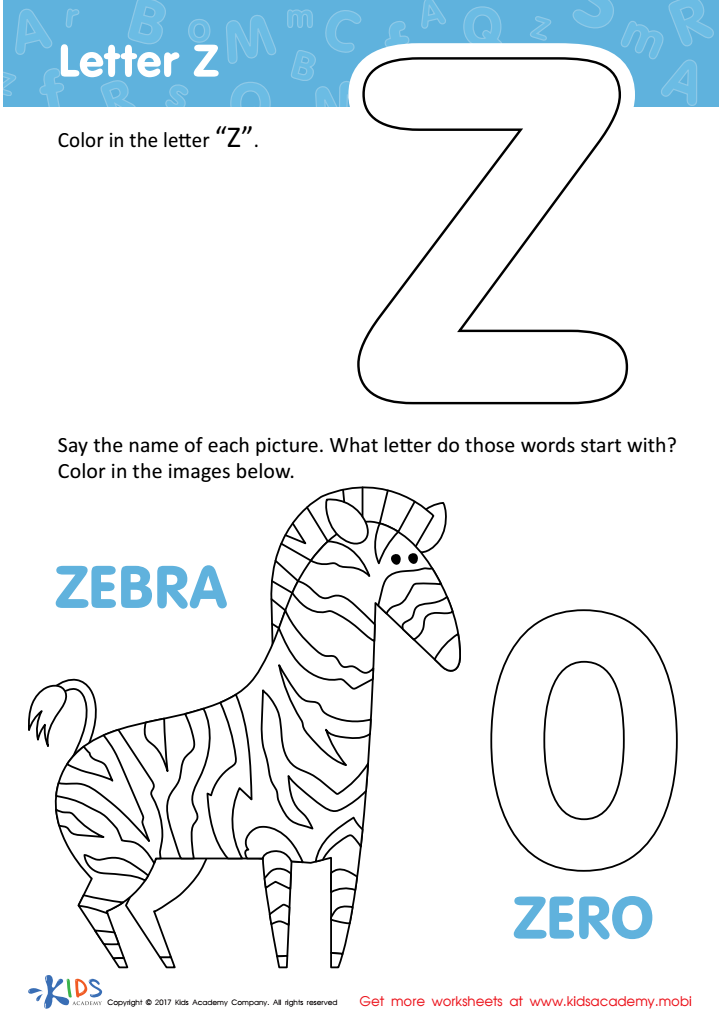
Letter Z Coloring Sheet
Assign to My Students
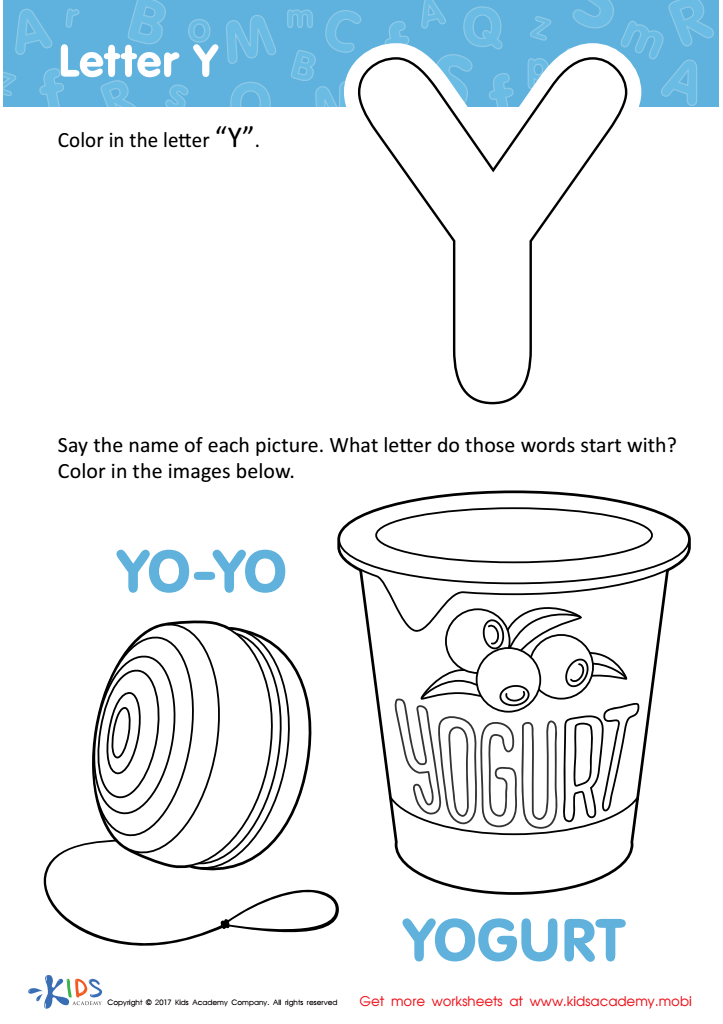
Letter Y Coloring Sheet
Assign to My Students



Fine motor skills and letter recognition are foundational elements in early childhood education, and it is crucial for parents and teachers to prioritize their development in Grade 1. Fine motor skills involve the coordination of small muscles in the hands and fingers, which are necessary for young children to perform essential day-to-day tasks such as writing, buttoning clothes, and using utensils. By encouraging activities that enhance these skills, children become more proficient in controlling pencils and other writing instruments, thereby benefiting their overall academic performance.
Letter recognition, the ability to identify and name the letters of the alphabet, is another fundamental skill. It serves as a precursor to reading and writing. Children who easily recognize letters are more likely to have an easier time decoding words, developing phonemic awareness, and achieving reading fluency. Just as building strong physical foundations allow children to perform more complex tasks, early mastery of letter recognition and fine motor skills provides the basis upon which more advanced literacy and academic skills are built.
When parents and teachers emphasize the development of fine motor skills and letter recognition, they are not just enhancing a child’s scribbles or alphabet tests. They are laying down critical pathways to academic success, lifelong learning, and independence.