Understanding fractions Easy Grade 1 Geometry Worksheets
6 filtered results
-
From - To
Discover the world of fractions with our "Understanding Fractions Easy Grade 1 Geometry Worksheets"! Perfectly tailored for young learners, these worksheets simplify fundamental fraction concepts using engaging visuals and activities. Kids will learn to recognize and compare fractions with hands-on practice that makes learning fun. Designed to build early math skills, these resources help first graders grasp the essentials through interactive exercises. Boost your child's confidence in geometry while enjoying playful and effective fraction lessons. Ideal for classroom or home use, kickstart their mathematics journey with our easy-to-understand, beautifully illustrated printable worksheets.
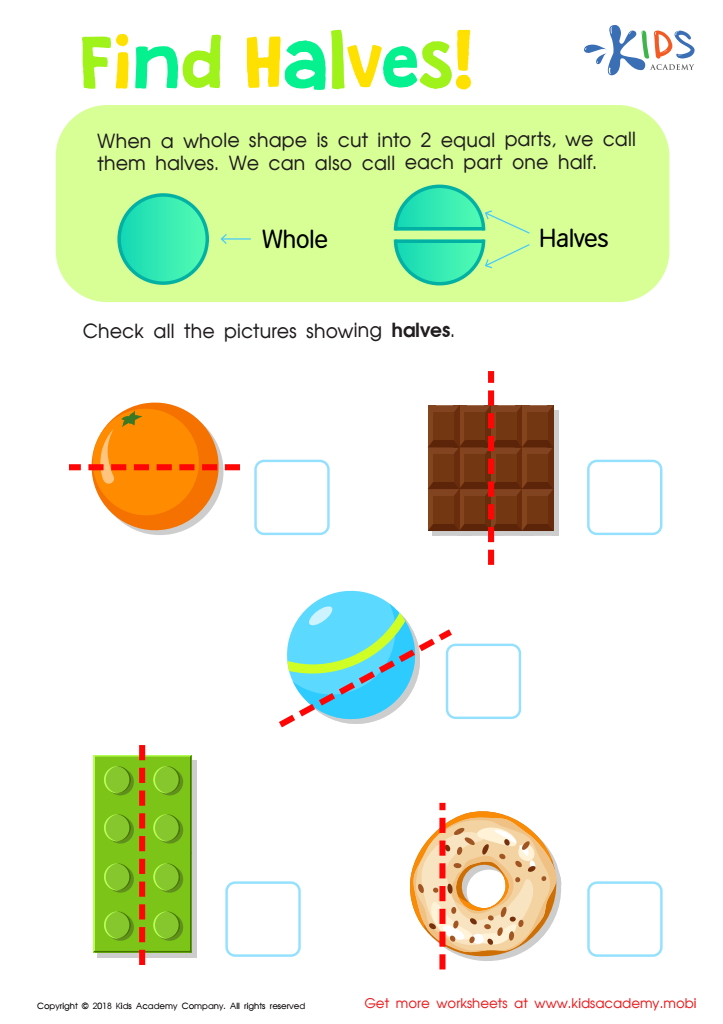
Find Halves Worksheet
 Assign to My Students
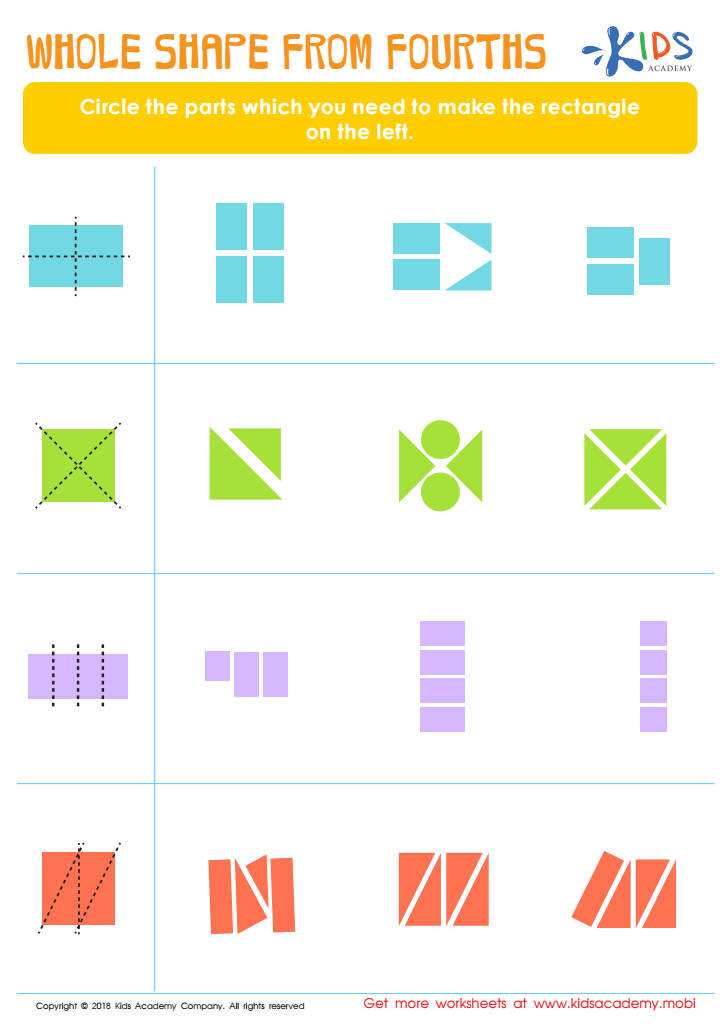
Whole Shape from Fourths Worksheet
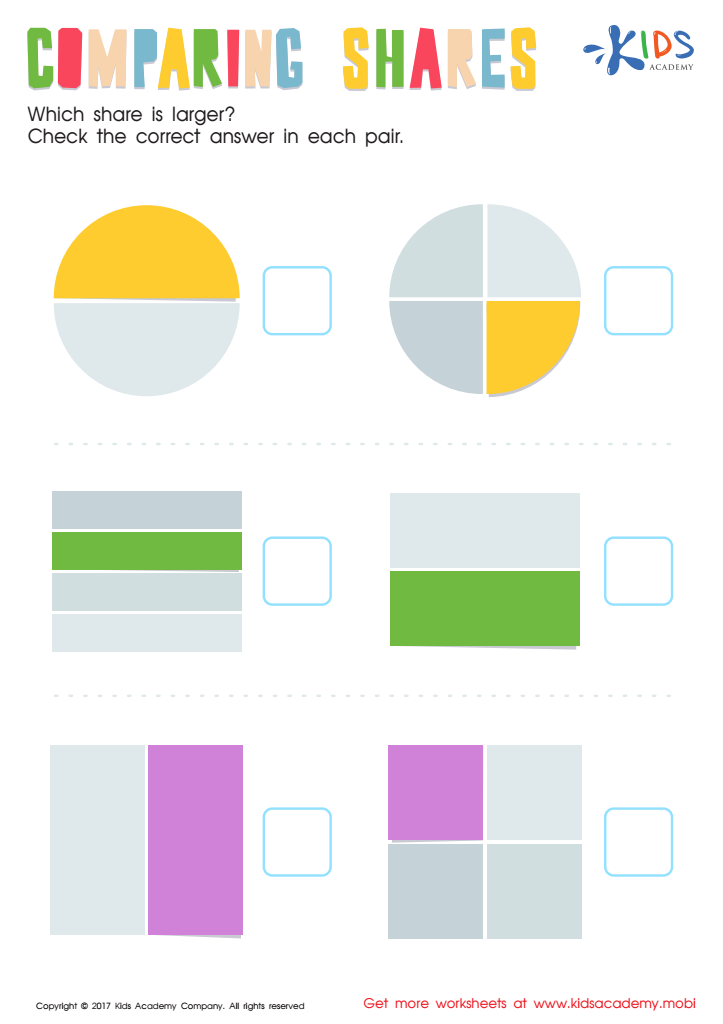
Comparing Shares Worksheet
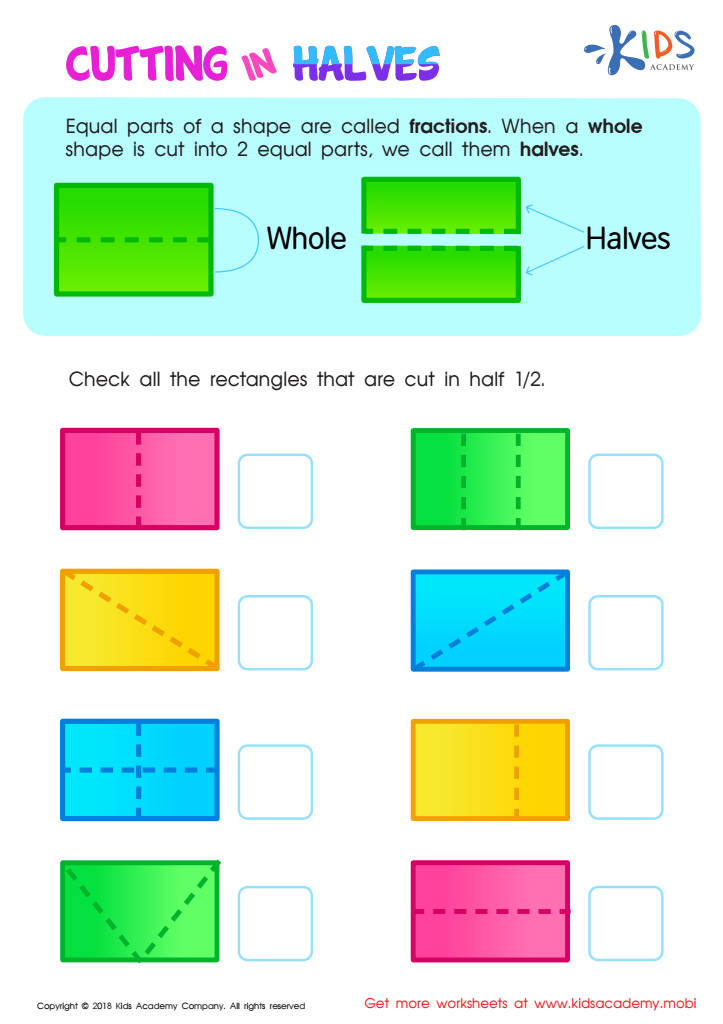
Cutting in Halves Worksheet
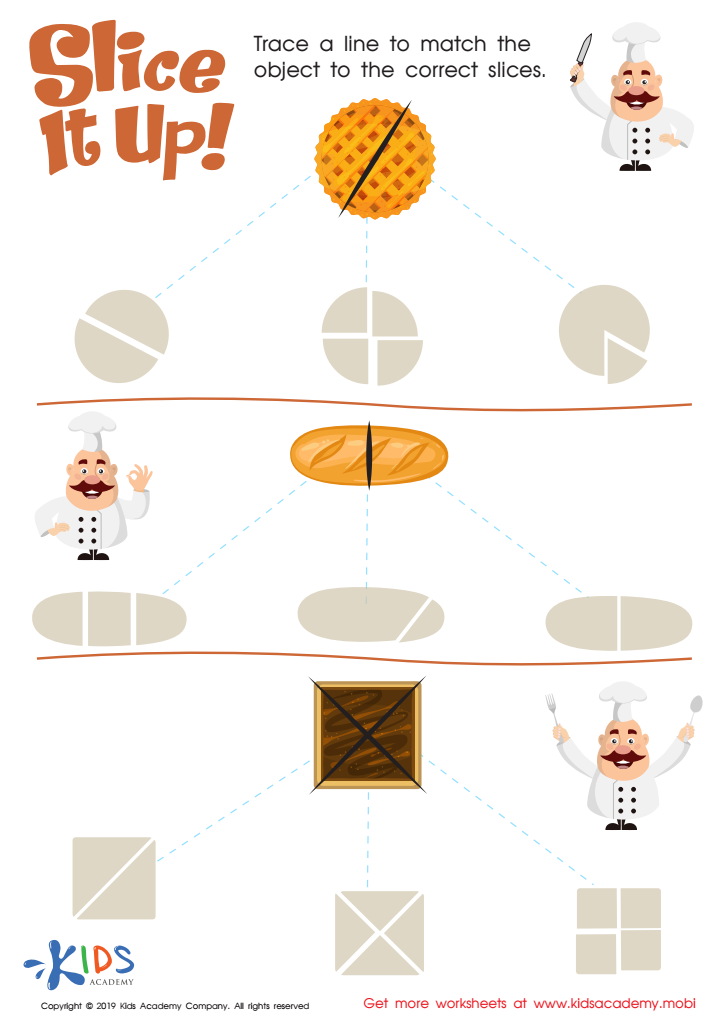
Slice It Up Worksheet
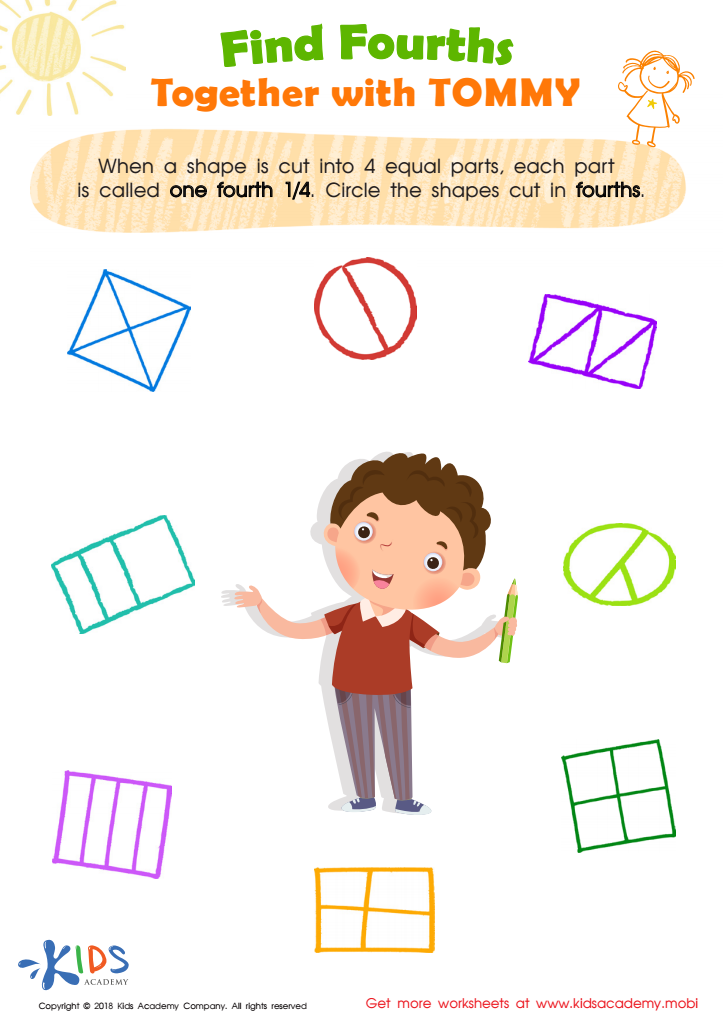
Find Fourths Together with Tommy Worksheet








Understanding fractions is essential even from a young age, as it lays the foundation for future mathematical learning and practical life skills. For parents and teachers of Grade 1 students, it's important to make early geometry engaging and comprehensible. Grasping fractions early helps children developed critical thinking and problem-solving skills, as they learn to observe parts of a whole and understand the relationships between them.
Incorporating fractions within basic geometric concepts, like splitting shapes into equal parts, can make learning enjoyable and relatable. This foundational understanding also translates into their future learning in mathematics, as fractions are integral in various concepts such as division, decimals, and ratios.
Recognizing fractions helps children in real-life situations too; for example, when sharing a pizza, dividing candies among friends, or understanding time as quarters and halves. By making fractions part of their cognitive toolkit, we set them up for success both academically and socially.
Additionally, early success with fractions can build confidence in a child’s overall math ability, reducing anxiety towards more complex mathematics. Creating a strong math foundation by integrating fractions into simple geometry in first grade significantly contributes to their overall numeracy development. Thus, parents and teachers must prioritize understanding fractions to foster children's growth comprehensively.