Animal recognition Easy Grade 1 Word Problems Worksheets
3 filtered results
Difficulty Level
Grade
Age
-
From - To
Subject
Activity
Standards
Unlock the wonders of wildlife with our "Animal Recognition Easy Grade 1 Word Problems Worksheets"! Tailored specifically for first graders, these engaging worksheets blend math with captivating animal themes, making learning enjoyable and interactive. Your students will improve their problem-solving skills as they tackle simple word problems that involve various animals. Each worksheet encourages critical thinking while using familiar contexts to help solidify their understanding of addition and subtraction. Fun illustrations spark interest, making math a delightful adventure in recognizing animals. Perfect for classroom activities or home practice, these worksheets will help young learners develop confidence in their math abilities. Explore today!
Favorites
With answer key
Interactive
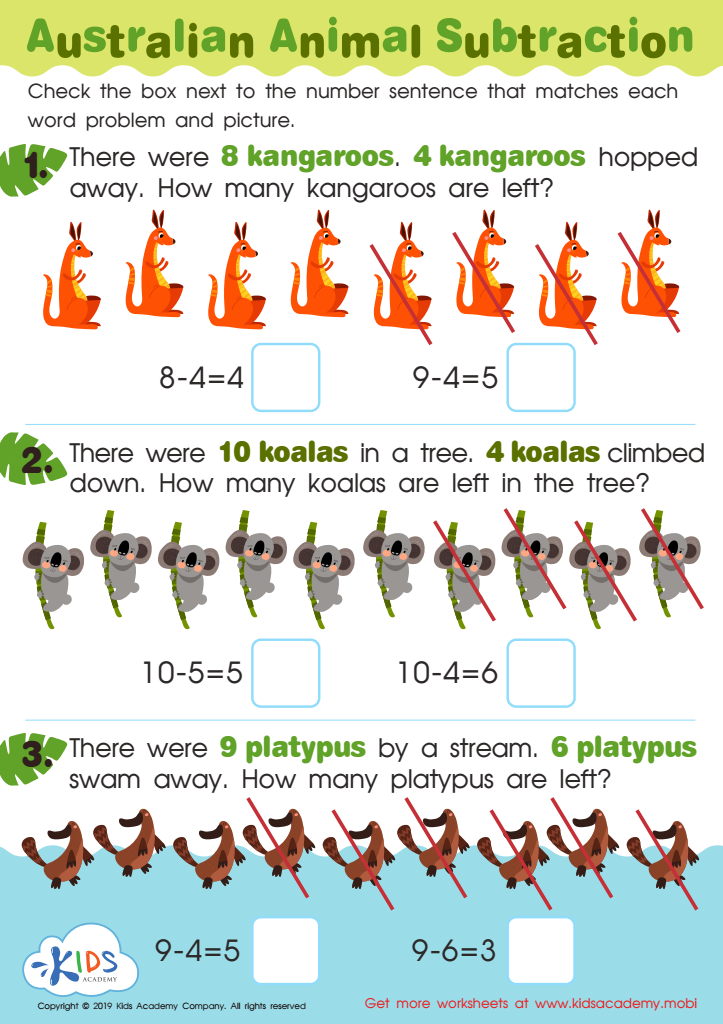
Australian Animal Subtraction Worksheet
Test your child's wildlife knowledge. Ask them to name animals indigenous to Australia or other countries. Show them the animals in this worksheet and have them match each word problem and picture with the correct number sentence.
 Assign to My Students
Australian Animal Subtraction Worksheet
Worksheet
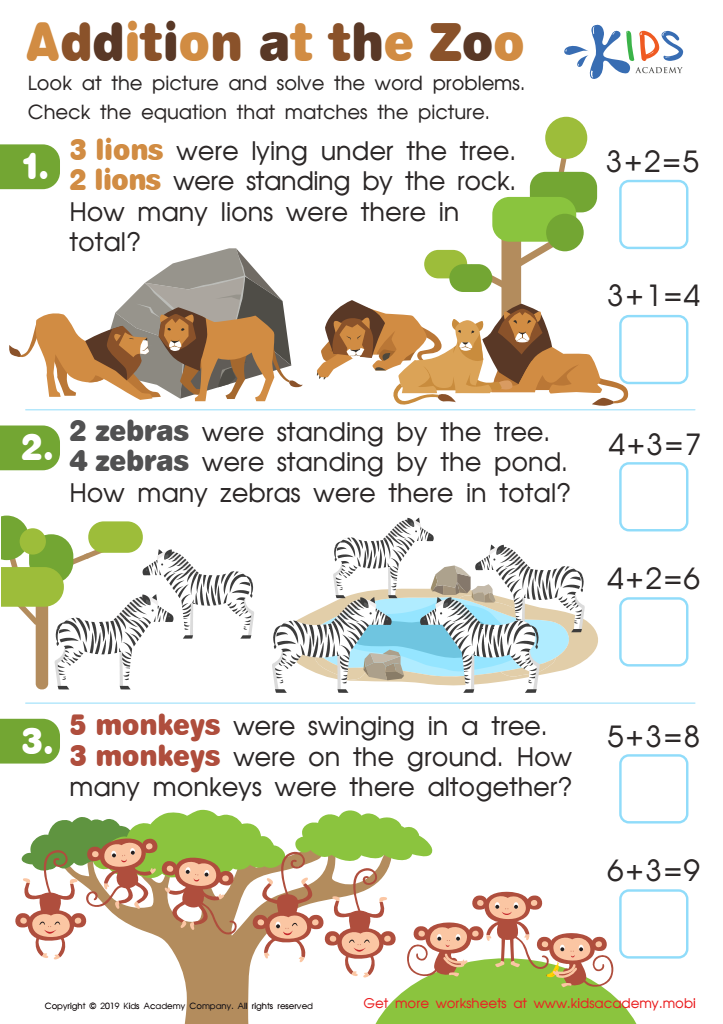
Addition at the Zoo Worksheet
Visit the zoo with your kids and point out all the different animals. Ask them to name their favorites and identify animals on a worksheet. Challenge them to solve word problems related to the pictures. Ask them for the equation that fits the picture and check the answer.
Addition at the Zoo Worksheet
Worksheet
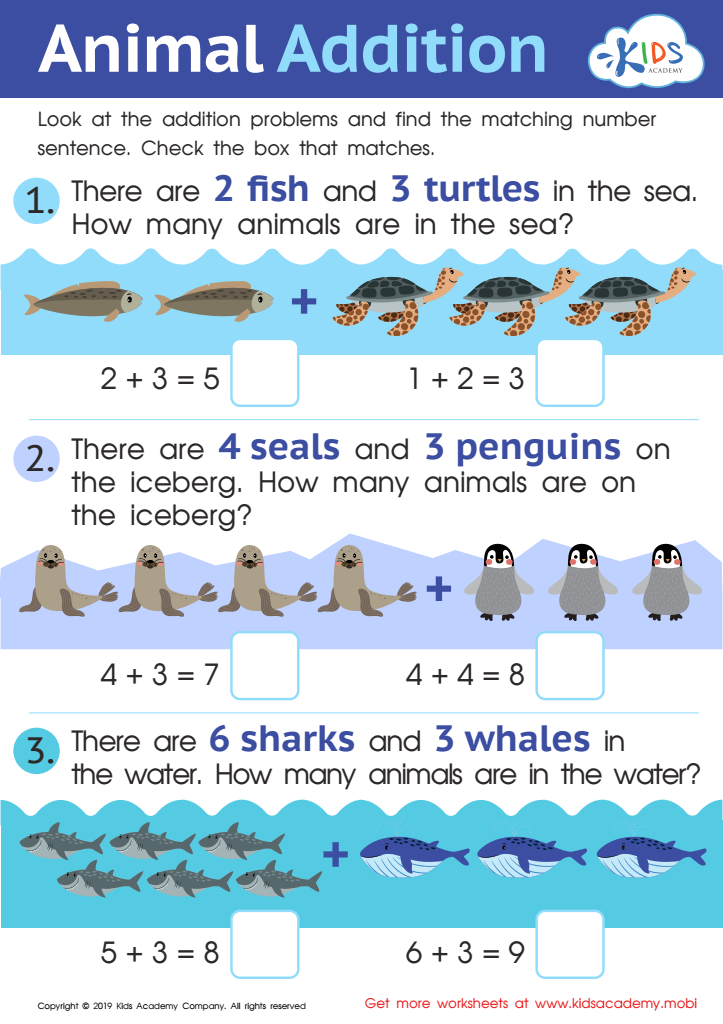
Animal Addition Worksheet
Get your kids learning addition and subtraction with this fun worksheet! Show them that solving equations can be enjoyable and help them match number sentences to the correct boxes. By doing this together, you'll create a positive learning experience that your kids won't forget.
Animal Addition Worksheet
Worksheet
Join Kids Academy for Free
Who is primarily going to use this learning content?








Animal recognition is an essential part of early childhood education, particularly in Grade 1. For parents and teachers, it offers multiple benefits that support a child's cognitive and social development. First, recognizing animals helps enhance vocabulary and communication skills as children learn the names of various creatures and describe their characteristics. This newfound language fosters improved expressive and receptive language in young learners.
Additionally, animal recognition introduces critical thinking and problem-solving as children engage in simple word problems involving animals, such as "If you have two dogs and one cat, how many pets do you have in total?" These exercises develop mathematical skills and enhance logical reasoning from an early age.
Beyond academics, learning about animals can cultivate empathy and compassion. Discussing animal behavior and habitats encourages students to develop an appreciation for nature and the importance of caring for living creatures in our environment.
Overall, animal recognition word problems are not just about counting or language; they lay the groundwork for valuable lifelong skills and stimulate curiosity in young minds. Parents and teachers should care about these lessons because they contribute significantly to holistic childhood development and prepare children for future learning experiences.