Comprehension skills Easy Kindergarten Worksheets
4 filtered results
Difficulty Level
Grade
Age
-
From - To
Subject
Activity
Standards
Explore our "Comprehension Skills Easy Kindergarten Worksheets" designed to enhance your child's understanding and retention of essential reading concepts. These engaging, printable worksheets feature colorful visuals and age-appropriate activities that foster critical thinking and encourage children to comprehend stories and texts effectively. Each worksheet targets key skills like identifying main ideas, making predictions, and recalling details, ensuring a comprehensive learning experience. Ideal for both classroom and at-home use, our resources support young learners in developing confidence in their reading abilities. Help your child unlock the magic of reading with our fun, interactive comprehension worksheets tailored for kindergarten enthusiasts!
Favorites
With answer key
Interactive
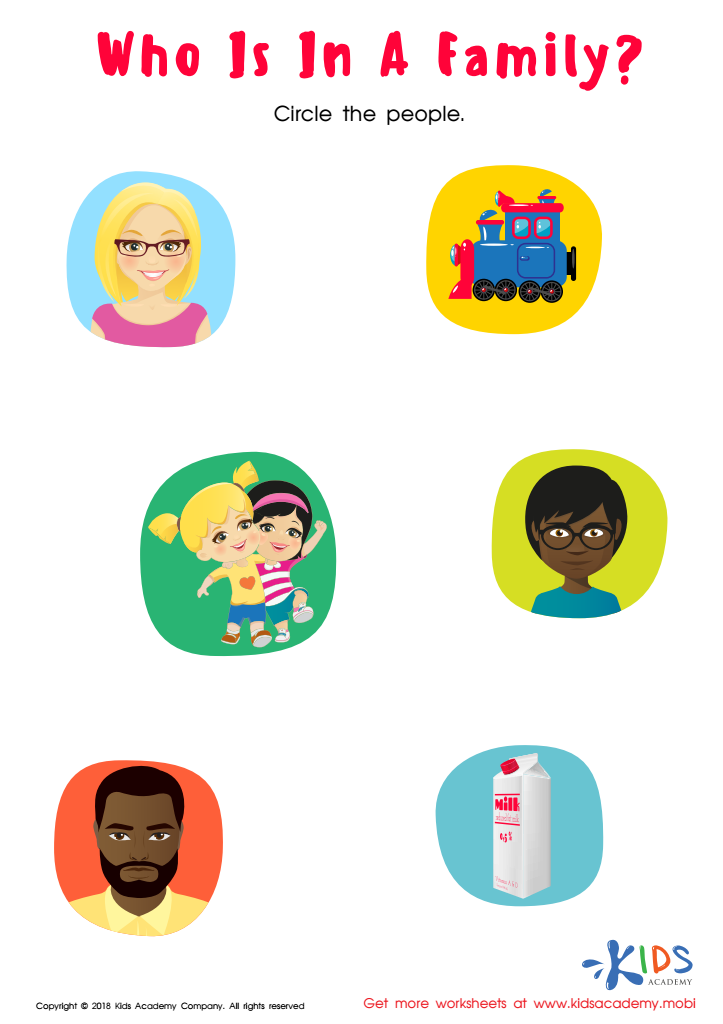
Who Is in a Family? Worksheet
Kids enjoy discussing families. This easy, colorful worksheet helps them determine if a person or thing is in a family. Children look at each picture, name it, and circle it if it represents someone in a family. It introduces or reinforces family words, making it ideal for toddlers.
 Assign to My Students
Who Is in a Family? Worksheet
Worksheet
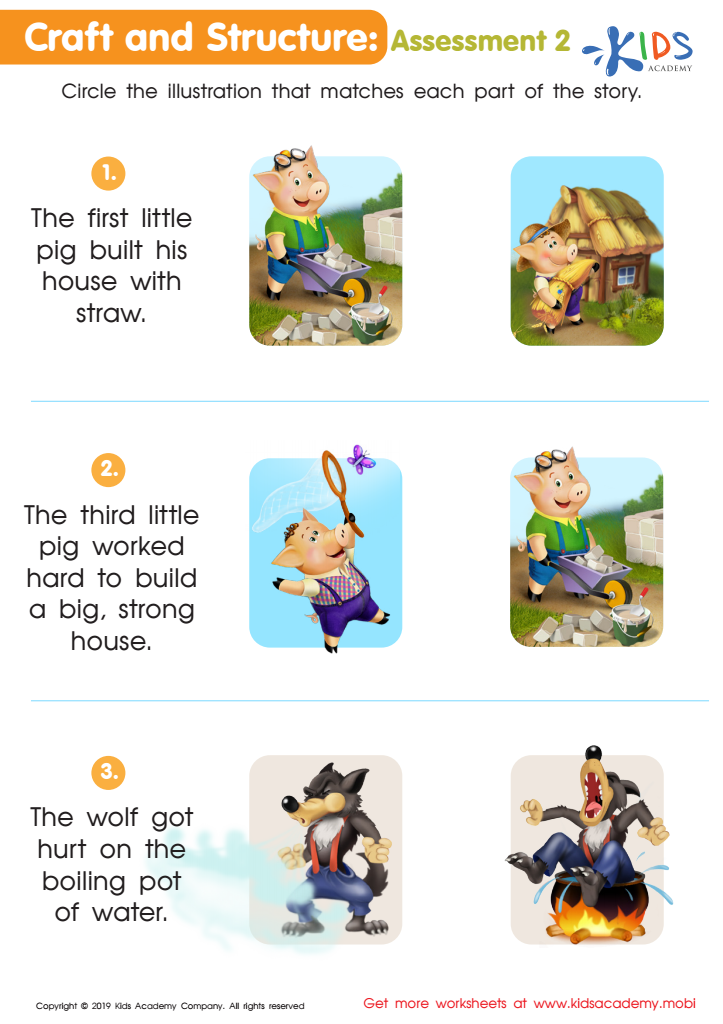
Craft and Structure: Assessment 2 Worksheet 2
This fun printout with colorful illustrations will assess how much your kids pay attention to story time. Go through the pictures and help them circle the ones that match each part of the story. Stimulate their brains and have fun in the process!
Craft and Structure: Assessment 2 Worksheet 2
Worksheet
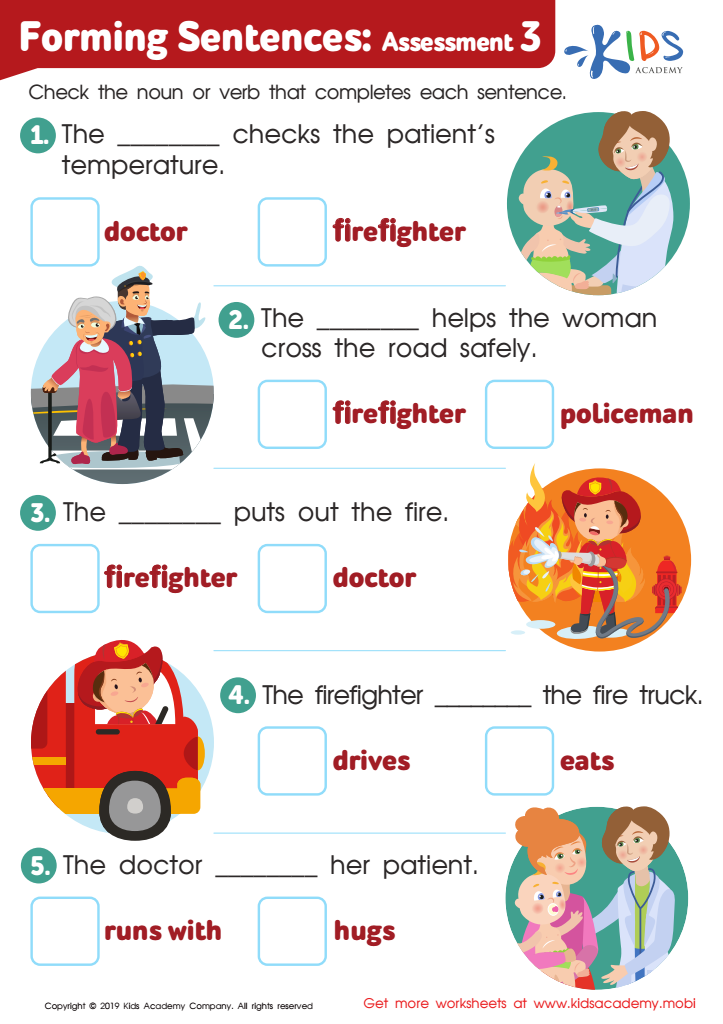
Forming Sentences: Assessment 3 Worksheet
Students must master sentence formation to be successful English learners. After grasping the ABCs and basic words, the next step is to construct sentences using those words. Worksheets like this one can help teach kids how to make sentences; they need to look at the pictures and select the correct noun or verb to complete each sentence.
Forming Sentences: Assessment 3 Worksheet
Worksheet
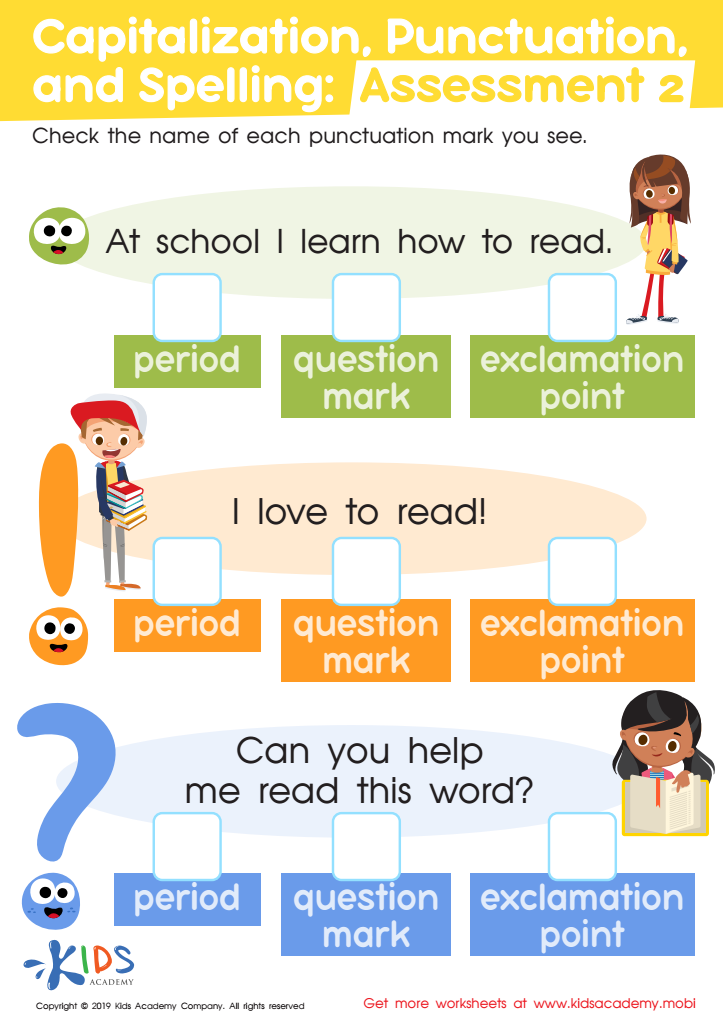
Capitalization. Punctuation. Spelling: Assessment 2 Worksheet
Teach your kids the basics of punctuation. Ask them to name the punctuation marks they know and review a worksheet together. Start with the full stop, question mark and exclamation mark. Show them examples and explain the differences between a comma and semi colon. Teaching proper use of punctuation marks is key to their development.
Capitalization. Punctuation. Spelling: Assessment 2 Worksheet
Worksheet
Join Kids Academy for Free
Who is primarily going to use this learning content?








Comprehension skills are foundational to a child's educational journey, making it essential for parents and teachers to prioritize them in kindergarten. At this stage, children begin to develop a love for reading, which directly influences their learning across subjects. When kids can comprehend what they read, they can make connections, solve problems, and engage critically with the material.
Strong comprehension skills foster confidence. When children understand stories, concepts, or information, they feel more empowered to participate in discussions and ask questions, which enhances their verbal skills and social interactions. Additionally, these skills are closely linked to academic achievement; early comprehension contributes to future success in more complex subjects, as reading is integral to learning in all areas.
Furthermore, focusing on comprehension helps children develop higher-order thinking skills. It encourages them to analyze, evaluate, and synthesize information, preparing them for lifelong learning. For parents and teachers, fostering a comprehension-friendly environment—through discussions, questions, and age-appropriate texts—sets the stage for a richer educational experience, igniting curiosity and a passion for knowledge that lasts beyond kindergarten. Ultimately, prioritizing comprehension ensures children are not just readers but also thinkers and learners who thrive in school and beyond.