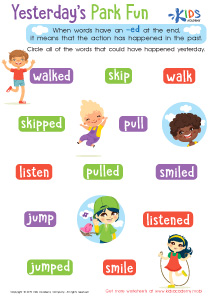
Phonics recognition Easy Kindergarten Worksheets
3 filtered results
Difficulty Level
Grade
Age
-
From - To
Subject
Activity
Standards
Welcome to our Phonics Recognition Easy Kindergarten Worksheets! Designed for young learners, these engaging worksheets help develop essential phonics skills vital for early reading success. With vibrant illustrations and simple exercises, children will enjoy identifying sounds and matching letters to enhance their recognition abilities. Our sheets cover key concepts through fun activities, making learning enjoyable and interactive. Ideal for classroom use or at-home practice, these resources cater to various learning styles, ensuring every child can benefit. Explore our collection to support your child's literacy journey today, and watch their confidence soar as they master phonics effortlessly!
Favorites
With answer key
Interactive
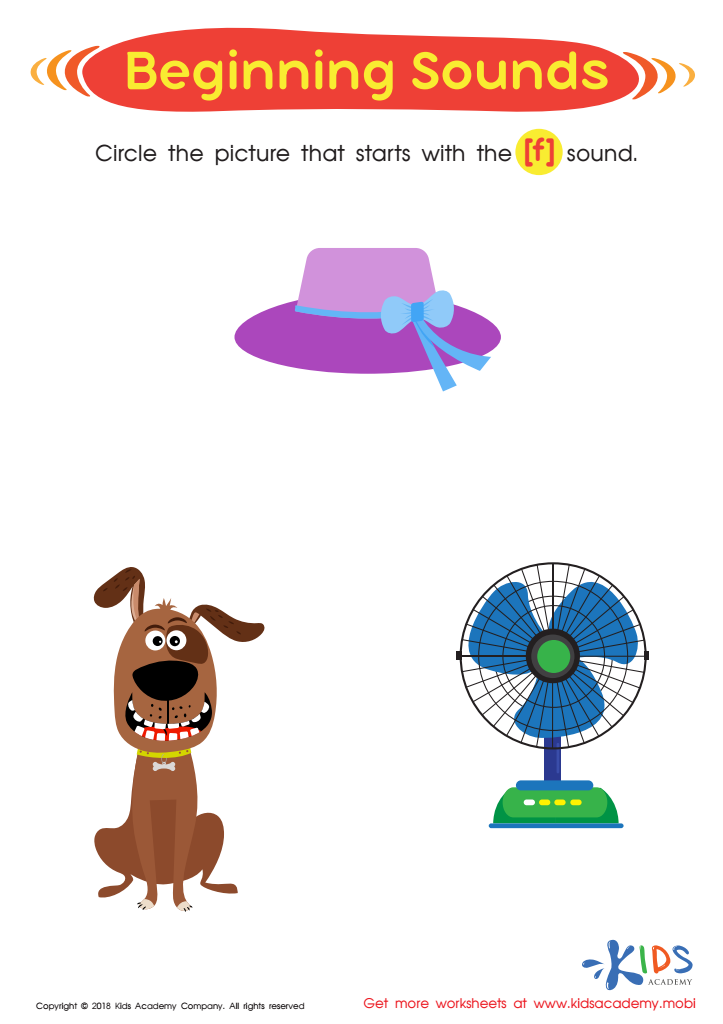
Beginning Sounds Assessment Printable
Test your child's knowledge of the alphabet. Ask them to recite the whole alphabet and the words for each letter. For example: A for apple, B for boy. Identify objects on this worksheet, then ask your child which one starts with the letter "f" and have them circle it.
 Assign to My Students
Beginning Sounds Assessment Printable
Worksheet
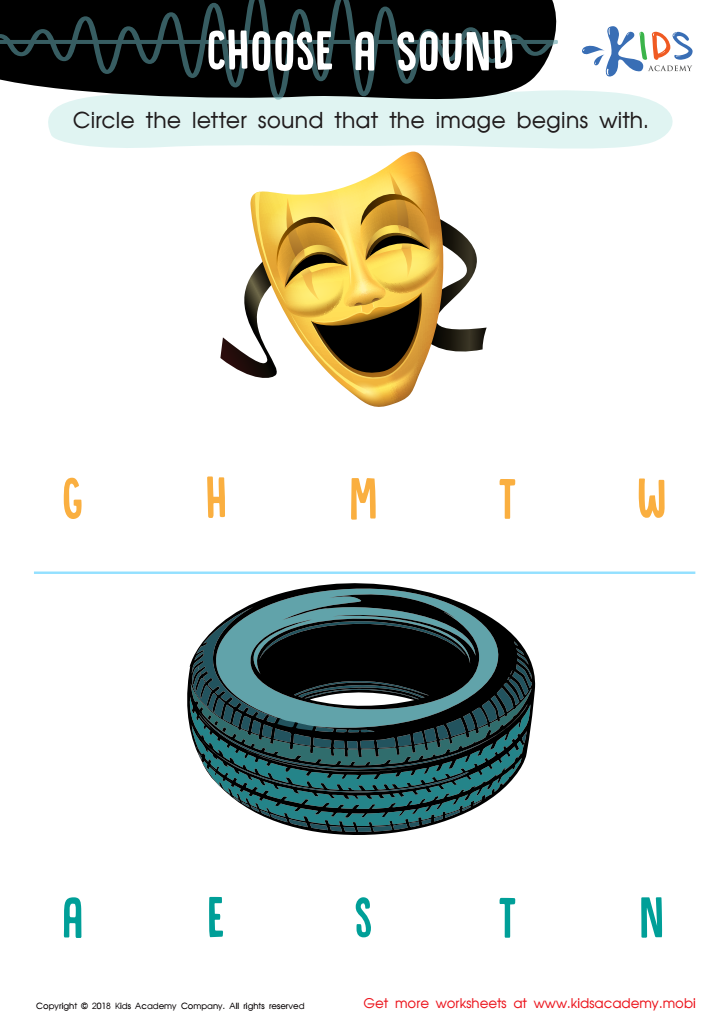
Choose a Sound Worksheet
Help your child hone pre-reading skills with this colorful worksheet! They'll practice tracing letter sounds, develop phoneme awareness, and gain confidence. Plus, it's a fun way to work on their fine motor skills.
Choose a Sound Worksheet
Worksheet
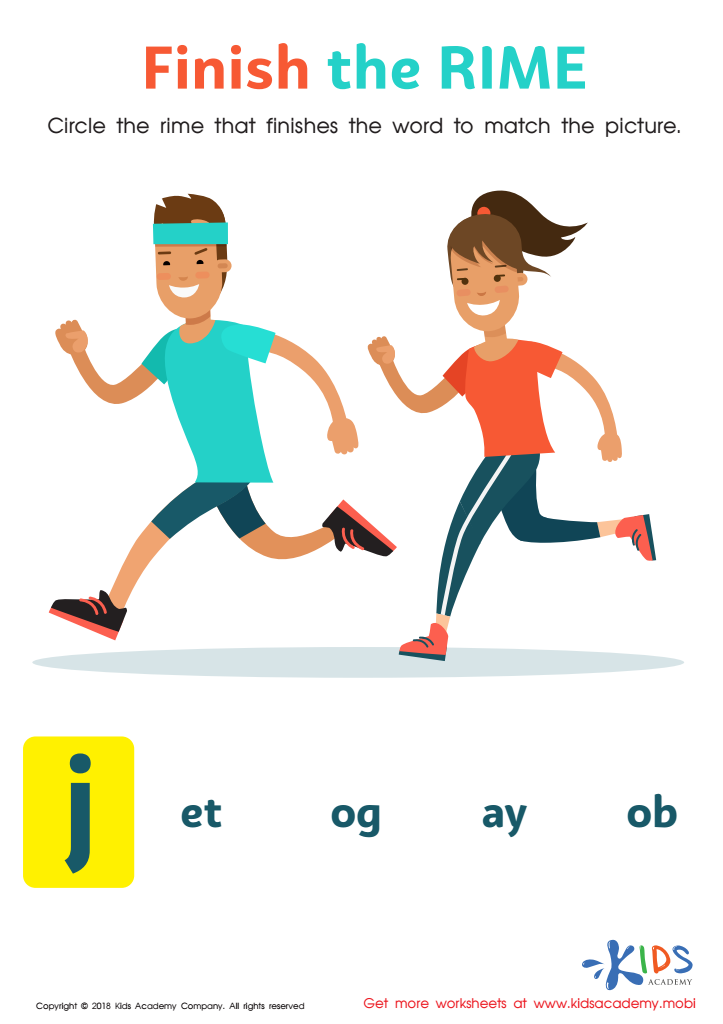
Finish the Rime Worksheet
Rimes help kids learn word families and spelling strategies. This PDF worksheet gives new readers practice with initial consonants, pictures, colors and motor skills. It's fun and cheery, and a great way to boost phonological awareness and rime identification.
Finish the Rime Worksheet
Worksheet
Join Kids Academy for Free
Who is primarily going to use this learning content?








Phonics recognition is a foundational skill vital to early literacy development in young learners, especially in kindergarten. Understanding phonics helps children decode words by linking sounds to letters, which boosts their reading and writing abilities. Early mastery of phonics sets the stage for fluency in reading—an essential skill for both academic success and lifelong learning.
Parents and teachers should care about phonics recognition because it not only enhances reading skills but also builds confidence in young learners. When children can effectively sound out words, they are more likely to engage with texts, participate in discussions, and develop a love for reading. Furthermore, phonics serves as a crucial tool for spelling, enabling children to write more effectively as they grasp the relationship between sounds and letter patterns.
In addition, strong phonics instruction can help identify and address learning difficulties early on, allowing for timely support. This proactive approach ensures that all students, regardless of their background, receive the necessary resources to gain a solid footing in literacy. Ultimately, investing in phonics recognition fosters a lifelong appreciation for language and learning, equipping children with essential skills that extend far beyond the classroom.