Understanding Sequences Easy Kindergarten Numbers Worksheets
3 filtered results
Difficulty Level
Grade
Age
-
From - To
Subject
Activity
Standards
Enhance your kindergarteners' math skills with our "Understanding Sequences" easy worksheets! These specially designed activities introduce young learners to the concept of number sequences in a fun and engaging way. Through colorful visuals and interactive exercises, children will grasp the idea of ordering and pattern recognition, essential foundations for future math success. Each worksheet promotes critical thinking while improving fine motor skills as kids connect dots, trace numbers, and fill in missing values. Ideal for home or classroom use, these resources make learning sequences enjoyable and effective. Start building a strong mathematical foundation today with our expert-crafted worksheets!
Favorites
With answer key
Interactive
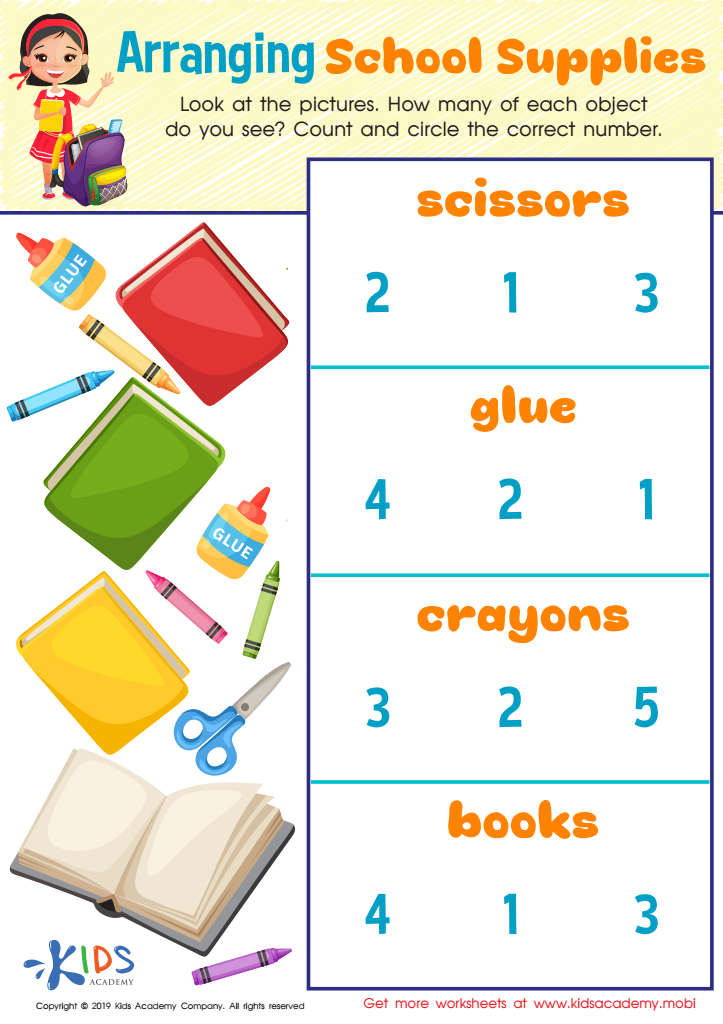
Arranging School Supplies Worksheet
Help your kids identify and count the school supplies in this colorful printout. Ask them to circle the correct number from the options provided. This is an easy and fun way for your child to practice their counting skills and recognize everyday objects.
 Assign to My Students
Arranging School Supplies Worksheet
Worksheet
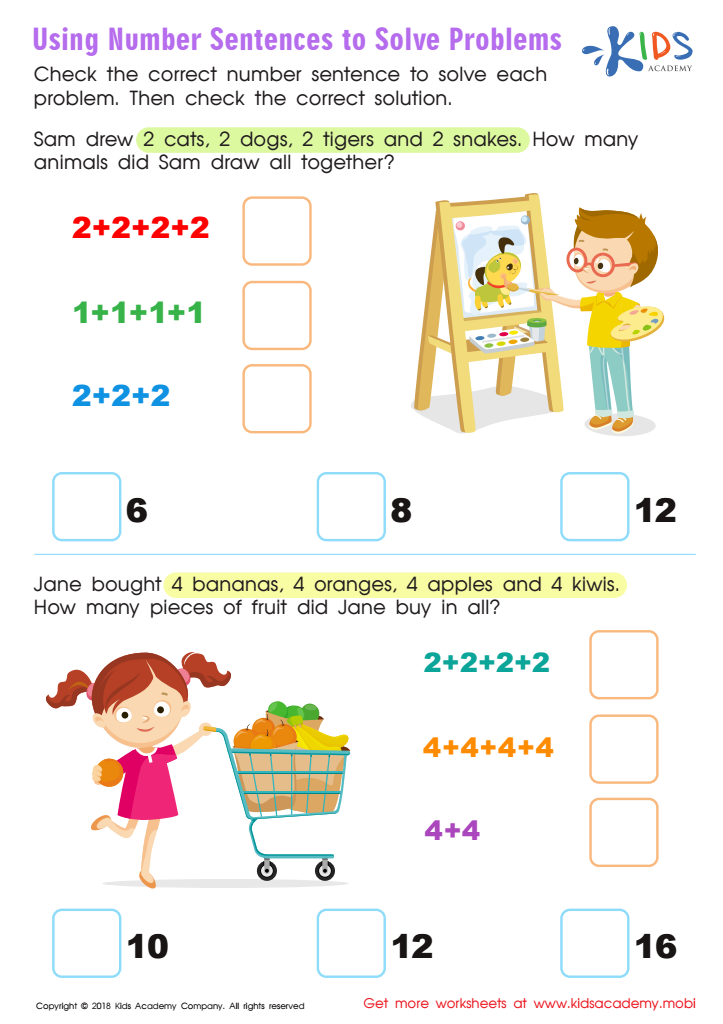
Using Number Sentences to Solve Problems Worksheet
Solving math problems requires an efficient strategy. Picture representation can help young mathematicians with basic addition problems, especially when it involves repeated addends. As they gain confidence, they'll be able to apply their number sentence solving abilities to more complex equations.
Using Number Sentences to Solve Problems Worksheet
Worksheet
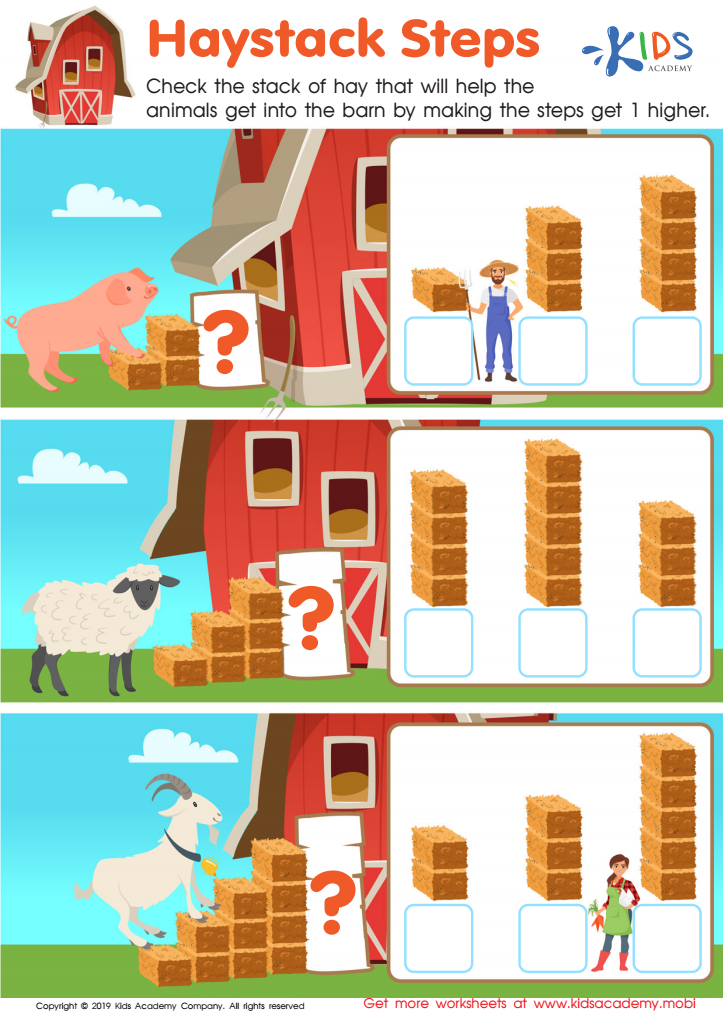
Haystack Steps Worksheet
Have your kids ever visited a farm? What activities and sights did they enjoy? Farmers are essential to our lives, growing food and providing us with dairy and eggs. In this worksheet, a farmer has made a haystack for his animals to climb into the barn. Ask your kids to add an extra layer to the stack to make the climb easier.
Haystack Steps Worksheet
Worksheet
Join Kids Academy for Free
Who is primarily going to use this learning content?








Understanding sequences is a foundational skill for young learners, and it plays a crucial role in early mathematics development. For parents and teachers of kindergarten-aged children, nurturing this skill can significantly enhance a child's numerical literacy and cognitive abilities.
Firstly, recognizing and understanding sequences helps children develop their counting skills. Counting is a cornerstone of math, and when children grasp number sequences, they can count more confidently and accurately. This understanding also lays the groundwork for more complex math concepts, such as addition and subtraction, as children learn to recognize patterns in numbers.
Additionally, sequences foster critical thinking and problem-solving skills. As children work with sequences, they begin to identify patterns and make predictions, leading to stronger analytical abilities that are applicable beyond mathematics.
Finally, engaging with sequences can be a fun and interactive experience. Activities such as singing number songs, playing games, or participating in hands-on crafts encourage collaborative learning and strengthen the parent-child or teacher-student bond.
By prioritizing an understanding of sequences, parents and teachers not only support early mathematical success but also contribute to overall cognitive and social development, setting the stage for lifelong learning.