Number Recognition Easy Kindergarten Numbers up to 100 Worksheets
10 filtered results
Difficulty Level
Grade
Age
-
From - To
Subject
Activity
Standards
Introduce your kindergarteners to the fun and educational world of numbers with our "Number Recognition Easy Kindergarten Numbers up to 100 Worksheets." Designed specifically for young learners, these engaging and colorful worksheets help children recognize and understand numbers up to 100 through a variety of playful exercises. With two versions of practice sheets, adhering to Common Core standards, kids can increasingly gain confidence in identifying, writing, and sequencing numbers. Enhance their early math skills effortlessly through hands-on activities and interactive learning. Perfect for classroom use or at-home practice, kids enjoy learning math the easy and enjoyable way!
Favorites
With answer key
Interactive
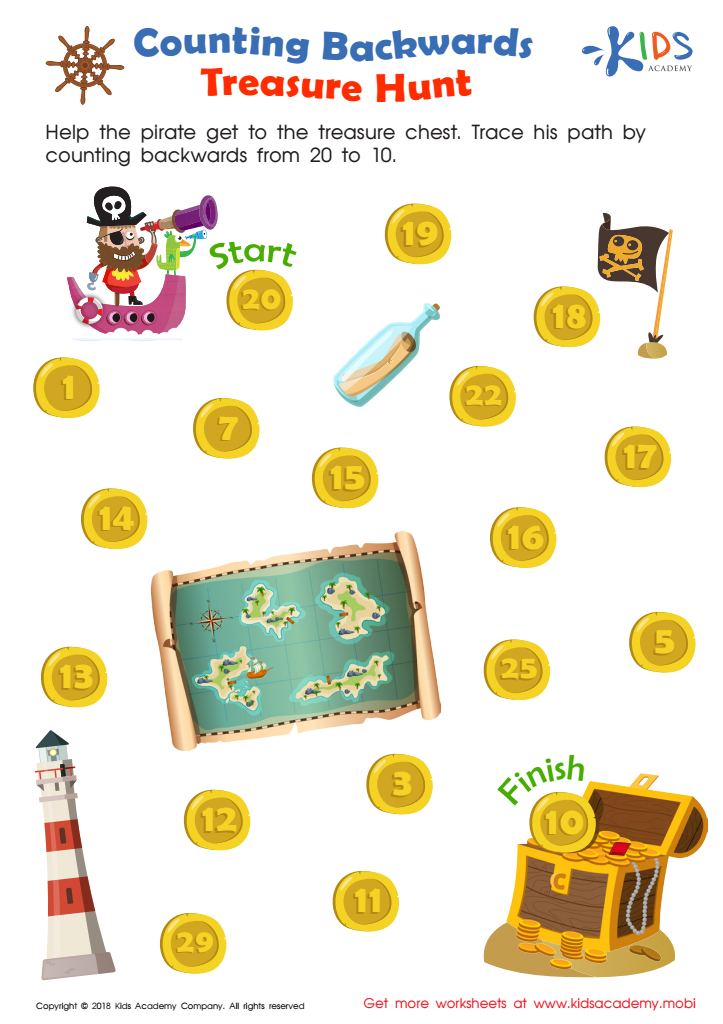
Counting Backwards: Treasure Hunt Worksheet
This fun and inviting PDF worksheet gives young math students the opportunity to visualize counting back. They'll trace their way backward from 20 to 10 and help the pirate find his treasure, while also working on fine motor skills. Building foundational math skills like this is vital, so don't miss out on this colorful and inviting activity.
 Assign to My Students
Counting Backwards: Treasure Hunt Worksheet
Worksheet
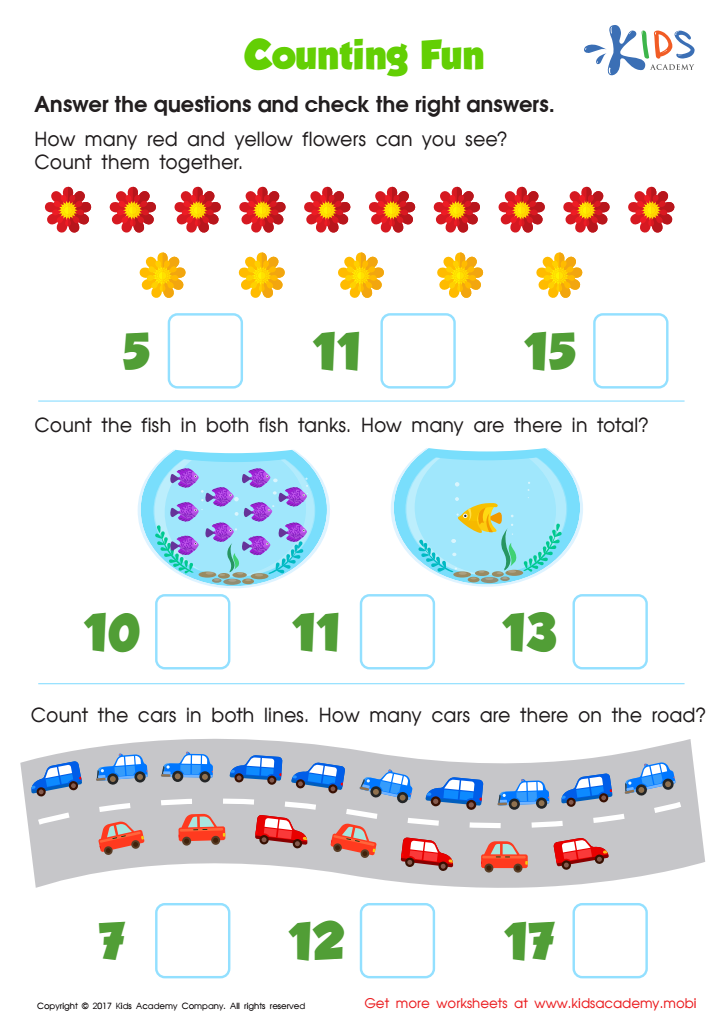
Counting Fun Worksheet
Math and fun can go hand-in-hand with this free PDF worksheet! Bright, colourful illustrations will activate your child's brain, as they count the red and yellow flowers. How many can you see? Count together and write down the total. Make learning and counting fun for your little ones!
Counting Fun Worksheet
Worksheet
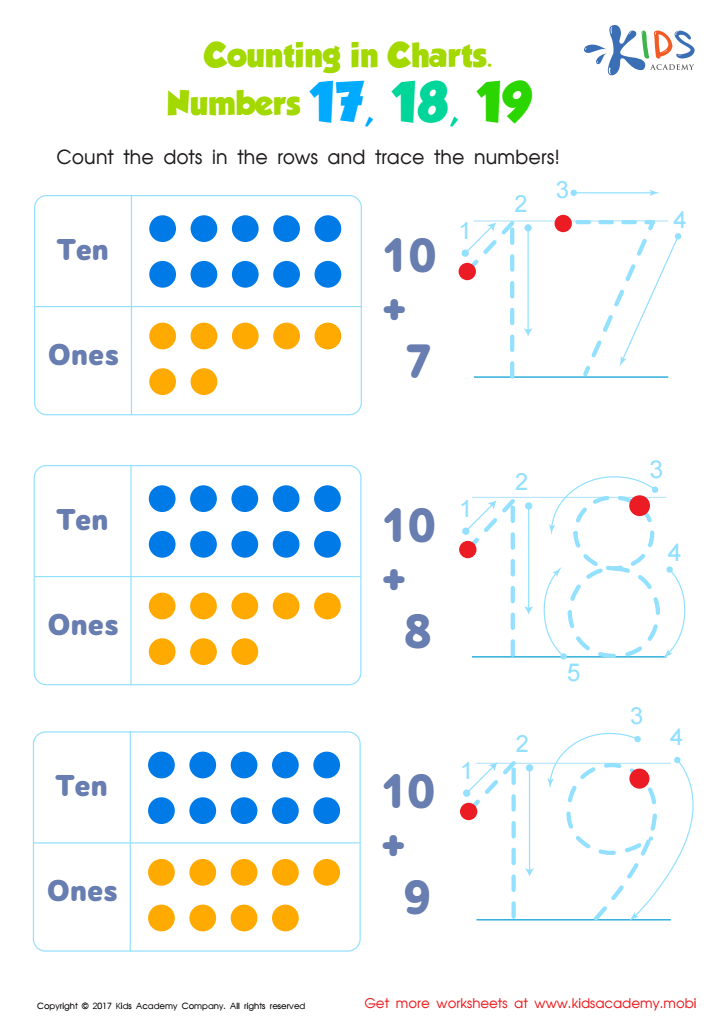
Kindergarten Number Tracing: Counting in Charts Worksheet
Little learners can find big numbers tricky! Help them practice counting and build early math skills, like place value and addition, with this kindergarten number tracing PDF worksheet. Count the dots to solve the problem and trace each answer!
Kindergarten Number Tracing: Counting in Charts Worksheet
Worksheet
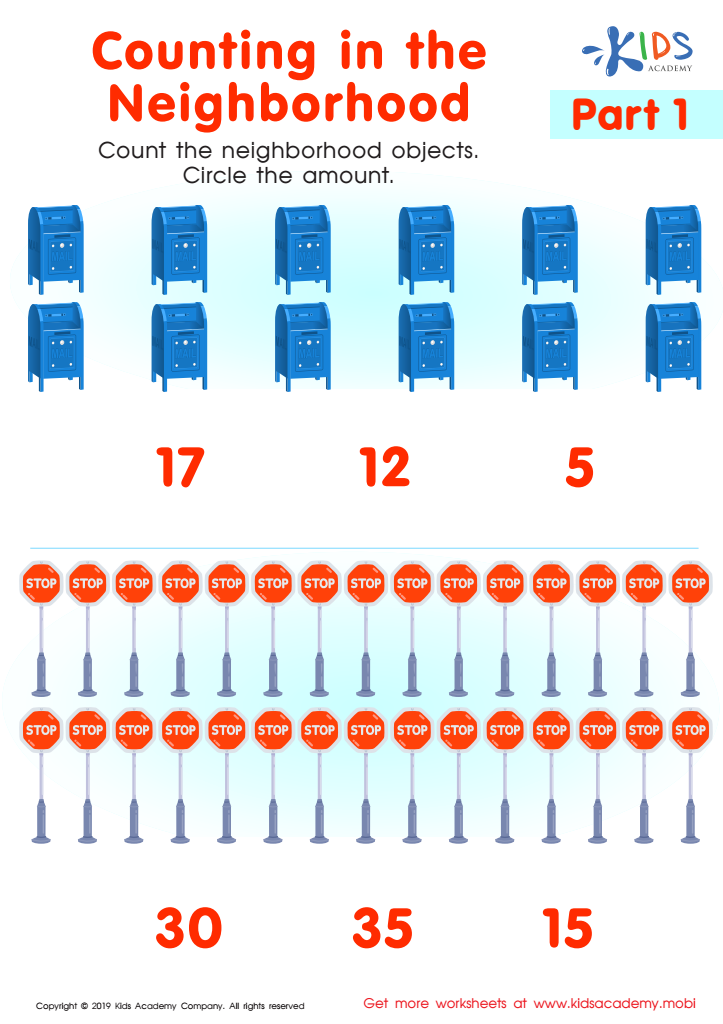
Counting in the Neighborhood Part1 Worksheet
Counting using one-to-one representation is a great way to develop a child's number sense. Use objects, pictures and images to help counting beyond the fingers. This worksheet uses everyday objects to practice counting. It encourages children to find the correct number and count forward. Give it a try!
Counting in the Neighborhood Part1 Worksheet
Worksheet
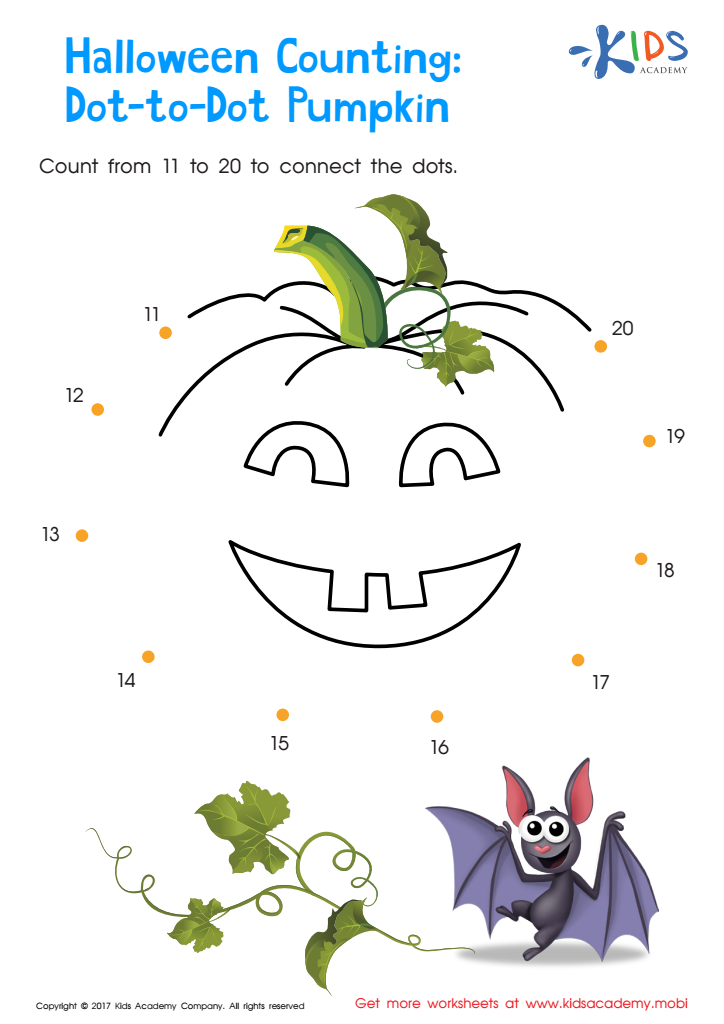
Ordering 11–20: Halloween Counting Worksheet
No matter the time of year, help your child get ready for Halloween with this worksheet. They'll practice counting from 11 to 20, recognizing numbers, and using a pencil to draw. By connecting the dots, they'll create a pumpkin picture, while unknowingly strengthening their early math skills. Print it today for an educational and fun experience!
Ordering 11–20: Halloween Counting Worksheet
Worksheet
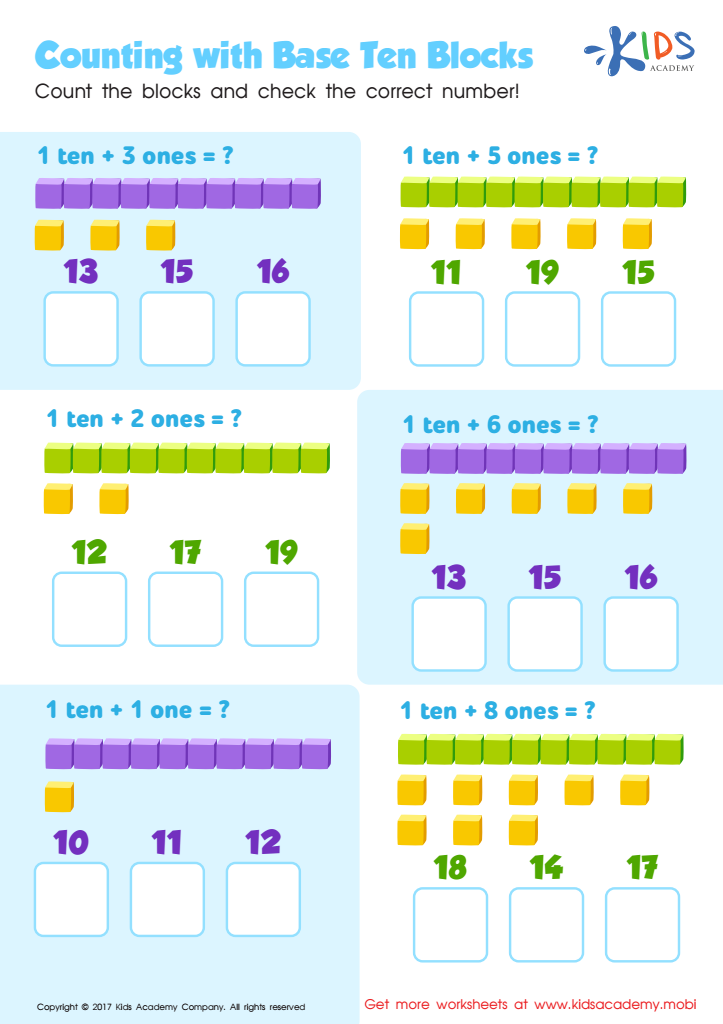
Counting with Base Ten Blocks Worksheet
Math has different levels and gets harder as your child progresses. Don't be surprised when they bring home an algebra worksheet! In this one, they will add 1 tens to varying numbers and fill in the total. This builds their understanding of base tens.
Counting with Base Ten Blocks Worksheet
Worksheet
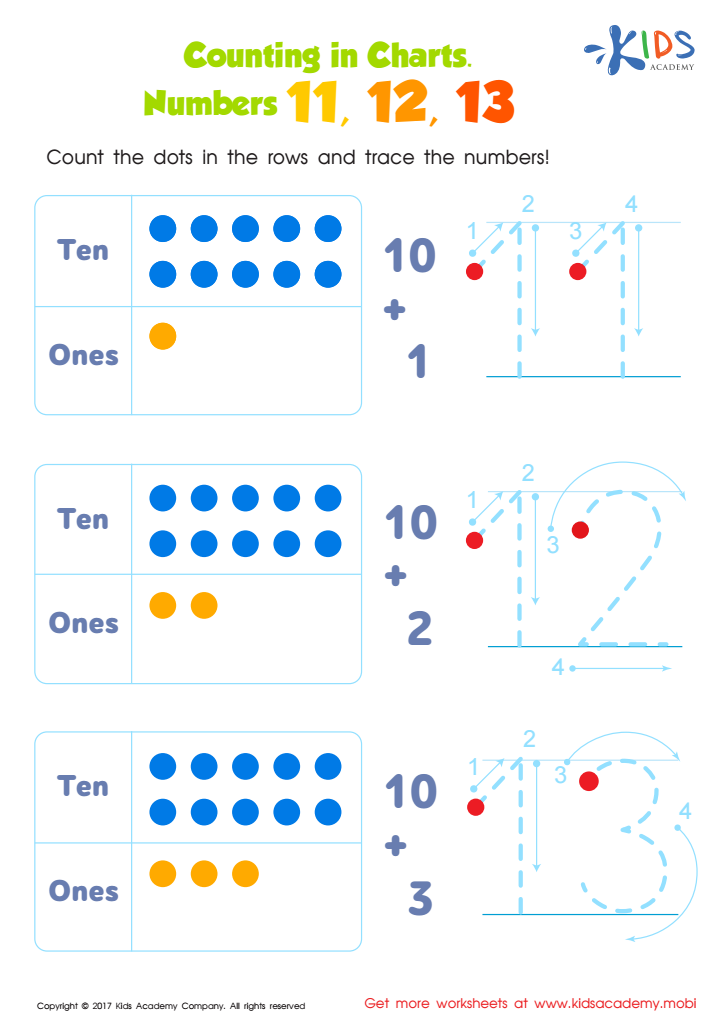
Number Tracing Worksheet For Kindergarten
Help your child develop addition skills and improve number recognition with this easy-to-use worksheet. Have them count the dots and add to solve each problem. Then, trace over the number to complete each row! It's a fun and simple way for kindergarteners to practice their math skills.
Number Tracing Worksheet For Kindergarten
Worksheet
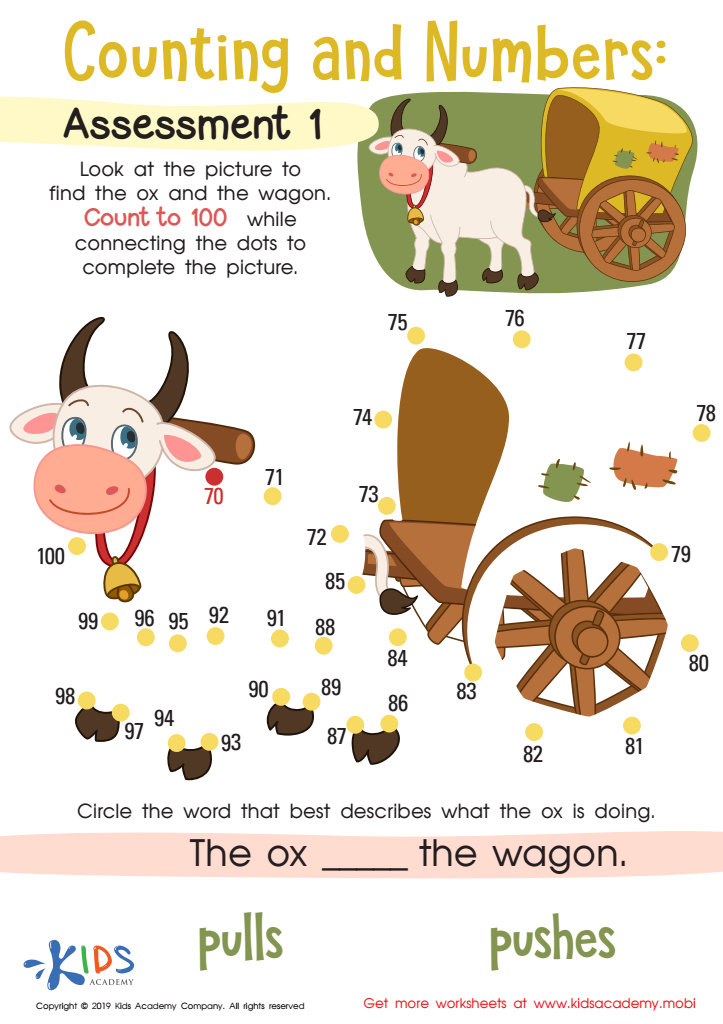
Counting and Numbers: Assessment 1 Worksheet
Let your kids use the picture as a guide and count from 70 to 100 to complete an ox pulling a wagon. As a comprehension check, have them answer the related question using words from the word bank. This dot-to-dot worksheet is a great way to assess their number reasoning and counting forward skills.
Counting and Numbers: Assessment 1 Worksheet
Worksheet
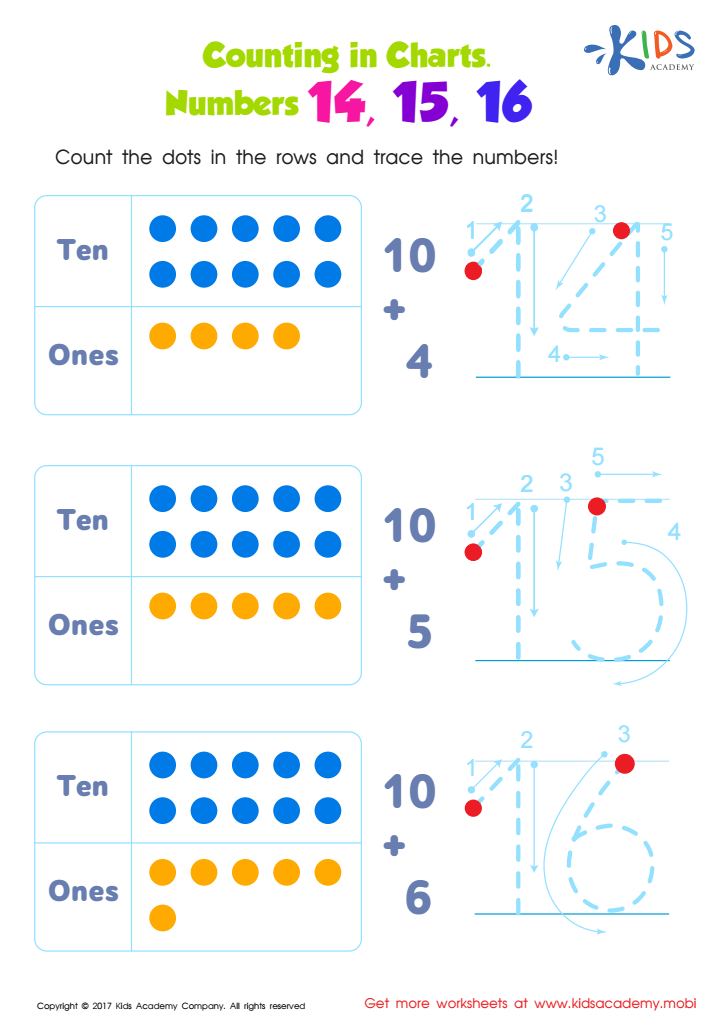
Number Tracing Worksheet
Kids learn math with counters and place value! This handy worksheet helps form a foundation for math skills and number sense! Have your child count the dots and trace the answers to the addition problems. It's a great way to support their math skills!
Number Tracing Worksheet
Worksheet
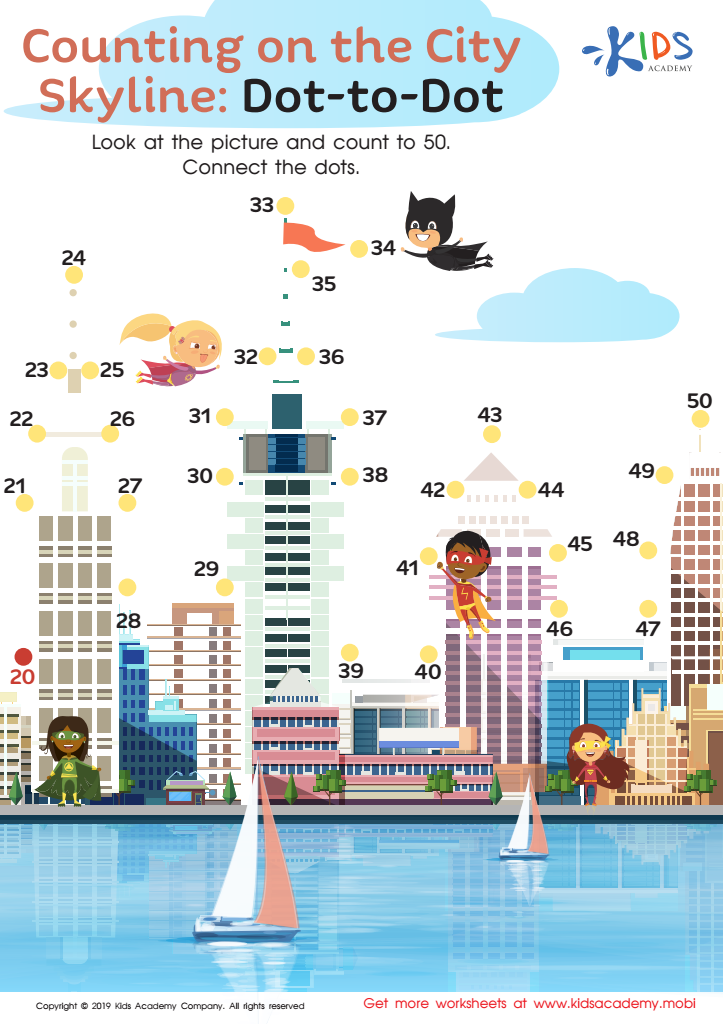
Counting on the City Skyline: Dot-to-Dot Worksheet
Kids will love connecting the dots to make a superhero skyline! They'll reinforce their number line thinking and number sense while building fine-motor skills. Watch them beam with pride as the cityscape reveals itself, all thanks to some math practice.
Counting on the City Skyline: Dot-to-Dot Worksheet
Worksheet
Join Kids Academy for Free
Who is primarily going to use this learning content?



%20(1).jpg)


Number recognition is a fundamental skill for early childhood development, laying the groundwork for future mathematical understanding and overall academic success. For parents and teachers of kindergartners, focusing on number recognition up to 100 is crucial for several reasons.
Firstly, recognizing numbers helps children develop essential cognitive skills such as memory, attention to detail, and problem-solving. By identifying and understanding numbers, children learn to categorize information, make comparisons, and establish patterns, which are critical thinking skills applicable in many areas of learning.
Secondly, early number recognition forms the basis for more advanced mathematical concepts, including addition, subtraction, and place value. By familiarizing themselves with numbers up to 100, children gain confidence in counting and start viewing numbers as part of a continuous sequence rather than isolated symbols. This understanding is essential for performing mental math, reading time, handling money, and solving real-life problems.
Moreover, fostering number recognition in kindergarten encourages a positive attitude toward learning mathematics. When children feel competent in their ability to recognize and work with numbers, they are more likely to experience enjoyment and persistence in learning, which can influence their attitude toward math throughout their school years.
Lastly, early number recognition builds a supportive bridge between home and school learning environments.