
Interpreting data Easy Worksheets
3 filtered results
Difficulty Level
Grade
Age
-
From - To
Subject
Activity
Standards
Welcome to our "Interpreting Data Easy Worksheets" page! Designed for early-grade learners, these engaging worksheets simplify the process of data interpretation. Students will explore various types of data through fun activities that include reading charts, understanding graphs, and making connections between concepts. Ideal for enhancing math and critical thinking skills, each worksheet promotes hands-on learning while fostering a strong foundation in data literacy. With easy-to-follow instructions and vibrant illustrations, our worksheets keep learners motivated and encouraged. Explore our collection today to help your child master the essential skill of interpreting data in an enjoyable and manageable way!
Favorites
With answer key
Interactive
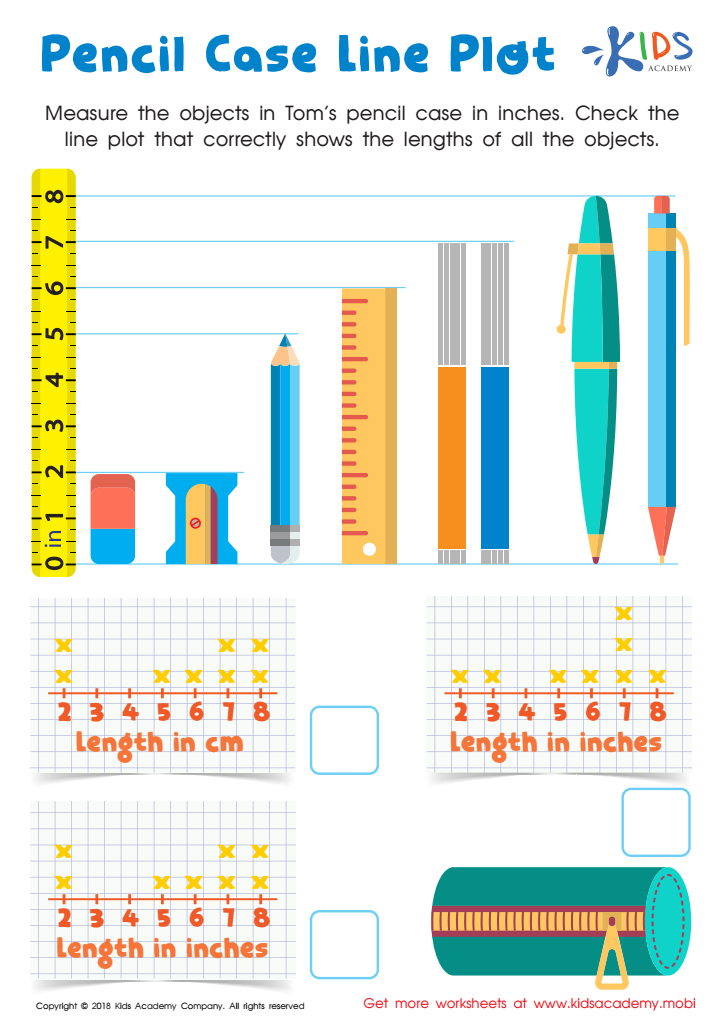
Pencil Case Line Plot Worksheet
Explain to your child that a line plot is a way to organize information. For example, if they need to arrange objects, they should draw a line plot. Now, have them help Tom measure the objects in his pencil case in inches. Then, have them check the line plot that accurately shows the length.
 Assign to My Students
Pencil Case Line Plot Worksheet
Worksheet
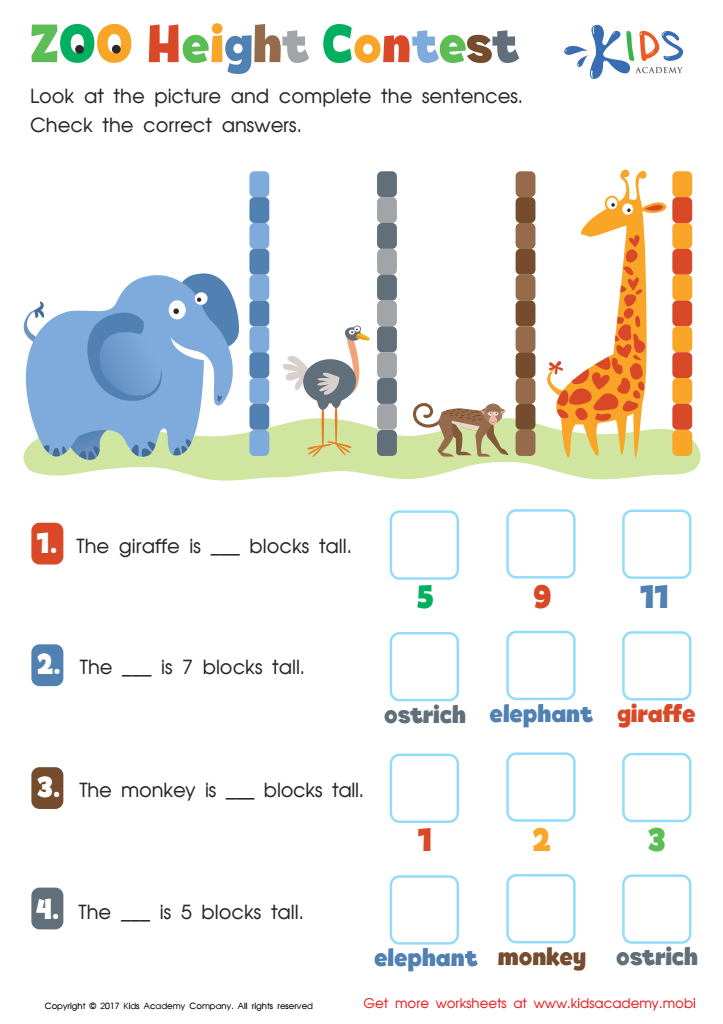
Zoo Height Contest Worksheet
Let's head to the zoo and use colorful blocks to measure your child's favorite animals! With this Kids Academy worksheet, help them practice and prepare for learning measurement. Guide them in looking at the zoo animals and counting blocks to find the height. Then, read the questions and check the box next to the correct answer.
Zoo Height Contest Worksheet
Worksheet
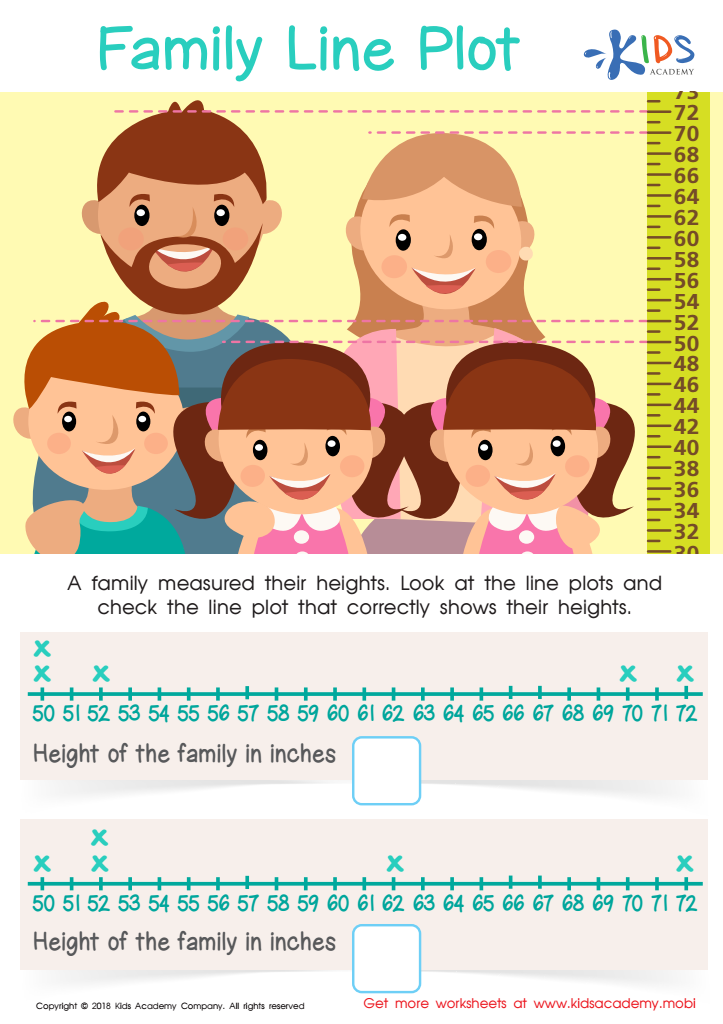
Family Line Plot Worksheet
Have you and your kids ever done a family height measurement? How did it go? If they're familiar with it, this worksheet may be simpler. The picture shows a family with their heights recorded. Get your kid to look at the line plots and choose the one that shows the family's heights accurately.
Family Line Plot Worksheet
Worksheet
Join Kids Academy for Free
Who is primarily going to use this learning content?








Understanding and interpreting data is crucial for parents and teachers as it informs decision-making and enhances student development. First, data provides insights into a child's academic progress, helping educators identify strengths and areas needing improvement. For example, test scores and assessment results can highlight specific subjects where a student may struggle, allowing for targeted support.
Additionally, interpreting data can foster effective communication between parents and teachers. By sharing data trends and individual metrics, both parties can collaborate more effectively to create personalized learning strategies that cater to each child’s unique needs. This partnership can motivate students, as they see their progress tracked through tangible metrics.
Furthermore, in today's data-driven world, cultivating data literacy in children can prepare them for future academic and career challenges. Teaching kids to understand and analyze information equips them with critical thinking skills necessary for problem-solving.
Ultimately, caring about data is not just about numbers; it’s about enhancing educational outcomes and ensuring every child has the opportunity to succeed. By prioritizing data interpretation, parents and teachers can foster a supportive learning environment that caters to the holistic development of students.








