Understanding opposites Easy Worksheets
4 filtered results
-
From - To
"Understanding Opposites Easy Worksheets" from Kids Academy helps children grasp essential concepts by contrasting words and ideas. Perfect for early learners, these printable activities provide a fun and engaging way for kids to recognize and understand opposites. With colorful illustrations and simple tasks, kids can boost their vocabulary and critical thinking skills. These worksheets cater to different learning styles, ensuring every child can master the concept at their own pace. Ideal for classroom use or at-home practice, they support foundational learning and prepare children for more advanced language skills. Unlock your child's potential with these easy, educational worksheets!
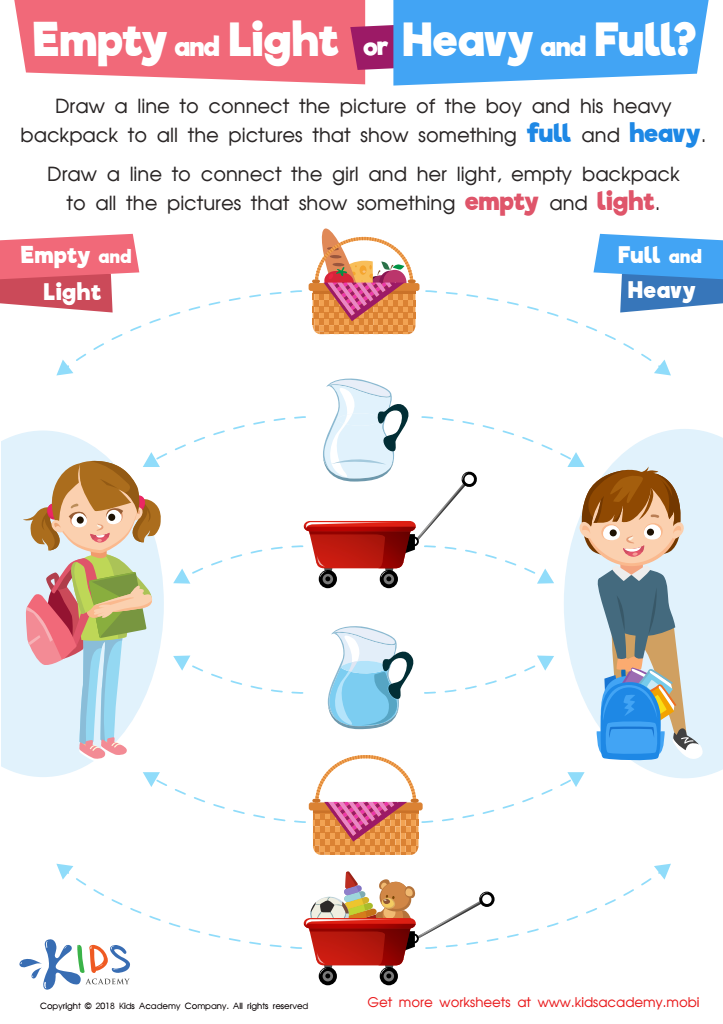
Empty and Light or Heavy and Full? Worksheet
 Assign to My Students
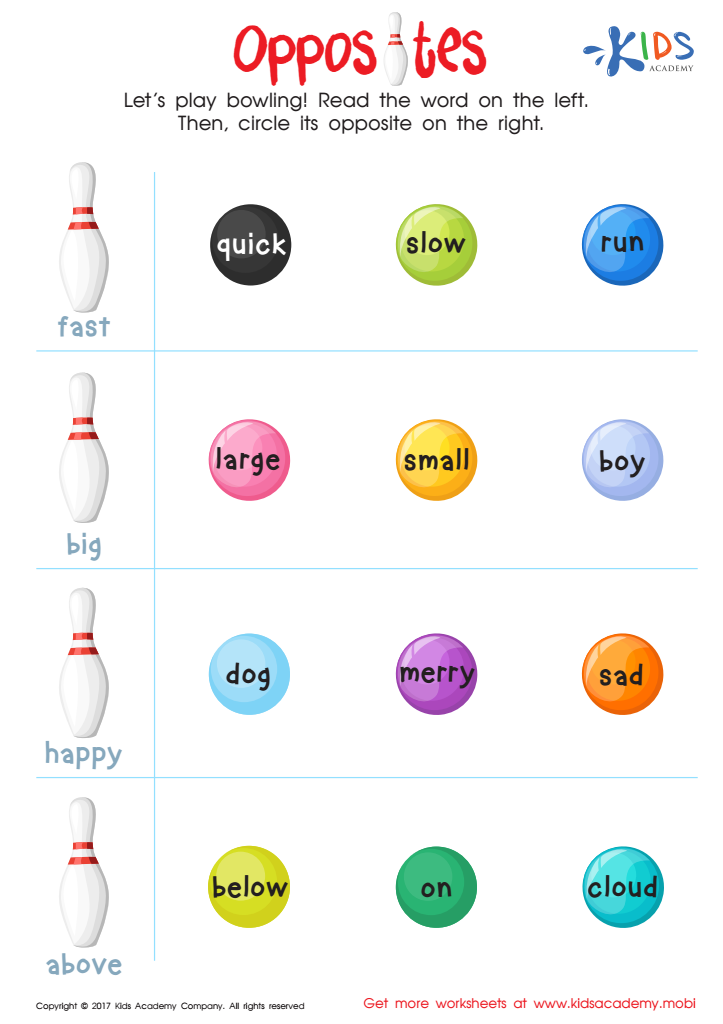
Opposites Worksheet
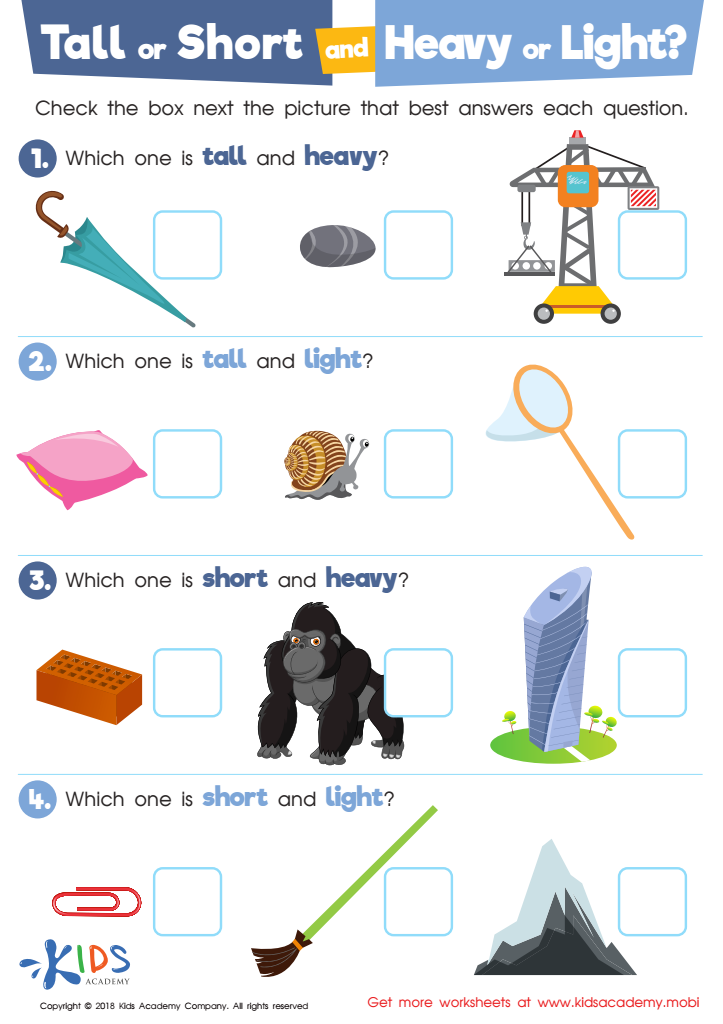
Tall or Short and Heavy or Light? Worksheet
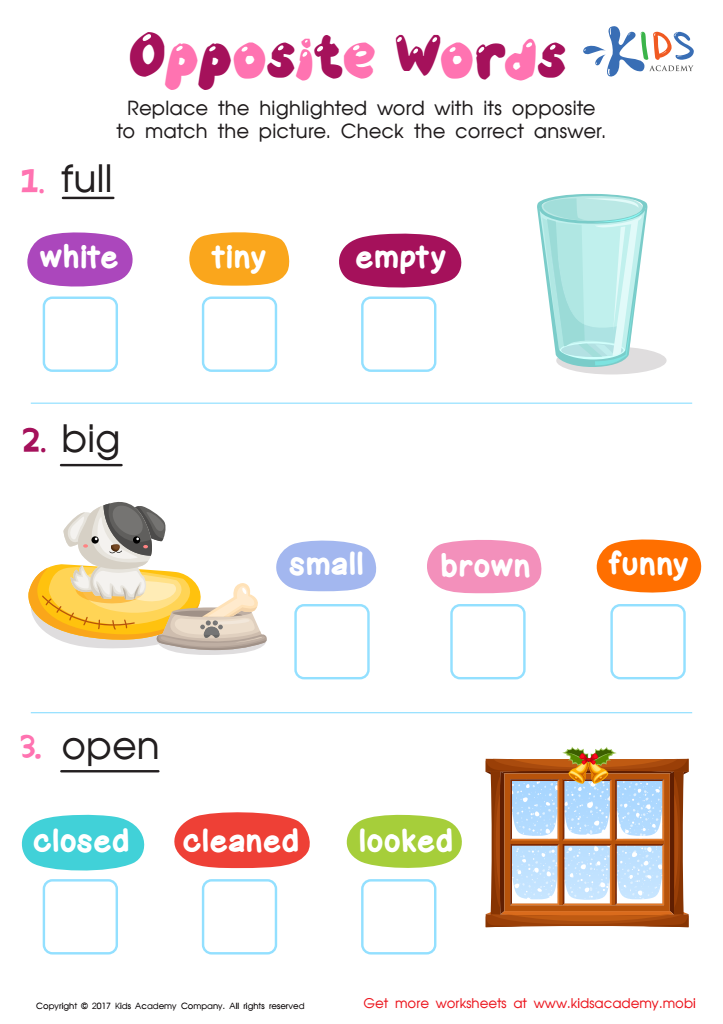
Opposite Words Worksheet







Understanding opposites is fundamental for young children, and both parents and teachers should prioritize teaching these concepts. Firstly, grasping opposites helps children build their vocabulary. When kids learn words like "big" and "small," they not only acquire two terms but also understand how they contrast, enhancing comprehension. This skill promotes clearer communication as children can describe the world around them more accurately.
Secondly, knowing opposites supports cognitive development. It fosters critical thinking as children begin to categorize and distinguish between different concepts. This mental exercise is crucial for problem-solving skills that children will need in more complex academic subjects later on.
Thirdly, understanding opposites aids emotional and social development. For instance, learning the difference between "happy" and "sad" helps children recognize and articulate their own feelings, fostering empathy and social interaction.
Additionally, grasping opposites aligns with early math skills. Concepts like big/small, long/short, and heavy/light are foundational for understanding measurements and quantities.
Parent and teacher involvement is essential because children learn best through repeated, contextual exposure. By encouraging discussions about opposites during playtime, storytime, or daily routines, adults can make learning these concepts engaging and fun, setting a strong foundation for the child’s future academic and social success.








