Understanding subtraction Easy Addition & Subtraction Worksheets
3 filtered results
-
From - To
Welcome to our "Understanding Subtraction Easy Addition & Subtraction Worksheets" page, designed specifically for young learners! These engaging worksheets help children grasp the concept of subtraction as a crucial part of math learning. With a variety of fun and interactive activities, kids will learn to subtract numbers with confidence while reinforcing their addition skills. Perfect for home or classroom use, our resources support children in developing essential problem-solving abilities in a stress-free environment. Explore our selection of worksheets to make learning subtraction enjoyable and effective—an excellent way to strengthen foundational math skills for lifelong success!
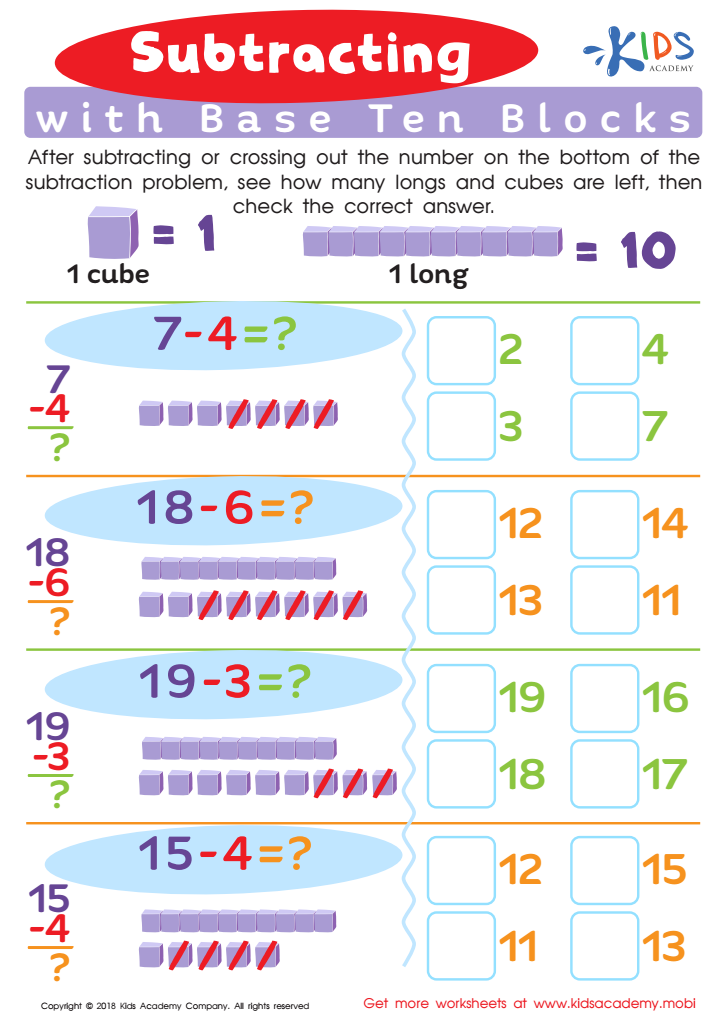
Subtracting With Base 10 Blocks Worksheet
 Assign to My Students
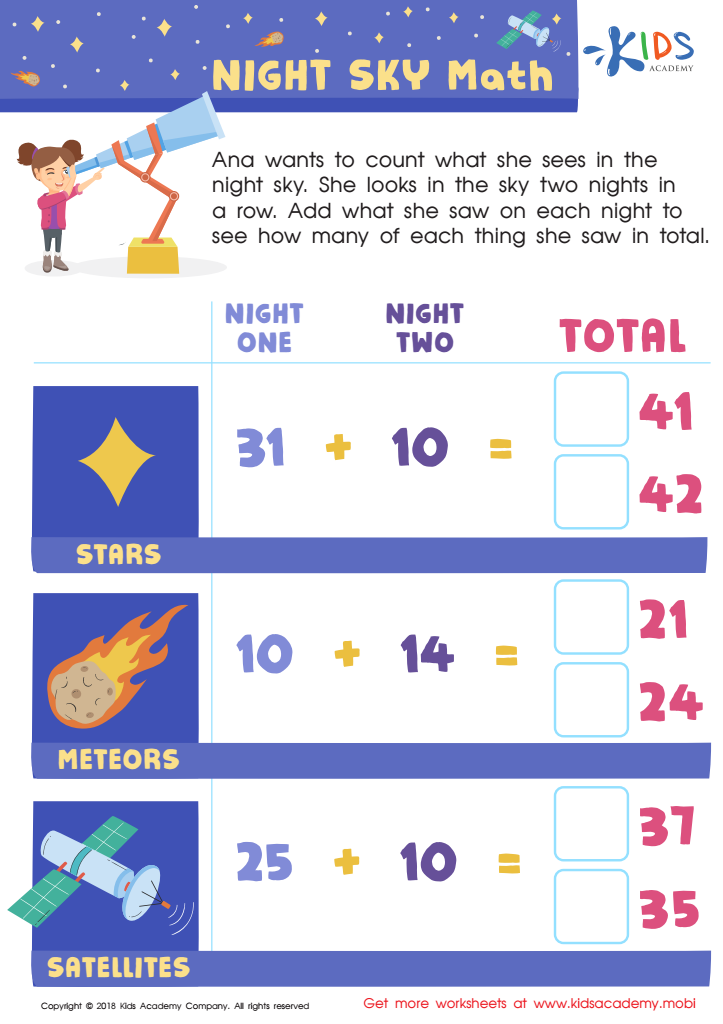
Night Sky Math Worksheet
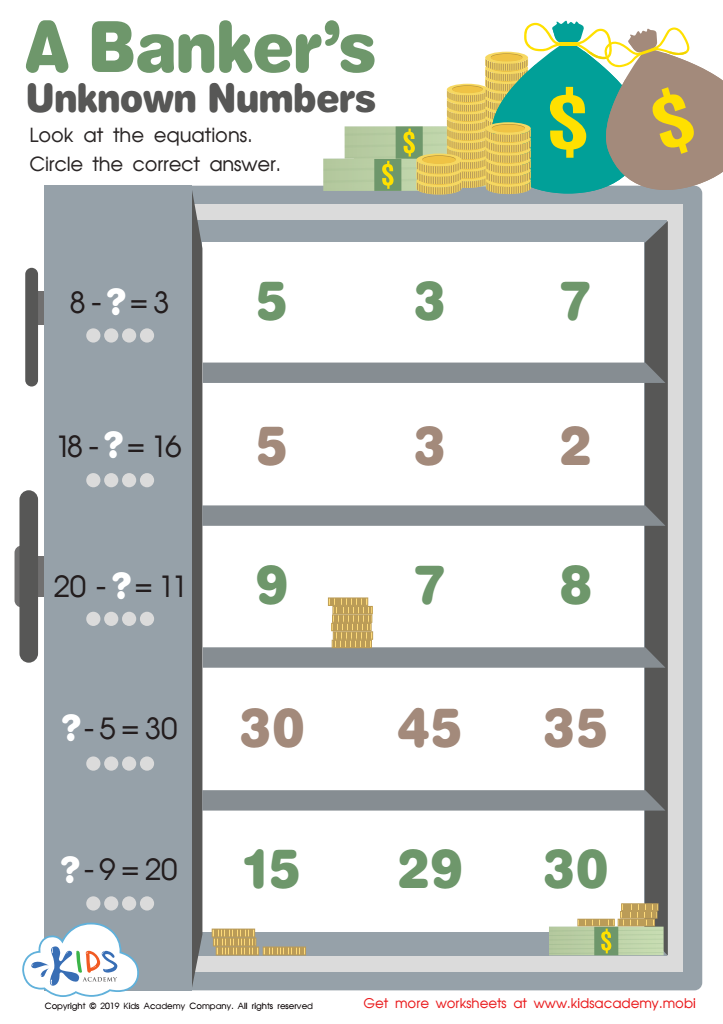
A Banker's Unknown Numbers Worksheet








Understanding subtraction, along with its relationship with addition, is essential for parents and teachers because it lays the foundation for a child's mathematical development. Mastery of these concepts not only helps children perform basic calculations but also enables critical thinking and problem-solving skills.
When children grasp the concept of subtraction as the inverse of addition, they become more versatile in their approach to solving mathematical problems. This interconnectedness fosters a deeper understanding, allowing students to tackle more complex mathematical tasks later on, such as multi-digit arithmetic, fractions, and even algebra.
Moreover, early proficiency in addition and subtraction boosts a child's confidence in their abilities. When children feel competent in these basic skills, they are more likely to engage with math in a positive way, participate in classroom discussions, and take on new challenges without fear of failure.
Lastly, subtraction is not just a numerical skill but also a life skill. Practical applications, from counting change to measuring ingredients in cooking, require an understanding of these operations. Therefore, fostering a solid grasp of addition and subtraction is critical for a child’s academic success and everyday functioning. As stakeholders in a child's education, parents and teachers play a crucial role in nurturing these essential skills.








