Counting skills Easy Geometry Worksheets
3 filtered results
-
From - To
Welcome to our "Counting Skills Easy Geometry Worksheets" page, designed to enhance your child's understanding of basic geometry concepts while improving counting skills! Our engaging and interactive worksheets are tailored for early learners, featuring clear illustrations and age-appropriate exercises. Students will explore shapes, numbers, and spatial relationships in a fun, immersive way. These resources not only reinforce counting proficiency but also encourage critical thinking as children identify and categorize geometric figures. Perfect for classroom activities or home practice, our worksheets make learning math an enjoyable experience. Unlock your child's potential in geometry and counting today! Download now for endless learning opportunities!
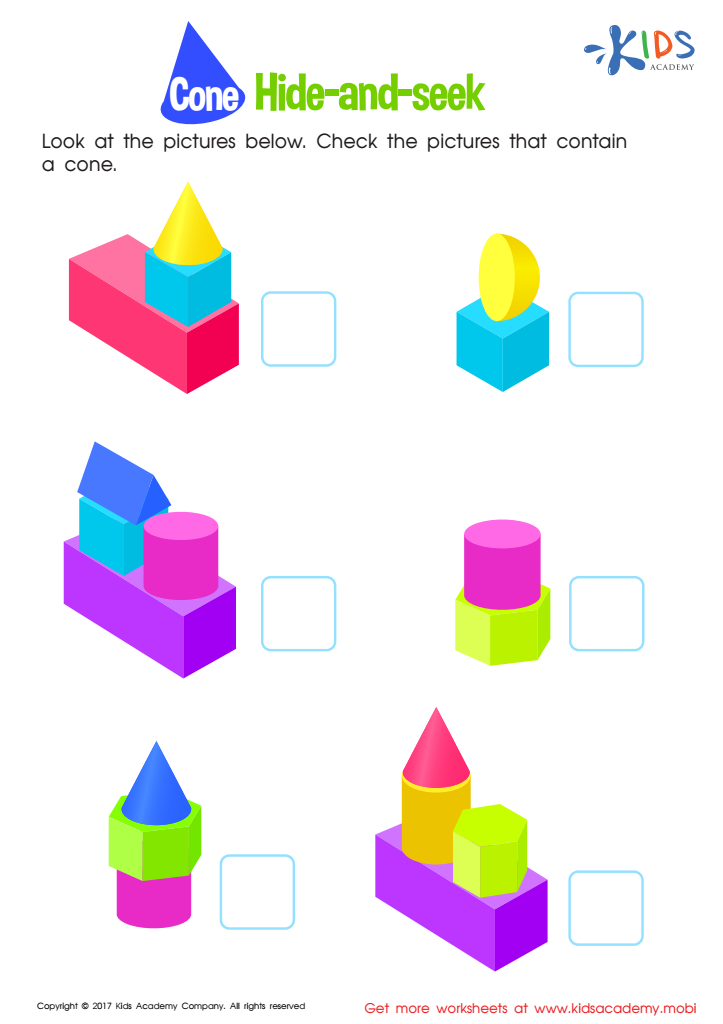
Cone Hide-and-Seek Worksheet
 Assign to My Students











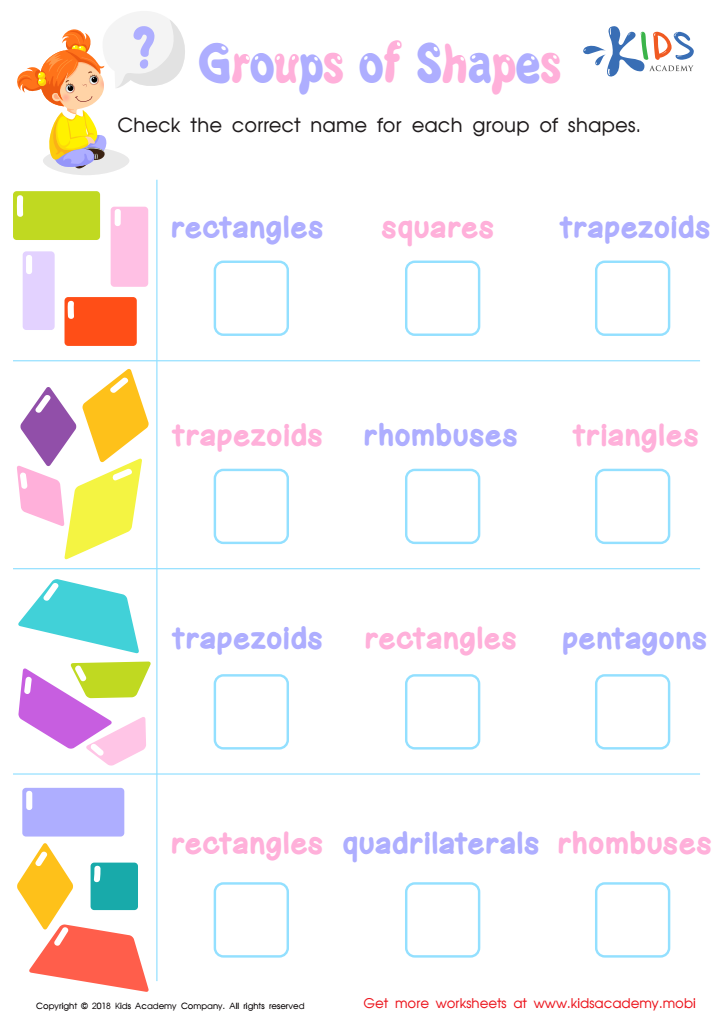
Groups of Shapes Worksheet
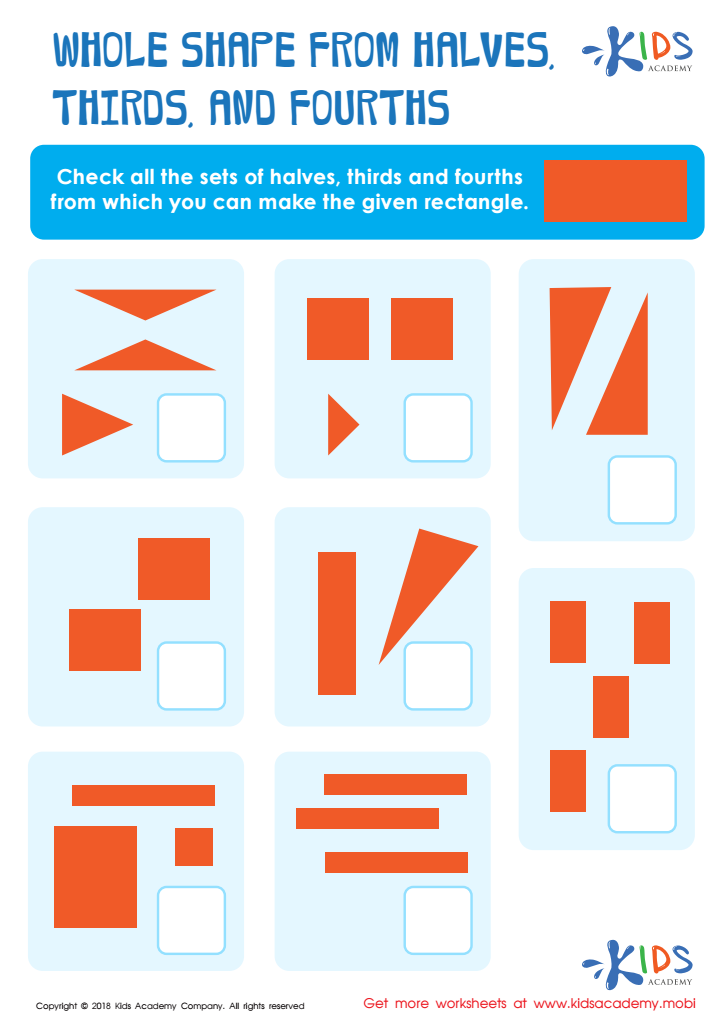
Whole Shape from Halves, Thirds and Fourths Worksheet








Understanding counting skills and basic geometry is crucial for children's early development, as these foundational concepts lay the groundwork for more advanced mathematical reasoning. For parents and teachers, fostering these skills supports cognitive growth and boosts children's confidence in their ability to interact with numbers and shapes.
Counting skills are essential for children to grasp number sense, which influences their ability to perform operations like addition, subtraction, and ultimately more complex mathematics. When children can count effectively, they can compare quantities, recognize patterns, and make sense of everyday situations involving numbers.
Moreover, engaging with easy geometry helps children learn about shapes, sizes, and spatial relationships. Recognizing geometric figures enhances their observational skills and strengthens their ability to categorize objects. This knowledge is not only applicable in math classes but also beneficial in arts, sciences, and various real-world scenarios.
Encouraging counting and geometry skills in young children also promotes critical thinking, problem-solving, and the ability to communicate mathematical ideas. Thus, by prioritizing these skills, parents and teachers play a vital role in preparing children for future academic success and equipping them with tools they will need throughout their lives.








