Visual Perception Skills Easy Math Worksheets
3 filtered results
-
From - To
Explore our "Visual Perception Skills Easy Math Worksheets" designed to enhance Children's learning experience! These engaging and colorful worksheets help young learners develop essential visual perception skills crucial for mastering math concepts. Activities include identifying shapes, recognizing patterns, and honing spatial awareness, all while making math enjoyable. Our resources encourage critical thinking and problem-solving, empowering kids to navigate mathematical challenges with confidence. Perfect for classroom use or homeschooling, these worksheets support educational goals and foster a love for learning. Unlock your child's potential with fun and effective visual perception exercises—download and start exploring today! Ideal for early grade teachers and parents alike!
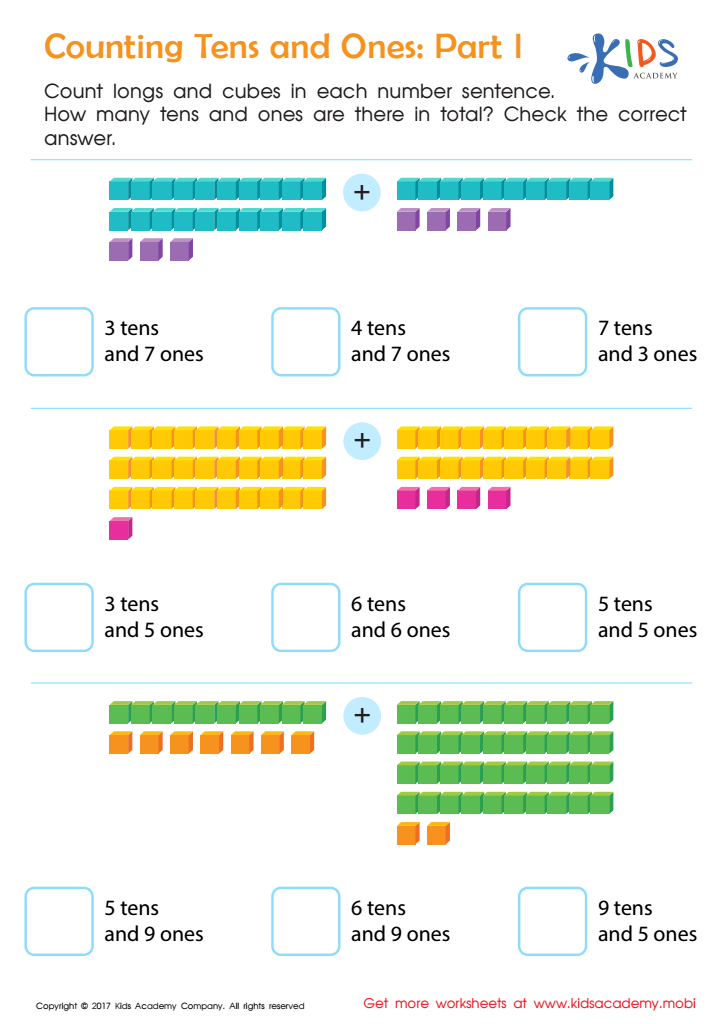
Counting Tens and Ones: Part 1 Worksheet
 Assign to My Students
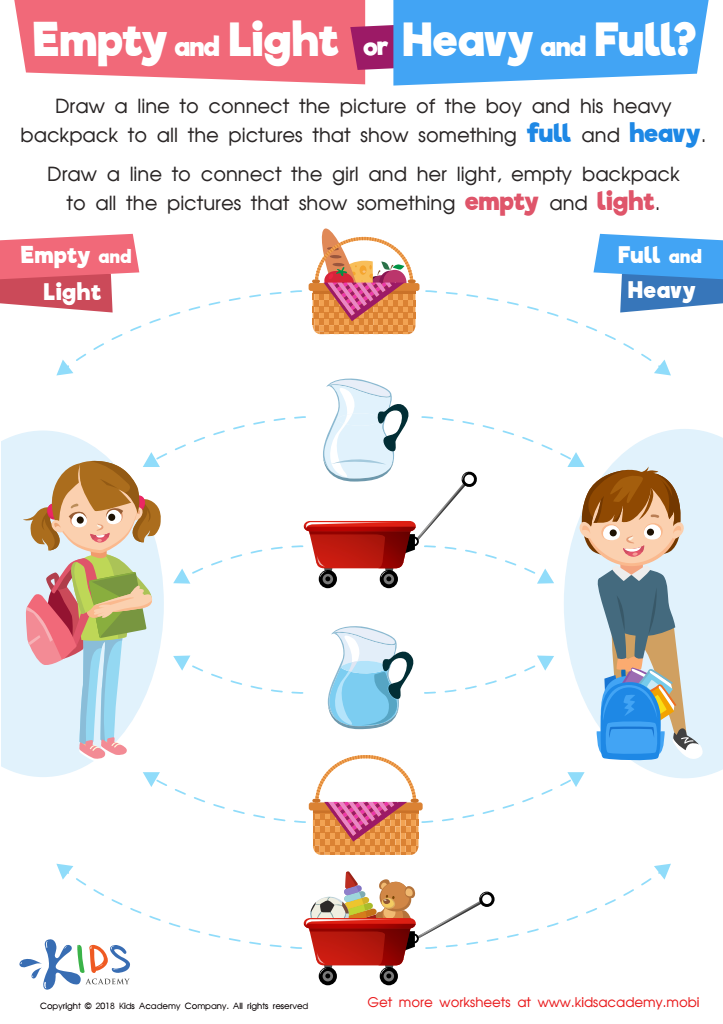
Empty and Light or Heavy and Full? Worksheet
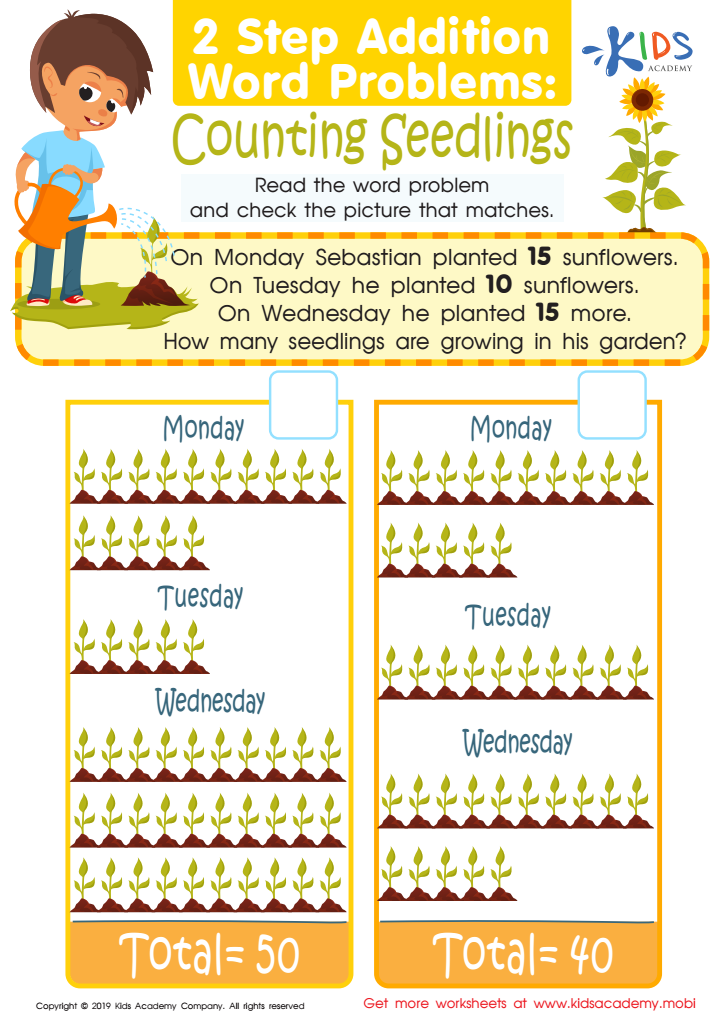
Counting Seedlings Worksheet








Visual perception skills are crucial for children's academic success, especially in early math learning. These skills enable children to interpret and understand visual information, which is fundamental in grasping mathematical concepts such as shapes, sizes, patterns, and spatial relationships. For instance, recognizing and differentiating geometric shapes enhances a student’s ability to identify and solve problems involving area and volume later on.
Furthermore, strong visual perception skills support reading development necessary for math word problems, as well as attention to detail while working through equations or graphs. When parents and teachers prioritize these skills, they lay a strong foundation for children, enhancing their confidence and competence in mathematics.
Additionally, practice with visual perception exercises can engage children in fun, interactive ways, making math enjoyable. Activities like sorting, patterning, and puzzles not only sharpen these skills but also promote critical thinking and problem-solving abilities. Moreover, children who struggle with visual perception might face difficulties in math, leading to frustration and disinterest. Therefore, fostering visual perception skills is essential—not just for math proficiency but for nurturing a lifelong love of learning among children. Parents and teachers should collaborate to integrate engaging techniques that support the development of these vital skills.








