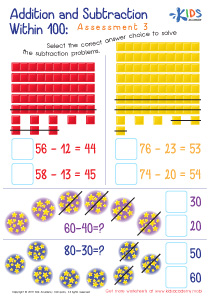
Sorting skills Easy Numbers 0–10 Worksheets
3 filtered results
-
From - To
Enhance your child’s sorting skills with our Easy Numbers 0–10 Worksheets! Designed for early learners, these engaging worksheets help children practice sorting numbers through fun and interactive activities. By categorizing numbers, kids develop critical thinking and organizational skills while reinforcing their understanding of numerical values. Featuring colorful illustrations and simple instructions, these worksheets make learning enjoyable and effective. Perfect for home or classroom use, parents and teachers can easily integrate these activities into their lesson plans. Equip your young learners with foundational skills that set the stage for future math success. Explore our resources today and watch your child's confidence grow!
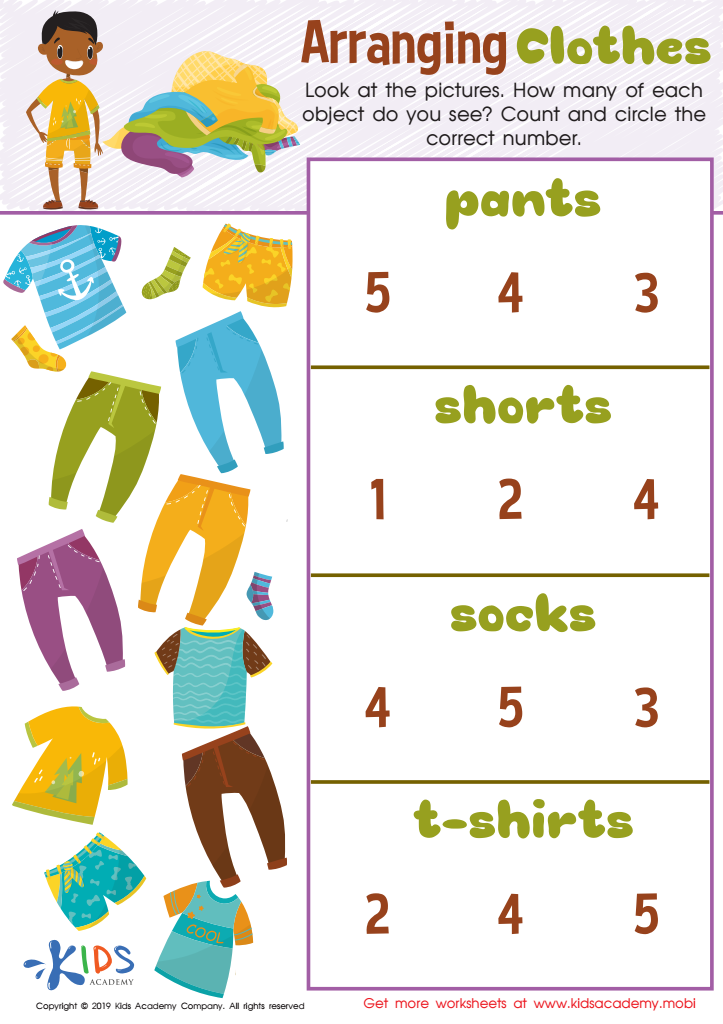
Arranging Clothes Worksheet
 Assign to My Students
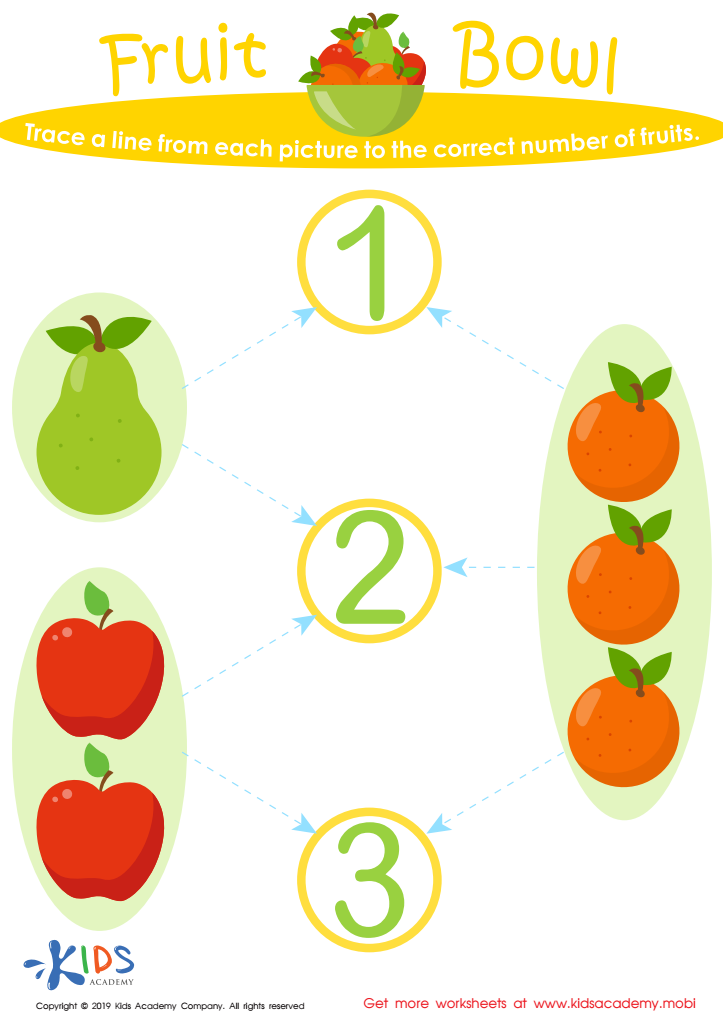
Fruit Bowl Worksheet
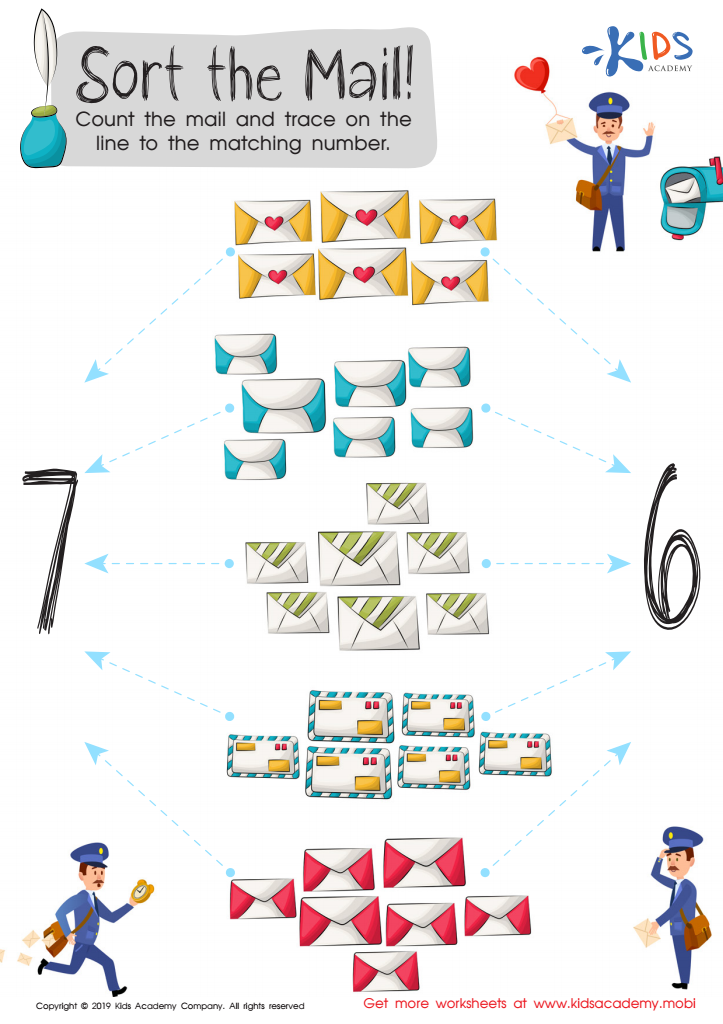
Sort the Mail Worksheet








Sorting skills are fundamental for young learners, particularly when dealing with numbers from 0 to 10. Parents and teachers should prioritize these skills as they lay the groundwork for essential mathematical concepts. When children engage in sorting activities, they develop critical thinking and analytical abilities. By organizing objects or numbers based on specific criteria, such as size, color, or value, children learn to recognize patterns and relationships, paving the way for more complex problem-solving.
Additionally, sorting helps enhance children's understanding of numerical order and quantity, reinforcing their comprehension of basic math operations, such as addition and subtraction. Mastery of sorting lays the foundation for later mathematical experiences, including the ability to group and categorize larger sets of numbers, which is crucial for more advanced operations.
Moreover, sorting activities promote fine motor skills through hands-on manipulation of objects, fostering a tactile learning experience. Such engagement can spark interest in mathematics, making the learning experience enjoyable and interactive. Ultimately, by emphasizing sorting skills, parents and teachers play a vital role in cultivating a child’s math confidence and readiness for future learning, setting them up for success in their academic journey and everyday life.