Visual Learning Easy Word Problems Worksheets
3 filtered results
-
From - To
Introduce young learners to the world of problem-solving with our Visual Learning Easy Word Problems Worksheets. These engaging, printable resources are designed to simplify math through visually appealing and relatable scenarios. Each worksheet helps children develop critical thinking and analytical skills by presenting math problems within the context of everyday activities. Perfect for early grade students, our worksheets support understanding through colorful illustrations and straightforward instructions, making math both fun and accessible. Equip your students with the tools they need to confidently navigate math word problems and build a solid foundation for their future learning. Explore and download today!
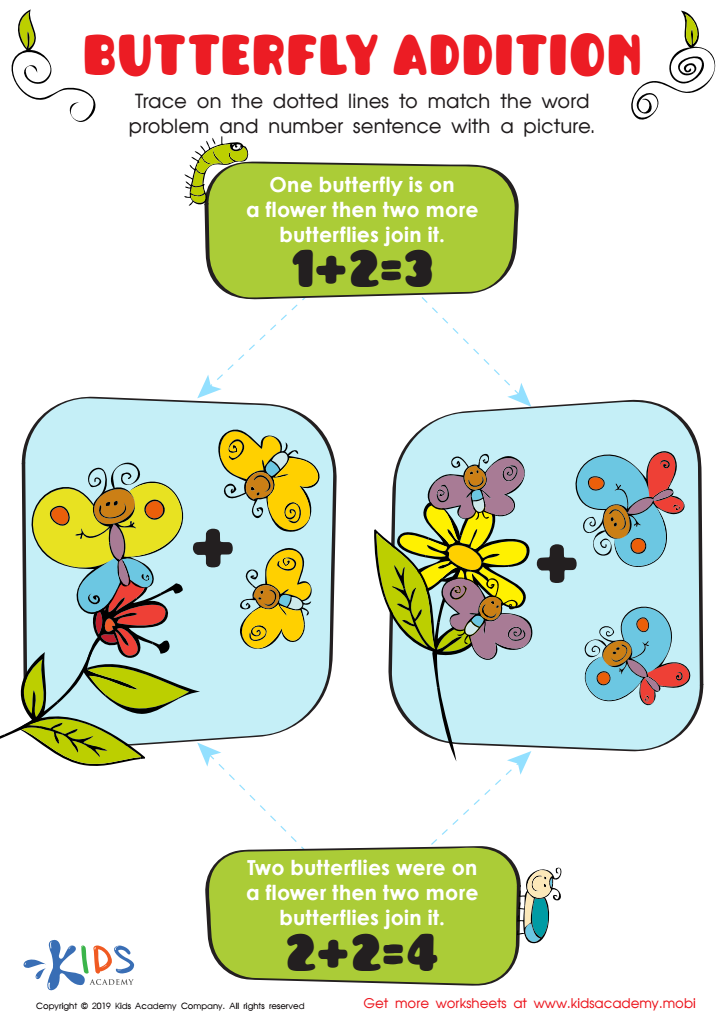
Butterfly Addition Worksheet
 Assign to My Students
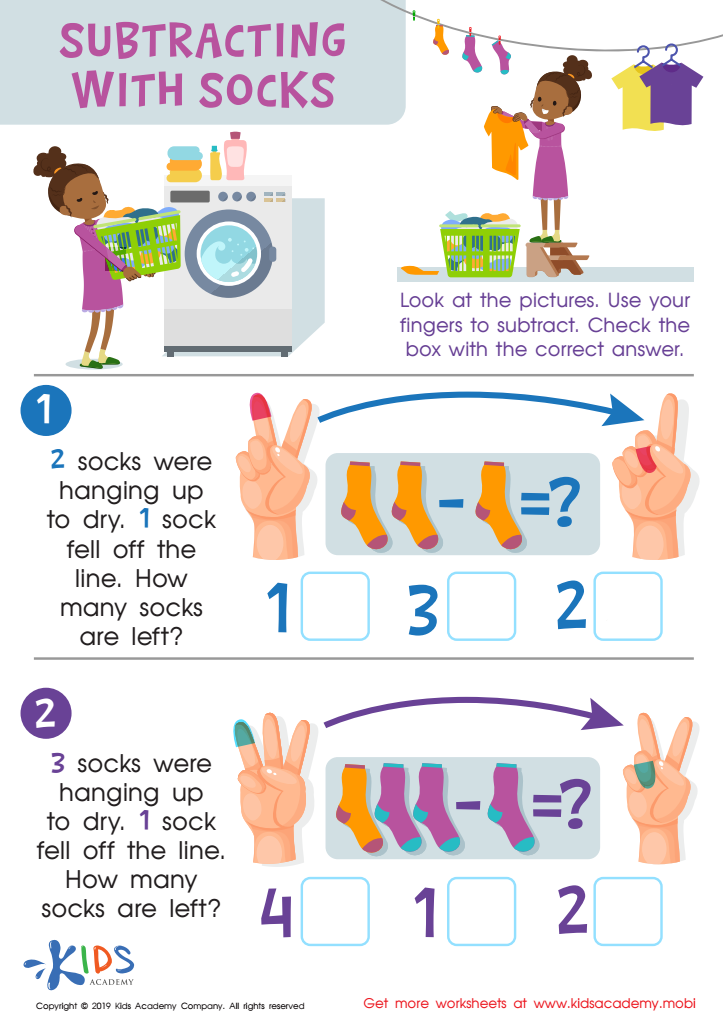
Subtracting Socks Worksheet
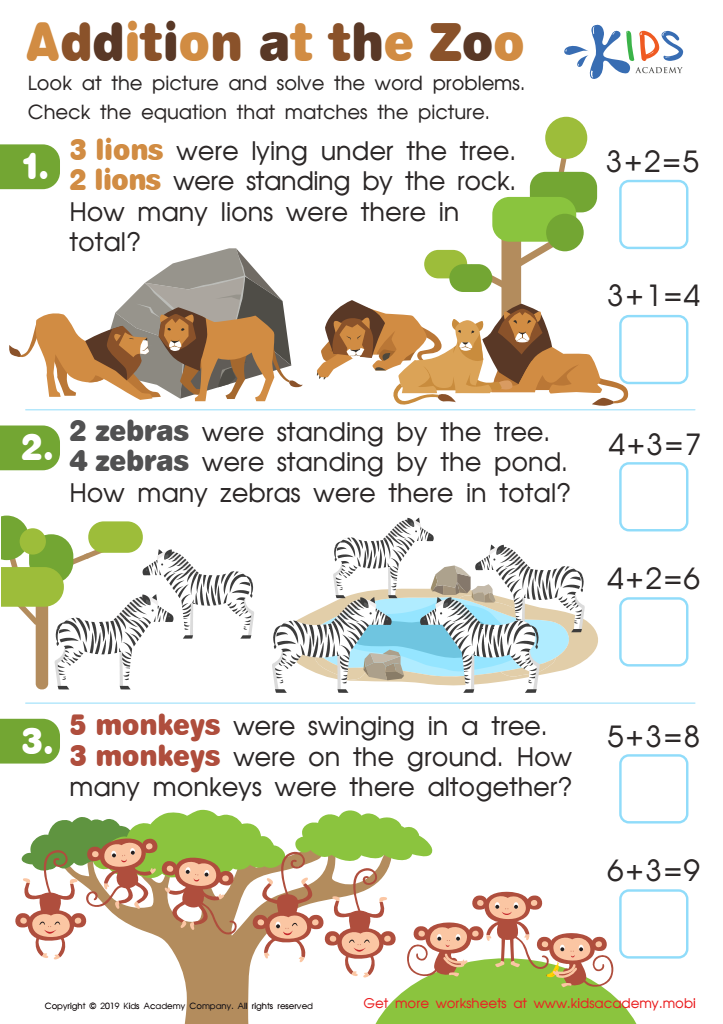
Addition at the Zoo Worksheet








Visual learning in solving word problems is crucial for early-grade students because it bridges the gap between abstract concepts and concrete understanding. Parents and teachers should care about this approach as it enhances children's comprehension and retention. When students see a problem in visual form, such as through pictures, diagrams, or charts, it becomes more relatable and less intimidating. Visual aids help in breaking down complex problems into manageable steps, allowing young minds to grasp concepts like addition, subtraction, or multiplication more readily.
Furthermore, incorporating visual learning strategies caters to diverse learning styles. Not every child learns best through verbal instructions; many are visual learners who need to 'see' the problem to understand it fully. By integrating visual aids, educators and parents can provide a more inclusive learning environment that meets the needs of all students.
Additionally, visual learning promotes critical thinking and problem-solving skills. When children are encouraged to visualize problems, they develop a deeper understanding of relationships and patterns, which are essential for higher-level math concepts.
In summary, visual learning in word problems fosters better understanding, accommodates different learning styles, and enhances critical thinking skills. This holistic approach not only supports academic achievement but also builds a strong foundation for lifelong learning.








