
Critical Thinking Easy Animals Worksheets
3 filtered results
Difficulty Level
Grade
Age
-
From - To
Subject
Activity
Standards
Enhance your child's critical thinking skills with our engaging "Critical Thinking Easy Animals Worksheets." Designed for early learners, these fun and interactive worksheets explore the fascinating world of animals while promoting essential cognitive abilities. Each worksheet is crafted to challenge young minds, encouraging them to analyze, compare, and draw conclusions based on various animal-related scenarios. Perfect for teachers and parents, these resources foster a love for science and nurture problem-solving skills through imaginative tasks. Whether used at home or in the classroom, our easy animal worksheets make learning a joyful experience, building a strong foundation for future learning adventures.
Favorites
With answer key
Interactive
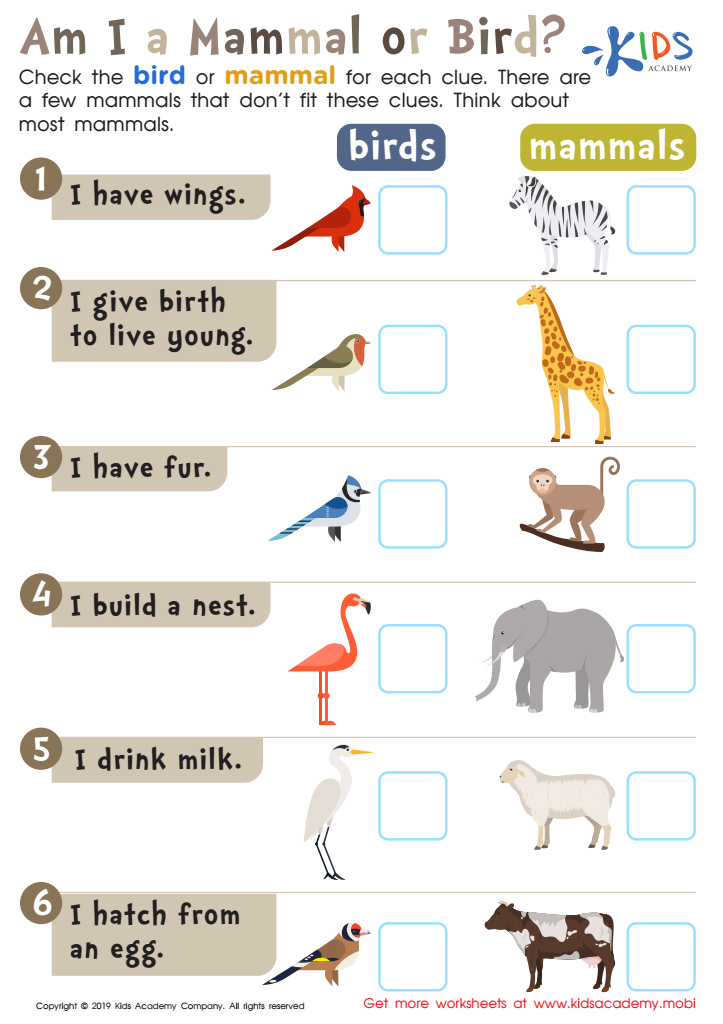
Am I a Mammal or Bird? Worksheet
We categorize animals into groups such as mammals, birds, reptiles, etc. This worksheet helps kids understand the difference between birds and mammals. Read through the clues and think about each one. Then decide if it describes a bird or mammal, check the box and complete!
 Assign to My Students
Am I a Mammal or Bird? Worksheet
Worksheet
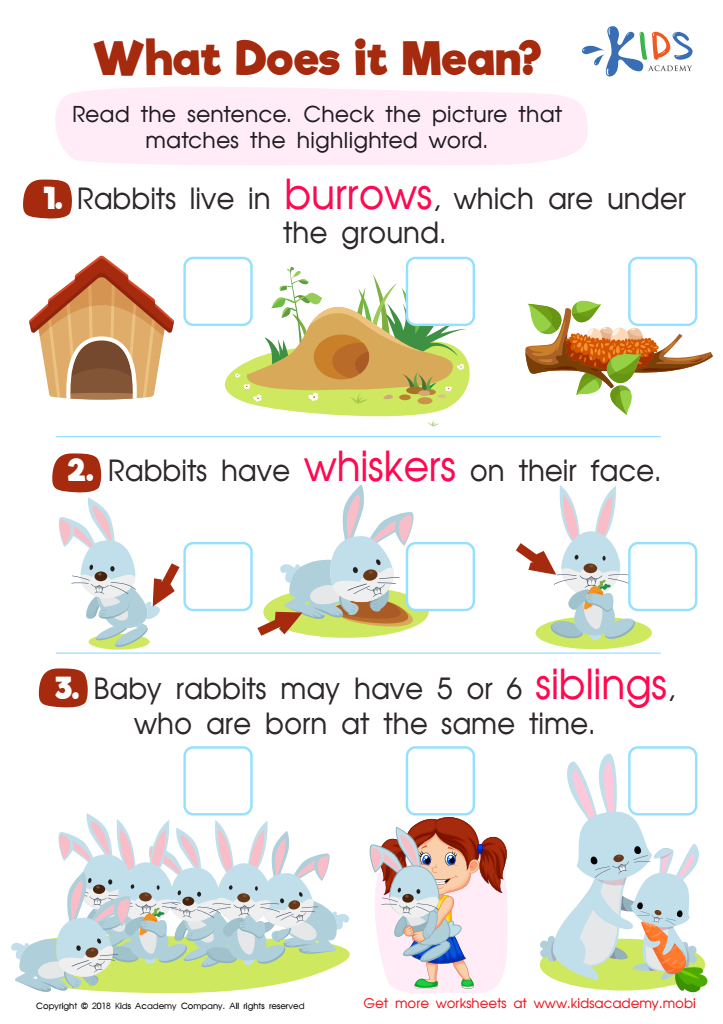
What Does It Mean? Worksheet
Teach your child to use context clues with this engaging Kids Academy worksheet. Read the sentences and find the pink-highlighted word. Use the other words in the sentence to figure out the meaning, then check the box next to the picture that represents it.
What Does It Mean? Worksheet
Worksheet
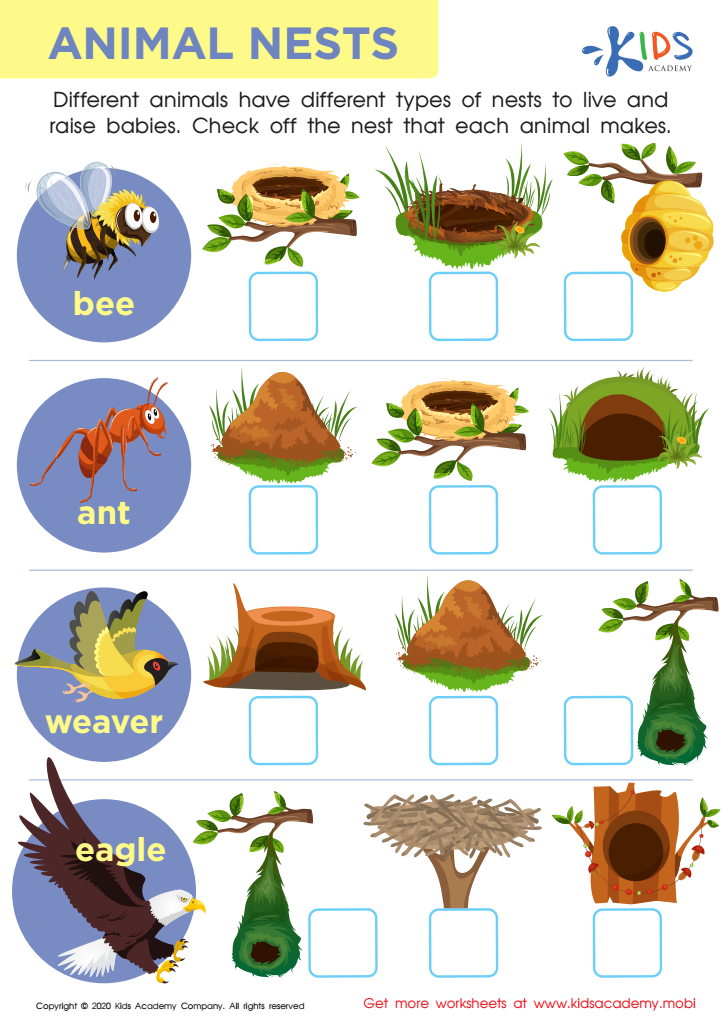
Animal Nests Worksheet
Animals need homes to sleep and stay safe. Look at the animal on the left and examine the nests and hives to the right. Check off the correct one for each animal to complete the worksheet! From birds to bees, it's a great way to show different types of homes animals make!
Animal Nests Worksheet
Worksheet
Join Kids Academy for Free
Who is primarily going to use this learning content?







Parents and teachers should prioritize fostering critical thinking skills through engaging activities like "Easy Animals" because these skills are crucial for a child's cognitive development and overall success. Critical thinking encourages children to analyze, evaluate, and create new ideas rather than simply memorizing facts. By exploring topics like "Easy Animals," kids learn not just about various animals but also how to question information, assess their understanding, and make connections with real-world scenarios.
Activities centered around animals can stimulate curiosity and promote hands-on learning. For example, discussing the traits and behaviors of animals fosters observational skills and encourages children to formulate hypotheses. When students engage in classification, comparisons, or problem-solving through animal-related activities, they develop reasoning and analytical capabilities that transcend the classroom.
Moreover, nurturing critical thinking prepares children for complex decision-making later in life, laying a foundation for academic success and informed citizenship. By highlighting relationships between different animal species or survival strategies in nature, students learn to approach challenges with a thoughtful mindset. In a rapidly changing world, the ability to think critically is essential; thus, parents and teachers should champion activities like "Easy Animals" that cultivate these essential life skills.








